
Choosing the China Best Anterior Cervical Plate Manufacturer requires more than comparing prices or catalog photographs. Hospitals need evidence of mechanical reliability, surgical usability, traceability, and responsive technical support. The Anterior Cervical Plate should fit the intended anatomy, maintain fixation, and support stable fusion without unnecessary profile height. Small design details matter. Screw angulation matters. So does the quality of the locking mechanism.
Industry data provides useful direction, but it should not be treated as a final verdict. Grand View Research’s 2024 analysis describes continued growth in the global spinal implants market, supported by degenerative cervical disorders, ageing populations, and advancing surgical techniques. MarketsandMarkets reports similarly identify cervical fixation systems as an important segment within spinal devices. However, market reports use different definitions and forecasting methods. Their figures are not perfectly comparable. That limitation deserves attention.
Cervical spine specialist K. Daniel Riew has stated, “The goal of anterior cervical surgery is to decompress the neural elements and stabilize the spine.” This principle keeps manufacturer evaluation clinically grounded. A dependable Chinese supplier should provide material specifications, dimensional drawings, sterilization information, validation records, and relevant quality certifications. ISO 13485 registration is important, but certification alone is not enough. Real-world feedback, complaint handling, and consistent batch control reveal more.
Some manufacturers may present impressive testing results. Ask how those tests were conducted. Ask whether the evidence reflects actual surgical conditions. The strongest candidate is not always the largest factory. It is the supplier that can explain its process clearly, acknowledge limitations, and improve when problems appear. That is where professional judgment becomes essential.
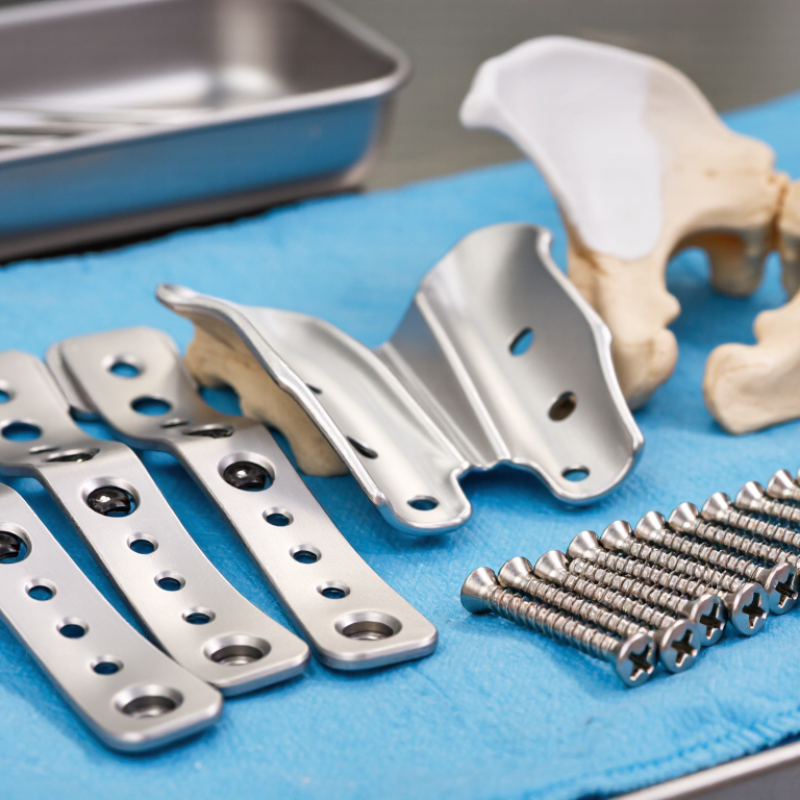
An anterior cervical plate is a small fixation device used during anterior cervical discectomy and fusion. Surgeons place it across the front of the cervical spine. It connects the treated vertebrae and supports the interbody cage while bone fusion develops. The plate may improve immediate stability, but it does not replace healthy bone growth.
Materials commonly include medical-grade titanium or titanium alloys. Their strength, contour, screw angle, and profile influence surgical handling. A 2023 systematic review in the Journal of Orthopaedic Surgery and Research reported postoperative dysphagia rates near 9% after anterior cervical surgery. Other peer-reviewed reviews report fusion rates commonly above 90%, although results vary by patient, level, and follow-up period. These figures are useful, not absolute promises. A thinner plate may reduce soft-tissue irritation, but “low profile” alone does not guarantee comfort. I would avoid judging quality by appearance or market popularity.
Tips: Confirm plate length with imaging and the surgeon’s plan. Check screw locking, edge smoothness, and compatibility with the selected cage. Review sterilization instructions and traceability records. Ask whether the design has clinical evidence, not only laboratory testing. Device selection should consider anatomy, bone quality, surgery level, and swallowing risk. Product data can look convincing, yet long-term clinical evidence may remain limited. That deserves honest discussion.
Choosing the best anterior cervical plate manufacturer requires more than comparing catalog photos. A reliable Chinese supplier shows controlled production, documented experience, and clear communication. Engineers should understand plate geometry, screw angulation, locking mechanisms, and cervical anatomy. Ask how design inputs become verified drawings and tested samples. The details matter. A plate should fit predictably, resist deformation, and support efficient surgical handling.
Look for a quality system aligned with ISO 13485 and applicable medical-device requirements. Request material certificates, incoming inspection records, machining parameters, cleaning controls, and batch traceability. Titanium alloy identity should be confirmed, not simply printed on a label. Surface finish deserves attention too; rough edges or inconsistent polishing can affect handling and tissue contact. Reliable manufacturers use calibrated measuring tools, documented inspections, and controlled packaging. They should explain sterilization compatibility and shelf-life evidence without vague promises.
Experience becomes visible during technical questions. Can the supplier provide validation reports, risk assessments, and change-control records? Can they support prototypes before volume production? A useful manufacturer answers directly and admits limitations. No factory is perfect. A missed measurement or delayed corrective action can reveal weak systems, even when brochures look polished. Request samples, inspect markings, and compare each result with approved specifications. Keep communication recorded. Responsive complaint handling and transparent lead-time updates build trust over time.
A reliable manufacturer should be evaluated through verifiable technical, regulatory, and quality-control checkpoints. The screening priorities below are based on common requirements for implantable medical devices, including ISO 13485 quality management, ISO 10993 biocompatibility evaluation, ISO 14971 risk management, material traceability, and validated sterilization processes.
The percentages represent a practical procurement screening model rather than market-share or company-performance data. Buyers should verify certificates, test reports, material records, design history, and regulatory documentation directly.
China Best Anterior Cervical Plate Manufacturer?
How Anterior Cervical Plates Are Designed and Made
Anterior cervical plates begin with surgical requirements, not appearance. Engineers study cervical anatomy, screw trajectories, implant visibility, and the space available beside the spine. The plate must support fusion while limiting unnecessary tissue irritation. Small details matter. A rounded edge can reduce contact with soft tissue. A low profile can help manage prominence after implantation.
Most plates use a medical-grade titanium alloy because it combines strength, corrosion resistance, and imaging compatibility. Engineers create digital models, then check hole positions, plate curvature, and locking features. Prototypes may be machined from solid material for dimensional inspection. A tiny mismatch can affect screw seating. The work is unforgiving. Feedback from spine surgeons helps refine contours and instrument access, but laboratory data must support every major change.
Manufacturing usually includes precision machining, deburring, cleaning, surface treatment, and controlled packaging. Each stage requires documented inspection. Technicians measure hole diameter, plate thickness, curvature, and locking performance. Fatigue and static tests evaluate whether the construct meets defined specifications. Sterility is handled through validated processes, not visual judgment. Traceability links raw material, machine settings, inspection records, and final packaging. No design is perfect. A reliable manufacturer should still question whether a thinner plate, sharper instrument interface, or faster production cycle introduces new risk. Continuous review keeps engineering decisions connected to real surgical use.
| Design and Manufacturing Dimension | Typical Specification or Practice | Why It Matters | Quality-Control Considerations |
|---|---|---|---|
| Primary clinical purpose | Anterior cervical plates are used to stabilize the cervical spine after procedures such as anterior cervical discectomy and fusion. | The plate helps maintain alignment and supports the fusion construct while bone healing occurs. | The intended use, anatomical region, and compatible implant components should be clearly defined in the product specification. |
| Common plate material | Medical-grade titanium alloy, commonly Ti-6Al-4V, is widely used because of its strength, corrosion resistance, and biocompatibility. | The material must withstand physiological loading while remaining suitable for long-term implantation. | Material certificates, chemical composition, mechanical properties, and traceability should be verified for each production batch. |
| Screw material | Cortical or cancellous bone screws are commonly manufactured from titanium alloy, with thread and tip geometry selected for cervical fixation. | The screw must achieve reliable purchase in the vertebral body without unnecessary damage to bone or surrounding anatomy. | Thread accuracy, head dimensions, drive interface, locking function, and resistance to stripping should be inspected. |
| Anatomical contour | The plate is contoured to follow the anterior cervical vertebral profile and may be available in multiple lengths and curvature options. | A close fit can reduce soft-tissue prominence and help distribute load across the fixation construct. | Dimensional inspection should include length, width, thickness, hole position, curvature, and edge profile. |
| Plate thickness | Low-profile designs are commonly selected to limit anterior prominence; exact thickness varies by design and load requirement. | A thinner plate may improve profile, but it must still provide adequate stiffness and fatigue strength. | Finite element analysis and mechanical testing should support the selected thickness rather than relying only on visual appearance. |
| Screw-hole configuration | Holes may allow fixed-angle or variable-angle screw placement, depending on the locking mechanism and surgical design. | Controlled angulation can support anatomical placement while maintaining secure plate-to-screw locking. | Angular range, insertion torque, locking torque, pull-out resistance, and back-out resistance should be tested. |
| Locking mechanism | Common mechanisms include locking caps, integrated locking elements, or screw-head retention features. | The mechanism is intended to reduce unintended screw loosening or migration after implantation. | The locking system should be checked for repeatability, secure engagement, resistance to vibration, and compatibility with the designated instruments. |
| Manufacturing route | Typical steps include material preparation, precision CNC machining, deburring, surface finishing, cleaning, inspection, packaging, and sterilization where applicable. | A controlled process helps maintain dimensional consistency and reduces contamination or surface defects. | Process validation, equipment calibration, work instructions, in-process inspection, and batch records should be maintained. |
| CNC machining requirements | Multi-axis machining may be used for plate contours, screw holes, countersinks, locking features, and instrument interfaces. | Accurate machining supports proper screw seating, predictable fixation, and compatibility with surgical instruments. | Coordinate measuring machines, calibrated gauges, and validated inspection programs should verify critical dimensions. |
| Surface finishing | Finishing may include controlled polishing, passivation, or anodic treatment appropriate for the selected titanium alloy and intended use. | A controlled surface can reduce burrs and sharp edges and support corrosion resistance and cleanability. | Surface roughness, discoloration, burrs, embedded particles, and visible defects should be evaluated against documented acceptance criteria. |
| Mechanical performance | Evaluation commonly includes static strength, fatigue strength, plate-screw interface performance, and construct stability. | The construct must tolerate expected cervical loading during the period required for fusion. | Testing should use defined worst-case configurations and documented methods based on applicable medical-device standards. |
| Biocompatibility | Biological evaluation considers the patient-contacting materials, processing residues, and the nature and duration of tissue contact. | The assessment helps identify potential biological risks associated with the finished device. | Testing and risk assessment should address cytotoxicity, sensitization, irritation, systemic toxicity, and other endpoints when applicable. |
| Cleaning and packaging | Finished implants should be cleaned to control machining residues and packaged to protect them from damage and contamination. | Packaging integrity is essential for maintaining the specified condition through transport and storage. | Validated cleaning methods, particulate limits, seal integrity, labeling accuracy, and shelf-life evidence should be documented. |
| Sterilization status | Products may be supplied sterile or non-sterile, depending on the product configuration, regulatory filing, and intended healthcare workflow. | The sterilization method must be compatible with the materials, packaging, and claimed shelf life. | Sterilization validation, residual limits, packaging validation, and sterile-barrier maintenance should be verified when supplied sterile. |
| Regulatory quality system | A medical-device manufacturer should operate a documented quality-management system appropriate to the markets it serves. | A controlled quality system supports design control, risk management, production consistency, and corrective action. | Relevant evidence may include design history, risk analysis, supplier controls, validation records, complaint handling, and post-market surveillance. |
| Supplier evaluation criteria | Key criteria include material traceability, process capability, inspection capacity, technical documentation, lead-time control, and change management. | These factors help purchasers compare manufacturing capability without relying solely on price or marketing claims. | A documented supplier audit and review of objective quality records should precede approval for regulated production. |
Note: Exact dimensions, materials, test methods, and regulatory requirements depend on the device design, intended use, and target market.
China Best Anterior Cervical Plate Manufacturer?
Standards for Evaluating Product Quality and Safety
Choosing an anterior cervical plate manufacturer requires more than comparing prices or polished brochures. A reliable evaluation starts with documented design controls, risk management, and traceable production records. The manufacturer should demonstrate an ISO 13485-based quality system and clear control over suppliers, machining, cleaning, packaging, and storage. Evidence matters.
Product quality depends on measurable details. Review the plate’s material certification, dimensional tolerance, screw locking mechanism, and fatigue performance. Titanium alloy components should have verified chemical composition and corrosion resistance. Testing should reflect expected spinal loads, not only ideal laboratory conditions. Fit matters. Instrument compatibility, radiographic visibility, and smooth edge finishing also deserve close inspection.
Safety evidence should include biocompatibility testing, sterilization validation when applicable, packaging integrity, and shelf-life data. Ask whether each lot can be traced from raw material to final inspection. Independent laboratory reports are more useful than general marketing claims. Clinical feedback may reveal handling problems that bench testing misses. A careful review should also examine complaint records, corrective actions, and post-market monitoring.
No evaluation is perfect. A certificate can confirm a system, but it cannot guarantee every shipment is flawless. Manufacturing teams should investigate small inconsistencies, such as uneven markings or delayed documentation. Technical reviewers should record assumptions and revisit them when new clinical or production data appears. The strongest manufacturer is not simply the one with the most documents, but the one that can explain limitations openly and respond with verifiable corrective action.
Choosing the best manufacturer requires more than comparing prices or viewing polished websites. Examine its experience with anterior cervical systems, engineering capabilities, and quality controls. Request ISO 13485 certification, production records, material certificates, and traceability from raw material to finished plate. The manufacturer should explain its design validation, mechanical testing, sterilization compatibility, and inspection procedures clearly. Vague answers deserve caution.
Evaluate communication during technical discussions. Can the team understand plate geometry, screw locking, instrument compatibility, and packaging requirements? Ask for controlled drawings, sample evaluation, and documented change-management procedures. Check whether the factory supports regulatory documentation for your target market. Independent audits and qualified clinical or engineering reviewers can add confidence. However, no certificate replaces careful verification.
Tips: Visit the facility if possible. Observe clean work areas, inspection tools, and batch labeling. Ask how nonconforming products are isolated. Confirm lead times with written records, not promises. Speak with existing professional users when permitted. A small sample may reveal machining marks, inconsistent fit, or unclear instructions. Do not ignore these details. A practical weakness can become a serious supply problem later. My own selection process would still leave room for doubt, so I would document every question and reassess after sample testing.
It is a small fixation device placed across the front of the cervical spine. It connects treated vertebrae and supports the interbody cage during fusion.
No. The plate can improve early stability, but healthy bone growth remains necessary. It supports healing rather than creating it.
Medical-grade titanium or titanium alloys are common. Material strength, corrosion resistance, and chemical composition should be verified.
It may reduce soft-tissue irritation, but a low profile does not guarantee comfort. Individual anatomy and surgical level also matter.
Review plate length, screw locking, edge smoothness, and cage compatibility. Confirm these details with imaging and the surgical plan.
Look for documented design controls, risk management, supplier oversight, and traceable production records. Evidence matters.
Relevant tests include biocompatibility, fatigue performance, sterilization validation, packaging integrity, and shelf-life data. Testing should reflect expected spinal loads.
Review material certificates, inspection records, complaint history, corrective actions, and post-market monitoring. Polished brochures are not enough.
No. It shows controlled processes, not perfect shipments. Small inconsistencies still require investigation and documented correction.
Not always. Clinical feedback may reveal handling or swallowing problems that laboratory testing misses. Long-term evidence can remain limited.
Choosing the best Anterior Cervical Plate manufacturer in China requires careful evaluation of product design, manufacturing capabilities, quality systems, and customer support. An anterior cervical plate is an implant used to help stabilize the cervical spine after surgery, so its design should provide secure fixation, appropriate anatomical fit, smooth edges, and compatibility with related screws and instruments. A reliable manufacturer should demonstrate strong engineering expertise, consistent production processes, traceable materials, and strict quality control from raw material inspection to final packaging.
When comparing manufacturers, buyers should review product specifications, material quality, testing procedures, manufacturing equipment, and documentation. Attention should also be given to safety validation, sterilization options, regulatory compliance, production capacity, lead times, and communication efficiency. The best choice is not necessarily the lowest-cost supplier, but a dependable partner that can provide stable quality, transparent service, customization support, and long-term cooperation while meeting applicable medical device requirements.
