
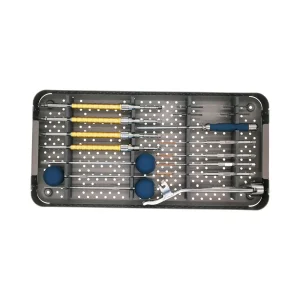
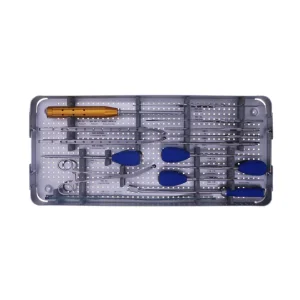
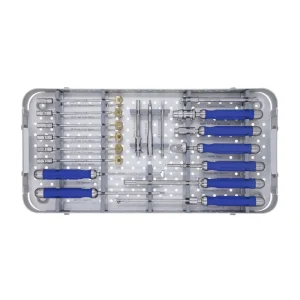
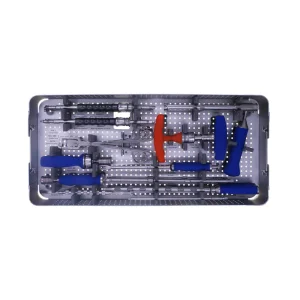
Featured Spinal Fusion & Decompression Instrument Sets
Directly integrated with titanium implants, our surgical instruments are crafted with strict tolerance control to ensure seamless intraoperative handling, ergonomic tactile balance, and prolonged autoclave longevity.
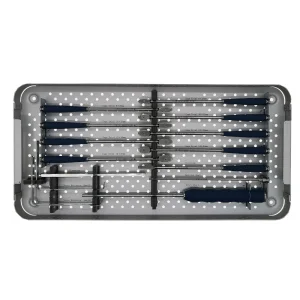
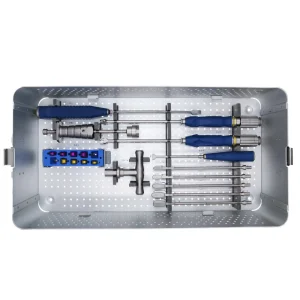
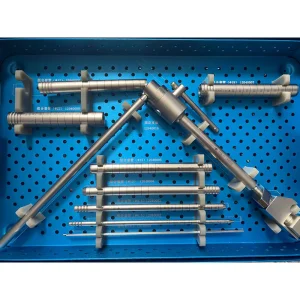
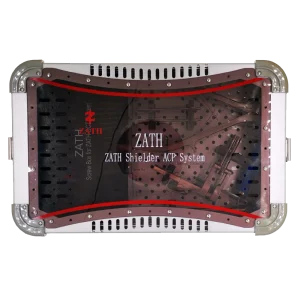
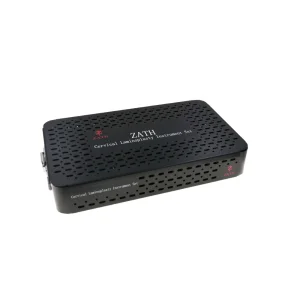
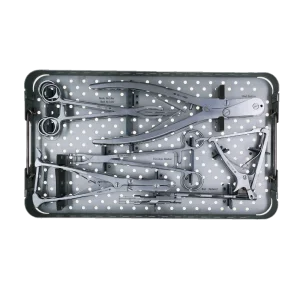
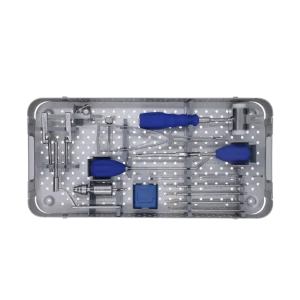
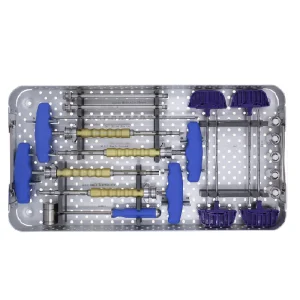
Spinal Surgery Instrumentations: Key Dynamics & Paradigm Shifts
Modern spinal arthrodesis and motion-preservation procedures are defined by minimal tissue disruption, digital guidance, and strict ergonomic demands. The spinal instrument ecosystem has shifted from basic manual tooling to high-precision engineering assemblies.
Minimally Invasive (MIS) Transition
Open spinal exposures are increasingly replaced by tubular retractor systems and percutaneous access corridors. Instrument designers must navigate long-reach lever arms while minimizing mechanical deflection and maintaining tactile biofeedback across narrow incision geometries.
Navigation & Robotic Readiness
Modern spinal sets require factory integration with optical trackers and navigation arrays. Instrument tolerances are strictly calibrated to prevent spatial drift during robotic trajectory placement, ensuring sub-millimeter pedicle cannulation accuracy.
Universal Modularity & Sterile Kits
Hospital Central Sterile Services Departments (CSSD) demand streamlined tray architectures. By combining multiple functional steps into multi-use quick-connect drivers and modular handles, processing cycle costs drop by up to 35% without clinical compromise.
Global Sourcing Needs: Solving Structural Supply Bottlenecks
Hospital networks, tender authorities, and regional orthopedic distributors encounter severe operational frictions when procurement focuses solely on unit price while ignoring lifecycle durability and regulatory conformity.
Eliminating Cross-Batch Incompatibilities Between Implants and Instruments
A primary cause of intraoperative screw stripping and driver slippage is decentralized production: implants sourced from one facility and insertion drivers from another. ZATH resolves this by unifying pedicle screw head geometry and counter-torque driver shafts under identical tight manufacturing tolerances (±0.01mm) with matched lot calibration.
Material Fatigue & Decontamination Resilience
Sub-standard surgical steels degrade quickly under alkaline washers and autoclaves. Our spinal instrument sets utilize surgical-grade 17-4PH stainless steel and passivated Ti6Al4V ELI alloys, providing exceptional resistance to chloride stress cracking, galling, and torsional torque failure during high-stress reduction maneuvers.
Total Cost of Ownership
High durability drivers and reduction sleeves deliver up to 500+ sterilization cycles without recalibration, cutting the total procurement cost of replacement instrument trays over multi-year tenders.
Custom Branding (OEM/ODM)
Laser mark your customized scale indicators, color-coded anodization, localized logos, and custom-molded silicone instrument rack layouts tailored directly to distributor branding specifications.
Rapid Supply Continuity
With centralized raw material reserves and continuous multi-axis wire cutting and CNC milling lines in Beijing, we guarantee standard instrument sets ship within short turnaround cycles.
Rigorous Manufacturing & Regulatory Safeguards
Distributors and hospital systems require airtight compliance documentation. Operating under an accredited ISO 13485 framework, every step from raw bar stock to sterile barrier release is validated and audit-proof.
ISO 13485 Management
A fully audited medical device quality management system covering product design, machining tolerances, cleanroom packaging, and lot-level traceability.
UDEM & CE Certification
Conformity dossiers, Free Sale Certificates (FSC), and complete biomechanical testing reports ready for expedited regional health ministry registrations.
Sterile & Cleanroom Packing
Dual-barrier medical packaging options processed under Class 100,000 cleanrooms provide sterile shelf-ready implants to reduce hospital OR overhead.
Local Registration Files
We provide dedicated regulatory filing support, material certificates, biocompatibility data, and sterilization validation manuals directly to global partners.
Technology Roadmap & Surgical Innovation
To match evolving spinal techniques, ZATH continues investing in next-generation manufacturing technology, smart ergonomics, and advanced patient-matched instrumentation.
Integrated 3-in-1 Systems
Deployment of integrated multi-function thoracolumbar systems that merge pedicle insertion, reduction, and final break-off lock driving into simplified single-pass instrument configurations, reducing soft-tissue exposure.
Carbon-Fiber & Radiolucent Retractors
Integration of high-grade PEEK/CF composites within access channels to provide total radiolucency under intraoperative fluoroscopy and real-time intraoperative 3D imaging navigation.
Smart Sensor-Equipped Distractors
Development of digital interbody distractor instruments with built-in micro-piezoelectric sensors to report real-time endplate pressure vectors, helping prevent cage subsidence during fusion surgery.
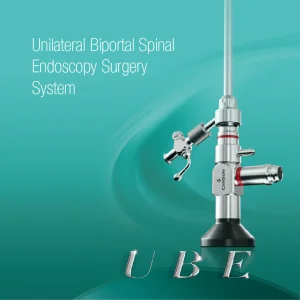
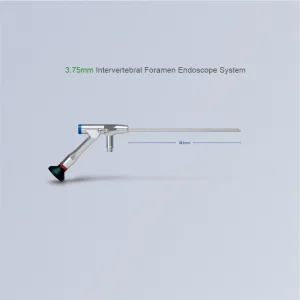
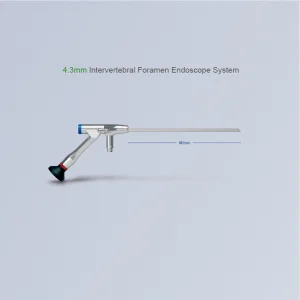
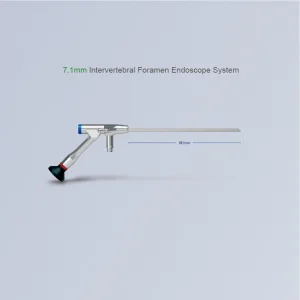
Pedicle Screws, Fixation Trays & Endoscopic Systems
Explore our comprehensive lineup of cervical plates, polyaxial pedicle instrumentation, and full-endoscopic spine surgery systems, all produced in compliance with global quality and technical standards.
Frequently Asked Questions for Spinal Instrument Procurement
Essential technical, clinical, and regulatory details for hospital tenders, surgical coordinators, and prospective distributors.