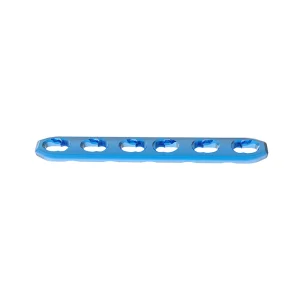
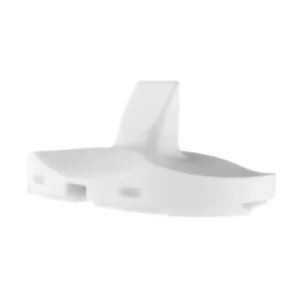
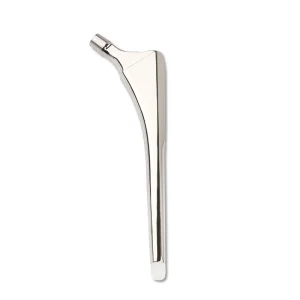
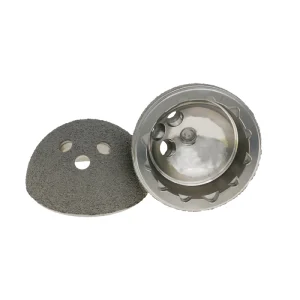
Featured Surgical Instrument Systems
Explore our ISO 13485 certified, high-precision orthopedic instrument sets and specialized implants engineered for optimal clinical outcomes.
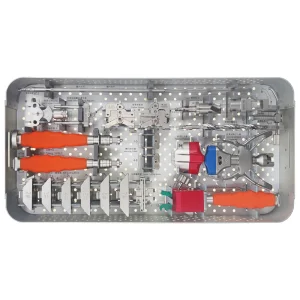
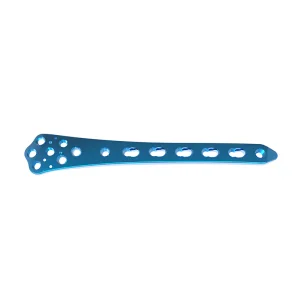
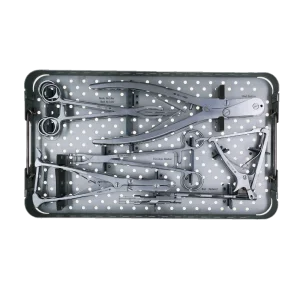
1. Executive Summary & Global Arthroplasty Industry Dynamics
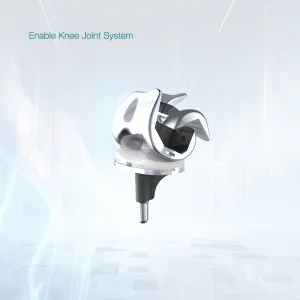
Total Knee Arthroplasty (TKA) remains one of the most clinically successful orthopedic interventions in modern medicine. As global demographic trends lean toward an aging population and higher osteoarthritic prevalence, the structural demand for precision knee joint replacement instruments has accelerated at a CAGR of 6.8% globally.
Modern surgical suites require more than just standard implants; the clinical efficacy of joint reconstruction relies directly on the accuracy, ergonomics, and metallurgical integrity of the surgical instrument set. Instrument kits serve as the critical interface between the surgeon’s biomechanical technique and the long-term fixation of the prosthesis. Consequently, hospital procurement teams, medical device distributors, and OEM buyers are increasingly analyzing the global manufacturing footprint—evaluating high-precision Chinese OEM/ODM hubs alongside traditional Tier-1 Western manufacturers to achieve optimal cost-performance ratios without compromising ISO 13485 regulatory compliance.
This industry report acts as a definitive B2B procurement whitepaper, dissecting the engineering architecture of TKA instrument sets, factory cost structures, local clinical applications, technological integration (including PSI and navigation-assisted jigs), and the supply chain resilience of leading medical manufacturing ecosystems like Beijing ZhongAnTaiHua Technology Co., Ltd. (ZATH).
2. Architectural Breakdown: Anatomy of a Total Knee Instrument Set
A comprehensive Total Knee Replacement (TKA) surgical tray comprises multiple sub-systems designed to handle precise resection of the distal femur, proximal tibia, and patella, while maintaining accurate flexion and extension gap balancing.
Femoral Resection System
Includes Intramedullary (IM) alignment rods, adjustable distal femoral cutting blocks (5° to 7° valgus setup), anterior/posterior 4-in-1 chamfer cutting guides, and femoral sizing gauges. These tools ensure correct femoral rotation relative to the transepicondylar axis.
Tibial Alignment & Resection
Features Extramedullary (EM) and Intramedullary alignment jigs, ankle clamps, posterior slope adjusters (0° to 7° slope capability), and tibial resection guides. High-grade stainless steel construction prevents blade skiving during oscillating saw operations.
Gap Balancing & Trial Components
Tensioning devices, distraction gauges, and trial components (femoral trials, tibial insert trials, and baseplates) ranging across sizes 1 through 8. Allows intraoperative evaluation of coronal stability and range of motion prior to final component implantation.
Metallurgical & Material Science Specifications
Instrumentation durability depends heavily on alloy selection. Certified knee instrument factories utilize specific medical-grade metals designed for high fatigue strength, bio-compatibility, and corrosion resistance under repeated autoclave sterilization cycles:
| Material Standard | Material Type | Primary Instrument Component | Key Mechanical Benefit |
|---|---|---|---|
| ASTM F899 / AISI 630 | 17-4PH Stainless Steel | Osteotomes, Cutting Blocks, Saw Guides | Extreme hardness post-heat treatment (HRC 40-45), zero flex under heavy resection loads. |
| ASTM F136 / ISO 5832-3 | Ti-6Al-4V ELI Titanium Alloy | Trial Implants, Alignment Handles, Sizing Jigs | Lightweight ergonomics, low surgical hand fatigue, anti-glare matte surface finishing. |
| ASTM F2026 | PEEK (Polyetheretherketone) | Trial Insert Liners, Trial Patellar Components | Biocompatible radiolucency, precise trial sizing mimicking UHMWPE implant response. |
| ISO 7153-1 | Martensitic Stainless Steel (420) | Bone Drills, Reamers, Extractors | High edge-retention for sharp cutting teeth, reduced thermal necrosis risk during drilling. |
3. Factory Pricelist Architecture & Global Procurement Cost Breakdown
Understanding factory cost structures enables B2B procurement managers to negotiate realistic pricing while verifying that low-cost suppliers are not compromising on critical manufacturing processes like passivation, heat treatment, or 5-axis CNC machining.
Direct Machining & Tolerances
Multi-axis Swiss CNC turning and 5-axis vertical machining centers account for 35-40% of total instrument cost. Sub-micron tolerances on locking pins and sliding resection jigs ensure zero wobble during bone cutting.
Surface Finishing & Passivation
Laser marking, color anodizing, electropolishing, and citric/nitric acid passivation (ASTM A967) contribute 15-20% of costs, guaranteeing 1000+ autoclave cycles without rusting or scale formation.
Quality Assurance & Regulatory Verification
100% CMM (Coordinate Measuring Machine) dimensional checking, optical comparator validation, and ISO 13485 cleanroom sterilization/packaging add 15% to production costs.
B2B Benchmark Pricelist Matrix (Factory Direct vs. Tier-1 OEM Comparison)
The table below provides an industry benchmark comparing direct Chinese factory OEM/ODM pricing (such as ZATH) against traditional Tier-1 Western brand list prices for complete knee joint instrument systems:
| Instrument Set Classification | Kit Composition (Pieces) | China Factory Direct Price (USD) | Western Tier-1 OEM List Price (USD) | MOQ / Lead Time |
|---|---|---|---|---|
| Standard Primary TKA Instrument Set | 45 - 65 pcs (Container + Instruments) | $3,800 - $6,500 | $14,000 - $22,000 | 5 Sets / 15-20 Days |
| Advanced Gap Balancing / PS Knee Set | 70 - 95 pcs (Full Sizing & Trials) | $6,200 - $9,800 | $22,000 - $35,000 | 3 Sets / 20-25 Days |
| Revision Knee Replacement Instrument Kit | 100+ pcs (Augment Trials, Stem Extensions) | $9,500 - $14,000 | $38,000 - $55,000 | 2 Sets / 30 Days |
| Patient-Specific Instrumentation (PSI) Jigs | 2 Custom Jigs (Femoral + Tibial) | $350 - $650 / set | $1,500 - $2,800 / set | 1 Set / 5 Days (Post-CT Scan) |
| Single-Use / Disposable TKA Cutting Kit | 8-12 Essential Polypropylene/Steel Tools | $280 - $450 / kit | $1,100 - $1,800 / kit | 50 Kits / 10 Days |
4. China Factory Ecosystem: Supply Chain Resilience & Manufacturing Speed
Over the past decade, China’s medical device industrial parks—particularly in Beijing (Zhongguancun Science Park), Jiangsu, and Zhejiang—have evolved from contract component suppliers into end-to-end design and manufacturing powerhouses.
Vertical Raw Material Integration
Direct integration with domestic titanium refine factories and certified medical stainless steel mills eliminates raw material bottlenecks. Chinese factories maintain continuous raw bar stock, avoiding global supply chain delays.
Rapid Prototyping & Customization (ODM)
Utilizing high-speed 5-axis CNC machines and metal 3D printers, factories like Beijing ZATH can transform surgeon sketch modifications into working stainless steel prototype trays within 7 to 10 days.
Scale & Skilled Technical Workforce
Facilities employing hundreds of senior technicians running round-the-clock shift schedules ensure rapid turnaround times on bulk orders—shipping completed, sterile-packaged systems worldwide in 4 to 6 business days.
5. Localized Clinical Application Scenarios & Regional Requirements
Surgical demands vary across different regional healthcare markets. Instrument factory customization must reflect local operating room infrastructures, surgeon preferences, and economic constraints.
Emerging Markets (LATAM, Southeast Asia, Africa)
Clinical Environment: High-volume public general hospitals with centralized sterilization units.
Instrument Requirement: Heavy-duty, robust stainless steel construction (17-4PH) capable of surviving aggressive cleaning protocols and frequent flash-autoclaving. Universal sizing kits reduced to essential items to streamline OR setup times.
North America & Western Europe (ASCs)
Clinical Environment: Ambulatory Surgery Centers (ASCs) prioritizing rapid turnaround and minimal sterilization overhead.
Instrument Requirement: Lightweight ergonomic titanium handles, color-coded trial liners, micro-modular tray organization, and growing adoption of sterile-packed single-use cutting guides.
Middle East & Specialized Private Centers
Clinical Environment: High-end private orthopedic centers emphasizing premium branded aesthetics and customized implants.
Instrument Requirement: Complete ODM white-label laser customization, specialized anti-glare black PVD (Physical Vapor Deposition) coating on cutting blocks, and specialized MIS (Minimally Invasive Surgery) instrumentation sets.
6. Technological Roadmap & Future Outlook (2025–2030)
The total knee instrument sector is rapidly transitioning from mechanical alignment tools toward digitized, sensor-driven, and patient-tailored surgical systems.
High-Precision Modular Mechanical Sets
Universal instrument trays utilizing micro-adjustable extramedullary/intramedullary jigs, laser-etched sizing indicators, and quick-connect silicone handles. Focus on ergonomic efficiency and absolute structural rigidity.
Smart Gap Sensors & Additive PSI Jigs
Integration of wireless micro-load sensors into trial inserts to deliver real-time compartmental pressure dynamic readings on digital OR displays. Expanded adoption of 3D-printed Patient-Specific Instrumentation (PSI) for complex deformity cases.
Robotic-Assisted & Navigation Integration
Hybrid surgical sets featuring optical tracking arrays and robotic arm blade holders. Mechanical instrument factories are collaborating directly with surgical robotics developers to supply robotic-compatible cut guides and registration pointers.
7. Global Compliance, Regulatory Assurance & Quality Control
Navigating medical device clearance pathways requires full transparency from factory manufacturing lines. Top-tier manufacturers supply complete technical documentation dossiers to streamline regional distributor registrations.
Quality System Standards
Full adherence to ISO 13485:2016 Quality Management Systems for medical devices. Manufacturing operations undergo strict internal and third-party audits covering design control, cleanroom environment monitoring (ISO Class 7/8), and batch release protocols.
CE MDR & Regulatory Clearance
Technical Documentation Files (TDF) formatted for European Union Medical Device Regulation (EU MDR 2017/745) compliance, Free Sale Certificates (FSC), and FDA 510(k) pathway technical support for international importing partners.
Biocompatibility & Sterilization Validation
Validation reports for cleaning, packaging, and sterilization processes adhering to ISO 17665 (Moist Heat Sterilization) and ISO 10993 (Biological Evaluation of Medical Devices), guaranteeing zero residual machining oils or particulate contaminants.
Frequently Asked Questions (B2B Procurement & Technical Q&A)
Complete Orthopedic Product Portfolio
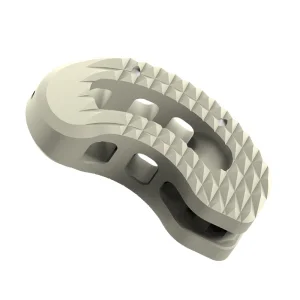
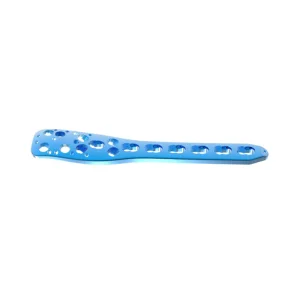
Browse additional specialized orthopedic devices, trauma plates, spinal cages, and sports medicine fixation systems available for global export.