
Joint System
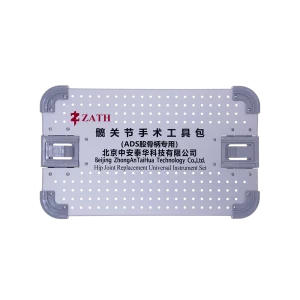
Famous Surgical use ADS Total Hip Joint Replacement Instrument Set Suppliers, Quotes
View Specifications
Explore 8 key clinical toolkits precision-machined under ISO 13485 oversight, perfectly calibrated for joint replacement, revision surgery, and advanced spinal fusion.
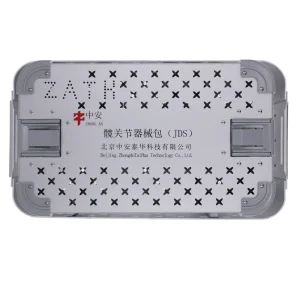
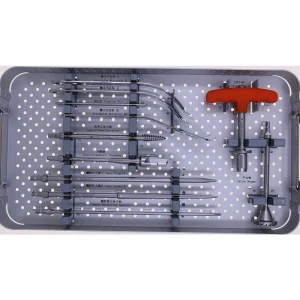
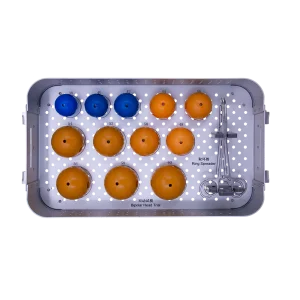
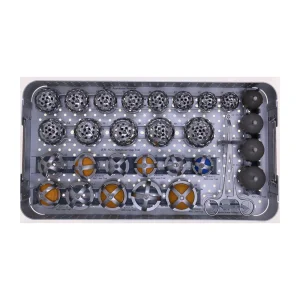
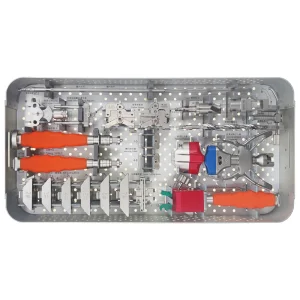
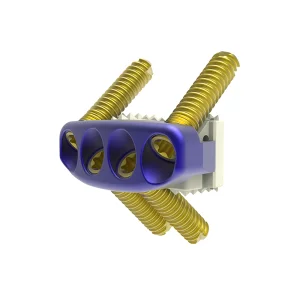
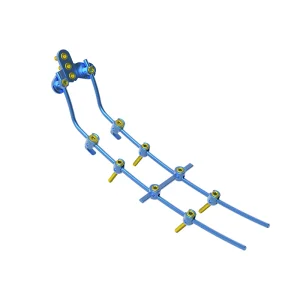
From monolithic stainless assemblies to ergonomic, high-fatigue PEEK-titanium hybrid platforms, the surgical instrumentation sector is redefining operative speed and implant survivorship.
Modern orthopedics demands that surgical instruments do far more than merely deliver hardware into a bony bed. Contemporary clinical literature underscores a direct relationship between operating room (OR) turnaround time, soft-tissue disruption, and systemic surgical site infection (SSI) rates. Surgical instrument set manufacturers are radically revamping trays to streamline workflow. Where a standard primary total hip arthroplasty (THA) or total knee arthroplasty (TKA) previously necessitated 6 to 8 full sterilization trays, modular engineering has compacted critical broaches, trial heads, alignment guides, and femoral impactors into 2 to 3 high-density, multi-layer sterilization cases.
This streamlining is augmented by advanced material engineering. Conventional martensitic stainless steels (such as AISI 420 or 440) are increasingly hybrid-bonded with surgical-grade polyphenylsulfone (Radel®), carbon-fiber-reinforced PEEK, and aerospace-spec Grade 5 Titanium (Ti-6Al-4V ELI). These combinations mitigate total tray weight by up to 35%, drastically decreasing ergonomic fatigue for scrub technicians and orthopedic surgeons while maintaining exceptional structural integrity across thousands of high-temperature autoclaving cycles (134°C vacuum steam).
Addressing Ambulatory Surgical Centers (ASCs) through procedure-specific, sterile pre-packaged kits that eliminate localized hospital CSSD processing costs and avoid missing instruments.
Laser-annealed 2D DataMatrix Unique Device Identification (UDI) compliant with EU MDR 2017/745 and US FDA regulations, enabling automated lifecycle tracking per surgical intervention.
Application of Diamond-Like Carbon (DLC) and Titanium Nitride (TiN) physical vapor deposition coatings to provide ultra-low friction, glare reduction under surgical lamps, and edge retention.
How international orthopedic distributors, health networks, and tender committees audit manufacturing partners to avoid supply bottlenecks and regulatory exposure.
Distributor margins are heavily dictated by time-to-market. Enterprise buyers prioritize manufacturing partners who furnish comprehensive technical documentations: ISO 13485 certification, CE technical dossiers conforming to MDR Class IIa/IIb requirements, biocompatibility test records (ISO 10993 series), and validated reprocessing instructions (ISO 17664) for cleaning, disinfection, and steam sterilization parameters.
Hospitals run diversified inventories. An instrument set manufacturer must provide tight spatial and dimensional compatibility with major standardized systems. Quick-coupling hex connections (AO small/large style, Zimmer-style, Hudson style) must withstand extreme torsional strain during screw insertion and femoral reaming without stripping, galling, or intraoperative failure.
Procurement teams evaluate lifetime durability rather than purely initial purchase price. Instrument sets made of uncertified low-grade steel degrade rapidly under repeated chemical decontamination, causing pitting corrosion and hinge seizure. High-tier OEMs utilize custom vacuum heat treatment to maintain 48–54 HRC hardness, extending tool longevity up to 1,200 sterilization cycles.
When tender contracts are won, hospitals cannot wait 6 months for consignment inventory. Tier-1 suppliers like Beijing ZhongAnTaiHua Technology Co., Ltd. (ZATH) maintain flexible multi-axis CNC cells, localized raw material stockpiles, and bonded warehouses capable of shipping standard or custom sets within 4 to 6 business days internationally via express couriers.
How Beijing ZhongAnTaiHua Technology Co., Ltd. leverages state-of-the-art multi-axis CNC, vacuum heat treatments, and automated metrology to guarantee sub-micron mechanical accuracy.
Complex geometries such as intramedullary nail distractor brackets, spinal polyaxial screw drivers, and curved femoral broaches are crafted in single-setup machining cells, eliminating cumulative indexing tolerances.
Precision temperature recipes transform martensitic crystal formations in bone drills and osteotomes, preventing edge blunting and eliminating risk of micro-chipping inside the operational surgical site.
Coordinate Measuring Machines (CMM) and non-contact structured optical scanners verify taper tolerances (e.g., 12/14 Morse tapers) down to ±0.003 mm, guaranteeing seamless implant-instrument match.
ISO Class 7/8 controlled cleanrooms ensure complete bioburden monitoring prior to sterile barrier sealing, supporting infection prevention standards in strict regional public tenders.
Purpose-built surgical sets optimized for diverse OR workflows, regional anatomical variations, and emergent trauma interventions.
Equipped with spherical acetabular reamers, offset broach handles, modular femoral trial heads, and ergonomic cup positioners designed for both direct anterior (DAA) and posterior approaches.
Comprehensive extraction kits featuring universal slap hammers, broken screw extractors, cemented mantle splitters, and distal reamers capable of managing high-difficulty implant removals without cortical perforation.
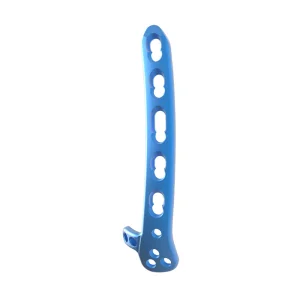
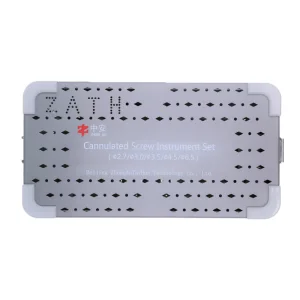
Multi-functional trauma sets accommodating variable-angle locking plates and cannulated screws. Features self-centering bone forceps, radiolucent carbon fiber aiming arms, and quick-exchange drill guides.
Authoritative engineering, metallurgical, and regulatory clarifications provided by ZATH manufacturing directors.
Explore 8 complementary trauma and arthroplasty systems manufactured to exacting tolerances for comprehensive hospital orthopedic tenders.
Partner directly with Beijing ZhongAnTaiHua Technology Co., Ltd. for fully certified ISO 13485 surgical sets, direct OEM engineering support, and competitive factory-direct supply chains.