
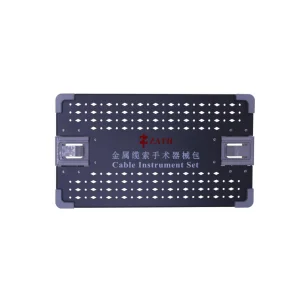
Surgical Solutions Portfolio
Standard Fixation Implants & Specialized Instrument Assemblies
Engineered for high tension tolerance, dynamic anatomical stabilization, and optimized tactile feedback in surgical reconstruction.
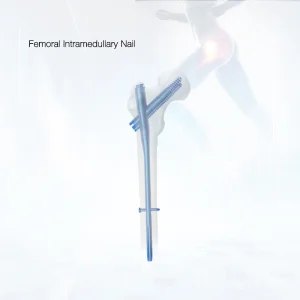
OEM Surgical Hospital Use InterZan Titanium Interlocking Nail for Femur Supplier, Factories
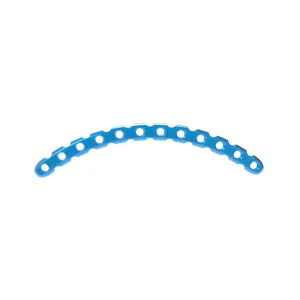
Custom Curved Reconstruction Locking Plate Factories, Service
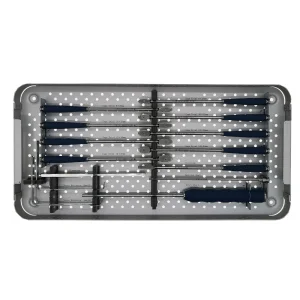
Famous Spine Surgery Thoracolumbar PLIF Cage Instrument Set Supplier, Suppliers
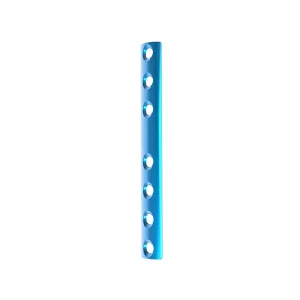
Cheap Metacarpal & Metatarsal Fractures 1/3 Tubular Locking Plate Factories, Service
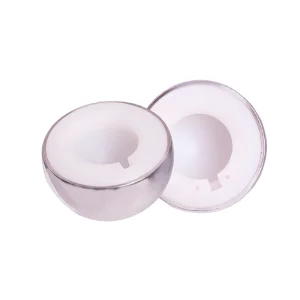
Wholesale FDAH Bipolar Acetabular Cup Medical Hip Joint Prosthetics Companies, Product
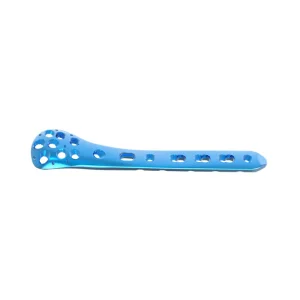
Cheap Proximal Lateral Humerus Locking Compression Plate II Supplier, Companies
Industry Architecture
Macro-Industry Challenges & The Evolution of Cerclage Pin & Cable Systems
Addressing structural failure modes in revision arthroplasty, periprosthetic fractures, and complex spiral fractures through multi-filament biocompatible engineering.
In modern orthopedic and trauma surgery, the clinical management of periprosthetic fractures (Vancouver B1, B2, and C types), long-bone spiral fractures, and non-union scenarios has emerged as a high-stake surgical challenge. Traditional single-strand monofilament wires, while historically prevalent, suffer from significant structural limitations: limited fatigue life, propensity to fray under sustained cyclical loading, notch sensitivity during mechanical crimping, and high contact pressure causing localized periosteal devascularization. Leading orthopedic manufacturing companies have fundamentally pivoted toward multi-strand braided cerclage cables and anatomically optimized Steinman and Kirschner wire configurations to address these structural deficits.
From an orthopedic engineering perspective, a high-performance surgical cable requires an optimal balance between ultimate tensile strength (UTS), bending flexural modulus, and biological inertness. Utilizing medical-grade titanium alloy (Ti-6Al-4V ELI conforming to ASTM F136) and premium implant-grade stainless steel (316LVM conforming to ASTM F138), modern pin and cable assemblies distribute circumferential hoop stresses uniformly over bone cortices. This design prevents localized bone resorption and preserves micro-vascular blood supply around periosteal regions—a critical variable for osteogenesis and callus formation.
Biomechanical Insight: Hoop Stress vs. Periosteal Perfusion
Standard monofilament wires demonstrate significant point-load stress concentrations, cutting into softened osteoporotic bone. Multi-filament braided cables (often constructed in 7x7 or 19x7 structural braid architectures) yield high flexibility while maintaining tensile strengths exceeding 1,200 MPa, allowing uniform radial hoop compression without causing thermal necrosis or circumferential devascularization.
Dynamic Elastic Modulus
Braided titanium cable configurations closely mimic physiological bone deformation, mitigating stress shielding and reducing incidence of premature implant fatigue failure.
Optimized Crimp Biomechanics
Advanced integrated crimps ensure secure mechanical closure without introducing sharp notch-stress concentrations that cause intra-operative wire severance.
Uniform Radial Pressure
Even distribution of circumferential forces maintains periosteal perfusion, significantly lowering non-union rates in geriatric and osteoporotic fracture populations.
Global Market Analysis
Global Commercial Dynamics: Procurement, Supply Chains & Regulatory Shifts
How international hospital groups, health authorities, and distributor networks navigate cost pressures, MDR compliance, and supply chain continuity.
Consolidation & The Rise of Full-Chain OEM/ODM Hubs
Global orthopedic supply chains have experienced unprecedented volatility due to regulatory shifts such as the EU Medical Device Regulation (EU MDR 2017/745) and localized value-based procurement schemes. Healthcare providers can no longer tolerate high price margins charged by conventional multinational conglomerates. Consequently, large distributor networks seek verified, direct-tier manufacturers who integrate multi-axis CNC machining, wire EDM cutting, automated cleanroom packaging, and in-house sterilization validation under one roof.
Audit-Ready Quality Management Systems
A reputable Pin and Cable manufacturing company must maintain documented audit readiness across multiple jurisdictions. Beijing ZhongAnTaiHua Technology Co., Ltd. (ZATH) has established an end-to-end quality paradigm since 2009 in Beijing's Zhongguancun Science and Technology Park. Operating under ISO 13485, Free Sale Certification (FSC), and international regulatory approvals, raw-material mill certificates, spectroscopic alloy tests, tensile fatigue curves, and cleanroom bioburden logs are maintained across the entire product lifecycle.
Surgical Indications
Localized Clinical Scenarios & Surgical Technique Integrations
Field-proven utilization profiles spanning periprosthetic hip revisions, patellar tension-band mechanics, and complex long-bone reconstruction.
Vancouver B1 Periprosthetic Femoral Fractures
When a stable femoral stem is present, cerclage cables provide non-invasive circumferential stabilization without necessitating cortical screw penetration near the implant mantle, avoiding stem scratching and cement disruption.
Patellar & Olecranon Tension-Band Wiring
Parallel Kirschner pins coupled with tensioned figure-eight cerclage cables convert tensile distracting forces generated by the quadriceps or triceps into dynamic compressive forces across the articular fracture surface.
Trochanteric Osteotomy Reattachment
In complex revision total hip arthroplasty (THA), securing the resected greater trochanter requires multi-plane cable grip plates and cross-cabling to resist superior migration driven by the abductor musculature.
Compliance Framework
Localization Support, Regulatory Dossiers & Compliance Assurance
Minimizing registration timelines and legal overhead for distributors operating in Latin America, Southeast Asia, the Middle East, and Europe.
Full Common Technical Dossiers (CTD)
ZATH provides localized partners with complete technical documentation, including raw material biocompatibility tests (ISO 10993 series), cytotoxicity profiles, sterilization validation reports (ISO 11137), and accelerated aging data.
Direct Sterile Operating Room Packaging
Pre-packaged double-sterile barrier blister packs with multi-year shelf-life stability eliminate internal hospital processing bottlenecks, reducing contamination vector risks and accelerating turnaround in sterile processing departments.
Rapid Consignment & Replenishment SLA
Partnering with premier international express networks (DHL, FedEx, UPS), ZATH supports responsive hospital consignment buffers, providing air-dispatched replenishment within 4 to 6 business days globally.
Next-Generation Roadmap
Engineering Trajectory: Next-Generation Fixation Technologies
How digital tension sensing, additive manufacturing, and bioabsorbable polymers are reshaping orthopedics.
Phase 01: Present
Calibrated Tensile Tensioners
Integration of real-time ergonomic tension measurement ratchets inside the instrument trays, preventing surgeon-dependent variations in cable tightening.
Phase 02: 2026-2027
3D-Printed Trabecular Cable Sleeves
Deploying additively manufactured porous titanium interfaces between bone and cable to foster osteointegration and eliminate mechanical fretting.
Phase 03: 2027-2028
Bioabsorbable Magnesium Pin Systems
Transitioning temporary fixation Kirschner wires toward bioresorbable magnesium alloys that dissolve safely in vivo, negating surgical removal interventions.
Phase 04: Horizon
Smart Sensor-Enabled Healing Telemetry
Micro-strain gauges integrated into the cerclage crimp body to provide non-invasive telemetric confirmation of bone union to mobile clinician consoles.
Technical & Commercial FAQ
Frequently Asked Questions: Pin & Cable Procurement
In-depth answers covering material specifications, regulatory dossiers, instrument interchangeability, and OEM capabilities.
What is the clinical and biomechanical difference between monofilament wire and braided surgical cable?
Monofilament cerclage wire consists of a single solid metallic strand. When tightened via mechanical twisting, it creates localized stress peaks at the twist site, resulting in unpredictable fatigue thresholds and high notch sensitivity. Additionally, monofilament wire creates narrow, knife-like pressure concentrations against bone cortices. Braided surgical cable utilizes multi-filament micro-strands (typically 49 individual wires arranged in 7x7 structural braids) that maximize flexibility and yield high ultimate tensile strengths while preventing catastrophic notch failures. Multi-filament cables distribute radial compression across a broader surface, protecting periosteal blood circulation.
How does ZATH ensure raw material traceability and manufacturing quality under ISO 13485?
Every production batch originates from verified medical-grade titanium alloy (Ti-6Al-4V ELI conforming to ASTM F136) or stainless steel (316LVM conforming to ASTM F138). Raw materials are received with original chemical mill test certificates and re-verified via spectrographic analysis. Production is managed across six controlled steps: material intake, wire EDM cut-off, high-precision CNC contouring, multi-dimensional coordinate measuring (CMM) testing, ISO Class cleanroom packaging, and lot-coded storage. Every shipped package maintains an unbroken batch history record.
Can ZATH surgical cable instruments be utilized with plates and systems from other orthopedic manufacturers?
Yes. ZATH Cable Instrument Set Type II and Set III feature modular designs engineered for universal utility. The tensioning devices, cable passers, crimpers, and cutters accommodate standard diameter cables (typically Ø1.5 mm, Ø1.8 mm, and Ø2.0 mm) and can interface smoothly alongside existing anatomical reconstruction locking plates, curved periprosthetic plates, and intramedullary nail systems.
What scope of OEM and ODM customization is provided for international distributors?
ZATH supports comprehensive private label (OEM) and custom-engineered (ODM) manufacturing. This includes laser marking of private branding, proprietary dimensional cable sizing, custom crimp geometry, bespoke anodized color combinations for instrument trays, multilingual packaging designs, and targeted documentation to meet regional health ministry filing standards.
What lead times and logistical frameworks are guaranteed for urgent clinical consignments?
Standard product lines and instrument configurations are maintained in stock within temperature- and humidity-controlled facilities in Beijing. Expedited international orders are processed and handed over to global air couriers (DHL, FedEx, UPS, TNT) within 24 to 48 hours, enabling typical delivery within 4 to 6 business days across most major international destinations.
Complementary Clinical Lines
Trauma, Spinal Fixation & Sports Medicine Implants
Rigid biomechanical construct options engineered to operate synergistically with orthopedic pin, cable, and locking systems.
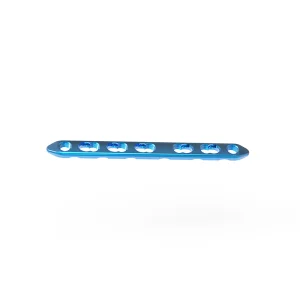
Custom Radius-Ulna Limited Contact Locking Compression Plate Factory, Exporter
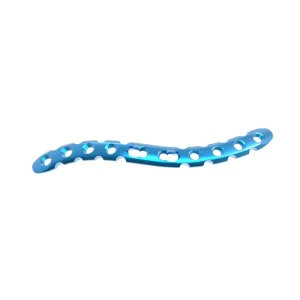
Wholesale Clavicle Reconstruction Locking Compression Plate Supplier, Exporters
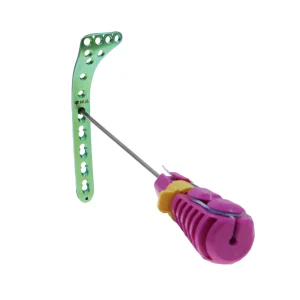
CE Certification CE Approved Hospital Use All Suture Anchor Titanium With Needle Factory, Companies
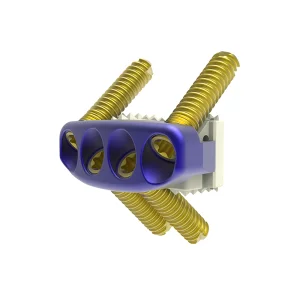
Buy ZP Cervical Cage Manufacturer CE FSC ISO Insured Supplier Exporter, Company
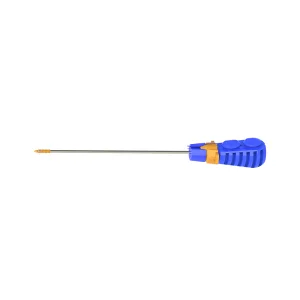
Wholesale Titanium Alloy knotless all adult titanium suture anchor with needle Pricelist, Products
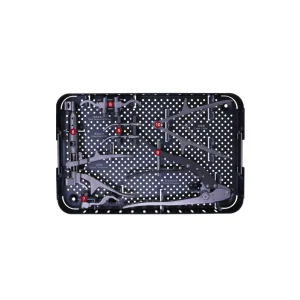
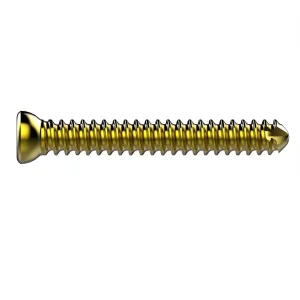
Best 2.0mm 2.7mm 3.5mm 4.5mm Cortical Screw Suppliers, Exporters
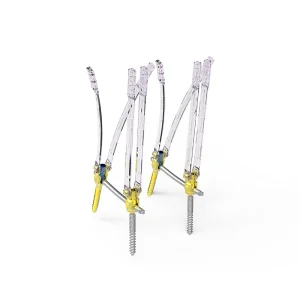
ODM Spine Titanium Minimally Invasive Pedicle Screws Manufacturer, Pricelist