Precision Knee Joint Implants & Surgical Platforms
Engineered for high flexion, long-term tribological wear resistance, and anatomical congruence. Explore our sterile-barrier packaged knee and hip replacement components configured for immediate enterprise distribution.
Navigating Shifts in High-Volume Joint Replacement Procurement
The global total knee arthroplasty (TKA) market is undergoing an unprecedented structural transition. Projected to reach $11.8 billion valuation by 2030, growth is accelerated by an aging worldwide population, the increasing prevalence of advanced osteoarthritis, and lifestyle expectations among active seniors. Concurrently, public healthcare systems and private Group Purchasing Organizations (GPOs) are implementing severe cost-containment measures.
From national Volume-Based Procurement (VBP) mandates in Asia to DRG bundle payments across the European Union and the rapid migration of arthroplasty procedures to Ambulatory Surgery Centers (ASCs) across the Americas, distributors face intense margin pressure. Sourcing from Western Tier-1 conglomerates often subjects regional suppliers to restrictive minimum order quotas, escalating ASPs, and lead-time volatility.
ZATH (Beijing ZhongAnTaiHua Technology Co., Ltd.) resolves this structural bottleneck. Founded in 2009, we offer global partners direct Tier-1 engineering capabilities: premium Cast and Forged CoCrMo femoral components, titanium alloy tibial baseplates, and advanced medical-grade UHMWPE inserts at scalable industrial margins. We bridge the gap between uncompromising clinical safety and tender competitiveness.
| Macro Procurement Factor | Traditional Multi-Tier Sourcing | ZATH Direct Factory Ecosystem |
|---|---|---|
| Lead Time (Standard TKA) | 16–24 Weeks (Subcontracted) | 4–6 Weeks (Direct CNC Cell) |
| Sterilization Integrity | Non-sterile or 3rd Party EtO | 100% In-House Cleanroom Packaging |
| Batch Traceability | Dispersed Paper Records | Direct Laser UDI & Mill Spec Archiving |
| OEM/ODM Mold Customization | Prohibitive NRE Capital Costs | Agile In-House Tooling & 3D Prototyping |
| Regulatory Support Files | Generic CE Declaration | Complete STED Technical Dossiers |
Engineering Longevity: Advanced Metallurgy & Wear Kinetics
The success of artificial knee arthroplasty depends on reducing volumetric polyethylene wear, minimizing edge-loading contact stress, and ensuring osseointegration. Here is how our manufacturing science guarantees performance.
Cobalt-Chromium-Molybdenum (CoCrMo) Femoral Kinematics
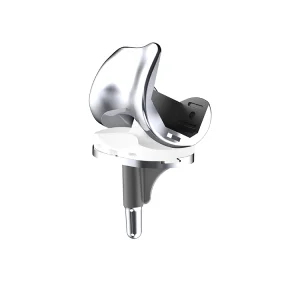
Manufactured in strict adherence to ASTM F75 / ISO 5832-4 standards. Our precision automated vacuum-furnace casting and high-speed CNC milling produce femoral components with surface roughness Ra < 0.02 µm.
- High fatigue endurance under eccentric dynamic loads exceeding 10 million cycles (ISO 14243).
- Optimized trochlear groove design promotes smooth patellofemoral tracking and reduces anterior knee pain.
- Asymmetric multi-radius coronal profiles enhance stability from full extension through 135° deep flexion.
Cross-Linked UHMWPE & Antioxidant Stabilization
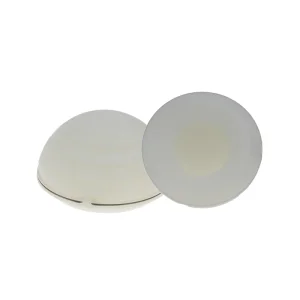
Tibial inserts and all-poly patellar components machined from medical-grade GUR 1020 / 1050 ultra-high-molecular-weight polyethylene, enhanced with controlled gamma irradiation cross-linking.
- Controlled cross-linking achieves up to 82% reduction in microscopic wear debris compared to conventional PE.
- Elimination of free radicals through thermal annealing prevents in vivo biological oxidation and embrittlement.
- Locking mechanisms with high push-out and rotational resistance eliminate backside micro-motion wear.
Titanium Ti6Al4V-ELI Osseointegrative Trays
Forged Ti-6Al-4V ELI (ASTM F136) tibial baseplates deliver an elastic modulus closer to cancellous bone, dramatically lowering stress shielding across proximal tibial resections.
- Macro-textured underside geometry and keel stabilization fins maximize initial press-fit bone purchase.
- Optional plasma-sprayed pure Titanium (Ti) and Hydroxyapatite (HA) dual-coatings support cementless integration.
- Universal taper and modular locking interface ensure interchangeability with diverse insert thicknesses.
Vertically Integrated CNC & Cleanroom Manufacturing
From metallurgical bar stock receipt to gamma-sterilized terminal packaging, ZATH controls every manufacturing variable in-house. Our facility eliminates reliance on unregulated subcontractors.
1. Mill Raw Material Control
Certified medical-grade bar stocks with lot-specific chemical analysis, tensile testing, and grain size verification (ASTM F136, F75, F138). Pre-production ultrasonic flaw detection ensures zero internal micro-voids.
2. 5-Axis Simultaneous CNC
Automated Swiss and German multi-axis machining centers create complex cam/post profiles, locking channels, and porous surfaces with tolerances held within ±0.005 mm (5 microns).
3. Automated Micro-Polishing
Multi-stage robotic abrasive buffing and electrochemical polishing generate an ultra-low-friction mirror finish on CoCrMo articular contours, minimizing initial friction against the UHMWPE articulating surface.
4. ISO Class 7 Cleanroom & Pack
Ultrasonic solvent degreasing followed by medical-grade packaging inside certified cleanrooms. Multi-layer Tyvek/PET barrier blister packs with validated ethylene oxide (EtO) or Gamma irradiation sterilization (ISO 11137).
| Kinematic System Feature | Cruciate Retaining (CR) | Posterior Stabilized (PS) |
|---|---|---|
| PCL Management | Preserved anatomical PCL | Resected PCL replaced by spine/cam |
| Bone Resection Depth | Minimal bone resection needed | Intercondylar box cut required |
| Flexion Stability | Patient proprioception preserved | Guided femoral rollback up to 140° |
| Primary Clinical Indication | Intact posterior cruciate ligament | PCL deficiency, severe contracture |
| Instrument Tray Footprint | 3 Core Lightweight Trays | 4 Precision Modular Trays |
Cruciate-Retaining (CR) vs. Posterior-Stabilized (PS) Modularity
Surgeons worldwide remain divided between preservation of natural soft-tissue tension via Cruciate Retaining (CR) implants and predictable femoral rollback achieved through Posterior Stabilized (PS) spine-and-cam mechanics. ZATH's knee replacement platforms are engineered on a unified femoral geometry that accommodates both modalities with zero compromise.
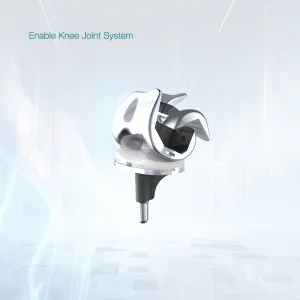
Our Enable Total Knee System features an optimized femoral coronal curvature that minimizes contact stress across all degrees of flexion. The deepened patellar groove provides stable tracking even in high-flexion conditions (up to 145°), preventing patellar clunk syndrome and reducing extensor mechanism tension.
To match diverse patient morphotypes—from Caucasian broad skeletons to narrower Asian and Latin American distal femoral profiles—our factory provides proportional medio-lateral and antero-posterior sizing increments. This prevents component overhang or bone under-coverage, reducing postoperative soft-tissue impingement.
International Regulatory Support & Dossier Preparedness
Market authorization is the ultimate gateway for orthopedic distributors. ZATH operates a dedicated Regulatory Affairs (RA) team that prepares comprehensive STED (Summary Technical Documentation) for partner submissions worldwide.
ISO 13485:2016 Certified QMS
Our quality management system is independently audited and certified under ISO 13485:2016 for orthopedic implant design, CNC precision fabrication, surface finishing, and sterile packaging validation.
- Rigorous incoming raw material verification (spectrometry, metallography).
- In-process coordinate measuring machine (CMM) dimensional verification.
- Class 10,000 / ISO Class 7 cleanroom environmental particle & bioburden monitoring.
MDR & FDA 510(k) Ready Test Dossiers
We supply full bench testing documentation compliant with international standards, helping distributors streamline their national regulatory clearances.
- Dynamic fatigue testing data up to 10 million cycles per ISO 14243-1/2/3.
- Biocompatibility test reports covering cytotoxicity, sensitization, and genotoxicity (ISO 10993 series).
- Sterilization validation packages compliant with ISO 11137 (Gamma) and ISO 11135 (EtO).
Global Free Sale & Tender Support
Accelerate public tender entries with factory-authenticated administrative documentation customized to your country's Ministry of Health regulations.
- Certificate of Free Sale (CFS / FSC) issued and authenticated.
- Authorized Representative (EC REP) guidance and technical support.
- UDI barcode integration (GS1 standards) for hospital inventory traceability.
Arthroplasty Technology Roadmap & 2030 Horizon
Orthopedic surgery is shifting from standardized implants toward customized, digitally aligned reconstruction. Here is our continuous development pipeline spanning additive manufacturing, navigation instrumentation, and sensor telemetry.
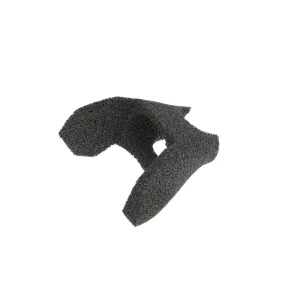
Additive manufacturing of trabecular titanium sleeves and cones with 65–75% interconnected porosity (pore size 400–600 µm), replicating natural trabecular bone architecture to resolve severe metaphyseal bone defects in revision TKA.
Next-generation blended α-tocopherol (Vitamin E) UHMWPE resins that quench free radicals without post-radiation re-melting, preserving optimal mechanical tensile strength while driving wear rates below 5 mg/million cycles.
Pre-calibrated surgical arrays and patient-specific cutting guides (PSI) based on preoperative 3D CT reconstructions. Universal adapter kits optimized for leading robotic surgical arms and optical navigation platforms.
Disposable micro-sensor tibial trial inserts that wirelessly broadcast medial-lateral ligament balance, real-time compartment pressure, and contact center dynamics to operating room tablet monitors during trial reduction.
Frequently Asked Questions for Joint Arthroplasty Sourcing
Essential regulatory, technical, logistics, and private-label details for hospital group purchasing organizations and medical equipment distributors.
What materials are used in your knee femoral components and tibial baseplates?
Our femoral components are cast or forged using vacuum-melted Cobalt-Chromium-Molybdenum (CoCrMo) alloy conforming strictly to ASTM F75 / ISO 5832-4, delivering extreme scratch resistance and mirror-like articulation. Our tibial baseplates are machined from high-purity Titanium alloy Ti-6Al-4V ELI conforming to ASTM F136 / ISO 5832-3, offering excellent bone-matching elasticity and biological tolerance.
How does ZATH validate the wear rates of its tibial inserts?
Tibial inserts undergo multi-million cycle dynamic wear simulation on multi-axis knee simulators in accordance with ISO 14243 standards under physiological calf serum lubrication. Gravimetric wear measurements and microscopic profilometry confirm that our highly cross-linked UHMWPE inserts exhibit minimal volumetric wear, dramatically lowering risk of particle-induced osteolysis.
Do you supply matched surgical instrumentation sets alongside implants?
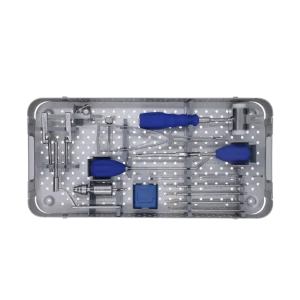
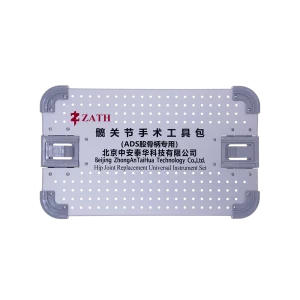
Yes. Every joint system is backed by dedicated, autoclaved, hard-anodized surgical instrument sets: femoral cutting blocks (4-in-1 or conventional), intramedullary and extramedullary tibial alignment guides, patella reamers, and trial reduction components. Instrument sets are engineered from surgical stainless steel (17-4PH / 420) and medical-grade polyphenylsulfone (Radel).
What sterile packaging validation standards are maintained?
All sterile implant lines are enclosed within dual-barrier Tyvek and thermoformed PETG blister pack units packaged inside certified ISO Class 7 cleanrooms. Validated under ISO 11607-1/2, our sterile barrier packaging maintains complete seal integrity and microbial impermeability for a shelf life of 5 years.
What is the typical production lead time for large distributor orders?
For regular inventory lines and standard size configurations, dispatch takes 5–10 business days. For bulk customized production lots or regional OEM custom-branded programs, production cycles average 4 to 6 weeks, supported by express priority air freight logistics via DHL, FedEx, TNT, or UPS with door-to-airport customs tracking.
Can ZATH provide private label OEM or ODM customization for local brands?
Yes. We provide complete OEM/ODM turnkey capabilities: laser-marking of distributor logos, unique part numbering, customized tray layouts, specialized dimensional runs, custom packaging artwork, and localized instruction for use (IFU) translation to satisfy target market regulatory bodies.
What documentation is provided to support our in-country product registration?
We supply a complete regulatory support dossier including our ISO 13485:2016 certificate, Certificate of Free Sale (CFS), material mill certificates, biocompatibility test results (ISO 10993), biomechanical wear/fatigue test data (ISO 14243), sterilization validation protocols, and comprehensive risk analysis reports (ISO 14971).
How does your factory accommodate anatomical variations in diverse populations?
Our implant geometry incorporates morphological databases spanning European, Asian, and Latin American distal femoral profiles. Sizing runs feature fine AP and ML dimensional increments, narrower anterior flanges, and proportional tibial keels, allowing surgeons to match anatomy closely without component overhang or soft tissue impingement.
Integrated Arthroplasty, Trauma & Spinal Ecosystem
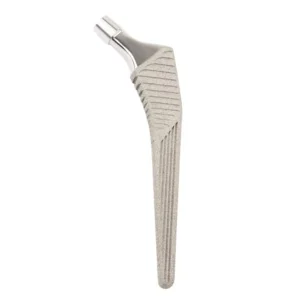
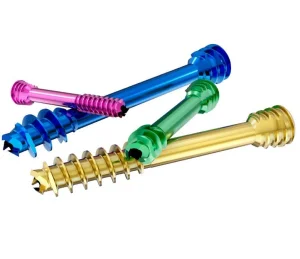
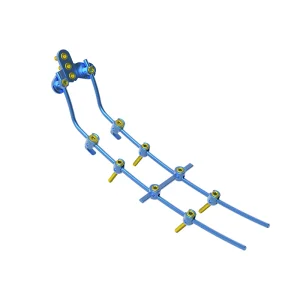
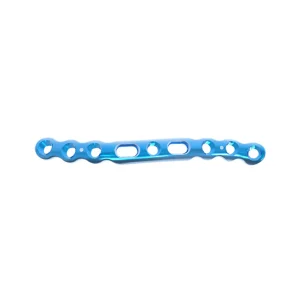
In addition to our flagship knee replacement platforms, ZATH produces clinical implant systems across hip reconstructive arthroplasty, complex trauma fracture fixation, and spinal instrumentation.