Featured Trauma & Reconstruction Product Platforms
Precision-machined fracture fixation devices, spinal assemblies, and trauma instrumentation manufactured under unified cleanroom protocols.
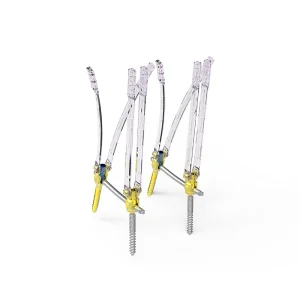
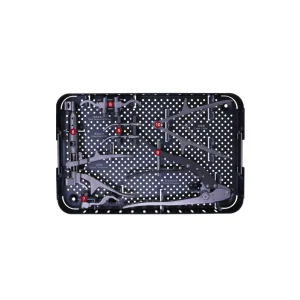
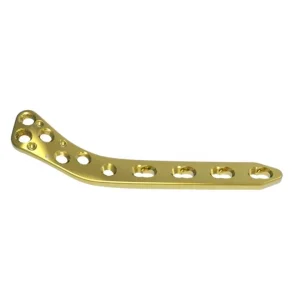
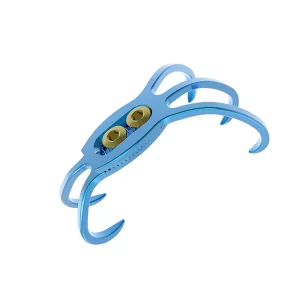
Commercial Landscape & Global Demand for Cannulated Screws
Evaluating macroeconomic drivers, geriatric fracture incidences, and the clinical evolution toward percutaneous, minimally invasive osteosynthesis.
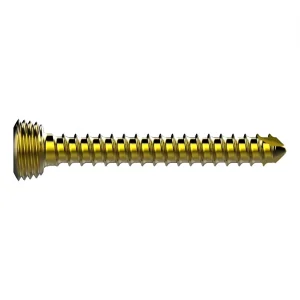
Cannulated screws represent the cornerstone of modern orthopedics. By allowing precise guidewire trajectory under intraoperative fluoroscopy before driving the hollow implant, surgical margins are protected, periosteal vascular stripping is drastically minimized, and operating room workflow is standardized across emergent fracture reduction protocols.
Aging Demographics & Fragility Fractures
With global life expectancies extending beyond 80 years in developed and emerging economies, the incidence of osteoporotic femoral neck fractures and geriatric ankle instabilities has accelerated demand for cannulated cancellous screws with reverse-cutting flutes and specialized core geometries.
Percutaneous & MIS Surgical Shift
Open reduction internal fixation (ORIF) is progressively yielding ground to percutaneous techniques. Cannulated systems reduce soft-tissue envelope trauma, cut blood loss by over 40% during subcapital stabilization, and drastically shorten patient length of hospital stay (LOS).
Tender Standardization & Cost Pressures
National health services and private hospital chains are systematically rationalizing implant costs. Tier-1 brands face margin compression, propelling international distributor procurement towards ISO 13485 Chinese tier-one manufacturers delivering equivalent metallurgical yield strength.
Chinese Factory Efficiency: Precision CNC & Supply Chain Velocity
How Beijing ZhongAnTaiHua Technology Co., Ltd. (ZATH) transforms raw titanium alloy bar stock into ultra-high-precision cannulated screw platforms.
Swiss-Type Micro-Turn CNC & Concentric Deep Drilling
The fundamental challenge in cannulated screw production is maintaining absolute coaxial concentricity over long aspect ratios (e.g., Ø7.3mm screws up to 130mm length). ZATH deploys multi-axis Swiss-type automated turning machines equipped with high-pressure internal through-spindle coolant gun drills, maintaining a cannula runout tolerance within ±0.015mm. This guarantees that Kirschner guidewires glide without binding or intraoperative deflection.
End-to-End Cluster Aggregation in Pinggu, Beijing
Located in the Zhongguancun Science and Technology Park, ZATH controls every phase under one physical roof: vacuum heat treatment, micro-blasting, passivated ultrasonic decontamination, laser serialization, Class 10,000 cleanroom thermoforming, and ISO 11137-validated ethylene oxide/gamma sterilization. By eliminating cross-province sub-contractor transport, cycle times are reduced by 60%, delivering unparalleled rapid-response OEM scaling.
| Dimensional Range (Ø) | Common Lengths | Cannula Bore (Ø) | Recommended Guide Wire | Core Thread Profile | Typical Anatomical Indication |
|---|---|---|---|---|---|
| Ø2.5 mm Micro | 10 mm – 34 mm | 0.9 mm | Ø0.8 mm K-Wire | Fine pitch partial / full | Scaphoid, osteochondral fractures, phalangeal arthrodesis |
| Ø3.0 mm / 3.5 mm Small | 12 mm – 50 mm | 1.35 mm | Ø1.2 mm K-Wire | Differential pitch headless | Carpal, tarsal, distal radius, metatarsal osteotomies |
| Ø4.0 mm / 4.5 mm Medium | 16 mm – 80 mm | 1.75 mm | Ø1.6 mm K-Wire | Cancellous wide pitch | Medial malleolus, patella, tibial plateau, calcaneus |
| Ø6.5 mm / 7.3 mm Large | 30 mm – 130 mm | 2.75 mm | Ø2.5 mm Threaded K-Wire | Buttress reverse-cutting | Femoral neck, slipped capital femoral epiphysis (SCFE), sacroiliac joint |
Localized Clinical Applications & Surgical Indications
Sub-specialty deployment of cannulated compression screws across hand, trauma, pediatric, and reconstructive orthopedic theaters.
1. Femoral Neck Fractures (Garden I-IV)
In intracapsular femoral neck fractures, maintaining femoral head vascularity via the retinacular vessels is critical. Surgeons utilize an inverted triangular configuration of three Ø6.5mm or Ø7.3mm cannulated cancellous screws. Parallel placement prevents rotational torsion during screw advancement, driving controlled dynamic collapse and interfragmentary compression across the fracture gap.
2. Scaphoid Non-Union & Carpal Injuries
The scaphoid bone demands completely countersunk, headless compression screws (Herbert-type). Differential pitch design—where trailing threads feature a narrower pitch than leading threads—generates substantial interfragmentary compression as the screw seats beneath the articular cartilage, avoiding impingement on the radius during wrist extension.
3. Foot, Ankle & Subtalar Arthrodesis
From medial malleolar avulsions to triple arthrodesis, Ø4.0mm and Ø4.5mm partially threaded cannulated screws provide robust lag screw effects without disrupting the periosteum. Low-profile countersunk heads and titanium washers distribute cortical loads, preventing sink-in within soft osteopenic bone beds.
4. Pediatric SCFE & Pelvic Ring Trauma
Slipped Capital Femoral Epiphysis (SCFE) mandates in-situ fixation using a single centrally placed large-diameter cannulated screw across the physis to avert premature avascular necrosis. In pelvic trauma, iliosacral percutaneous screw placement through the S1/S2 corridor relies fundamentally on cannulated navigation to safeguard the lumbosacral plexus.
Technological Frontiers & Next-Generation Trends
How additive manufacturing, robotic integration, and surface metallurgy are revolutionizing hollow screw architectures.
Trabecular 3D Printing & Osseointegration
Laser Powder Bed Fusion (LPBF) allows the creation of cannulated screws featuring continuous central hollow guides surrounded by trabecular biomimetic porous outer structures (60-70% porosity, 300-500μm pore size). This promotes vascular in-growth directly through the screw core, shifting implants from mechanical wedges to osteoinductive scaffolds.
Robotic Navigation & Optical Tracking
With orthopedic surgical robots gaining traction in trauma theaters, cannulated instruments now feature quick-coupling robotic end-effector arrays. Sub-millimeter guidewire trajectory alignment prevents breach of posterior cortical borders, transforming complex percutaneous sacroiliac screw fixation into repeatable, zero-radiation-drift interventions.
Bioabsorbable Magnesium & Polymer Hybrids
Addressing pediatric and sports medicine demands to avoid secondary removal surgeries, high-purity magnesium alloys (Mg-Zn-Ca) are being engineered with precise degradation curves. Cannulated magnesium screws maintain structural stability during osteotomy healing (12-16 weeks) before metabolizing safely into natural bone apatite.
Global Procurement Checklist: Regulatory, Quality & Supply Security
Key verification parameters hospital purchasing directors and international medical device importers must demand when evaluating an orthopedic OEM manufacturer.
1. Raw Material Metallurgy & Traceability
Procurement must mandate certified test reports (MTR) confirming medical titanium grade conforming strictly to ASTM F136 (Ti6Al4V ELI) or implant-grade stainless steel according to ASTM F138 / ISO 5832-1. Interstitial element monitoring (Nitrogen, Carbon, Hydrogen, Oxygen, and Iron) guarantees fatigue strength and eliminates notch sensitivity during torque loading.
2. ISO 13485 QMS & Regulatory Dossiers
Suppliers must provide full technical documentation compliant with EU MDR (2017/745) Class IIb and US FDA 510(k) submissions. This includes biocompatibility evaluation per ISO 10993, static and dynamic axial pullout testing per ASTM F543, driving torque resistance verification, and accelerated aging shelf-life packaging validation.
3. Sterile-Packaged vs. Non-Sterile Trays
Global tenders increasingly penalize non-sterile implants due to central sterile services department (CSSD) workload and cross-contamination liabilities. Top manufacturers provide double Tyvek® blister sterile packaging with individual GS1-128 2D DataMatrix barcodes, facilitating automated hospital supply cabinet tracking and rapid OR turnaround.
Frequently Asked Questions for Sourcing & Engineering Teams
In-depth biomechanical, manufacturing, and operational insights addressed by ZATH's senior orthopedic engineering department.
1. What mechanical difference exists between partially threaded and fully threaded cannulated screws?
2. How does central bore cannulation affect the torsional and bending strength of the screw?
3. Why is Titanium Ti6Al4V ELI (ASTM F136) generally preferred over Stainless Steel (316L) in modern trauma?
4. What measures prevent guidewire shearing or deflection during cannulated screw insertion?
5. How does ZATH guarantee lot-to-lot traceability for OEM and private-label partners?
6. Can ZATH accommodate custom thread pitches, reverse cutting flutes, or custom instrument sets?
Arthroplasty, Spine & Trauma Systems Portfolio
Expand your hospital distribution catalog with ZATH's clinically proven orthopedic implants and precision surgical instrumentation.