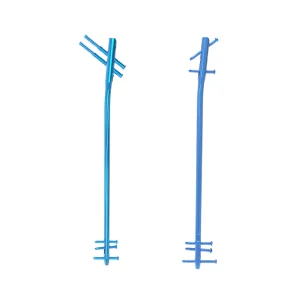
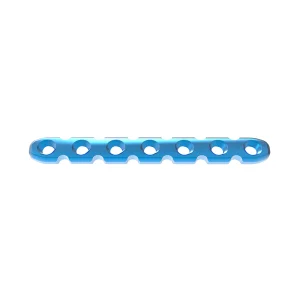
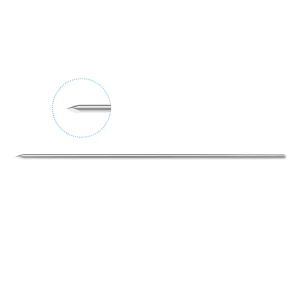
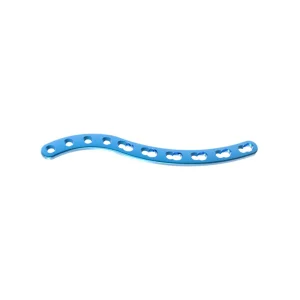
Direct Trauma & Orthopedic Pipeline
Procure CE-certified external fixation units, bone pins, and reconstruction hardware directly from verified cleanroom manufacturing facilities.
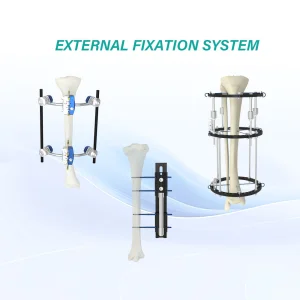
Global Macroeconomics: External Fixation Demand Drivers
Analyzing geopolitical stabilization, military field surgery, polytrauma protocol adoption, and orthopedic procurement budgets across tiered international markets.
Polytrauma Protocol Optimization
Global emergency surgical guidelines prioritize Damage Control Orthopedics (DCO) over Early Total Care (ETC) in unstable hemodynamic patients. Modular external fixators reduce physiological surgical insult, establishing rapid skeletal stability within 20–30 minutes while minimizing pulmonary embolisms and systemic inflammation.
Tiered Institutional Sourcing
Healthcare providers face stringent DRG-based reimbursement caps. Purchasing committees increasingly divert from legacy Western tier-1 brands toward ISO 13485 certified original equipment manufacturers (OEMs), capturing 40% to 60% procurement cost reductions without sacrificing metallurgical tolerance or sterility.
Disaster & Emergency Stockpiling
National disaster relief frameworks, UN field clinics, and military logistics departments mandate standardized, multi-indication external fixation kits. Interchangeable carbon fiber connecting rods and multi-pin clamping architectures reduce SKU storage volume while maintaining versatile anatomic application.
External Fixation Pricelist Benchmark & Procurement Framework
Comprehensive cost matrices categorized by anatomical complexity, metallurgical composition, and volume procurement bands for institutional hospital purchasing.
| System Architecture | Material Engineering | Primary Clinical Indications | Volume Sourcing Range (FOB) | Sterility & Compliance |
|---|---|---|---|---|
| Modular Unilateral System Large Joint / Long Bone |
Radiolucent Carbon Fiber Rods + Grade 5 Ti Clamps | Femoral & Tibial shaft open fractures, Gustilo-Anderson II/III damage control | $280 – $650 / kit | ISO 13485 / CE Sterile barrier double blister packaging |
| Circular Ring System Ilizarov & Hexapod Style |
High-Strength Aircraft Aluminum Rings + Ti Wire Bolts | Complex limb lengthening, chronic osteomyelitis, non-union, deformity correction | $750 – $1,900 / set | Non-sterile modular container or sterile surgical trays |
| Wrist & Mini Joint Fixator Articulated & Dynamic |
Anodized Aerospace Titanium Alloy & 316L Stainless | Unstable distal radius intra-articular fractures, metacarpal bridging | $140 – $320 / kit | CE, FDA Class II technical file compliant |
| Pelvic C-Clamp & Frame Emergency Hemostasis |
High-torsion alloy frame with dual pin trocars | Unstable pelvic ring disruptions (Tile Type C), hypovolemic resuscitation | $850 – $2,200 / frame | Full lot traceability with bioburden validation |
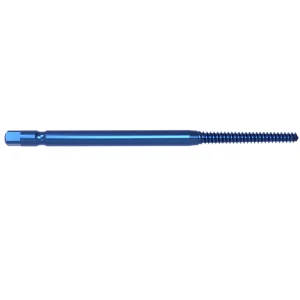
| Apex Schanz Screws / Bone Pins Self-Drilling / Self-Tapping |
Implant-Grade Ti-6Al-4V ELI / Medical 316LVM | Direct cortical & cancellous bone anchorage (Ø4.0mm to Ø6.0mm) | $12 – $38 / piece | Gamma irradiation or EO sterile peel pouches |
*Note: Quoted pricing reflects global OEM wholesale volumes (MOQ apply). Final hospital tender quotes fluctuate based on regional tariff structures, MDR auditing fees, and customized surgical instrument tray requirements.
Enterprise Procurement Strategy & Hospital Tender Solutions
Actionable guidance for hospital networks, military logistics groups, and medical device distributors managing multi-jurisdiction trauma implant tenders.
Modular Interoperability
Modern surgical theaters demand modular cross-compatibility. Specifying universal clamps capable of gripping both Ø11mm carbon rods and 4.0–6.0mm Schanz pins eliminates surgeon hesitation during high-pressure emergency resuscitations while reducing hospital inventory stockholding by up to 35%.
Total Cost of Ownership (TCO)
Beyond initial hardware acquisition costs, procurement boards must calculate reprocessing longevity. Reusable high-grade titanium clamps withstand over 250 steam autoclave cycles without thread galling, dramatically amortizing unit expense over typical single-use disposable frameworks.
Supply Chain Resilience & Delivery
Sudden geopolitical escalations and mass-casualty occurrences place immense strain on immediate inventory. Strategic buyers establish dual-supplier frameworks, pairing regional depots with direct OEM lines guaranteeing express air dispatch (typically 4–6 days) for critical trauma component replenishment.
Technological Roadmap: The Evolution of External Fixation
Discover engineering transformations bridging classic mechanical stabilization with next-generation smart osseointegration and digital trajectory planning.
Phase I: Advanced Radiolucent Metallurgy
Pioneering ultra-rigid radiolucent polyetheretherketone (PEEK) and advanced unidirectional carbon fiber matrices. Surgeons benefit from unhindered intraoperative fluoroscopic imaging, allowing instantaneous verification of axial alignment without hardware scatter.
Phase II: Hydroxyapatite (HA) Pin Technology
Direct application of plasma-sprayed HA nano-coatings onto Schanz screw threads. Clinically validated to improve pin-bone shear strength, mitigate thermal necrosis during insertion, and decrease pin-track sepsis by over 62% in prolonged reconstructions.
Phase III: Hexapod Software Calibration
Transitioning from manual Ilizarov mechanical adjustments to multi-planar computer-guided hexapod frames. Cloud algorithms analyze postoperative orthogonal X-rays to generate precise daily strut-adjustment prescription charts for the patient.
Phase IV: Micro-Electromechanical (MEMS) Sensors
Integrating telemetry-enabled strain gauges directly into external stabilization rods. Real-time axial micro-motion tracking alerts trauma teams to early hardware loosening, delayed union, or structural fatigue failure prior to radiographic manifestation.
Phase V: Biodegradable Pin Sleeves
Developing bioresorbable magnesium-calcium alloy sleeves situated at the skin-implant interface. Continuous local elution of antimicrobial silver ions and osteoconductive trace elements completely transforms surgical wound prophylaxis.
Phase VI: 3D-Printed Custom Anatomical Mounts
Patient-specific titanium clamping blocks additive-manufactured from pre-op CT scans. Offers unmatched rigid purchase in complex osteoporotic or blast-shattered bone segments impossible to stabilize using standard off-the-shelf clamps.
Global Regulatory Assurance & Localization Standards
Ensuring compliance with medical device regulations across North America, the European Union, Latin America, and emerging markets.
EU MDR (2017/745) & Notified Bodies
Navigating rigorous clinical evaluation reports (CER), post-market surveillance (PMS), and comprehensive technical documentation. Products are manufactured in adherence with ISO 13485 quality systems and validated by accredited notified bodies (e.g., UDEM) to ensure uninterrupted CE clearance across European territories.
FDA 510(k) Equivalence & Biocompatibility
Submissions utilize rigorous mechanical bench testing including ASTM F1541 (Standard Specification and Test Methods for External Skeletal Fixation Devices). Biocompatibility is thoroughly substantiated according to ISO 10993 series (cytotoxicity, systemic toxicity, and genotoxicity validation).
Emerging Market National Dossiers
Complete documentation packages tailored for fast-track product clearance: Free Sale Certificates (FSC), consular legalization, material chemical analysis certificates (mill certs), and comprehensive Arabic, Spanish, French, and Russian translation dossiers for regional ministries of health.
Frequently Asked Questions (FAQ) for Procurement Teams
In-depth technical, commercial, and operational clarifications covering external fixation manufacturing, pricing models, and clinical safety.
What are the primary clinical indications driving external fixation procurement over internal plates and intramedullary nails?
External fixation is primarily indicated for damage control orthopedics (DCO) in severe polytrauma, high-energy open fractures (Gustilo-Anderson Types II, IIIA, IIIB, and IIIC) with extensive soft-tissue stripping, severe intra-articular comminution, periarticular fractures with active skin contamination, chronic osteomyelitis requiring radical debridement, infected non-unions, and progressive limb lengthening or complex angular deformity correction via distraction osteogenesis. Its fundamental advantage is achieving skeletal stability without disrupting damaged local periosteal vasculature or introducing substantial foreign material into infected wound beds.
How do hospital purchasing teams balance costs between carbon fiber radiolucent rods and stainless steel rods?
While carbon fiber rods incur an estimated 25% to 40% initial procurement cost premium over medical-grade 316L stainless steel, they provide clear technical advantages: complete radiolucency under C-arm fluoroscopy (preventing visual obstruction of fracture reduction lines), high strength-to-weight ratios that maximize patient comfort and ambulation, and complete magnetic resonance (MR) conditional compatibility. Hospital purchasing teams typically assign carbon fiber modular configurations to emergency department quick-response sets and tertiary operating theaters, while reserving stainless steel frames for low-resource or secondary disaster inventory caches.
What regulatory and metallurgical quality criteria should be reviewed when evaluating external fixation manufacturers?
Procurement audits must verify: 1) Active ISO 13485 certification for orthopedic medical device design and manufacturing; 2) Conformity to biocompatibility standards (ISO 10993); 3) Complete raw material mill certificates proving grade ASTM F136 Ti-6Al-4V ELI or ASTM F138 implant-grade stainless steel; 4) Mechanical fatigue and grip torque testing under ASTM F1541 protocols demonstrating no slippage at clamping interfaces under dynamic cyclical axial loading; and 5) Batch traceability records linking raw bar stock to individual Schanz pin lot numbers.
Does ZATH provide complete instrument sets and sterilization trays matching external fixation lines?
Yes. All external fixation platforms manufactured by Beijing ZhongAnTaiHua Technology Co., Ltd. (ZATH) are supplied alongside customized, anodized aluminum or stainless steel surgical instrument containers. These trays feature ergonomic T-wrenches, torque-limiting screwdrivers, universal drill guides, trocar sleeves, tissue protectors, and depth gauges. Implants are available both non-sterile for autoclave processing and double-pouch sterile-packed to immediately support sterile OR field deployment.
What are standard lead times, minimum order quantities (MOQ), and shipping channels for international tenders?
Standard OEM/ODM orders feature flexible MOQs starting from 20 sets for specialized frames to 500+ units for Schanz bone pins. In-stock products are prepared and dispatched within 48 to 72 hours via international express couriers (DHL, FedEx, UPS, TNT, EMS), achieving worldwide delivery within 4 to 6 business days. Large tender production batches typically require 2 to 4 weeks, with full sea/air cargo freight documentation, certified certificates of origin, and consular legalization provided as needed.
Complementary Trauma & Orthopedic Systems
Integrate internal fixation plates, intramedullary rods, and diagnostic instruments into unified hospital purchasing consignments.