High-Performance Sports Medicine Fixation Catalog
Engineered for high-yield arthroscopic procedures, ACL/PCL reconstruction, meniscal repair, and shoulder labrum stabilization with full lot traceability.
The Global Sports Medicine Landscape & Shifting Sourcing Dynamics
How rising outpatient procedure volumes, economic constraints, and material transitions are reshaping procurement across hospital groups and B2B distributors.
The sports medicine device sector represents one of the most technologically dynamic and economically resilient segments within musculoskeletal healthcare. Driven by an active global demographic, an aging yet physically dynamic population, and remarkable progress in minimally invasive arthroscopic surgery, hospital networks and specialized Ambulatory Surgery Centers (ASCs) are experiencing record procedure volumes. Key interventions—such as Anterior Cruciate Ligament (ACL) reconstructions, rotator cuff repairs, meniscal repairs, and glenoid labrum refixations—have transitioned from open or mini-open surgical approaches to completely arthroscopic, all-inside methodologies.
Historically, the sports medicine consumables supply chain was intensely monopolized by a handful of multinational medical device conglomerates. In this legacy ecosystem, commercial pricing structures for fundamental devices such as titanium suture anchors, PEEK interference screws, and adjustable-loop cortical suspensory buttons included massive marketing markups, indirect channel costs, and exorbitant intellectual property premiums. Consequently, public healthcare tenders and regional private distributors faced constrained profit margins and escalating budget pressures.
Today, global procurement dynamics are undergoing a fundamental paradigm shift. Healthcare administrators and medical supply executives recognize that clinical outcomes are dictated by material purity, precision micro-machining tolerances, thread pitch biomechanics, suture pull-out strength, and sterile packaging reliability—not by the logo embossed on the instrument tray. The demand has decisively shifted toward audited, ISO 13485-certified original equipment manufacturers capable of delivering identical clinical biomechanical performance at an optimized direct industrial pricing tier.
Outpatient ASC Dominance
With over 65% of knee and shoulder arthroscopy procedures performed in outpatient settings, surgery centers demand pre-sterilized, single-use, peel-and-present kits that reduce autoclave turnover times and sterile reprocessing expenses.
Value-Based Tendering
Public health authorities and insurance payors increasingly employ DRG bundled payments. Distributors that fail to offer competitive pricelists lose institutional tenders to agile brands with vertically integrated manufacturing.
Biomechanical Equivalence
Tier-1 clinical data proves that certified Grade 5 Eli titanium (Ti-6Al-4V) and implant-grade Polyetheretherketone (PEEK-OPTIMA) machined by specialized producers yield identical fixation pull-out limits exceeding 250N to 400N.
Precision Engineering & Scaled Industrial Advantage
Examining how state-of-the-art Swiss-type CNC micro-machining, automated cleanrooms, and clustered supply chains empower ZATH to deliver exceptional clinical value.
China's medical implant manufacturing sector has transformed over the past fifteen years from conventional contract machining into a world-class center of precision biomechanical engineering. Headquartered in the Zhongguancun Science and Technology Park (Pinggu, Beijing), Beijing ZhongAnTaiHua Technology Co., Ltd. (ZATH) exemplifies this technological maturity. Combining a 300+ strong workforce, an elite engineering team of nearly 100 senior technical specialists, and dedicated multi-axis CNC production infrastructure, ZATH delivers advanced orthopedic and sports medicine systems that adhere to the most demanding international regulatory thresholds.
The manufacturing efficiency of advanced sports medicine implants rests upon four foundational pillars: multi-axis Swiss lathe precision, specialized material metallurgy, cleanroom packaging automation, and localized cluster logistics.
5-Axis Swiss Micro-Turning
Ultra-precision Star and Citizen CNC platforms maintain micron-level runout tolerances on miniature cancellous threads, suture eyelets, and self-tapping flutes down to ±0.005mm.
Certified Medical Raw Stock
Strict supply chain verification using certified ASTM F136 Ti-6Al-4V ELI titanium and raw PEEK polymers tested for complete biocompatibility, cytotoxicity, and structural tensile fatigue.
ISO Class 7 Cleanrooms
Implant sub-assembly, pre-loaded Ultra-High-Molecular-Weight Polyethylene (UHMWPE) suture threading, and double-blister Tyvek heat sealing performed in continuously monitored environments.
Unrivaled Cost Efficiency
Direct manufacturer integration eliminates 3 to 4 intermediary distribution tiers, reducing per-unit baseline acquisition costs by up to 50% without compromising mechanical integrity.
Sports Medicine Pricelist Architecture & Quotation Matrix
A comprehensive analysis of unit pricing components, manufacturing variables, and procurement tier parameters across key arthroscopic categories.
Procurement directors and hospital value-analysis committees often ask: What structural factors govern quotation variability in sports medicine implants? When evaluating quotes from certified manufacturers like ZATH, B2B buyers must review pricing across specific material configurations, suture compositions, knotless locking mechanisms, and pre-loaded deployment instrumentation. Below is an engineering and commercial benchmark summarizing the core categories in our sports medicine pricelist.
| Product Category | Primary Material & Specs | Clinical Indication | Pre-Loaded Suture Configuration | OEM Unit Pricing Benchmark | Quality & Compliance Standards |
|---|---|---|---|---|---|
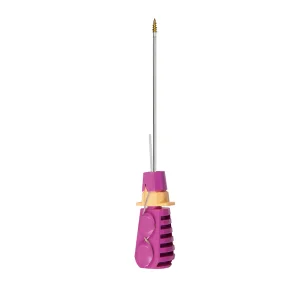
| SuperFix T Suture Anchors | ASTM F136 Ti-6Al-4V ELI (Ø2.8mm, Ø3.5mm, Ø5.0mm, Ø6.5mm) | Rotator Cuff, Bankart, SLAP, Achilles Tendon | 1 or 2 UHMWPE #2 braided sutures with surgical needles | Volume Tier B2B Quote | ISO 13485, CE / UDEM, 100% Optical CMM Inspection |
| SuperFix P Knotless Anchors | PEEK-OPTIMA / Medical Titanium Core (Ø3.5mm, Ø4.5mm, Ø5.5mm) | Knotless Rotator Cuff Bridge, Labral Reconstruction | Integrated loop shuttle suture & step-down driver | Volume Tier B2B Quote | Biocompatible PEEK, ASTM F2026, Static/Dynamic Fatigue Tested |
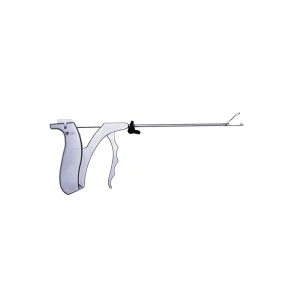
| All-Inside Meniscal Repair System | Dual PEEK/PLA T-implants + Pre-tied sliding knot | Meniscal horn & body vertical/horizontal tears | #2-0 / #0 UHMWPE high-strength core suture | Volume Tier B2B Quote | Class III Sterile Single-Use, Ergonomic Deployment Trigger |
| SuperFix Endo Button with Loop | Anodized Titanium Cortical Plate + Continuous Loop | Knee ACL/PCL Femoral Cortical Suspensory Fixation | Continuous loop UHMWPE braid (15mm to 50mm loop lengths) | Volume Tier B2B Quote | Ultimate tensile strength >1100N, Cyclic displacement <1.5mm |
| Adjustable Cortical Button System | Low-profile Titanium button plate with cinch loop | ACL Reconstruction with hamstring / BTB autograft | Dual self-locking cinch suture with tensioning pulls | Volume Tier B2B Quote | Knotless loop fixation, zero-backlash locking mechanism |
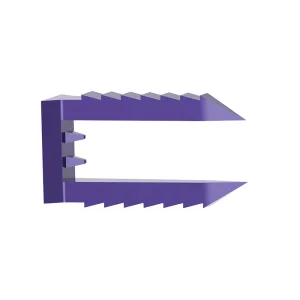
| SuperFix Soft-Tissue Staple | Medical-grade Titanium alloy, low-profile bridge | Tendon-to-bone fixation, ligament avulsion repair | Barbed teeth geometry for uniform graft grip | Volume Tier B2B Quote | Bio-inert, corrosion resistant, sterile blister packaging |
Primary Quotation Variables for Global Distributors:
- Material Selection (Titanium vs. PEEK vs. All-Suture): Titanium anchors provide the highest shear strength-to-diameter ratio at an economical price point. PEEK implants eliminate radiographic scatter on post-op MRI scans and mimic the flexural modulus of cortical bone (3.5–4.0 GPa), requiring precision machining feeds that adjust the price index accordingly.
- Suture Architecture (Standard Polyester vs. UHMWPE): Modern arthroscopic fixation relies almost exclusively on Ultra-High-Molecular-Weight Polyethylene (UHMWPE) braided sutures, offering up to 300% higher tensile strength and lubricious knot sliding compared to conventional polyester sutures.
- Sterile Barrier Packaging & Lot Serialization: Every ZATH sterile unit undergoes ethylene oxide (EO) or gamma radiation sterilization, validated under ISO 11135 / ISO 11137 protocols with five-year shelf-life stability, complete with multi-lingual GS1 DataMatrix barcodes.
Localized Application Scenarios & Surgical Integration
From complex knee ligament reconstruction to multi-row shoulder stabilization, precision-engineered sports medicine implants ensure reliable primary fixation and anatomical restoration.
Knee ACL / PCL Reconstruction
Indication: Cruciate ligament rupture using hamstring, patellar tendon, or quadriceps grafts.
Fixation Strategy: Femoral cortical suspension using the SuperFix Endo Button with Loop paired with tibial PEEK/Titanium interference screws or soft-tissue staples. Delivers superior graft pull-out forces exceeding 1,000N and eliminates graft tunnel abrasion.
All-Inside Meniscal Preservation
Indication: Unstable tears in the vascular red-red and red-white zones of the medial and lateral meniscus.
Fixation Strategy: One-handed deployment through standard anterior arthroscopy portals. The ZATH Fast All Inside Meniscal Repair System deploys twin miniature implants with a self-locking sliding pre-tied knot, applying controlled compression without requiring accessory posterior counter-incisions.
Shoulder Rotator Cuff & Labrum
Indication: Supraspinatus tendon tears, Bankart avulsions, SLAP tears, and biceps tenodesis.
Fixation Strategy: Double-row suture bridge configurations utilizing SuperFix T threaded anchors for the medial row and SuperFix P knotless anchors for lateral footprint pressurization. Restores native anatomical footprint contact area, promoting rapid tendon-to-bone fibrocartilage healing.
Foot, Ankle & Syndesmosis Repair
Indication: Acute syndesmotic diastasis, chronic lateral ankle instability (Modified Broström procedure), and Achilles tendon rupture.
Fixation Strategy: Titanium knotless anchors with high-strength UHMWPE suture tapes provide non-rigid, dynamic stabilization across the distal tibiofibular joint, preventing screw breakage and eliminating secondary implant removal operations.
Dedicated Surgical Instrumentation Kits
Indication: Fluid-tight cannula passage, precise bone tunnel preparation, and accurate suture passing.
Fixation Strategy: Every ZATH sports medicine platform is accompanied by matched, ergonomic instruments including the SuperFix Suture Passer, drill guides, cannulated reamers, and depth probes machined from surgical-grade stainless steel to ensure fluid OR workflows.
Emerging Technological Paradigms in Sports Medicine
Analyzing industry-wide shifts toward knotless tensioning, all-suture soft anchors, bioactive materials, and biologic integration.
The sports medicine device market is progressing rapidly toward less invasive, biologically receptive, and mechanically streamlined implants. Hospital purchasing officers and healthcare distributors must stay ahead of several emerging technological shifts:
1. The Knotless Revolution
Traditional suture anchors required the operating surgeon to tie intricate arthroscopic sliding and locking knots down a narrow cannula under fluid distension. Knot variability, knot profile impingement against the acromion, and knot slippage under cyclic loading represented frequent modes of failure. Modern knotless suture anchors—such as the SuperFix P series—utilize an internal interference locking mechanism or step-down eyelet capture. Surgeons independently adjust tissue tension prior to securing the anchor, ensuring consistent, reproducible footprint compression while eliminating bulky suture knots that can cause subacromial abrasion.
2. All-Suture "Soft" Anchors
In cases of revision surgery, pediatric sports injuries, or tight glenoid rims where bone stock is severely limited, solid PEEK or titanium anchors pose a risk of bone compromise or confluence of drill holes. All-suture anchors utilize an expandable UHMWPE sleeve or ribbon construct deployed through ultra-small drill tunnels (1.4mm to 1.8mm). When tension is applied to the primary suture, the sleeve bunches against the subchondral cortical bone, providing pull-out resistance exceeding 200N while conserving bone volume by up to 60% compared to traditional 3.5mm anchors.
3. Biocomposites and Bio-Integrative Scaffolds
While bioabsorbable polymers such as pure PLLA were widely used in past decades, issues with sterile osteolysis, late cyst formation, and incomplete bony replacement prompted substantial research into biocomposites. Today's high-performance materials incorporate 15% to 30% osteoconductive ceramic particles (such as beta-tricalcium phosphate β-TCP or hydroxyapatite HA) directly within the polymer matrix. Over 24 to 36 months, the implant safely hydrolyzes while stimulating local osteoblast migration and gradual bone replacement.
Global Enterprise Sourcing Framework & Auditing Criteria
The critical quality, regulatory, and supply chain criteria that medical device distributors, ministries of health, and procurement bodies evaluate before awarding supply tenders.
ISO 13485 QMS Certification
A foundational mandate for international orthopedic trade. ZATH maintains an internationally audited Quality Management System governing raw material verification, micromachining validation, cleanroom assembly, and post-market clinical surveillance.
UDEM & CE Documentation
Accessing regulated hospital systems requires exhaustive technical documentation. Our sports medicine lines carry validated design dossiers, biocompatibility testing (ISO 10993), Free Sale Certificates (FSC), and UDEM audit compliance files.
OEM / ODM Customization Agility
We partner with global healthcare brands to deliver private-label contract manufacturing. From laser engraving brand logos, custom handle colors, and tailored suture braid configurations to bilingual sterile peel pouches, we execute complete turnkey branding.
End-to-End Lot Traceability & Risk Mitigation
In the medical device supply chain, risk mitigation is paramount. Every batch of ZATH sports medicine implants is assigned a unique production run code linked directly to the raw material mill certificate, CNC workstation log, optical coordinate measuring machine (CMM) dimensional inspection record, bioburden assay, and EO sterilization validation cycle. This complete vertical traceability empowers our international distributor network to pass local Ministry of Health audits with total confidence.
Frequently Asked Questions: Sports Medicine Pricelist & OEM Sourcing
Key answers to technical specifications, regulatory filings, minimum order quantities, and custom contract engineering.
1. How can international distributors request a formal Sports Medicine Pricelist and Quote from ZATH?
2. Are ZATH sports medicine implants supplied sterile-packed or non-sterile?
3. What raw materials are utilized in ZATH sports medicine implants?
4. Does ZATH support private labeling, OEM, and custom ODM contract manufacturing?
5. What regulatory certificates and documentation files are available for import registration?
6. What is the typical Minimum Order Quantity (MOQ) and delivery lead time?
7. How does the biomechanical pull-out strength of ZATH suture anchors compare to tier-1 Western brands?
8. What are the advantages of direct sourcing from a Beijing-based orthopedic manufacturer?
Extended Orthopedic Implants & Instrument Systems
Explore ZATH's multi-platform surgical portfolio spanning advanced trauma reconstruction, minimally invasive spine systems, and joint arthroplasty instruments.