Clinical Solutions Portfolio
Precision Upper Limb & Trauma Implantation Matrix
Manufactured in automated multi-axis Swiss-lathe facilities under strict ISO 13485 cleanroom protocols, ready for hospital procurement and regional orthopedic distributor licensing.
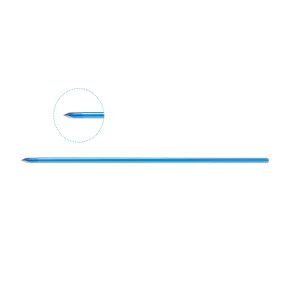
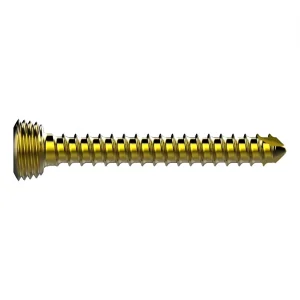
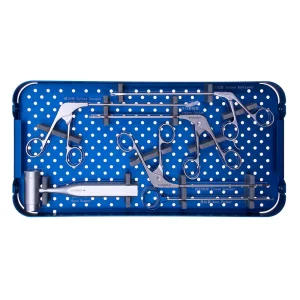
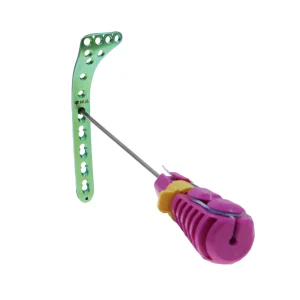
Industry Economics & Clinical Architecture
Macro Humeral Fracture Fixation Solutions: Engineering Meets Surgical Demand
Understanding the biomechanical challenges of proximal humerus fractures (PHFs), midshaft comminution, and intra-articular distal column reconstruction in an aging global demographic.
Proximal Humeral Locking Mechanics (PHILOS Architecture)
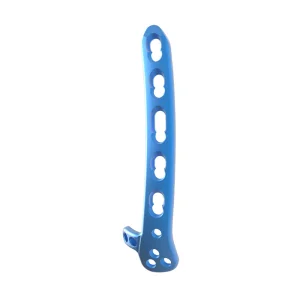
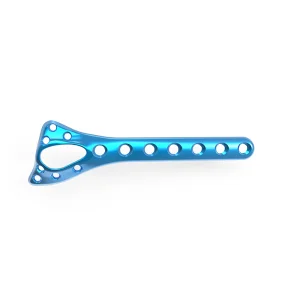
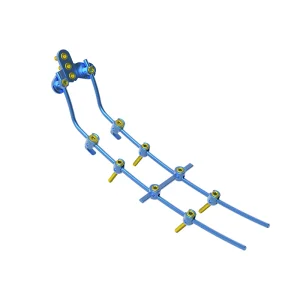
Proximal humerus fractures account for roughly 5-6% of all adult fracture incidents, with peak incidence among osteoporotic elderly patients. China medical device OEMs utilize medical Ti-6Al-4V ELI (Grade 23 ASTM F136) featuring multi-directional convergent/divergent screw configurations. This construct delivers structural angular stability without relying on poor quality cancellous bone friction.
- Calcar-supporting screws minimize secondary varus collapse.
- Suture eyelets integrated for rotator cuff refixation and tension balancing.
- Anatomical pre-contouring minimizes intraoperative bend cold-working.
Diaphyseal Shaft Fracture Solutions & Radial Nerve Safety
Mid-shaft fractures require dynamic compression or bridged locking fixation that tolerates physiological torsional shear while safeguarding the vulnerable radial nerve groove. Modern China production combines low-profile shaft plates with combi-holes, giving surgeons the flexibility to switch seamlessly between conventional compression and angular-stable locked bridging.
- Helical 3D contoured profiles circumvent anterolateral radial impingement.
- Limited Contact (LC-DCP) undersides safeguard periosteal microvascular supply.
- Chamfered distal/proximal ends accommodate minimally invasive plate osteosynthesis (MIPO).
Distal Parallel & Orthogonal Column Reconstruction
Complex distal humerus intra-articular fractures (AO/OTA 13-C type) demand anatomical parallel or 90-degree orthogonal dual-plating systems. The biomechanical goal is absolute stability at the articular blocks combined with relative stability along the metaphyseal columns to allow early post-operative elbow mobilization.
- Medial and posterolateral dual-column stabilization eliminates cross-shear.
- Low plate-screw profile averts olecranon fossa impingement.
- Fine-pitch 2.7mm/3.5mm locked screws capture subchondral bone wafers.
Global Supply Chain & Procurement
Commercial Dynamics of China Placa Humero Manufacturing
From Western brand premium erosion to state-of-the-art Chinese medical industrial clusters: Why healthcare systems and regional brands partner with Chinese trauma factories.
Supply Chain Realities & Cost Compression
For decades, tier-one medical corporations monopolized distal and proximal humeral fixation with massive price markups. Over the last 15 years, established Chinese manufacturers like Beijing ZhongAnTaiHua Technology Co., Ltd. (ZATH) invested heavily in 5-axis CNC machining, sliding-head turning centers, and vacuum anodization line integrations. Today, China produces identical metallurgical grades (ISO 5832-3 / ASTM F136 titanium, ISO 5832-1 stainless steel) at a manufacturing cost 60% lower than US and European counterparts.
Industrial Agglomeration: Beijing & Jiangsu Hubs
China's medical implant ecosystem is anchored around two prominent hubs: the Beijing Zhongguancun Science Park high-tech aerospace/biomedical belt and the southern Changzhou-Suzhou cluster. Having in-house cleanrooms, ISO 11137 gamma/EO sterilization validation stations, and high-precision Coordinate Measuring Machines (CMM) on one site ensures rapid lead times of 4-6 express shipping days for batch implant shipments worldwide.
Comprehensive OEM / ODM Turnkey Ecosystem
International medical brands face soaring domestic engineering overhead. China Placa Humero producers provide complete White-Label and Private-Label configurations: customized laser marking, bespoke screw-hole geometries, sterile Tyvek double-blister packaging, and specialized anodization hues (Blue, Gold, Magenta) corresponding to surgeon size identification systems.
Market Intelligence & Cost Analysis
China Placa Humero B2B Export Pricelist (Benchmark Estimates)
Comparative FOB China unit pricing across wholesale volumes, standard raw material tiers, and configuration varieties for trauma importers and hospital group buyers.
| Implant System Classification | Available Material Grades | Hole Count / Configurations | FOB MOQ Price (100–499 pcs) | B2B Contract Price (500+ pcs) | Sterility & Certification Status |
|---|---|---|---|---|---|
| Proximal Humerus Internal Fixation (PHILOS type) | Ti-6Al-4V ELI (ASTM F136) | 3H to 12H (Anatomical Left/Right) | $28.50 – $36.00 | $22.00 – $26.50 | ISO 13485 / CE / FSC |
| Distal Posterolateral Humeral Plate (with Support) | Medical Titanium / 316L Stainless | 3H to 14H (Pre-shaped columns) | $26.00 – $34.00 | $19.50 – $24.00 | Sterile / Non-Sterile Option |
| Distal Medial Column Humeral Locking Plate | Ti-6Al-4V ELI (ASTM F136) | 4H to 10H (Low profile) | $24.00 – $30.00 | $18.00 – $22.50 | Full Lot Traceability |
| Diaphyseal Shaft Humeral Locking Plate (LC-DCP) | Ti-6Al-4V / 316LVM Medical Steel | 5H to 16H (Straight / Helical) | $22.00 – $29.00 | $16.50 – $20.00 | ISO 13485 / UDEM |
| Distal Extra-Articular Humeral LCP | Ti-6Al-4V ELI (ASTM F136) | 4H to 12H (Left/Right) | $29.00 – $38.00 | $22.50 – $27.00 | Cleanroom Double Blister |
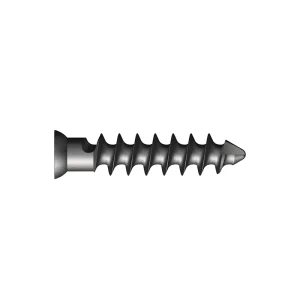
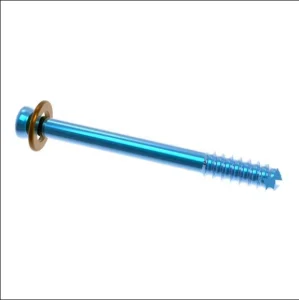
| Locking Screws & Cortex Screws (2.7 / 3.5 / 5.0mm) | Medical Titanium / 316L | 10mm – 90mm lengths (Torx/Star) | $2.20 – $3.80 | $1.40 – $1.90 | Barcoded Clean Pack |
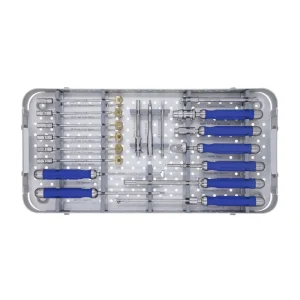
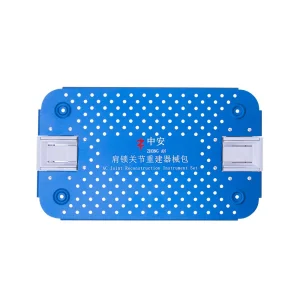
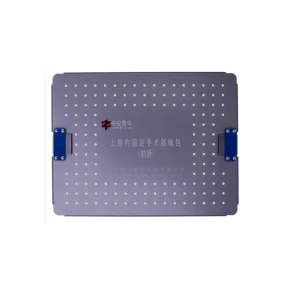
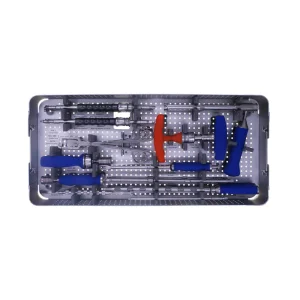
| Humeral Trauma Dedicated Surgical Instrument Kit | Medical Grade Stainless Steel / PPSU | Custom Trays, Taps, Drill Guides | $850.00 – $1,400.00 / Set | $650.00 – $950.00 / Set | Autoclavable 134°C Box |
*Note: Prices represent baseline manufacturing FOB quotes for international distributors and hospital tenders. Final customized pricing reflects exact OEM branding, packaging, and regulatory documentation requirements.
Global Regulatory Assurance
Localized Support & Rigorous Compliance Frameworks
Bridging Chinese engineering capacity with stringent hospital registration demands across Latin America, Southeast Asia, the Middle East, and the European Union.
Full Technical Dossier Support (MDR & FDA 510k Aligned)
Navigating MDR (EU) 2017/745 or national health surveillance submissions requires extensive testing data. Leading manufacturers deliver complete dossier packages: raw material spectroscopic certificates, fatigue test reports (ASTM F382 for bone plates), biocompatibility validations (ISO 10993 cytotoxicity, sensitization, systemic toxicity), and risk management analyses under ISO 14971.
Latin American & MENA Expedited Registration
Humeral plates (widely cataloged across Spanish-speaking countries as Placa Humero) require precise localization: COFEPRIS (Mexico), ANVISA (Brazil), INVIMA (Colombia), and ANMAT (Argentina). Chinese factory export divisions issue authenticated Free Sale Certificates (FSC), consular legalizations, and bilingual product labels conforming with local barcode traceability systems.
Class 10,000 Cleanroom & Sterilization Protocols
All humeral plating series are available in pre-sterilized, hospital-ready double-blister Tyvek packaging. Sterilization validation meets ISO 11137 (Radiation) and ISO 11135 (EO gas), achieving a minimum Sterility Assurance Level (SAL) of 10⁻⁶. This cuts hospital central sterile services department (CSSD) workloads and mitigates nosocomial infection risks.
Surgical Indications & Case Studies
Clinical Application Scenarios & Surgical Performance
Demonstrated efficacy across diverse clinical settings: from acute high-energy polytrauma centers to osteoporotic fragility fracture departments.
Osteoporotic Fragility Fractures (Geriatric 3-Part & 4-Part PHFs)
Elderly patients presenting Neer 3-part and 4-part proximal fractures challenge conventional non-locking plates due to poor screw thread purchase. Humeral locking systems bypass this issue by acting as an internal fixator: convergent/divergent locking screws construct an internal truss that supports the osteoporotic humeral head and prevents calcar collapse during arm elevation.
High-Energy Polytrauma & Motor Vehicle Collisions
Mid-shaft fractures with extensive comminution demand bridge-plating osteosynthesis via minimally invasive percutaneous plate osteosynthesis (MIPPO). Pre-contoured locking plates slide easily through submuscular tunnels under fluoroscopy, protecting blood flow around the fracture zone and shortening operative times in critical polytrauma units.
Complicated Intra-Articular Distal Reconstruction
Coronal and sagittal shear fractures of the distal humeral condyles require simultaneous stabilization of the medial and lateral columns. By using synchronized anatomical locking plates, surgeons achieve rigid construct stability that allows active elbow flexion-extension exercises within 48 to 72 hours post-surgery, avoiding debilitating elbow stiffness.
Innovation Trajectory
Technology Roadmap: Next-Gen Humeral Fixation Innovations
How China's orthopedic engineering hubs are integrating additive manufacturing, bio-absorbable metallurgy, and AI-driven anatomical profiling.
3D Electron Beam Melting (EBM) Trabecular Surfaces
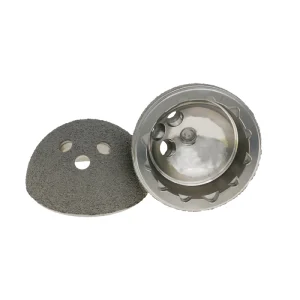
Next-generation humeral head contact plates feature 3D-printed porous titanium surfaces mimicking trabecular bone architecture (60-70% porosity, 300-500µm pore size). This promotes biological osseointegration at the plate-bone interface in difficult revision cases.
Biodegradable Magnesium Alloy Systems
Active research with Chinese academy partners targets biodegradable Mg-Zn-Ca alloys for auxiliary humeral fragment screws. These degrade safely over 12 to 18 months, eliminating secondary removal operations and implant-related discomfort.
AI-Assisted Multi-Ethnic Anatomical Modeling
By parsing thousands of international upper-limb CT volumetric datasets, machine learning models guide plate curvature development. The resulting implants fit both Asian and Western humeral geometries without intraoperative contouring.
Procurement Intelligence
Frequently Asked Questions for Medical Importers
Essential guidance on minimum orders, testing validations, custom branding, and international delivery cycles.
What are the key technical differences between titanium and stainless steel Placa Humero?
Titanium Ti-6Al-4V ELI (ASTM F136) offers an elastic modulus closer to cortical bone (~110 GPa vs ~200 GPa for 316L stainless steel), which significantly reduces stress shielding and accelerates secondary callus formation. Titanium is also MRI-compatible and generates fewer imaging artifacts. Stainless steel remains an economical, rigid alternative primarily favored in specific regional public hospital tenders.
How does your factory ensure the angular stability of locking screw interfaces?
Thread integrity in locking combi-holes is maintained using 5-axis CNC thread-milling cutters calibrated via automated optical sensors. Thread pitch, angle, and cone taper tolerances are held within ±0.01mm. This precision prevents cross-threading or screw head cold-welding during tightening, guaranteeing rigid angular locking up to 1.5–2.5 Nm torque levels.
What documents are supplied for national medical device registrations?
We provide full registration dossiers: ISO 13485 certification, Certificate of Free Sale (CFS / FSC), CE / UDEM audit documentation, Raw Material Spectroscopic Certificates, Biocompatibility Assessment (ISO 10993), Accelerated Aging and Packaging Integrity Reports (ASTM F1980), and Sterilization Validation files (ISO 11137 / 11135).
Can we request customized hole patterns, branding, and color anodization?
Yes. Through our full OEM/ODM program, distributors can define hole counts, plate profiles, laser-etched branding and catalog codes, color-coded Type II anodization, and branded sterile blister packaging. Prototyping lead times typically take 3 to 4 weeks, with production batch delivery in 4 to 6 weeks.
What logistics channels are used and what is the typical delivery timeframe?
Standard export orders ship via priority international couriers including DHL, FedEx, TNT, and UPS, with transit times averaging 4 to 6 business days worldwide. For high-volume hospital replenishment contracts, refrigerated or temperature-controlled air freight and sea freight options are fully managed by our export logistics team.
Complete Orthopedic Implantation Catalog
Comprehensive Trauma, Spine & Joint Systems
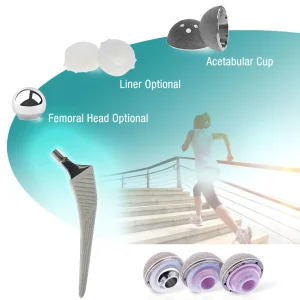
Explore matching instrumentation trays, specialized joint replacement components, and advanced anatomical fixation plates engineered for high operating room efficiency.