ODM DDR Locking Compression Plate Companies, Product

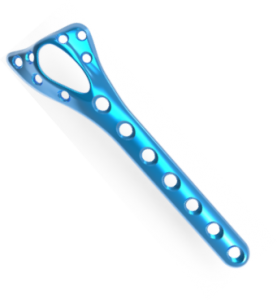
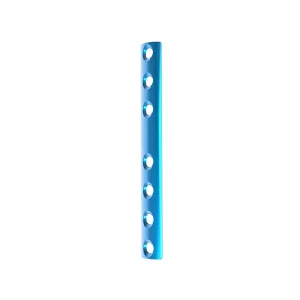
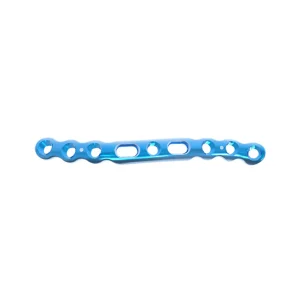
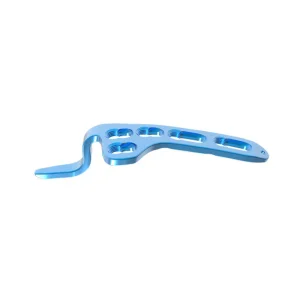
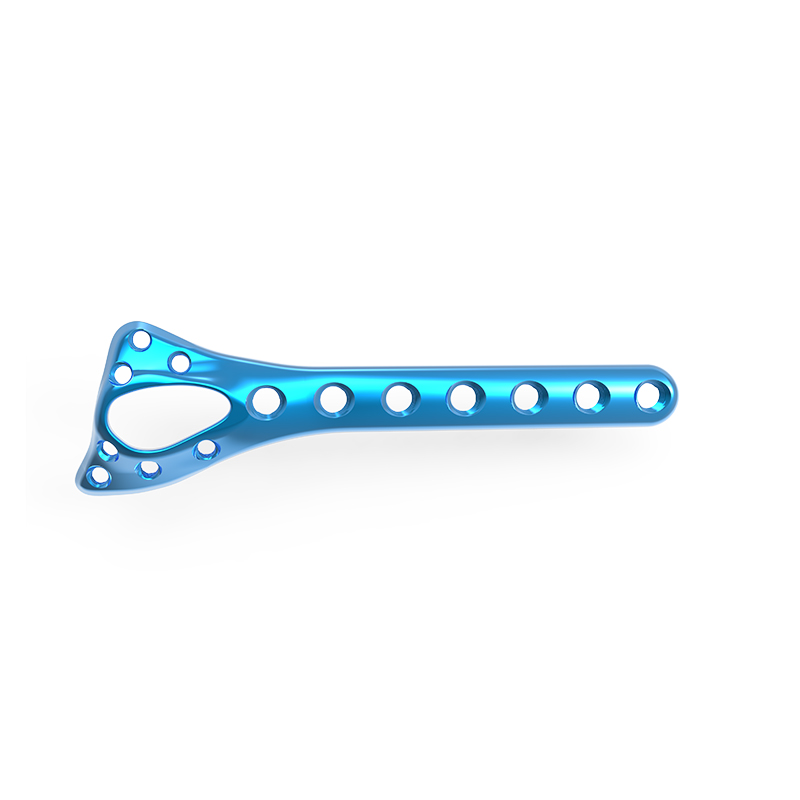
Anatomic plate design assists in restoring the original geometry of the patient’s anatomy. Dorsal Approach to the fracture allows the surgeon to visualize the fracture as well as use the plate to buttress the dorsal fragments for a simplified reduction. Plate positioning, low profile design and screw interface are intended to reduce soft tissue irritation and hardware prominence. Left and right plates Available sterile-packed

Product Description

Key Indications & Clinical Application

Buttress for Dorsal Fractures • Corrective Osteotomy • Dorsal Comminution
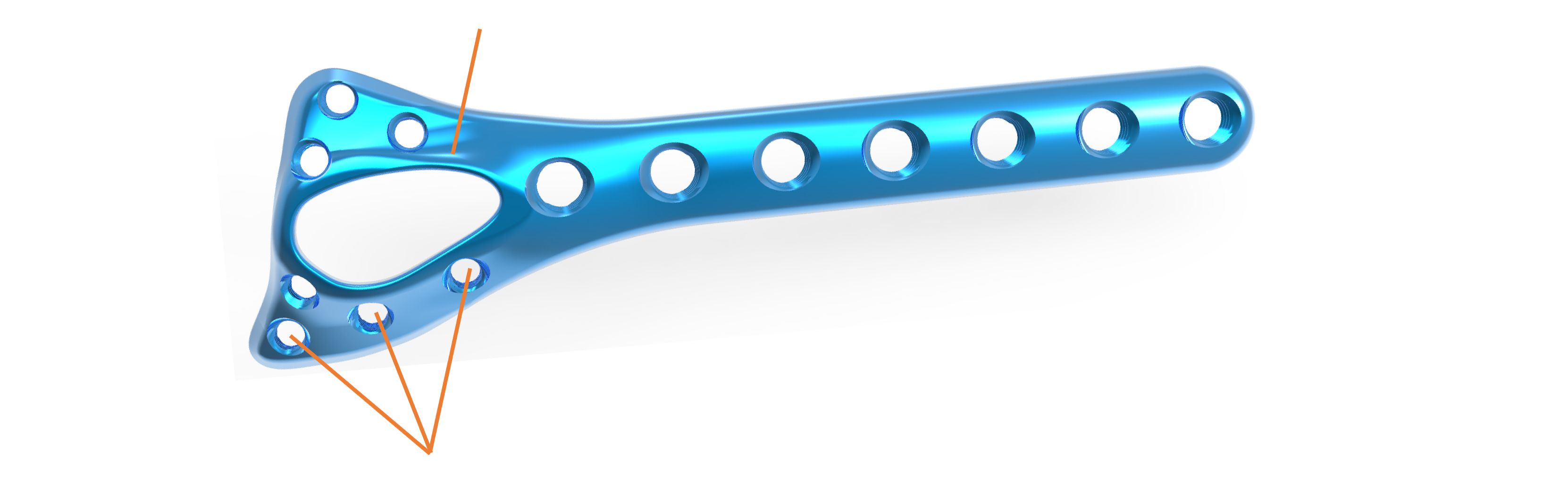
DDR Locking Compression Plate Design and Application
Fixed-angle locking screw holes
Product Specifications
DDR Locking Compression Plate
DDR Locking Compression Plate Profile
3 holes x 59mm (Left)
5 holes x 81mm (Left)
7 holes x 103mm (Left)
3 holes x 59mm (Right)
5 holes x 81mm (Right)
7 holes x 103mm (Right)
Width 11.0mm
Thickness 2.5mm
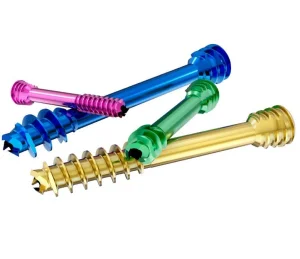
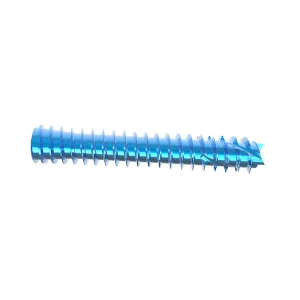
Matching Screw 2.7 Locking Screw for Distal Part
3.5 Locking Screw / 3.5 Cortical Screw / 4.0 Cancellous Screw for Shaft Part
Material Titanium
Surface Treatment Micro-arc Oxidation
Qualification CE / ISO13485 / NMPA
Package Sterile Packaging 1pcs/package
MOQ 1 Pcs
Supply Ability 1000+ Pieces per Month
Contraindications
Active Infection

If the patient has an active infection in the area where the plate will be placed, it is generally contraindicated to use the DCP. Infection can complicate the healing process and increase the risk of implant failure.

Poor Soft Tissue Coverage

If the soft tissue surrounding the fracture or surgical site is compromised or does not provide adequate coverage, the DCP may not be appropriate. Good soft tissue coverage is important for proper wound healing and to minimize the risk of infection.

Unstable Patient

In cases where the patient is medically unstable or has significant comorbidities that may affect their ability to tolerate the surgical procedure, the use of a DCP may be contraindicated. Overall health and physiological reserve must be evaluated prior to surgical intervention.

Skeletal Immaturity

The use of a DCP in growing children or adolescents may be contraindicated. Active growth plates may be impacted by rigid plating, interfering with normal bone development. Flexible or non-rigid alternatives should be considered.
Contraindications may vary depending on the specific patient, the fracture or surgical site, and the surgeon's clinical judgment. The final decision on whether or not to use a DDR Locking Compression Plate will be made by the orthopedic surgeon after a comprehensive evaluation of the patient's condition.
Surgical Technique Insight
Radial shaft plate placement position
The proximal portion of the plate is placed just radial to the convex surface of the radial shaft.
Frequently Asked Questions (FAQ)
1. What are the clinical indications for the DDR Locking Compression Plate?
The DDR Locking Compression Plate is primarily indicated as a buttress for dorsal fractures, corrective osteotomies, and dorsal comminution fixation.
2. What screws are compatible with this plate?
The distal part is designed to accommodate 2.7 Locking Screws, whereas the shaft section supports 3.5 Locking Screws, 3.5 Cortical Screws, or 4.0 Cancellous Screws.
3. What material and surface treatment are used for the plate?
The implant is manufactured from premium biocompatible Titanium and is treated with a Micro-arc Oxidation surface finishing process.
4. What dimensions and configurations are available?
The plate has a width of 11.0mm and a thickness of 2.5mm. It is available in both Left and Right configurations with options of 3 holes (59mm), 5 holes (81mm), and 7 holes (103mm).
5. How should the proximal portion of the plate be placed during surgery?
The proximal portion of the plate should be accurately positioned just radial to the convex surface of the radial shaft to ensure optimal fixation and anatomical alignment.
6. What international medical qualifications does this plate hold?
The DDR Locking Compression Plate complies with global standards, holding CE, ISO13485, and NMPA certifications.

Related Products