
Precision Internal Fixation & Arthroplasty Platforms
Engineered from surgical-grade Ti-6Al-4V ELI (ASTM F136) and high-nitrogen 316LVM medical stainless steel, our certified hardware delivers high biomechanical stability, reduced purchase acquisition overhead, and full surgical traceability.
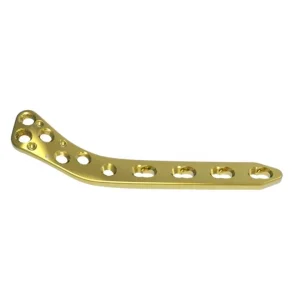
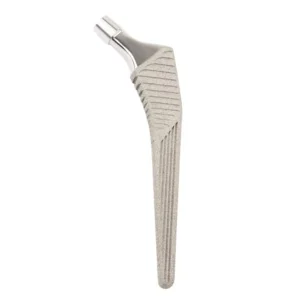
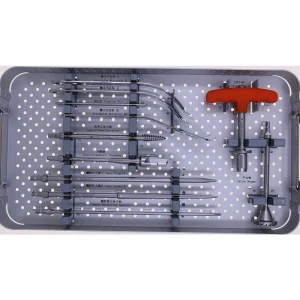
Famous CE Approved Orthopedic Implant THA Hip Instrument Set Femoral Part Supplier, Service
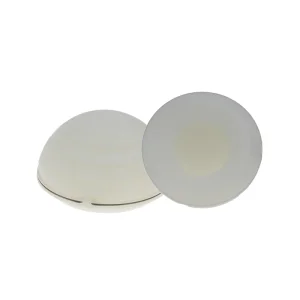
High-Quality TDC Cemented Acetabular Cup Artificial hip Joint Prosthesis Supplier, Suppliers
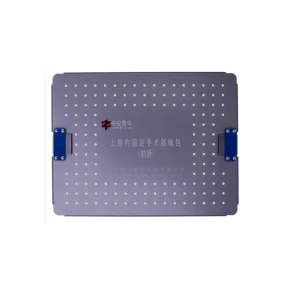
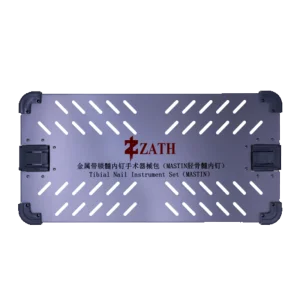
Discount MASTIN Expert Tibial Intramedullary Nail Instrument Set Manufacturers, Factories
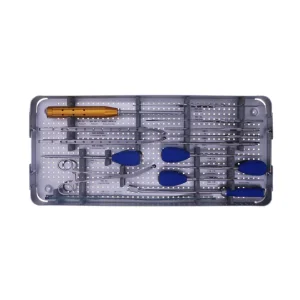
Best Zipper 6.0 System Spinal Internal Fixation System Instrument Universal Set Quotes, Company
The B2B Orthopedic Paradigm: True Factory-Direct Value vs. Cost Reductions
In Class IIb and Class III surgical implant supply, the term "discount" never denotes compromised metallurgy or loosened tolerances. Rather, it represents systemic efficiency, elimination of distributor layer markups, and end-to-end CNC automation within ISO 13485 cleanroom facilities.
Zero Intermediary Tiering
Western legacy brands operate across complex multi-tiered distribution channels where national importers, regional brokers, and hospital service organizations compound margins by 300% to 600%. Direct-from-source manufacturing returns procurement pricing to real fabrication baselines.
- Direct plant shipping reduces administrative overhead
- Transparent containerized FOB/CIF quotation matrices
Rigid Metallurgical Control
Discount pricing is anchored by bulk rod procurement directly from aerospace-grade raw material suppliers. Every batch of Ti-6Al-4V ELI (ASTM F136) and 316LVM (ASTM F138) undergoes optical emission spectroscopy and mechanical tensile testing prior to swiss-lathe tooling.
- Zero recycled titanium alloy scrap contamination
- 100% heat-lot traceability preserved on mill certs
Economies of Mass Scale
High-speed multi-axis turn-mill centers produce tens of thousands of cannulated, cortical, and locking screws per continuous shift. Continuous production lines minimize setup transition downtimes, driving unit costs down while maintaining sub-5 micron thread tolerances.
- Automated bar-feeder operations run 24/7
- Low scrap rate through laser sensor monitoring
China Factory 4.0: Supply Chain Resilience, Yield & Precision CNC Infrastructure
Operating from our modern facility in the Zhongguancun Science and Technology Park (Pinggu District, Beijing), Beijing ZhongAnTaiHua Technology Co., Ltd. (ZATH) deploys advanced multi-axis machining centers to achieve high surgical uniformity and production velocity.
Sub-Micron Swiss Turn-Mill Engineering
Bone screws present complex manufacturing challenges: variable pitch thread angles, reverse self-tapping flutes, cannulated micro-lumens, and precise head sphere tolerances. Our Beijing workshops employ advanced Star and Citizen Swiss-type lathes capable of 7-axis synchronous processing, turning continuous titanium bars into finished implants in a single cycle without secondary re-clamping distortion.
This single-setup capability eliminates eccentric runout between screw threads and drive sockets, preventing wobbling during surgical insertion and ensuring perpendicular plate-to-screw locking interface alignment.
Closed-Loop Quality Control: From Ingot to EtO
To safeguard hospital supply pipelines, every stage is audited under ISO 13485:2016 quality systems. Raw bar stock undergoes ultrasonic nondestructive flaw testing to eliminate internal voids or microcracks. During machining, automated optical coordinate measuring machines (CMM) sample parts every 30 minutes, recording 24 distinct dimensional parameters per screw.
Finished parts transition through multi-stage ultrasonic degreasing, passivation to ASTM F86 standards (generating a uniform titanium dioxide passivated protective surface), cleanroom double-blister sealing, and validated ethylene oxide (EtO) sterilization ensuring a sterility assurance level (SAL) of 10-6.
| Evaluation Parameter | Western Multi-Tier Importer | ZATH Smart Factory 4.0 Platform | Clinical & Commercial Benefit |
|---|---|---|---|
| Raw Material Specification | ASTM F136 / ISO 5832-3 (Re-branded) | Direct Mill Certified ASTM F136 Ti-6Al-4V ELI | Guaranteed identical biocompatibility without broker margin markup |
| Thread Profile Consistency | ± 0.015 mm tolerance window | ± 0.005 mm (Laser Micro-Gauged) | Uniform cortical purchase, optimal insertion torque & high pullout resistance |
| Procurement Lead Times | 12 – 20 Weeks (Backorder prone) | 4 – 6 Days express dispatch for stocked items | Elimination of hospital surgical backlogs and inventory stockouts |
| OEM / Private Labeling | Extremely cost-prohibitive / High MOQs | Agile OEM/ODM laser etching, packaging & sizing | Regional distributors can build high equity in their proprietary brands |
| Sterility & Packaging | Often non-sterile, re-sterilized by hospital | Double-barrier cleanroom blister packaging (Pre-sterile) | Saves 45 minutes of pre-op autoclave prep time; reduces nosocomial infection risks |
Macro Industry Solutions: Biomechanical Mechanics of Screw-Plate Construct Stability
An orthopedic screw is not merely a threaded fastener; it is an active mechanical load-bearing beam operating inside live dynamic bone tissue. Understanding internal fixation physics is central to designing implants that balance rigidity and biological healing.
Locking vs. Non-Locking Fixation
Conventional non-locking screws rely entirely on friction generated between the bone plate and underlying periosteum. Excessive tightening risks devascularizing the periosteum and compromising bone vascularization.
In contrast, ZATH Locking Compression Plate (LCP) systems utilize threaded screw heads that lock into the plate hole. This turns the construct into a rigid fixed-angle internal fixator, preserving periosteal blood flow and providing reliable anchorage in osteoporotic or comminuted bone.
Thread Design & Pullout Physics
Pullout force ($F_{pullout}$) is directly correlated to the shear area of bone engaged by the thread flanks:
F_pullout ∝ S_shear × π × D_outer × L × η
ZATH cancellous screws incorporate deep asymmetric buttress threads with high thread pitch to maximize bone purchase in low-density trabecular bone. Our cortical screws feature a shallower pitch and thicker core diameter to resist cyclic transverse bending moments during weight-bearing mobilization.
Self-Tapping Flute Geometries
Improper self-tapping flutes elevate insertion torque and can cause thermal osteonecrosis from frictional heat build-up. ZATH orthopedic screws feature precision-cut parabolic relief flutes ground with 18-degree cutting edges.
These flutes act as cutting dies, shearing bone chips into forward-facing flute recesses, which lowers required insertion torque by up to 35% and maintains intimate bone-implant contact for osseointegration.
Enterprise Procurement Standards: What Global Distributors Must Demand
When contracting high-volume orthopedic implant manufacturers, tier-one medical distributors execute stringent vendor qualification audits. Below is our engineering audit matrix outlining critical QA compliance benchmarks.
1. Metallurgical Purity & Material Certifications
Never accept standard generic commercial titanium. For load-bearing orthopedic screws, require raw material certificates verifying ASTM F136 Extra Low Interstitial (ELI) titanium, where oxygen content is restricted to ≤ 0.13% and iron to ≤ 0.25%. This composition preserves high fracture toughness and resistance to fatigue cracking under cyclic gait stresses.
All raw material lots at ZATH are delivered with full Mill Test Certificates (MTC) detailing melt chemistry, elongation percentage, and tensile yield strength (≥ 860 MPa).
2. Sterility Packaging Validation (ISO 11607)
Improper packaging leads to sterile barrier breaches during trans-oceanic freight. Verify that the supplier's packaging adheres to ISO 11607-1/2: medical-grade Tyvek heat-sealed to thermoformed PETG double blisters, validated through dye penetration (ASTM F1929), bubble emission testing (ASTM F2096), and accelerated aging tests validating a 5-year sterile shelf life.
Pre-sterilized packaging reduces central sterile supply department (CSSD) workload in hospitals and supports clinical infection control.
3. Mechanical Fatigue Verification (ASTM F543)
Bone screws must undergo comprehensive biomechanical testing according to ASTM F543 (Standard Specification and Test Methods for Metallic Medical Bone Screws), which measures:
- Torsional Yield Strength: Maximum rotational torque prior to plastic deformation
- Breaking Angle: Degree of plastic twist tolerated before catastrophic shear failure
- Axial Pullout Resistance: Load retention in standard polyurethane foam test blocks
4. Ergonomic Matching Instrument Sets
A bone plate or screw is only as dependable as the instrumentation used to deliver it. A common sourcing pitfall is contracting screws from one vendor and screwdrivers from another, which can result in loose driver-socket coupling, driver bit cam-out, and screw head stripping.
ZATH manufactures matched sets of stainless steel (17-4PH) drivers, drill bits, depth gauges, and drill guides. Tight tolerance matching guarantees stable driver engagement, enabling single-handed insertion in deep or minimally invasive surgical fields.
Regulatory Compliance & Dedicated Market Entry Support
Navigating medical device registrations requires complete, audit-ready technical files. ZATH provides regional partners with comprehensive dossier documentation to expedite national Ministry of Health clearances worldwide.
ISO 13485:2016 Certified QMS
Our Quality Management System is audited and certified specifically for the design, multi-axis machining, cleanroom packaging, and supply of joint arthroplasty, spinal instrumentation, trauma locking plates, and intramedullary fixation systems.
Full copies of current ISO certificates, scope annexes, and audit summaries are available to qualified distributor partners.
Free Sale Certificates (FSC) & CE Documentation
To facilitate clearance across Latin America, the Middle East, Southeast Asia, and Africa, ZATH supplies officially certified Free Sale Certificates (FSC) authenticated by governmental and chamber authorities, as well as UDEM CE-marked conformity dossiers.
We provide complete technical construction files including risk analysis matrices (ISO 14971) and biocompatibility reports (ISO 10993 series).
Customs Logistics & Express Stocking
We maintain an active strategic inventory of standard orthopedic screw sizes, plates, and surgical sets to shorten lead times. With express air cargo arrangements via DHL, FedEx, UPS, and air-freight forwarders, emergency orders typically dispatch within 24 to 48 hours, reaching major worldwide air hubs in 4 to 6 business days.
Technology Roadmap: The Next Generation of Orthopedic Screw Engineering
Orthopedic internal fixation is evolving rapidly beyond passive mechanical anchorage. ZATH R&D engineers collaborate with clinical institutions to integrate advanced biomaterials, surface nanotechnology, and additive manufacturing into next-generation fixation platforms.
Bio-Absorbable Magnesium Alloys
A primary clinical disadvantage of permanent titanium hardware is the frequent requirement for secondary surgical removal due to cold sensitivity, tendon irritation, or hardware impingement. ZATH is researching bioabsorbable high-purity magnesium-rare earth alloy systems (Mg-Nd-Zn-Zr).
These constructs degrade naturally via harmless physiological corrosion into magnesium ions, gradually transferring biomechanical loads to remodeling bone over a period of 12 to 18 months, eliminating the need for secondary removal procedures.
Additive 3D Porous Trabecular Screws
Using Electron Beam Melting (EBM) and Selective Laser Melting (SLM), our advanced R&D group is fabricating cannulated screws with highly porous central titanium lattice cores that mimic human trabecular bone (pore size: 300–500 μm; porosity: 65–75%).
This biomimetic porous structure lowers the modulus of elasticity closer to human cortical bone, reducing stress-shielding, while providing a 3D scaffold that accelerates osseointegration and vascular ingrowth.
Antimicrobial Surface Nano-Coatings
Implant-associated surgical site infections (SSI) and biofilm formation present severe clinical challenges in trauma and reconstructive surgery. Our surface engineering roadmap incorporates silver and zinc nanoparticle-doped anodization layers.
These coatings release targeted trace antimicrobial ions that disrupt bacterial cell walls (e.g., Staphylococcus aureus and Staphylococcus epidermidis) without inducing cytotoxic reactions in surrounding osteoblasts, protecting vulnerable healing windows.
Arthroplasty, Spinal Navigation & Specialized Trauma Hardware
Browse our comprehensive catalog of spine fixation, joint reconstruction, external pins, and precision cannulated surgical sets. Available directly for hospital procurement, healthcare tenders, and global OEM distribution networks.
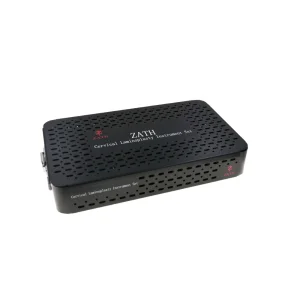
Buy Medical Hospital Use Cervical Laminoplasty Instrument Set Factories, Exporter
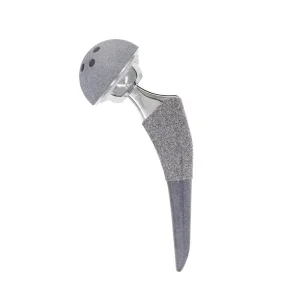
Cheap Hot sale Ti alloy JDS total hip replacement titanium joint prosthesis Quotes, Company
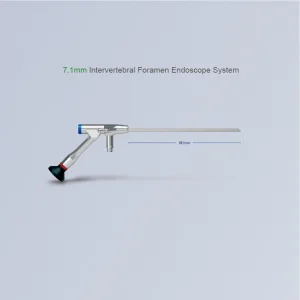
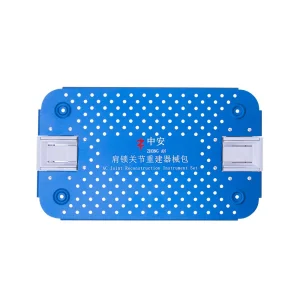

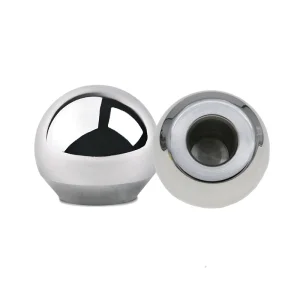
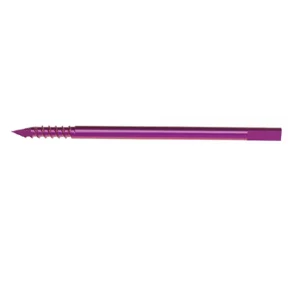
China Self Drilling and Self Tapping Triangular Cutting Edge Pin for Orthopedic External Fixation Supplier, Products
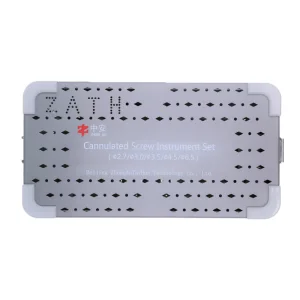
Discount Orthopedic Surgical Instruments Stainless Steel Cannulated Screw Instrument Set Supplier, Service
Frequently Asked Questions for Clinical Procurement Teams
Clear, engineering-backed answers addressing quality certifications, regulatory documentation, minimum order quantities (MOQs), and OEM customization capabilities.