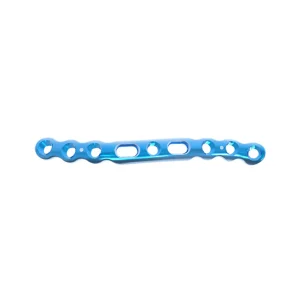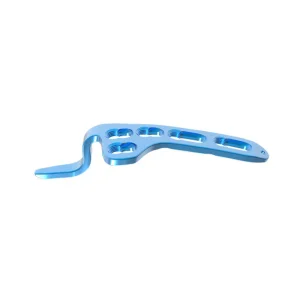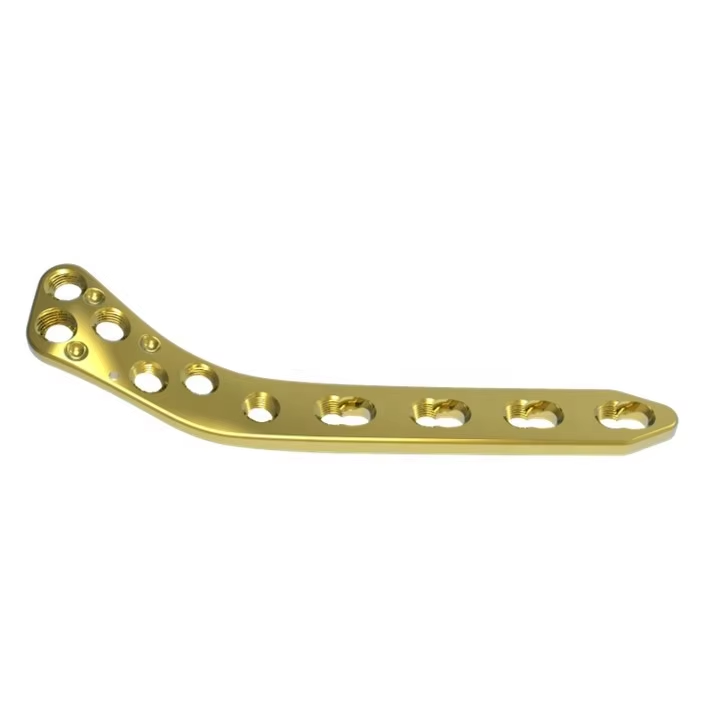
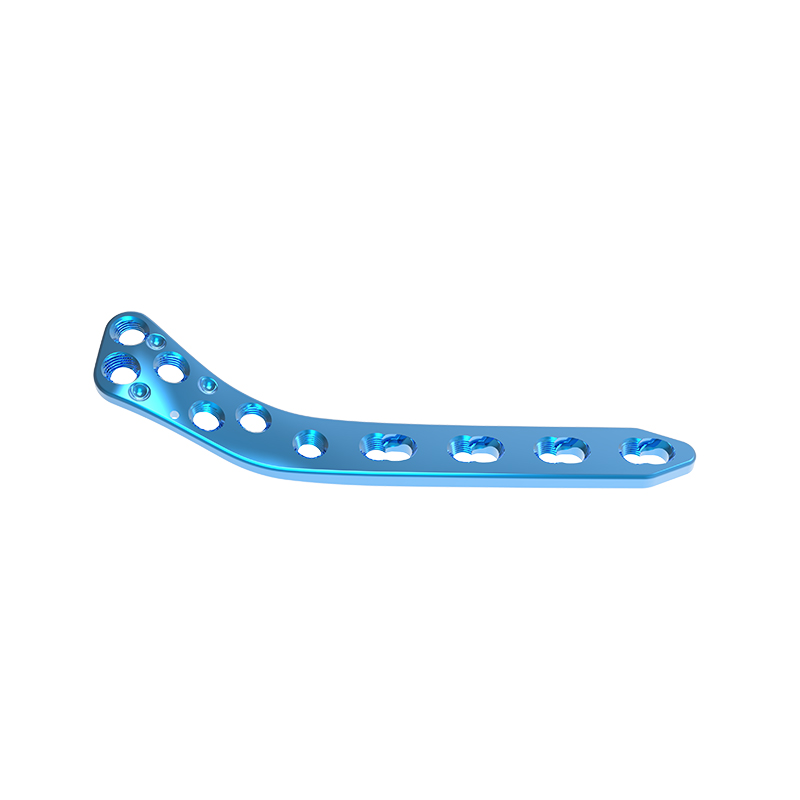
OEM Proximal Lateral Tibia Locking Compression Plate Supplier, Factories
Product Description
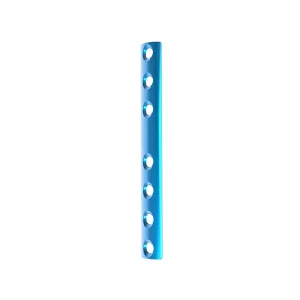
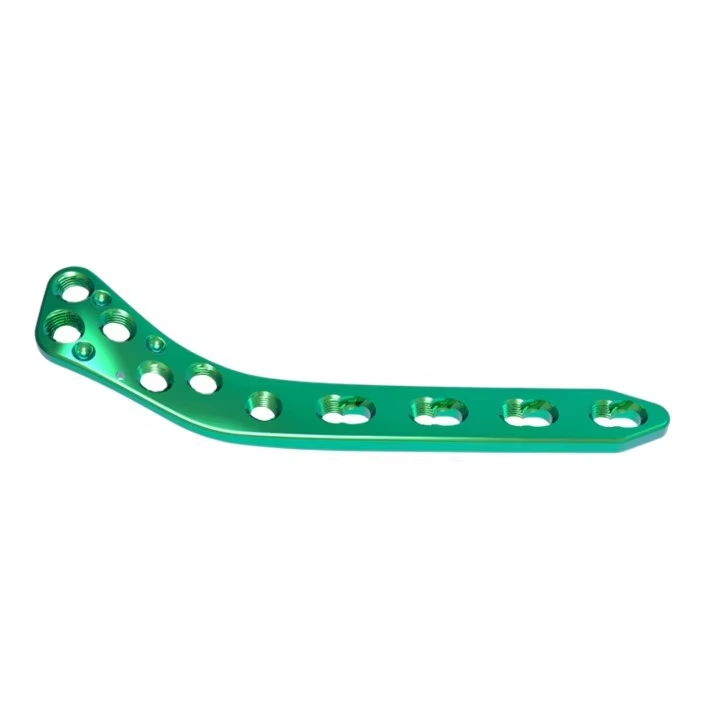
| Product Name | Proximal Lateral Tibia Locking Compression Plate |
| Specifications (Left) | 5 holes x 137 mm 7 holes x 177 mm 9 holes x 217 mm 11 holes x 257 mm 13 holes x 297 mm |
| Specifications (Right) | 5 holes x 137 mm 7 holes x 177 mm 9 holes x 217 mm 11 holes x 257 mm 13 holes x 297 mm |
| Width | 16.0 mm |
| Thickness | 4.7 mm |
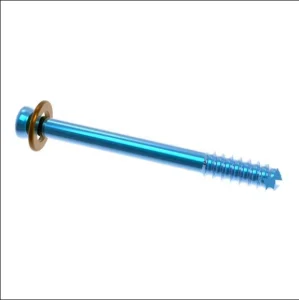
| Matching Screw | 5.0 mm Locking Screw / 4.5 mm Cortical Screw |
| Material | Titanium |
| Surface Treatment | Micro-arc Oxidation |
| Qualification | CE / ISO13485 / NMPA |
| Package | Sterile Packaging 1pcs/package |
| MOQ | 1 Pcs |
| Supply Ability | 1000+ Pieces per Month |
Indicated for treatment of nonunions, malunions and fractures of the proximal tibia including:
- ● Simple fractures
- ● Comminuted fractures
- ● Lateral wedge fractures
- ● Depression fractures
- ● Medial wedge fractures
- ● Bicondylar, combination of lateral wedge and depression fractures
- ● Fractures with associated shaft fractures
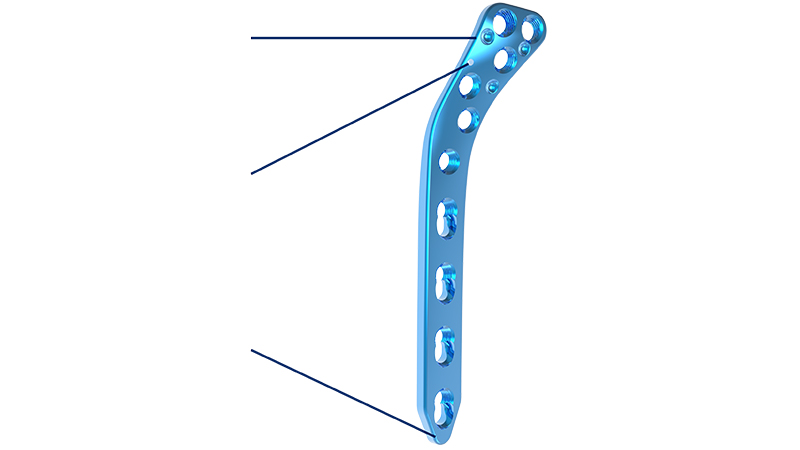
- ● The locking compression plate combines a dynamic compression hole with a locking screw hole, which provides the flexibility of axial compression and locking capability throughout the length of the plate shaft.
- ● Left and right plates
- ● Available sterile-packaged
- ● Anatomically precontoured plates improve plate-to-bone fit which reduces the risk of soft tissue irritation.
- ● K-wire holes with notches that can be used for provisional fixation using K-wires and sutures.
- ● Tapered, rounded plate tip facilitates a minimally invasive surgical technique.
The lcp tibia plate is made of a high-quality metal alloy, typically stainless steel or titanium, which allows for optimal strength and durability. It has multiple holes and slots along its length, which allow screws to be inserted and securely fixated into the bone.
The tibia locking plate features a combination of locking and compression screw holes. Locking screws are designed to engage with the plate, creating a fixed-angle construct that maximizes stability. Compression screws, on the other hand, are used to achieve compression at the fracture site, enhancing the healing process.
The main advantage of the proximal lateral tibia locking compression plate is its ability to provide a stable construct without reliance on the bone itself. By using locking screws, the plate can maintain stability even in cases of poor bone quality or comminuted fractures.