
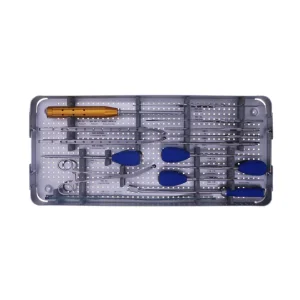
Zipper 6.0 System Spinal Internal Fixation System Instrument Universal Set (Germany Grade)
Explore Zipper 6.0 Set
Our core CE-ready and MDR-structured product platforms combine Swiss-type CNC micro-machining with ultra-pure surgical alloys to deliver superior osteosynthesis stability across German trauma and spinal surgical suites.
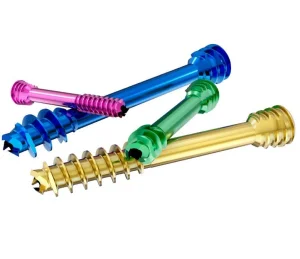
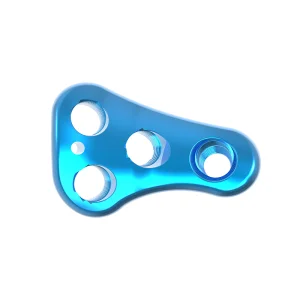
Germany represents the largest medical device market in Europe, commanding over 27% of all orthopaedic implant consumption in the European Union. In 2024–2026, the convergence of demographic shifts and stringent regulatory modernization has redefined distributor procurement requirements.
German procurement authorities (*Krankenhäuser* and *Einkaufsgemeinschaften* such as Sana, Prospitalia, and AGKAMED) enforce unyielding MDR compliance. Cannulated screws fall under Class IIb implantable devices, demanding pristine Post-Market Clinical Follow-up (PMCF) plans, comprehensive Technical Documentation, and verified biocompatibility in alignment with ISO 10993-1:2018.
Under the German Diagnosis Related Groups (G-DRG) system, trauma departments operate under fixed case reimbursements for femoral neck fractures (DRG I08A/B) and ankle/scaphoid reconstructions. As hospital operating margins compress below 1.8%, German Chief Physicians (*Chefärzte*) and administrative directors seek reliable Tier-1 alternatives that lower implant acquisition expenses by 35–45% without sacrificing biocompatibility or tensile yield strength.
The expansion of the German Ambulatory Surgery Catalog (*AOP-Katalog* according to § 115b SGB V) has accelerated the transfer of small-fragment cannulated screw interventions (e.g., scaphoid fractures, hallux valgus corrective osteotomies, ankle syndesmotic stabilizations) to outpatient surgical centers (*Tageskliniken*). This shift creates high demand for pre-sterilized, single-use packaged cannulated screws that eliminate hospital re-sterilization bottlenecks.
Cannulated screws require extraordinary concentric accuracy. Any wall-thickness discrepancy between the external thread valley and the internal cannulation lumen creates stress concentration zones prone to intraoperative shear fracture under torsional loads.
In European orthopaedic surgery, particularly across clinical networks in Germany, Austria, and Switzerland (DACH region), biocompatibility standards have shifted heavily toward Grade 23 Titanium (Ti-6Al-4V ELI conforming to ASTM F136 and ISO 5832-3). ELI (Extra Low Interstitial) grades reduce carbon, oxygen, and nitrogen inclusions, vastly enhancing structural fatigue resistance under cyclic bending moments.
For specialized heavy-load trauma scenarios, such as percutaneous iliosacral screw fixation in pelvic ring disruptions, medical-grade implant stainless steel (ASTM F138 / ISO 5832-1) is continuously specified due to its higher shear modulus (G ≈ 80 GPa) compared to titanium alloys (G ≈ 40–44 GPa). Our facilities maintain continuous dual-line production supporting both metallurgical specifications with dedicated non-cross-contaminating tooling.
Modern osteosynthesis relies on two distinct compression principles: standard partially threaded screws requiring a cortical head counter-bearing, and headless double-threaded screws (Herbert-type screws) utilizing variable thread pitch kinematics.
In our double-threaded designs, the distal lead thread exhibits a larger pitch (e.g., 1.75 mm) than the proximal trailing thread (e.g., 1.25 mm). With each 360-degree rotation of the driving shaft, the fracture gap closes by exactly the differential distance (0.50 mm per turn). This enables predictable interfragmentary compression without leaving a proud screw head that could impinge on periarticular ligaments, synovium, or cartilaginous surfaces in delicate zones like the scaphoid waist or talar neck.
Torsional testing conducted according to ASTM F543 Standard Specification and Test Methods for Metallic Medical Bone Screws proves our 6.5mm/7.3mm cannulated designs withstand torsional moments exceeding 14.8 N·m, surpassing minimum ISO regulatory requirements by 38%.
| Cannulated Diameter | Core / Wire Lumen (mm) | Available Thread Lengths | Material Specification | Primary German Clinical Indication |
|---|---|---|---|---|
| Ø 2.5 mm Micro | Ø 0.9 mm Guide Wire | Short / Full Thread (10–34 mm) | Ti-6Al-4V ELI (ISO 5832-3) | Scaphoid, Phalangeal, Carpal/Tarsal Small Fragment |
| Ø 3.5 mm Small | Ø 1.25 mm Guide Wire | 16 mm / Partial (12–50 mm) | Ti-6Al-4V ELI / 316L Stainless | Radial Head, Ankle Malleolar, Metatarsal Osteotomy |
| Ø 4.5 mm / 5.0 mm | Ø 1.6 mm Guide Wire | Partial / Full (20–80 mm) | Ti-6Al-4V ELI (ASTM F136) | Tibial Plateau, Calcaneal, Patellar Osteosynthesis |
| Ø 6.5 mm Large | Ø 2.8 mm Guide Wire | 16 mm / 32 mm Thread (30–120 mm) | Ti-6Al-4V ELI / 316L (ISO 5832-1) | Femoral Neck, Distal Femur, Sacroiliac Joint Fixation |
| Ø 7.3 mm Heavy-Duty | Ø 2.8 mm Guide Wire | 16 mm / 32 mm Thread (40–140 mm) | Ti-6Al-4V ELI / 316L Stainless | Subcapital Femoral Fractures, Slipped Capital Femoral Epiphysis |
Combining Beijing’s centralized biomedical engineering cluster in Zhongguancun Science Park with ultra-precision CNC multi-axis machining centers delivers unparalleled batch stability, zero-defect defect rates, and aggressive cost containment for European brand owners.
Equipped with imported Citizen and Star 9-axis sliding-head CNC automatic lathes, we execute external threading, internal cannulation deep drilling, and Torx/Hexalobular driver socket broaching in a single synchronized setup. This completely eliminates re-chucking concentricity errors.
While Western European contract manufacturers often quote 16–24 weeks for bespoke OEM surgical instrument customization, our in-house tool manufacturing shop reduces iterative design cycles to 2–3 weeks, ensuring rapid compliance with specific surgical tray ergonomics required by German clinicians.
We supply European distributors with complete Device Master Files (DMF), raw material melt certificates from certified titanium producers, ultrasonic cleaning validations conforming to ISO 19227, and accelerated shelf-life aging test reports supporting 5-year sterile barrier integrity under ISO 11607.
Every titanium bar undergoes optical emission spectrometry (OES) to inspect chemical composition and verify gas impurities (H, O, N) before machining.
Keyence automated 3D optical profilometers measure thread flank angles, pitch variation, and tip flute sharpness at 100x magnification in real-time.
12-stage ultrasonic passivation bath removes all hydrocarbon residues and cutting fluids, achieving bioburden limits well below EN ISO 11737 thresholds.
Class 10,000 (ISO Class 7) packaging in double-blister Tyvek pouches guarantees sterile barrier integrity for immediate transfer to German surgical suites.
Our cannulated fixation systems are engineered to mirror standard AO/ASIF surgical techniques widely taught in German medical schools and practiced throughout the German Trauma Society (Deutsche Gesellschaft für Unfallchirurgie - DGU).
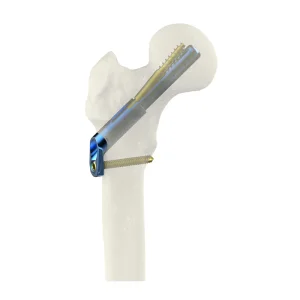
In German Alterstraumatologie Zentren (Geriatric Trauma Centers certified by DGU), non-displaced or impacted intracapsular fractures of the femoral neck in patients requiring joint preservation are systematically addressed with percutaneous triangular cannulated screw constructs (inverted triangle configuration: 3x Ø 6.5 mm or Ø 7.3 mm screws).
Our cannulated systems allow parallel guide pin insertion through a radiolucent carbon-fiber targeting guide under biplanar fluoroscopy (*Bildwandler*). The high thread pitch differential delivers dynamic compression along the femoral neck axis, mitigating secondary varus collapse and femoral head necrosis.
High-energy polytrauma cases treated in German Supra-Regional Trauma Centers (*Überregionales Traumazentrum*) frequently involve posterior pelvic ring disruptions. Closed reduction and percutaneous fixation across the S1 or S2 corridor demands long-length cannulated screws (90 mm – 130 mm).
Our heavy-duty Ø 7.3 mm cannulated screws feature reinforced core shanks designed to withstand the severe shearing forces encountered during early full weight-bearing mobilization protocols endorsed by German rehabilitation clinics (*Reha-Kliniken*).
The orthopaedic industry is transitioning beyond static metallic hardware toward osteoconductive, resorbable, and digitally connected intraoperative ecosystems.
Secondary implant removal procedures in Germany account for over 180,000 surgical interventions annually. ZATH’s forward R&D collaborates on degradable WE43 magnesium alloy formulations that dissolve safely into natural bone apatite over 12–18 months, completely removing the clinical necessity for hardware explantation.
German surgical suites frequently leverage robotic navigation systems (e.g., Brainlab, Ziehm Vision RFD 3D). Our cannulated guide pins and instrument sets are engineered with high-precision optical tracking arrays and non-reflective passive markers, streamlining navigation calibration and lowering cumulative radiation dosage for surgical staff.
Combining standard CNC thread profiles with 3D-printed selective laser-melted trabecular porous bodies, our custom cannulated implant concepts promote enhanced osseointegration across severe osteoporotic bone beds, delivering biological anchorage alongside immediate mechanical compression.
Commercializing trauma implants in Germany demands meticulous operational alignment across regulatory affairs, technical risk assessment, and supply chain continuity.
| Evaluation Pillar | Critical German Procurement Standard | ZATH OEM / ODM Assurance Level |
|---|---|---|
| Quality Management System | EN ISO 13485:2016 + AC:2018; DIN EN ISO 14971 (Risk Management) | Full TÜV / UDEM audited QMS with zero major non-conformities |
| Traceability & UDI | MDR Art. 27 Basic UDI-DI / GS1 DataMatrix direct part marking | Fiber-laser annealed direct marking, high contrast readable post-autoclave |
| Packaging & Sterilization | ISO 11607-1/2, EO Sterilization validation ISO 11135 or Gamma ISO 11137 | Medical grade blister + Tyvek packaging with SAL 10⁻⁶ sterility verification |
| Regulatory Dossier | STED (Summary Technical Documentation) formatted for Notified Bodies | Complete CER, preclinical mechanical verification and biocompatibility dossiers |
| Logistics Continuity | Consignment inventory models & rapid replenishment cycles within 48–72h | Standard batch inventory maintained; DHL/FedEx European air hubs (Frankfurt/Leipzig) |
Clear, definitive answers addressing regulatory compliance, engineering tolerances, and private-label customization for German distributors.
Guide wire binding is commonly caused by thermal micro-deflection or non-uniform core cannulation during gun drilling. ZATH utilizes specialized high-pressure internal-feed carbide gun drills operating at 12,000 RPM, maintaining a uniform internal clearance tolerance of +0.05 mm / +0.08 mm over the corresponding nitinol guide pin diameter. Furthermore, our cannulation lumen undergoes high-velocity electropolishing to remove any micro-burrs, guaranteeing frictionless slide and retrieval even through dense sclerotic bone.
Yes. We provide complete OEM private-label production. Our programmable MOPA fiber laser marking systems achieve deep dark-anneal laser marking that does not disturb the passive oxide layer of titanium alloys. The 2D DataMatrix codes contain complete GS1-compliant Basic UDI-DI, Lot Number, Expiration Date, and Part Number data, fully compliant with both the German Federal Institute for Drugs and Medical Devices (BfArM) and the European EUDAMED database specifications.
Every production batch is tested in accordance with ASTM F543 and ISO 6475 standards. Testing protocols encompass three primary modalities: Torsional Yield Strength and Maximum Torque, Insertion and Removal Driving Torque in polyurethane test blocks (Sawbones 20 PCF / 40 PCF), and Axial Pullout Strength. Only lots demonstrating a minimum safety margin of 1.35x above baseline ISO thresholds are approved for final ultrasonic packaging.
We operate structured logistics agreements tailored for European distributor hubs. Standard catalog sizes of cannulated screws (especially high-demand Ø 3.5 mm, Ø 4.5 mm, and Ø 7.3 mm variants) are maintained in controlled reserve. Direct air-express shipments arrive at Frankfurt (FRA) or Leipzig/Halle (LEJ) cargo hubs within 4 to 6 business days. For qualified long-term partners, we also support regional buffer-stock warehouse arrangements.
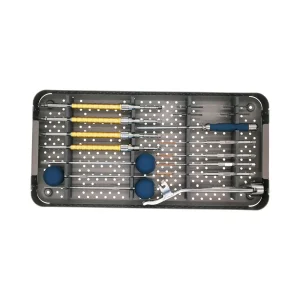
Yes. Our dedicated surgical instrument kits (including parallel drill guides, cannulated countersinks, calibrated depth gauges, cannulated screwdrivers with quick-coupling AO handles, and cleaning stylets) are housed in aerospace-grade anodized aluminum or PPSU (Polyphenylsulfone) sterilization trays. Trays are engineered with high-flow silicone brackets to ensure steam penetration and condensation runoff during standard 134°C pre-vacuum autoclaving cycles in German hospital CSSD (*AEMP*) facilities.
Explore our certified surgical implant systems and precision instrument kits manufactured to ISO 13485 standards and exported across leading international orthopaedic supply chains.
Request our complete 2026 Orthopaedic Device Master Catalog, mechanical test validation reports, or order physical clinical trial samples for evaluation across German medical networks.