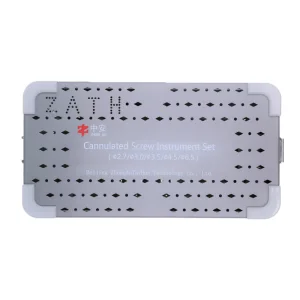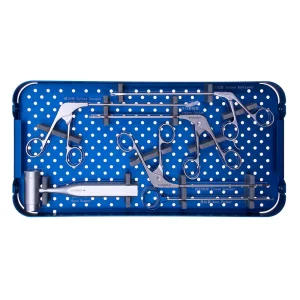
Integrated Solutions
Precision Implants & Compatible Surgical Systems
Explore initial surgical platforms, locking fixation kits, and arthroscopy devices engineered to ISO 13485 medical-grade standards.
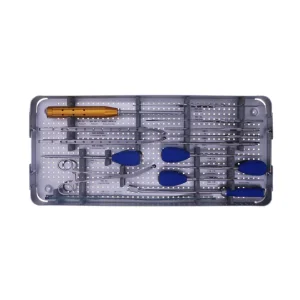
Zipper 6.0 Spinal Internal Fixation Set
Inquire Product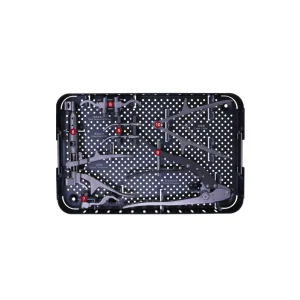
Cable Instrument Set Type II
Inquire Product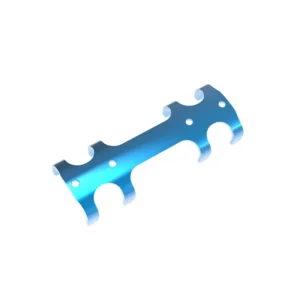
Titanium Rib Claw Plate for Pectorales AO
Inquire Product
ZAFIN Femoral Nail Instrument Set
Inquire Product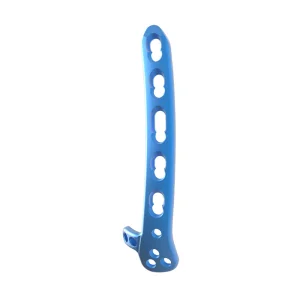
Distal Posterolateral Humerus Locking Plate
Inquire Product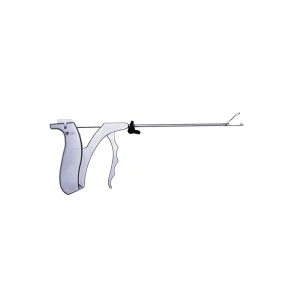
SuperFix Suture Passer Sports Device
Inquire Product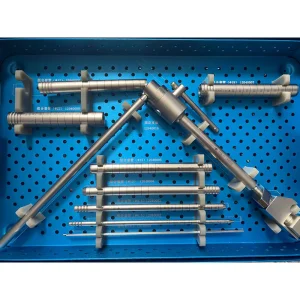
Spine MIS Channel Instrument System
Inquire Product12mm
Critical Metric Calibration
±0.005mm
CNC Swiss Machining Tolerance
100%
Lot Traceability (ISO 13485)
4-6Days
Global Air Expedited Logistics
Clinical Engineering Brief
Demystifying the "12 mm Bone Screw" in Clinical & Biomechanical Practice
A technical orientation clarifying diameter vs. length configurations across osteosynthesis, cranio-maxillofacial, spine, and small-fragment orthopedic reconstruction.
12 mm Effective Working Length
In midfoot arthrodesis, distal radius fixation, and metacarpal trauma, a 12 mm length screw (typically in outer diameters Ø2.0 mm, Ø2.4 mm, Ø2.7 mm, or Ø3.5 mm) provides exact bicortical engagement without risking dorsal soft-tissue irritation or flexor tendon impingement.
Its application ensures high-compression interfragmentary stability across delicate articular surfaces where excessive protrusion leads to clinical complications.
12 mm Large-Bore Diameter (Reconstruction)
When evaluated as a diameter parameter, 12 mm represents specialized massive cannulated salvage screws, iliosacral trauma bolts, and veterinary equine condylar fixation shafts engineered to withstand massive multiaxial shear forces exceeding 6,500 N.
These massive diameter designs incorporate tapered core geometry to disperse peak bending stresses across pelvic rings and compromised osteoporotic bone beds.
Thread Pitch & Pullout Mechanics
Engineered with a cortical buttress thread pitch (typically 1.0 mm to 1.25 mm) or deep-cut cancellous profile (1.75 mm pitch), surgical screws in this calibration guarantee superior pullout strength under repetitive cyclic loading, mitigating post-operative hardware migration.
Reverse-cutting flutes facilitate seamless self-tapping insertion while cutting clean relief zones to prevent thermal bone necrosis.
Commercial Intelligence
Global Market Dynamics & 12 mm Bone Screw B2B Pricelist
Comprehensive pricing transparency across medical-grade Titanium Alloy (Ti-6Al-4V ELI) and Implant-Grade Stainless Steel (316LVM) for OEM, regional distributors, and hospital procurement boards.
Executive Sourcing Insight: Total Cost of Ownership (TCO)
While Western multi-national tier-1 brands maintain catalog pricing upwards of $180 to $420 per sterile titanium locking screw, Chinese direct-from-factory ISO 13485 production delivers equivalent ASTM F136 compliant mechanical performance at $12.00 to $34.00, enabling substantial margin recovery for distributors navigating national DRG and tender caps.
| Product Specification | Core Material Grade | Clinical Usage | Factory FOB Price (MOQ 100) | Tier-1 Brand Equivalent | Sterilization Status |
|---|---|---|---|---|---|
| Ø2.4 mm x 12 mm Cortical Screw | Ti-6Al-4V ELI / 316LVM | Distal Radius / Metacarpal | $9.50 – $14.20 | $140 – $220 | Sterile / Non-Sterile |
| Ø3.5 mm x 12 mm Locking Screw | Grade 5 ELI Titanium (ASTM F136) | Clavicle / Fibula / Pelvis | $14.00 – $19.50 | $185 – $310 | Double Tyvek Sterile |
| Ø4.0 mm x 12 mm Cancellous Screw | Titanium Alloy / Stainless Steel | Foot & Ankle Osteotomy | $12.50 – $18.00 | $160 – $275 | Sterile Optional |
| Ø4.5 mm x 12 mm Cortex Screw | 316LVM Surgical Stainless (ASTM F138) | Reconstruction & Trauma | $11.00 – $16.50 | $170 – $290 | Cleanroom Packed |
| Ø6.5 mm x 12 mm Thread Cannulated | Ti-6Al-4V ELI (High Fatigue) | Femoral Neck / Tibial Plateau | $28.00 – $42.00 | $350 – $600 | Double Sterile Barrier |
| Ø12 mm Large-Bore Salvage Screw | High-Strength Medical Titanium | Sacroiliac / Equine Arthrodesis | $65.00 – $98.00 | $750 – $1,200 | Individual Blister |
Custom Laser Marking
Universal Torx & Stardrive Recesses
AO Standard Flute Geometry
Anodized Color Coding
Manufacturing Excellence
Why Chinese Precision Manufacturing Dominates Global Screw Supply
Combining advanced Swiss-type turning centers, end-to-end supply chain integration, and rigorous ISO 13485 cleanroom validation.
Swiss CNC High-Throughput Machining
By leveraging Japanese Citizen and Star multi-axis CNC turning machines, production facilities achieve micron-level concentricity (under 5 microns) across high-volume batches. Tool wear monitoring algorithms ensure self-tapping cutting edges remain razor-sharp, mitigating insertion torque spikes during operating room drilling.
Cleanroom Automation & Passivation
Automated ultrasonic multi-stage cleaning lines completely remove residual cutting oils, followed by ASTM A967 chemical passivation and Type II electrochemical anodization. These processes generate a robust, bio-inert titanium oxide (TiO2) film that expedites osseointegration and prevents heavy metal ion leaching in vivo.
Class 10,000 Packaging Integration
Implants are sealed directly within localized Class 10,000 (ISO Class 7) cleanrooms inside medical-grade double blister trays with breathable Tyvek lidding. Terminally sterilized via Ethylene Oxide (EO) or Gamma irradiation, each pack features 5-year validated shelf life to streamline local regulatory registrations worldwide.
Clinical Indications
Localized Application Scenarios & Global Buyer Specifications
Analysis of how surgical specialties utilize 12 mm bone screws across emergency trauma centers, elective orthopedic facilities, and sports medicine institutes.
Distal Radius & Small Frag
Primary Need: Low-profile locking heads that seat flush inside volar plates. The 12 mm screw length avoids dorsal extensor tendon rupture in lister's tubercle fractures.
Anterior Cervical Plating (ACP)
Primary Need: Semi-constrained or constrained 12 mm self-drilling cervical screws engineered for unicortical vertebral body fixation without risk of posterior canal breach.
Syndesmotic & Ankle Fusion
Primary Need: Partially threaded cannulated cancellous screws with 12 mm active thread runouts providing high interfragmentary compression across sub-talar or calcaneal joints.
Veterinary Orthopedics (TPLO)
Primary Need: High bending-yield 12 mm veterinary cortical screws for canine tibial plateau leveling osteotomies requiring rapid bone healing under constant dynamic stress.
Strategic Outlook
Emerging Technology Trends in Modern Fastener Systems
The convergence of advanced metallurgical additive manufacturing, bio-resorbable polymers, and digital inventory robotics.
Bio-absorbable Magnesium Alloys
Next-generation bone screws are transitioning toward magnesium-zinc-calcium bio-absorbable matrices. These implants offer modulus match close to natural human cortical bone (40-45 GPa) eliminating stress shielding, naturally hydrolyzing into harmless biological elements, and eliminating secondary hardware removal procedures.
Additive 3D Porous Trabecular Cores
Utilizing selective laser melting (SLM) additive manufacturing, advanced screws now feature dense cortical load-bearing threads coupled with porous lattice shafts (pore size 300–500 μm). This micro-architecture stimulates deep osteoblast migration and rapid bone ingrowth across complex non-union sites.
RFID & 2D Matrix UDI Smart Implantation
Global regulatory mandates (US FDA UDI and EU MDR) require comprehensive device traceability. Forward-thinking manufacturers now laser-etch microscopic 2D Data Matrix codes directly onto screw heads, facilitating automated operating-room stock recognition, eliminating surgical tray sorting errors, and tracking implant performance over decades.
Knowledge Base
Frequently Asked Questions: 12 mm Bone Screw Engineering & Sourcing
Direct technical responses addressing common procurement, material compliance, and clinical application concerns.
What is the difference between a 12 mm thread length screw and a 12 mm diameter screw?
In orthopedic nomenclature, the nominal callout typically denotes diameter followed by total shaft or thread length (e.g., Ø3.5 mm x 12 mm). A 12 mm length screw is commonplace across small-fragment trauma, distal radius, and craniofacial plating to secure bicortical contact without soft-tissue protrusion. Conversely, a 12 mm diameter screw is an ultra-heavy-duty fastener utilized exclusively in specialized pelvic salvage, sacroiliac joint fixation, or large-animal equine orthopedics to resist extreme multiaxial shear stresses.
How do Titanium Alloy (Ti-6Al-4V ELI) and Stainless Steel (316LVM) compare in screw performance?
Titanium Alloy (Grade 5 ELI / ASTM F136) offers exceptional biocompatibility, superior MRI compatibility (significantly reducing imaging scatter artifacts), and an elastic modulus closer to human cortical bone, reducing stress-shielding risks. Stainless Steel (ASTM F138 / 316LVM) possesses a higher modulus of rigidity and shear strength, providing crisp tactile feedback during manual insertion and higher resistance to stripping, making it popular in acute trauma salvage situations where cost-efficiency is a paramount tender consideration.
What quality certifications must a Chinese manufacturing partner possess for EU/US imports?
Reputable Chinese medical implant manufacturers must maintain an active ISO 13485:2016 certified quality management system audited by a recognized notified body (such as TÜV, BSI, or UDEM). For exportation into the European Union, compliance with the Medical Device Regulation (EU MDR 2017/745) Class IIb certification is mandatory. For the United States, manufacturers require FDA 510(k) clearance, Device Establishment Registration, and compliance with 21 CFR Part 820 Quality System Regulations.
Can screw thread geometry be customized for OEM/ODM private label programs?
Yes. Qualified production factories support OEM/ODM customization of thread lead pitch (cortical, cancellous, or dual-core), flute geometry (self-tapping, reverse-cutting flutes), recess patterns (Torx, Stardrive, Hexagonal, or Cruciform), and surface treatments (electrochemical anodization in gold, blue, or magenta). Custom laser markings, barcoded blister packaging, and full technical documentation files (DHF/DMR) are supplied to assist local regulatory filings.
How do hospital purchasing groups prevent stripping during high-torque bone screw installation?
Stripping issues are mitigated by transitioning from legacy cruciform or hexagonal drive recesses to Stardrive (Torx-style) interfaces (T8, T10, T15, T20). Torx configurations distribute driver torque radially rather than axially, preventing "cam-out" effects and eliminating the need for excessive downward force during bone purchase in dense sclerotic or cortical structures.
Product Catalog
Comprehensive Trauma & Reconstruction Product Range
Explore matching plates, intramedullary nails, sports anchors, and cannulated screw instrumentation engineered for complete surgical compatibility.
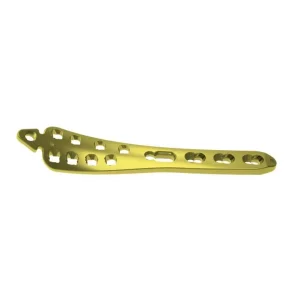
Distal Medial Tibia Locking Plate II
Inquire Product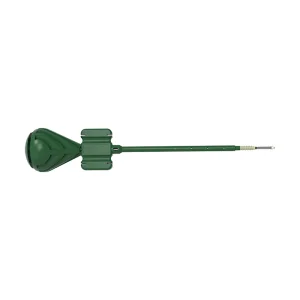
SuperFix P Knotless Suture Anchor
Inquire Product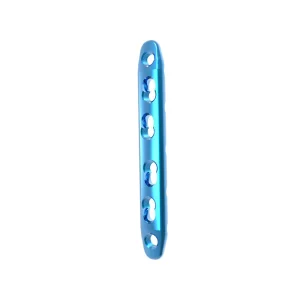
Humerus Limited Contact Locking Plate
Inquire Product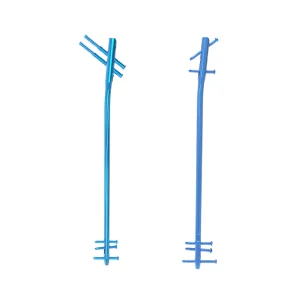
MASFIN Femur Intramedullary Nail
Inquire Product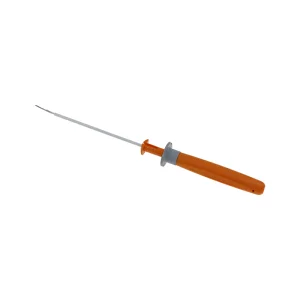
Fast All Inside Meniscal Repair System
Inquire Product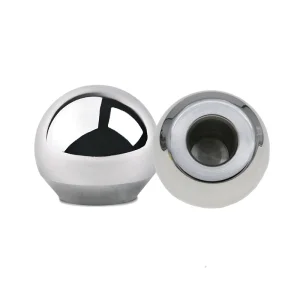
Artificial Hip Joint FDH Femoral Head
Inquire Product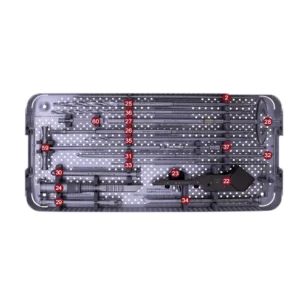
InterZan Intramedullary Nail Instrument Set
Inquire Product