
Spinal System
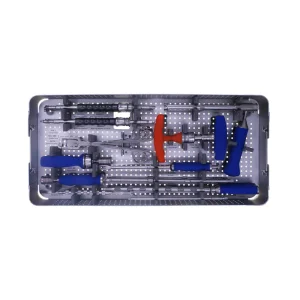
CE Certification Zipper 6.0 System Spinal Internal Fixation System Instrument Exclusive Set Factories, Product
Explore Specifications
From trauma plating cortical screws to specialized spinal and reconstructive assemblies, manufactured under high-precision multi-axis Swiss sliding-head CNC machining protocols.
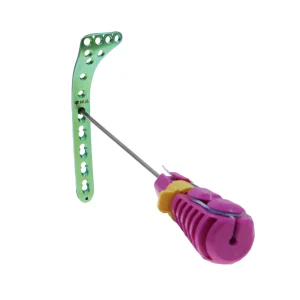
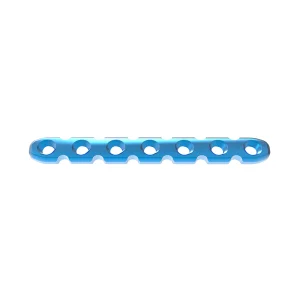
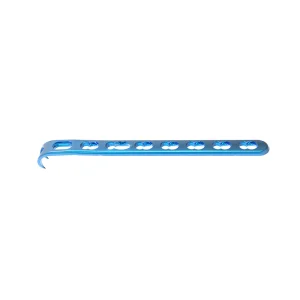
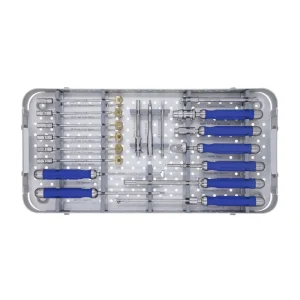
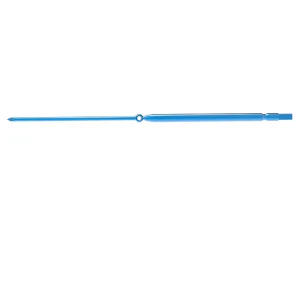
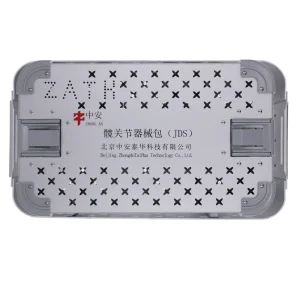
Cortical bone screws are the mechanical keystone of internal fixation. Understanding thread purchase mechanics, core-to-outer diameter ratios, and raw material purity is paramount for clinical zero-failure rates.
In human musculoskeletal biomechanics, cortical bone (compact bone) exhibits an elastic modulus of approximately 12 to 20 GPa and dense lamellar osteon organization. Consequently, cortical bone screws require an engineered geometry fundamentally distinct from cancellous or spongiosa screws. Our manufacturing line follows AO/ASIF (Arbeitsgemeinschaft für Osteosynthesefragen) standards, characterized by a shallower thread depth, a fine thread pitch (typically 1.0 mm to 1.75 mm), and a high core-to-outer diameter ratio (typically 0.65 to 0.75).
The high core-to-outer diameter design maximizes the screw's area moment of inertia, directly reinforcing its resistance against bending and torsional shear loads during physiological weight-bearing and plate tensioning. The pullout force ($F_{pullout}$) in dense diaphyseal bone is governed by the shear failure of the interdigitated bone shelf:
$$F_{\text{pullout}} = \tau_{\text{bone}} \cdot \pi \cdot d_{\text{outer}} \cdot L_{\text{purchase}} \cdot \text{TSF}$$
Where $\tau_{\text{bone}}$ is the shear strength of the patient's cortical lamellae, $d_{\text{outer}}$ is the major outer diameter, $L_{\text{purchase}}$ is the cumulative bicortical engagement length, and $\text{TSF}$ is the Thread Shape Factor. Our precision rolling and whirling lines ensure consistent flank angles and micro-radiused thread roots to minimize stress concentration points.
Distributors and hospitals procuring from Chinese manufacturing facilities must strictly delineate between the metallurgical profiles of Ti6Al4V ELI (ASTM F136 / ISO 5832-3) and ultra-clean surgical Stainless Steel (ASTM F138 / ISO 5832-1):
ASTM F136 Ti6Al4V ELI (Extra Low Interstitial): Provides an elastic modulus (~110 GPa) closer to cortical bone than stainless steel, reducing the incidence of "stress shielding" and subsequent peri-implant cortical osteoporosis. Interstitial element content (Oxygen < 0.13%, Iron < 0.25%, Carbon < 0.08%, Nitrogen < 0.05%, Hydrogen < 0.012%) is stringently controlled to ensure exceptional high-cycle fatigue life and biocompatibility. Spontaneous formation of a dense, self-healing titanium oxide ($TiO_2$) passivated layer guarantees superior corrosion resistance within human tissue fluids.
ASTM F138 High-Grade 316L Stainless Steel: Vacuum Induction Melted and Vacuum Arc Remelted (VIM-VAR) alloy engineered with 17-19% Chromium, 13-15% Nickel, and 2.25-3.0% Molybdenum. This composition minimizes non-metallic inclusions and eliminates susceptibility to pitting and crevice corrosion under dynamic compression plate (DCP) countersunk screw-hole interfaces.
How Beijing ZhongAnTaiHua Technology Co., Ltd. (ZATH) and modern Chinese medical clusters deliver high-yield production, uncompromised lot-traceability, and cost resilience for worldwide OEMs.
By sourcing high-purity medical rods directly from domestic titanium clusters (Baoji Titanium Valley), Chinese manufacturing facilities circumvent multilayer broker markups while securing verified mill test certifications (MTR 3.1) for chemical composition and tensile elongation.
Our machining facility deployed in Beijing utilizes 7-axis and 9-axis Swiss-type sliding-head CNC turning centers (Citizen and Star platforms). The entire screw geometry—from drive recess broaching to thread whirling and self-tapping flute milling—is executed in a single chucking.
Following high-speed CNC shaping, implants undergo automated ultrasonic multi-tank degreasing, Type II electrochemical anodization for color-coding and fatigue enhancement, and passivated drying before entering our ISO Class 7 (Class 10,000) cleanroom packaging suites.
International distributors face severe margin compression and increasing regulatory friction. Here is how modern contract manufacturing solves supply security, drive recess optimization, and packaging agility.
A major cause of surgical delay during osteosynthesis is screw-head stripping or "cam-out." International buyers are systematically transitioning purchasing portfolios from traditional hexagonal drive recesses (ISO 5835) to self-retaining Star-Drive (Torx / Hexalobe ISO 10664) configurations. Our Beijing manufacturing lines produce both formats with tight broaching tolerances:
Torx / Hexalobe Recesses (T6, T8, T10, T15, T25): Parallel drive walls and an optimized angle of engagement distribute rotational insertion torque along broad perimeter lobes rather than sharp corners. This eliminates radial outward forces that cause screwdriver slippage, enabling high-torque bicortical insertion even through hyper-dense sclerotic bone cortex.
Hexagonal Recesses (1.5mm, 2.5mm, 3.5mm): Highly compatible with widespread hospital instrument fleets in emerging markets. Our cold-heading and rotary broaching processes yield chamfered entry ramps to facilitate rapid intraoperative screwdriver docking under blood-obscured conditions.
To reduce operative steps and ischemia times, over 85% of modern cortical bone screw orders specify Self-Tapping Flutes. ZATH incorporates CNC-milled reverse-cutting parabolic flutes. As the screw advances, the cutting flutes shave dense bone chips into specialized clearance pockets rather than packing them against thread flanks, preventing spike resistance and reducing bone thermal necrosis.
| Screw Diameter | Core Diameter | Thread Pitch | Gliding Hole Drill Bit | Thread Pilot Hole Drill | Drive Recess Type | Primary Clinical Indication |
|---|---|---|---|---|---|---|
| Ø 1.5 mm Cortical | 1.0 mm | 0.50 mm | Ø 1.5 mm | Ø 1.1 mm | Star-Drive T6 / Hex 1.2 | Hand, craniomaxillofacial, phalangeal |
| Ø 2.0 mm Cortical | 1.3 mm | 0.60 mm | Ø 2.0 mm | Ø 1.5 mm | Star-Drive T8 / Hex 1.5 | Metacarpal, distal radius, fibula distal |
| Ø 2.4 mm Cortical | 1.7 mm | 1.00 mm | Ø 2.4 mm | Ø 1.8 mm | Star-Drive T8 / Hex 2.0 | Distal radius volarlocking, small bone |
| Ø 2.7 mm Cortical | 1.9 mm | 1.00 mm | Ø 2.7 mm | Ø 2.0 mm | Star-Drive T8 / Hex 2.5 | Clavicle, ulna, ankle pilon, pelvic margin |
| Ø 3.5 mm Cortical | 2.4 mm | 1.25 mm | Ø 3.5 mm | Ø 2.5 mm | Star-Drive T15 / Hex 2.5 | Humerus, radius, ulna, distal fibula, pelvis |
| Ø 4.5 mm Cortical | 3.0 mm | 1.75 mm | Ø 4.5 mm | Ø 3.2 mm | Star-Drive T25 / Hex 3.5 | Femur diaphyseal, tibia shaft, total arthroplasty |
Meeting European MDR 2017/745 Class IIb and US FDA 510(k) mandates requires empirical testing protocols, non-cytotoxic surface validation, and rigorous batch risk controls.
Every manufacturing production run undergoes destructive torsional verification per ASTM F543 Annex A1. Screws are clamped in a split collet with 5 threads exposed, rotated at 1-5 rpm until structural fracture.
To eliminate head-stripping and intraoperative shank snapping, screws are driven into certified medical-grade polyurethane test blocks (ASTM F1839). Maximum insertion torque ($T_{ins}$) is benchmarked against stripping torque ($T_{strip}$).
Per ASTM F543 Annex A3, screws are fully seated in synthetic bone and pulled axially at 5 mm/min to establish ultimate tensile pullout load. Implants additionally satisfy all ISO 10993 cytotoxicity, sensitization, and pyrogenicity criteria.
From diaphyseal transverse fracture compression to pelvic reconstructive stabilization, cortical screws achieve primary stability under precise mechanical insertion parameters.
A classic cortical bone screw converts rotational torque into axial compressive force across an oblique or spiral fracture line. When utilized as a "lag screw," the near cortex is overdrilled to match the screw's outer thread diameter (gliding hole), while the far cortex is drilled to the core diameter (thread hole). As the screw head seats against the countersunk bone surface, tension pulls the two fragments together, generating primary osteon direct bone healing without visible callus formation.
When used in conjunction with non-locking plates (such as tubular, dynamic compression, or pelvic reconstruction plates), cortical screws act as tension anchors. In Dynamic Compression Plating (DCP), eccentric screw insertion into an inclined oval hole drives the plate horizontally, forcing fracture gap closure. In locking compression plate (LCP) systems, cortical screws are frequently placed first as reduction screws to pull bone fragments tightly against the plate before locking head screws fix the angular construct.
Except in strictly designated sub-muscular bridge plating situations where locking screws are employed, cortical screws must universally achieve bicortical purchase. Engaging both the near (cis) and far (trans) cortex doubles the holding length ($L_{purchase}$), drastically elevating pullout thresholds and resisting cyclical physiological cantilever bending stresses during initial patient rehabilitation.
The orthopedic implant landscape is rapidly transitioning beyond standard metallic alloys. Explore next-generation technologies being integrated into Chinese R&D roadmaps.
Next-generation resorbable cortical screws utilize magnesium-zinc-calcium (Mg-Zn-Ca) matrices engineered with controlled corrosion rates. These screws degrade completely into non-toxic biological ions over 12-18 months, eliminating mandatory secondary removal surgeries and chronic foreign-body tissue irritation.
Post-machining surface functionalization incorporating anodized $TiO_2$ nanotubular arrays loaded with silver nanoparticles (AgNP) or local vancomycin eluting matrices. This provides contact-killing and release-killing antimicrobial efficacy against Staphylococcus aureus biofilms without provoking systemic hepatic cytotoxicity.
Modern surgical suites require bone screws calibrated for optical navigation and robot-assisted screwdriver end-effectors. Our Beijing production protocols integrate precision torque-limiting quick-coupling adapters and laser-etched depth fiducials to enable sub-millimeter surgical robotic guidance.
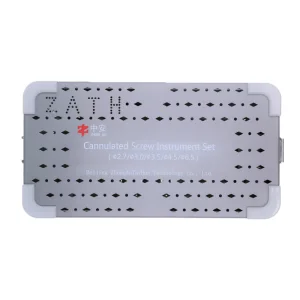
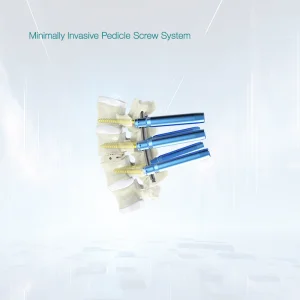
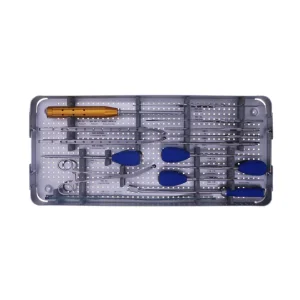
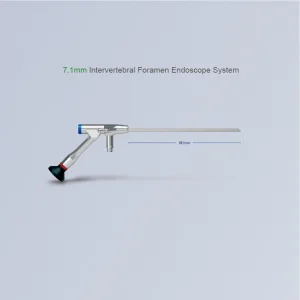
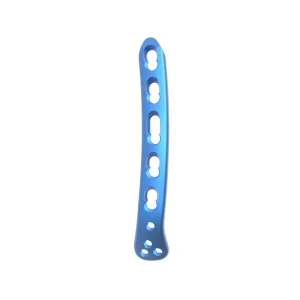
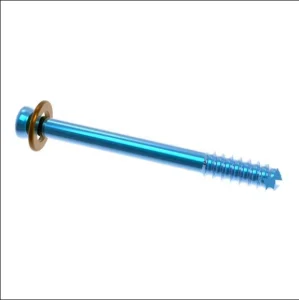
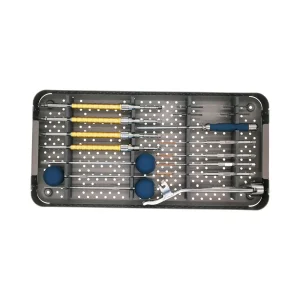
Explore advanced cannulated cortical screws, trauma locking compression systems, and complete surgical instrument kits directly available from factory inventories.
Detailed technical, regulatory, and logistics answers for hospital procurement committees, commercial directors, and medical device distributors qualifying Chinese manufacturing partners.