
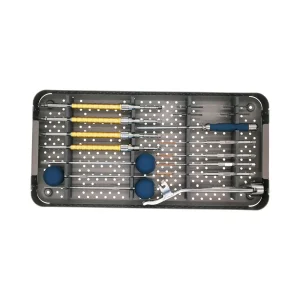
Precision Engineering Catalog
Featured Orthopedic Systems & Instrument Platforms
Explore our top ISO 13485-certified orthopedic assemblies, trauma plates, and spinal implants engineered with micrometer CNC tolerances for global hospital procurement.
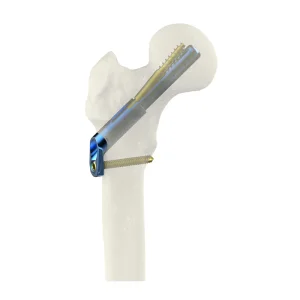
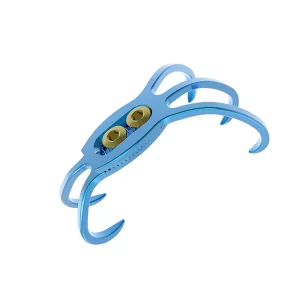
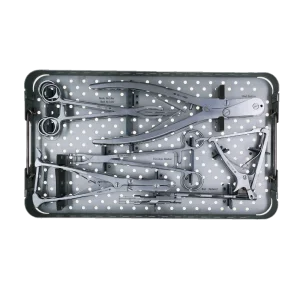
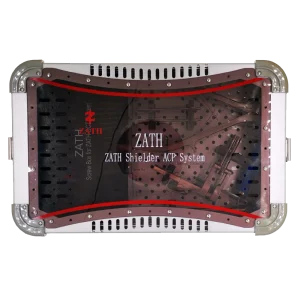
Executive Sourcing Analysis
Global Commercial Landscape of Stainless Cortical Screws
Within modern orthopedic trauma osteosynthesis, the stainless steel cortical bone screw remains the irreplaceable bedrock of rigid internal fixation. While titanium alloys (Ti-6Al-4V ELI) have captured substantial market share in permanent spinal fusion, arthroplasty, and craniomaxillofacial surgery, medical-grade austenitic stainless steel—specifically ASTM F138 / ISO 5832-1 (316LVM)—continues to dominate worldwide trauma procedures by volume.
Global procurement metrics show that over 65% of all diaphyseal fracture fixations, non-union corrections, and temporary neutralization plating systems worldwide rely on stainless steel cortical screws. The clinical justification is rooted in solid metallurgical mechanics: 316LVM exhibits superior modulus of shear, tactile resistance against micro-stripping during maximum screw torque insertion, and favorable ductile deformation prior to catastrophic shear failure compared to standard titanium grades.
Clinical Value Proposition: Stainless steel cortical screws deliver 18% higher torque tolerance during dynamic bicortical compression, reducing the rate of screw-head shearing in dense cortical bone while providing a 40–60% unit cost advantage over titanium alternatives.
However, geopolitical supply chain realignments, hospital budget caps under Universal Healthcare programs, and the European Union Medical Device Regulation (MDR 2017/745) have created a global procurement squeeze. International distributors and tier-1 hospital networks require certified, zero-defect cortical screws that satisfy uncompromising biological safety without imposing hyper-inflated costs. This market demand has positioned certified Chinese original equipment manufacturers at the epicenter of international medical device supply chains.
Mechanical Superiority in Diaphyseal Fixation
Cortical bone requires continuous interfragmentary compression to trigger direct primary bone healing (contact healing without callus formation). 316LVM stainless steel cortical screws provide:
- Ultimate Tensile Strength: ≥ 860 MPa to 1050 MPa (Cold worked condition).
- Elongation at Break: ≥ 12%, preventing brittle fracture during load peaks.
- Resistance to Galling: Superior thread interlock with stainless steel compression plates.
- Vacuum Arc Remelting (VAR): Ultra-low inclusion rating for biocompatibility.
15+
Years Engineering Focus
±0.005mm
Swiss CNC Pitch Precision
100%
Lot Traceability & MTR
4-6 Days
Global Express Deployment
Industrial Ecosystem Superiority
Why China's Smart Factories Lead in Orthopedic Screw Yield & Pricing
Modern surgical implant manufacturing is not merely about raw labor—it is an intricate convergence of high-end CNC multi-axis tooling, automated metrology, raw material verticalization, and regulatory validation.
7-Axis Swiss Lathe Automation
At our Beijing manufacturing facility in the Zhongguancun Science and Technology Park, cortical screws are machined using high-speed, synchronized Swiss-type turning centers (Citizen, Star). By single-pass operations encompassing thread cutting, reverse-fluting, and head recess broaching, cycle times are reduced by 42% while eradicating re-clamping runout errors.
Bulk Metallurgy Supply Chains
Through direct vertical integration with top medical-grade certified steel mills, bar stock is procured in volume with complete chemical segregation. Stringent ASTM F138 compliance audits ensure precise percentages of Chromium (17.00–19.00%), Nickel (13.00–15.00%), and Molybdenum (2.25–3.00%) with ultra-low Carbon (<0.030%) to eliminate intergranular corrosion risks.
Integrated Cleanroom Packaging
Implant contamination is eliminated through automated multi-stage ultrasonic degreasing, nitric acid passivation, and Class 100,000 cleanroom thermoforming. Delivering both non-sterile bulk packages for autoclave processing and pre-sterilized Ethylene Oxide (EO) blister packages saves hospital OR staff critical prep time.
Clinical Mechanics & Anatomy
Biomechanical Fixation: Cortical Bone Interface & Clinical Scenarios
Cortical screws are specifically engineered to anchor in the dense, compact outer shell of tubular long bones (femur, tibia, humerus, radius, and ulna). Achieving optimal bone-screw purchase requires deep understanding of pitch, thread profile, and cortical bone micro-architecture.
Thread Geometry & Pitch
Cortical screws utilize an asymmetrical, shallow thread profile with a fine pitch (typically 1.25mm to 1.75mm). Because compact cortical bone has a high mineral density and modulus of elasticity, the shallow thread preserves bone stock while maximizing the shear area within the Haversian canals.
Bicortical Purchase
In conventional plating, cortical screws penetrate both the near and far cortex. Bicortical fixation provides superior resistance to bending and torsional displacement compared to unicortical insertion, delivering rock-solid stability during early patient rehabilitation.
Dynamic Compression (DCP)
When inserted eccentrically into the dynamic compression hole of an AO/ASIF bone plate, the spherical head of the cortical screw slides along the ramped plate hole, creating horizontal translation and applying axial compression across the fracture gap.
Self-Tapping Flute Physics
Modern cortical screws incorporate precision parabolic cutting flutes at the tip. These flutes collect and expel bone debris during insertion, preventing heat necrosis, lowering the insertion torque requirement, and removing the need for a separate bone tap.
ISO / ASTM Dimensional Engineering Matrix
Standard Stainless Cortical Screw Specifications & Tolerances
Technical specifications for surgical planning and international distributor procurement verification. All screws are fully compatible with standard AO/ASIF instrumentation trays.
| Outer Diameter | Core Diameter | Thread Pitch | Pilot Drill Bit | Drive Recess | Min. Torsional Yield | Clinical Indications |
|---|---|---|---|---|---|---|
| Ø 1.5 mm Mini | 1.0 mm | 0.50 mm | Ø 1.1 mm | Cross / Star T4 | 0.45 N·m | Phalangeal & Hand |
| Ø 2.0 mm Mini | 1.3 mm | 0.60 mm | Ø 1.5 mm | Hex 1.5 / Star T6 | 0.95 N·m | Metacarpal & Clavicle |
| Ø 2.7 mm Small | 1.9 mm | 1.00 mm | Ø 2.0 mm | Hex 2.5 / Star T8 | 2.10 N·m | Distal Fibula & Forearm |
| Ø 3.5 mm Standard | 2.4 mm | 1.25 mm | Ø 2.5 mm | Hex 2.5 / Torx T15 | 4.25 N·m | Radius, Ulna, Fibula, Pelvis |
| Ø 4.5 mm Large | 3.0 mm | 1.75 mm | Ø 3.2 mm | Hex 3.5 / Torx T20 | 7.50 N·m | Femoral & Tibial Diaphysis |
* All dimensions conform to ISO 5835 standard specifications. Screws are manufactured from vacuum arc remelted 316LVM austenitic stainless steel (ASTM F138). Torsional and pull-out verification performed under ASTM F543 testing conditions.
Frontier MedTech Horizons
Technological Innovations & Market Trends in Trauma Fixation
While the cortical screw is a mature orthopedic implant, intense research into surface chemistry, recess mechanics, and digitalized inventory management continues to drive significant technical advancement.
Torx vs. Hexagonal Drive Transition
Global trauma centers are steadily migrating from classic hexagonal screw heads to Torx (star-drive) recesses. The Torx recess offers zero cam-out angle and dramatically increases contact surface area, preventing screw head stripping during removal—especially crucial after prolonged bone healing when tissue integration creates high breakout torque.
Hydrophobic Passivation & TiN Coatings
To further suppress nickel ion leaching in hypersensitive patients without sacrificing the ductile strength of stainless steel, innovative physical vapor deposition (PVD) Titanium Nitride (TiN) and ultra-smooth electrochemical passivation layers are being applied to 316LVM cortical screws, elevating corrosion resistance in acidic post-surgical hematoma environments.
UDI & Intelligent Traceability
Under global regulatory mandates (US FDA and EU MDR), every individual screw blister pack now features laser-etched 2D DataMatrix Unique Device Identification (UDI). This connects hospital EHR systems directly back to our automated CNC mill run, heat treatment logs, and bioburden testing reports.
B2B Procurement Guidelines
Strategic Procurement Protocol for Global Distributors & Hospital Chains
Sourcing discount stainless cortical screws without compromising surgical safety requires strict adherence to international vetting protocols. Experienced medical device purchasers look beyond the per-unit invoice price to evaluate five pillars of manufacturer capability:
-
1Raw Material Traceability (MTR): Demanding certified mill test reports confirming vacuum arc remelting (316LVM) per ASTM F138 with chemical inclusion analysis under ASTM E45.
-
2ISO 13485 QMS Verification: Validating that the supplier's scope explicitly covers design and CNC manufacture of implantable orthopedic trauma devices.
-
3Packaging & Sterilization Validation: Confirming whether implants are packaged in validated ISO 11607 sterile barriers (Tyvek/foil blisters) or shipped non-sterile for local terminal steam sterilization.
-
4Custom OEM/ODM Engineering: Capability to adjust screw flute angles, thread pitches, and custom laser brand markings to match national tender specifications.
Direct Volume Quote Framework
We offer tiered commercial quotations based on annual volume commitments, contract manufacturing, or localized registration distribution agreements:
Standard Clinic Tier
Volume Discount Base
500 – 5,000 units / lot
Distributor Stocking Tier
Up to 35% Discount
5,000 – 50,000 units / lot
Global OEM Tender Partner
Factory Direct Pricing
> 50,000 units / annual
Technical & Sourcing FAQ
Frequently Asked Questions for Orthopedic Procurement Teams
Direct, authoritative technical answers addressing metallurgical composition, regulatory certifications, instrumentation compatibility, and supply chain logistics.
What is the metallurgical difference between 316L and 316LVM stainless steel?
Standard 316L is air-melted commercial stainless steel, which contains non-metallic microscopic inclusions that can act as fatigue stress concentration points. In contrast, 316LVM (Vacuum Arc Remelted) undergoes secondary melting under a vacuum. This purification process removes dissolved gases and volatile impurities, yielding exceptional micro-structural cleanliness, superior corrosion resistance in human body fluid environments, and superior fatigue endurance according to ASTM F138 specifications.
Why choose stainless steel cortical screws instead of titanium alloy?
While titanium alloys offer lower density and zero nickel content, stainless steel (316LVM) has significant mechanical advantages in orthopedic trauma: it has higher ultimate shear strength, greater ductility (allowing warning bend rather than sudden brittle snap), superior resistance against stripping the drive recess during insertion, and seamless compatibility with standard stainless steel trauma plates to eliminate galvanic corrosion risks. Furthermore, stainless steel cortical screws are typically 40% to 60% more cost-effective.
Are ZATH cortical screws fully compatible with AO/ASIF instrumentation?
Yes. All dimensions, head curvatures, pitch standards, and drive recesses (Hexagonal 2.5mm/3.5mm and Torx T15/T20) are engineered to comply strictly with international ISO 5835 standard envelopes. Surgeons can use standard orthopedic quick-coupling screwdrivers, drill guides, countersinks, and depth gauges already stocked in hospital operating rooms without any proprietary tooling barriers.
Can you support local medical device registration for overseas tenders?
Absolutely. Our dedicated regulatory affairs department provides full technical documentation dossiers (STED), ISO 13485 QMS certificates, Free Sale Certificates (FSC) authenticated by government authorities, biocompatibility test results (ISO 10993 series), biomechanical pullout and torsion validation reports (ASTM F543), and sterilization validation files to expedite your national health authority approvals.
What is the typical lead time for bulk volume or OEM private label orders?
For standard inventory sizes, orders are typically packed and dispatched within 48 to 72 hours via international express (DHL, FedEx, UPS) arriving within 4–6 business days. For customized OEM contracts—involving proprietary packaging, specialized laser marking, or custom length matrix assortments—mass production lead times usually range from 3 to 4 weeks depending on batch volume.
How does your factory ensure thread tolerance across high-volume batches?
Our CNC Swiss-type production cells operate closed-loop quality control with automated in-line tool compensation. Samples from each operational lot are subjected to non-contact optical video measurement (Keyence system) to verify thread profile angle (60°), pitch, core diameter, and runout to within ±0.005mm tolerances. Additionally, 100% of finished screws pass go/no-go gauge inspection before ultrasonic cleaning.
Comprehensive Trauma & Spine Solutions
Complementary Implants & Specialized Fixation Systems
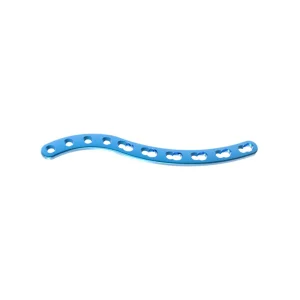
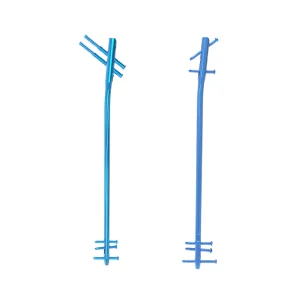
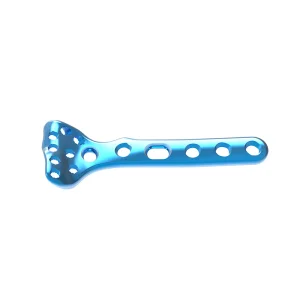
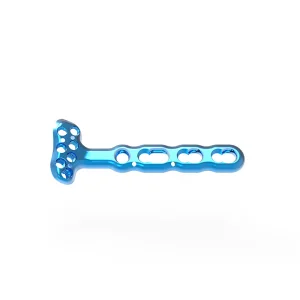
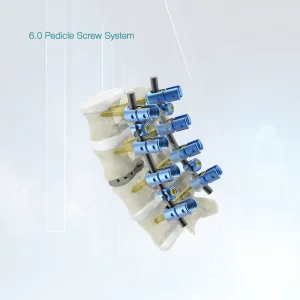
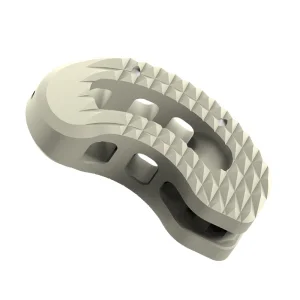
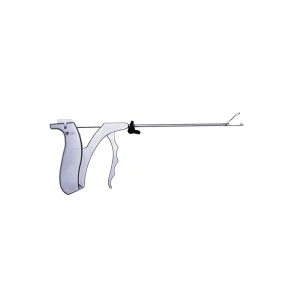
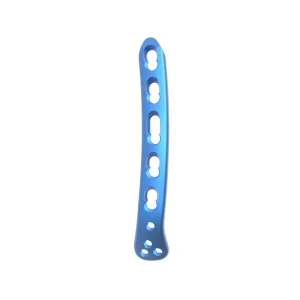
Expand your hospital catalog with our matched anatomically contoured locking plates, intramedullary nails, and spinal fusion technologies.
Global Distribution & Direct Supply
Secure Direct Factory Quotations for Cortical Screws
Get custom OEM/ODM packaging, verified mill test certificates, sample evaluation kits, and tiered B2B pricing directly from our Beijing engineering department within 24 hours.