
Clinical Precision Implant Systems
Explore our certified orthopedic portfolio spanning anatomical femoral reconstruction, intramedullary stabilization, arthroplasty, and specialized instrumentation manufactured under stringent quality protocols.
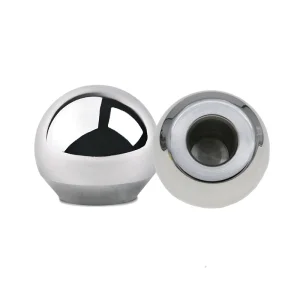
Famous Artificial Hip Joint FDH Femoral Head Factories, Companies
Explore Specifications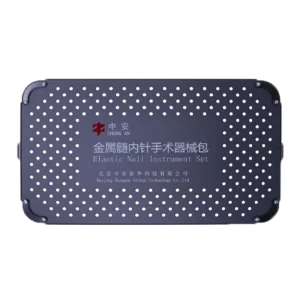
CE Certification Elastic Nail Instrument Set (ZEIN) Supplier, Factories
Explore Specifications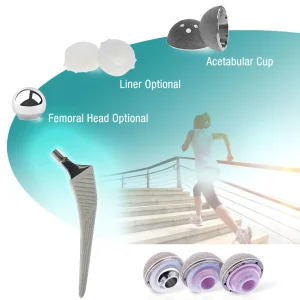
Discount Professional Medical Hip Implant Titanium Bipolar Hip Joint Prosthesis Manufacturers, Supplier
Explore Specifications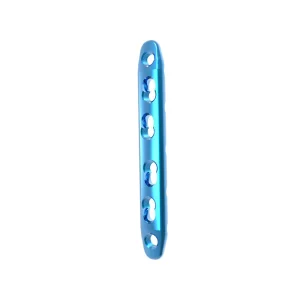
China Humerus Limited Contact Locking Compression Plate Manufacturer, Service
Explore Specifications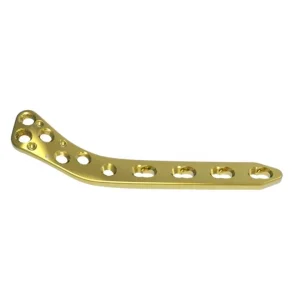
OEM Proximal Lateral Tibia Locking Compression Plate Supplier, Factories
Explore Specifications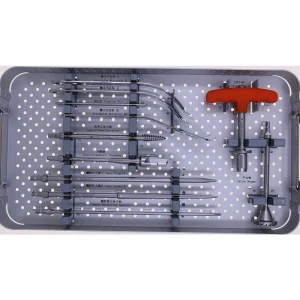
Famous CE Approved Orthopedic Implant THA Hip Instrument Set Femoral Part Supplier, Service
Explore Specifications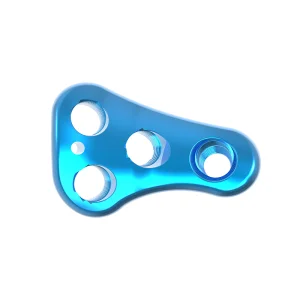
High-Quality Proximal Femur MIS Locking Plate II Suppliers, Product
Explore Specifications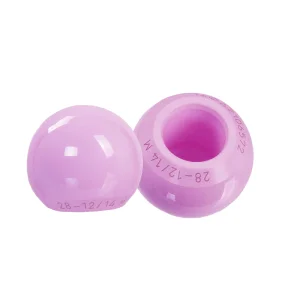
Buy Ceramic CDH Femoral Head Implant Hip Exporter, Company
Explore SpecificationsMacro Industry Solutions: The ICP Proximal Lateral Femoral Benchmark
Proximal femur fractures—encompassing trochanteric, subtrochanteric, peritrochanteric, and combined osteoporotic neck-shaft fractures—represent one of the most critical mechanical challenges in contemporary orthopedic trauma surgery. The Interlocking Compression Plate (ICP) Proximal Lateral Femoral System bridges the gap between dynamic hip screws and cephalomedullary intramedullary nailing, delivering unprecedented angular stability and biological preservation.
Fixed-Angle Load Neutralization
The proximal femur experiences significant compressive, bending, and torsional forces exceeding three times patient body weight during regular ambulation. As a world-class ICP Proximal Lateral Femoral manufacturer, our constructs feature convergent-divergent locking screw arrays into the femoral head and calcar, converting severe shear loads into benign compressive vectors along the primary bone trabeculae.
Biological Periosteal Preservation
Traditional bone plates apply massive direct compression onto the periosteum, compromising local Haversian vascular networks and stalling secondary secondary callus formation. The modern ICP concept incorporates Limited Contact (LC) undersurface scallops that reduce contact area by up to 60%, drastically accelerating cortical perfusion and reducing delayed consolidation rates.
Combating Osteoporotic Cut-Out
In poor-quality, osteoporotic bone, conventional cortical screws risk catastrophic mechanical toggling, varus collapse, and articular cut-out. The ICP Proximal Lateral Femoral locking screw interface creates an internal-fixator dynamic, where each screw functions as a stiff rigid cantilever, distributing stress over a vast anatomical footprint without relying on plate-to-bone friction.
Global Commercial & Industrial Status: Procurement Realities
The global orthopedic trauma fixation sector is rapidly transforming. Hospital procurement departments, medical device tenders, and regional surgical distribution networks are shifting away from inflated legacy Western monopolies toward verified, vertically integrated OEM/ODM manufacturing leaders who guarantee ISO 13485 certification, CE MDR readiness, and uncompromising metallurgical integrity.
| Evaluation Parameter | Legacy Tier-1 Global Conglomerates | Certified Asian Precision Manufacturers (ZATH Benchmark) | Clinical & Economic Value Gain |
|---|---|---|---|
| Raw Material Origin | Ti-6Al-4V Grade 5 / ISO 5832-3 | Certified Medical-Grade Titanium Ti-6Al-4V ELI (ASTM F136 / ISO 5832-3) | Equivalent ultra-high tensile yield strength (>860 MPa) with 35-50% reduction in procurement acquisition costs. |
| Anatomical Pre-Contouring | Fixed anatomical curves (often biased toward Western bone geometry) | Global anthropometric database: multi-radius bowing optimized for diverse Asian, European, and Latin American phenotypes | Eliminates intraoperative cold-bending, preserving plate structural fatigue threshold and lowering surgical operating time. |
| Packaging & Sterility | Standard sterile double-blister or bulk non-sterile trays | 100% Class 10,000 cleanroom sterile double-barrier Tyvek packaging + gamma/EO irradiation | Immediate OR readiness, zero hospital autoclave overhead, and minimized risk of surgical site infections (SSI). |
| OEM/ODM & Registration Lead Times | Rigid branding; 12-18 month lead time for regional SKU modification | Agile engineering, custom laser marking, modular tray development in 4-8 weeks; full Tech Dossier for local MoH filing | Immediate market agility for regional distributors capturing high-margin public tenders and private healthcare systems. |
Supply Chain Resiliency
Disruptions in global logistics have exposed vulnerabilities in single-source hospital networks. Operating out of Beijing's Zhongguancun Science and Technology Park since 2009 with over 300 dedicated specialists, our manufacturing facility ensures uninterrupted production runs, robust raw material reserves, and streamlined express delivery via DHL, FedEx, and air freight within 4 to 6 business days worldwide.
Comprehensive OEM/ODM Engineering
From personalized laser annealing and anodization colour-coding to customized plate length (from 4-hole short plates to 18-hole extended bridging plates) and dedicated radiolucent carbon-fiber targeting guide handles, our engineering team collaborates directly with brand holders to fulfill precise tender specifications.
Global Quality System Auditing
Every lot undergoes 100% optical CMM dimensional verification, thread profile pitch testing, dynamic fatigue load testing under ASTM F382 standards, and material certificate verification, assuring distributors that our ICP products match and exceed standard regulatory benchmarks worldwide.
Localized Application Scenarios: Surgical Versatility
The clinical spectrum of proximal femoral reconstruction demands high flexibility across diverse anatomical and demographic conditions. As a leading ICP Proximal Lateral Femoral company, our implants are engineered to address complex clinical scenarios with reproducible intraoperative precision.
Subtrochanteric Fractures
High deforming muscle forces (iliopsoas flexing the proximal fragment and abductors external-rotating it) require massive bending resistance. The thick shaft transition of our ICP plate withstands varus collapse throughout lengthy healing intervals.
Periprosthetic Femur Fractures
Occurring around stable or loose hip stems (Vancouver Types B1, B2, and C). The combi-hole layout enables bicortical locking fixation distal to the stem and cable-clamp fixation proximally via specialized plate-cable buttons.
Geriatric Osteoporotic Fractures
In severely osteopenic bone, multi-planar angular locking screws create a rigid structural subchondral "raft" beneath the femoral head, distributing stresses and reducing fixation loosening or cutting out through weak trabeculae.
Malunions, Nonunions & Osteotomies
For corrective valgus or varus intertrochanteric osteotomies. The anatomical ICP plate facilitates controlled axial dynamic compression across osteotomy planes, promoting primary bone healing under solid stabilization.
Localized Support & Compliance: Zero-Risk Hospital Qualification
Procuring surgical implants requires total legal certainty and medical documentation. Every ICP Proximal Lateral Femoral internal fixation system manufactured by our team is backed by end-to-end technical documentation designed to sail through international health ministry and hospital tender evaluations.
Audited ISO 13485 QMS
We maintain an independently audited Quality Management System for Medical Devices under ISO 13485. From raw bar stock metallurgical spectroscopy to final package seal integrity (ASTM F88/F1929), each phase is recorded with batch traceability.
CE MDR & Global Free Sale (FSC)
Our regulatory affairs department actively prepares comprehensive Technical Files, Clinical Evaluation Reports (CER), and Risk Assessment matrices (ISO 14971), supplying notarized Certificates of Free Sale (FSC) and UDEM CE certifications for seamless registration across Europe, the Middle East, Southeast Asia, and the Americas.
Field Clinical Support & Training
We empower local distributors with high-definition surgical technique manuals, synthetic bone workshop bone models, animation-assisted operative guides, and dedicated matching surgical instrumentation sets (including drill guides, depth gauges, torque limiters, and self-retaining screwdrivers).
Technology Roadmap: Next-Generation ICP Innovations
The discipline of proximal femoral fixation is on the threshold of massive technological evolution. Our in-house R&D team, in close collaboration with prominent orthopedic surgeons and biomechanical engineering institutes, is driving forward major advances across trauma and reconstruction platforms.
3D Electron Beam Additive Manufacturing (EBM)
Integrating highly porous trabecular titanium lattice geometries onto the bone-interfacing side of proximal femoral plates. This biomimetic structure mimics natural cancellous bone porosity (65-75% porosity, pore size 400-600 μm), encouraging osteointegration and mechanical interlocking in difficult nonunion cases.
Bioactive Nano-Coatings & Infection Prophylaxis
Addressing surgical site complications with advanced surface engineering: anodized silver-ion and nano-hydroxyapatite electrochemical coatings that suppress periprosthetic bacterial colonization while simultaneously stimulating regional alkaline phosphatase activity and osteoblast differentiation.
Smart Sensor Telemetry & MIS Ergonomics
Developing ultra-low-profile radiolucent targeting guides paired with micro-strain telemetry sensors capable of non-invasively transmitting real-time fracture callus stiffness and load-bearing data directly to clinicians during early rehabilitation.
Frequently Asked Questions (FAQ)
Comprehensive engineering and commercial answers to assist hospital boards, biomedical procurement officers, and orthopedic distributors in qualifying our ICP Proximal Lateral Femoral manufacturing platform.
What distinguishes an ICP Proximal Lateral Femoral plate from conventional dynamic hip screws (DHS)?
What grade of titanium alloy is used, and what certifications accompany each production batch?
How does the Limited Contact (LC) undersurface profile prevent periosteal devascularization?
What surgical instrument sets accompany the ICP Proximal Lateral Femoral system?
Can ZATH provide private label OEM/ODM services for local medical device tenders?
What are the typical lead times and shipping terms for international medical device distributors?
Specialized Orthopedic Implants & Instrumentation
Review the second series of our certified orthopedic catalog, encompassing patellar fixation, spine internal systems, 3D acetabular reconstruction, and precision small fragment plates.
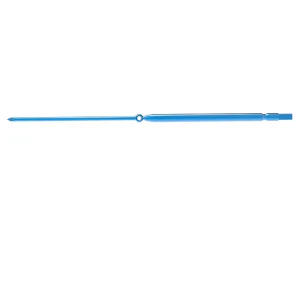
Discount Orthopedic Implants Titanium Alloy Material Patella Pin Suppliers, Exporters
Explore Specifications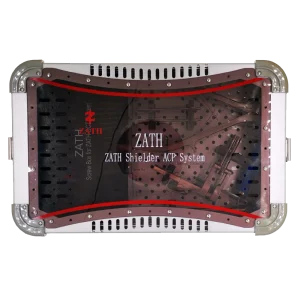
ODM Orthopedic Surgical Use Cervical ACP Plate System Instrument Set Manufacturer, Pricelist
Explore Specifications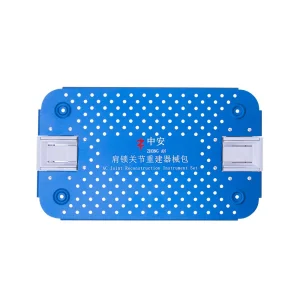
ODM AC Joint Reconstruction Instrument Set Supplier, Products
Explore Specifications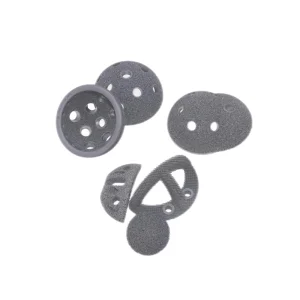
ODM 3D Printing Acetabular Revision System Manufacturers, Pricelist
Explore Specifications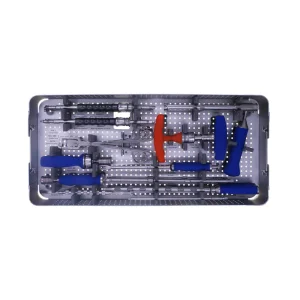
CE Certification Zipper 6.0 System Spinal Internal Fixation System Instrument Exclusive Set Factories, Product
Explore Specifications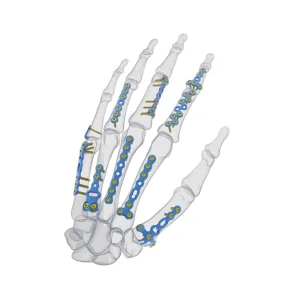
Best Hand Fracture Locking Plate System Exporter, Companies
Explore Specifications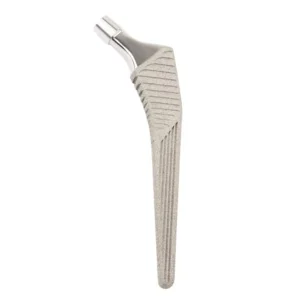
CE Certification ADS Stem For Hip Prosthesis Product, Service
Explore Specifications
CE Certification Pin for External Fixation Quotes, Products
Explore SpecificationsPartner with an Established Orthopedic Pioneer
Access complete orthopedic catalogs, technical dossiers, pricing structures, and sample evaluation kits for global hospitals and distributor networks.