
Standard & Reconstructive Titanium Trauma Solutions
Explore our core engineered trauma systems, arthroplasty assemblies, and clinical instrument solutions manufactured under rigorous cleanroom conditions for global healthcare providers.
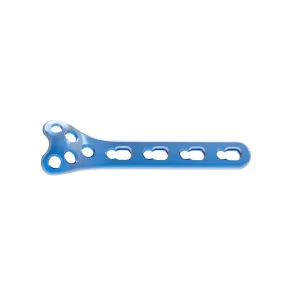
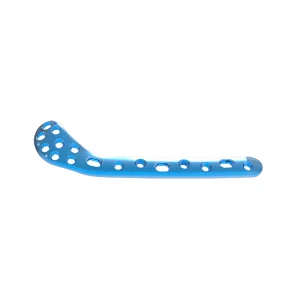
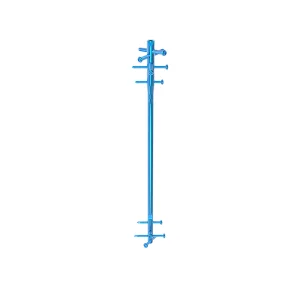
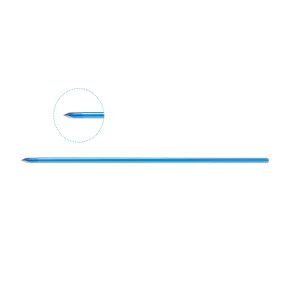
Precision Chinese Foundry Advantages in Titanium Femoral Nail Manufacturing
Strategic integration of high-tier metallurgy, Swiss multi-axis computerized machining, and automated ISO 13485 quality protocols delivers unmatched competitive value for global medical device brand owners.
Ultra-Precision Multi-Axis CNC & EDM
Our production base in Zhongguancun Science Park utilizes imported multi-axis Swiss-type turning centers and high-speed Wire Electrical Discharge Machining (EDM). This ensures concentricity tolerances within ±0.005mm across long femoral intramedullary nail cannulations, eliminating internal micro-burrs and guaranteeing effortless guide wire passage during emergency trauma operations.
Supply Chain & Certified Raw Materials
We source certified medical-grade titanium alloy bars strictly adhering to ASTM F136 and ISO 5832-3 standards. Every titanium ingot is accompanied by original chemical composition and tensile strength mill test certificates. The localized supply chain ecosystem in China minimizes raw material lead times while maintaining a 30% to 50% cost advantage over Western contract manufacturers.
Class 100,000 Cleanroom & Sterilization
Implantable intramedullary nails undergo multi-stage ultrasonic de-greasing, acid passivation, Type II anodic oxidation for fatigue resistance, and final packaging in Class 100,000 (ISO Class 8) cleanroom facilities. We offer validated gamma irradiation and ethylene oxide (EO) sterile barrier packaging configurations ready for immediate institutional distributor distribution.
Evolutionary Trends & Macro Solutions in Intramedullary Femur Fixation
How cutting-edge structural adaptations, variable radii of curvature, and helical blade stabilization mechanisms are transforming modern diaphyseal and trochanteric fracture management.
Technical Analysis Anatomical Curvature Matching & Anterior Bow Optimization
Early-generation femoral intramedullary nails utilized standardized, large radii of curvature (often exceeding 2.0 to 3.0 meters), which frequently caused anterior cortical impingement or iatrogenic distal femur perforation, especially in East Asian, Latin American, and female populations characterized by smaller stature and more pronounced anterior femoral bowing. Modern ODM intramedullary nail manufacturing addresses this clinical failure mode by engineering an anatomically pre-curved radius of 1.5 to 1.8 meters. By harmonizing the nail's sagittal curvature with the native physiological arc of the human medullary canal, insertion torque is markedly reduced, reducing hoop stresses on fragile cortices and preserving the periosteal blood supply crucial for non-union prevention.
Furthermore, distal beveling and multi-planar dynamization options allow surgeons to transition between rigid static fixation for comminuted fractures and controlled dynamic axial compression for delayed union presentations. This biomechanical versatility is standard across ZATH’s OEM/ODM femoral platforms.
Proximal Anti-Cutout Helical Blades
Replacing traditional large-thread lag screws with compaction helical blades enhances structural bone grip in osteopenic femoral heads, minimizing the clinical risk of superior mechanical cut-out.
Carbon-Fiber Radiolucent Targeting
Ultra-rigid carbon-composite aiming guides provide unhindered intraoperative fluoroscopic visualization, eliminating drill parallax and drastically cutting operative C-arm radiation exposure.
Multi-Planar Distal Locking Holes
Engineered with oblique and coronal locking holes to maximize distal purchase in extremely low supracondylar fractures, offering solid anti-rotational stability without supplementary plating.
DRG-Optimized Modular Instrumentation
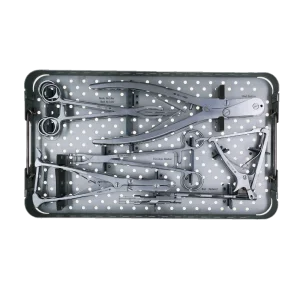
Streamlined single-tray surgical instrument sets engineered to cover retrograde and antegrade indications, simplifying hospital autoclave cycles and lowering sterilizing logistics expenditure.
ODM Titanium Femoral Nail Engineering & Price Architecture
Comprehensive cost breakdown, volumetric tiering, and metallurgical parameters for qualified medical device distributors, contract brand owners, and hospital purchasing consortia.
| System Classification | Material Standard | Dimensional Range | Surface Treatment | Target Regulatory File | Estimated ODM Tier Price (FOB) |
|---|---|---|---|---|---|
| Antegrade Femoral Nail (Standard Diaphyseal) | Ti-6Al-4V ELI (ASTM F136 / ISO 5832-3) | Dia: 9.0–12.0mm | Length: 320–440mm | Color Anodized / Micro-Blasted | CE / ISO 13485 / FDA 510(k) Ready | $45.00 – $78.00 / pc (MOQ: 50 pcs) |
| Proximal Femoral Nail Antirotation (PFNA Type) | High Fatigue Strength Ti6Al4V ELI | Dia: 9.0–11.0mm | Length: 170, 200, 240mm | Hard Anodized (Type II Anti-Galling) | CE / CFDA / ISO 13485 | $65.00 – $115.00 / set (incl. Blade & Cap) |
| Reconstruction / Cephalomedullary Femur Nail | Certified Medical Titanium Alloy | Dia: 10.0–13.0mm | Length: 340–420mm | Electrolytic Polish & Passivation | Full Design Dossier (EU MDR) | $72.00 – $125.00 / pc (MOQ: 30 pcs) |
| Retrograde / Supracondylar Femoral Nail | Ti-6Al-4V ELI Bar Stock | Dia: 10.0–12.0mm | Length: 150–280mm | Matte Fine Glass Bead Blasting | ISO 13485 Sterility Validated | $52.00 – $88.00 / pc (MOQ: 50 pcs) |
| Matching Surgical Aiming Instrumentation Kit | 17-4PH / 316L / Carbon Fiber Composite | Custom Calibrated Cannulated Tray | Passivated Anti-Glare Finish | Autoclave 134°C Tested (500+ Cycles) | $1,850.00 – $3,200.00 / kit |
*Note on Procurement Pricing Structure: Actual volume prices fluctuate based on contract order scale, sterile vs. non-sterile packaging configurations, custom laser etching specifications, OEM instrument case customization, and destination territory regulatory document notarization (e.g., Free Sale Certificates - FSC). Full design history files (DHF) and device master records (DMR) are available for private-label regulatory transfer.
Localized Applications & Surgical Treatment Pathways
Matching specific femoral trauma morphology with engineered load-sharing intramedullary devices across high-volume trauma clinics and emergency regional surgery centers.
Geriatric Trochanteric & Subtrochanteric Fractures
In low-energy osteoporotic fall injuries (AO/OTA 31-A1 to A3), our short and long Cephalomedullary systems allow swift percutaneous insertion via the tip of the greater trochanter. The internal compaction dynamics of the proximal helical blade condense cancellous trabeculae rather than removing bone stock, providing immediate mechanical stability that enables early next-day weight-bearing, decreasing hypostatic pneumonia and thromboembolic complications.
High-Energy Diaphyseal Polytrauma Fixation
Motor vehicle accidents and industrial crush trauma generate complex comminuted femoral shaft fractures (AO/OTA 32-A through C). Reamed antegrade intramedullary nailing remains the gold standard treatment. The load-sharing biomechanics of high-strength titanium alloy maintain limb length, rotation, and axial alignment while sparing periosteal biology, yielding high consolidation rates without structural bone grafting.
Retrograde Distal Femoral & Periprosthetic Fixation
In cases of ipsilateral hip and femoral shaft fractures or periprosthetic fractures proximal to total knee arthroplasties (TKA), our retrograde distal femoral nails offer an essential alternative. Delivered through an intercondylar entry point within the knee joint, the nail locks securely into distal bone fragments, preserving existing hip hardware and offering maximum stability without extensive soft-tissue stripping.
Associated Orthopedic Implants & Specialty Systems
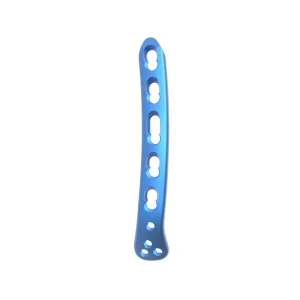
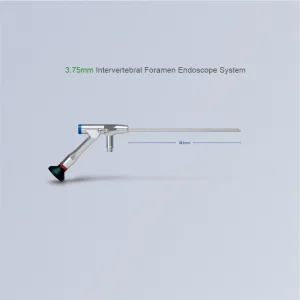
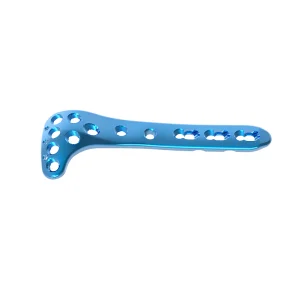
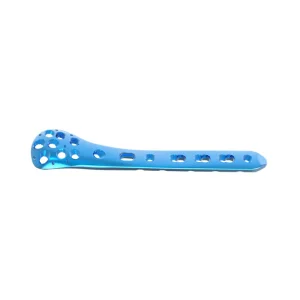
Complementary fracture fixation systems, spine endoscopy equipment, and precision trauma sets manufactured to matching rigorous medical standards.
Strategic OEM/ODM Sourcing: A Roadmap for Multinational Brands
Minimizing technical risks, accelerating regulatory clearance, and establishing resilient orthopedic supply chain pipelines from production inception to clinical adoption.
Stage 1: Engineering CAD/CAM & Customization
Distributors and OEM partners provide target anatomical geometries or select from ZATH's validated proprietary libraries. We adjust the curvature radius (ROC), proximal valgus angles (typically 4° to 6°), locking hole spacing, and color-coded anodic finishes. Detailed mechanical stress modeling (FEA) confirms endurance limits before toolpath creation.
Stage 2: Pilot Validation & Mechanical Testing
Before mass production, pilot batches undergo rigorous dynamic axial fatigue testing, torsional shear testing, and four-point bending assessments according to ASTM F384 and ASTM F1264 guidelines. Dimensional CMM scanning guarantees sub-micron adherence to critical drawing tolerances, validating high-repetition reliability.
Stage 3: Full Dossier & Rapid Global Logistics
We supply complete technical documentation portfolios (Biocompatibility ISO 10993, Sterilization Validation ISO 11137/ISO 11135, and Clinical Evaluation Reports) facilitating streamlined clearance in destination markets. Fast air courier routes deliver finished products to distributor central distribution hubs within 4 to 6 business days.
Frequently Asked Questions on ODM Titanium Femoral Nails
Critical metallurgical, manufacturing, regulatory, and logistics inquiries addressed by our senior orthopedic biomechanical engineering team.