
Discount Distal Medial Femur Locking Compression Plate Pricelist, Products
Product Description
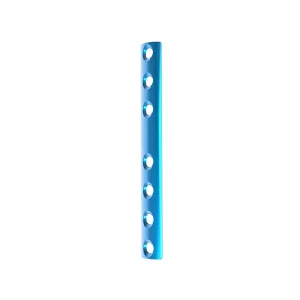
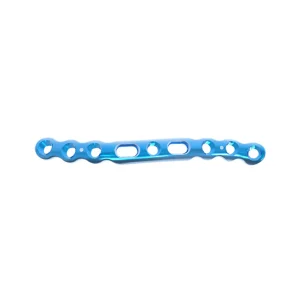
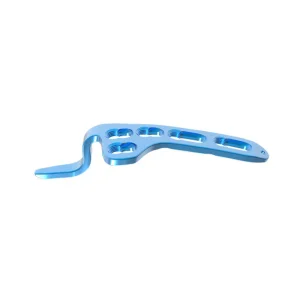
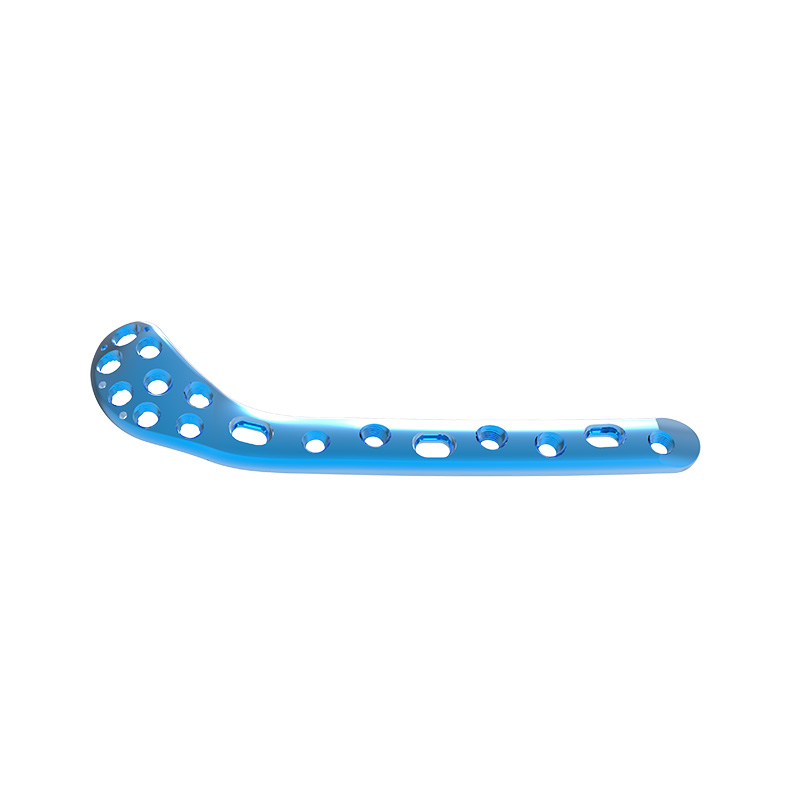
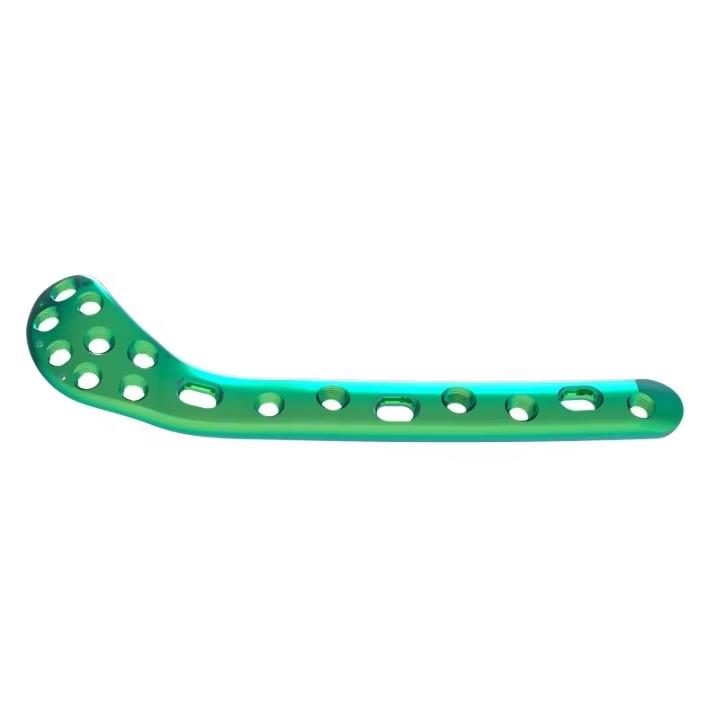
Distal Medial Femur Locking Compression Plate
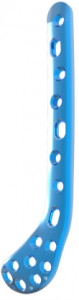
|
4 holes x 121mm (Left) |
| 7 holes x 169mm (Left) | |
| 4 holes x 121mm (Right) | |
| 7 holes x 169mm (Right) | |
| Width | 17.0mm |
| Thickness | 4.5mm |
| Matching Screw | 5.0 Locking Screw / 4.5 Cortical Screw / 6.5 Cancellous Screw |
| Material | Titanium |
| Surface Treatment | Micro-arc Oxidation |
| Qualification | CE / ISO13485 / NMPA |
| Package | Sterile Packaging 1pcs/package |
| MOQ | 1 Pcs |
| Supply Ability | 1000+ Pieces per Month |
The Distal Medial Femur Locking Compression Plate (LCP) offers several advantages for the treatment of fractures or other injuries in the distal medial femur. Here are some of the key advantages of using this plate:
The LCP provides stable fixation of the fractured bone fragments, allowing for optimal healing and alignment. The locking screws in the plate create a rigid construct, which provides better stability compared to traditional non-locking plate fixation techniques.
The locking mechanism of the plate prevents screw back out and enhances resistance to angular and rotational forces, reducing the risk of implant failure or loss of fixation.
The design of the plate minimizes disruption to the blood supply to the fractured bone, helping to preserve the vitality of the bone and promote proper healing.
The plate is anatomically contoured to fit the shape of the distal medial femur, reducing the need for excessive bending or contouring during surgery. This helps to minimize soft tissue damage and improve overall surgical outcomes.
The locking screws distribute the load across the plate and bone interface, reducing stress concentration at the fracture site. This can help prevent complications such as implant failure, nonunion, or malunion.
The plate is designed to allow for minimal soft tissue dissection during surgery, reducing the risk of wound complications and facilitating faster recovery.
The Distal Medial Femur LCP comes in a variety of sizes and configurations, allowing the surgeon to choose the most appropriate plate based on the specific fracture pattern and patient anatomy. This versatility improves surgical precision and outcomes.
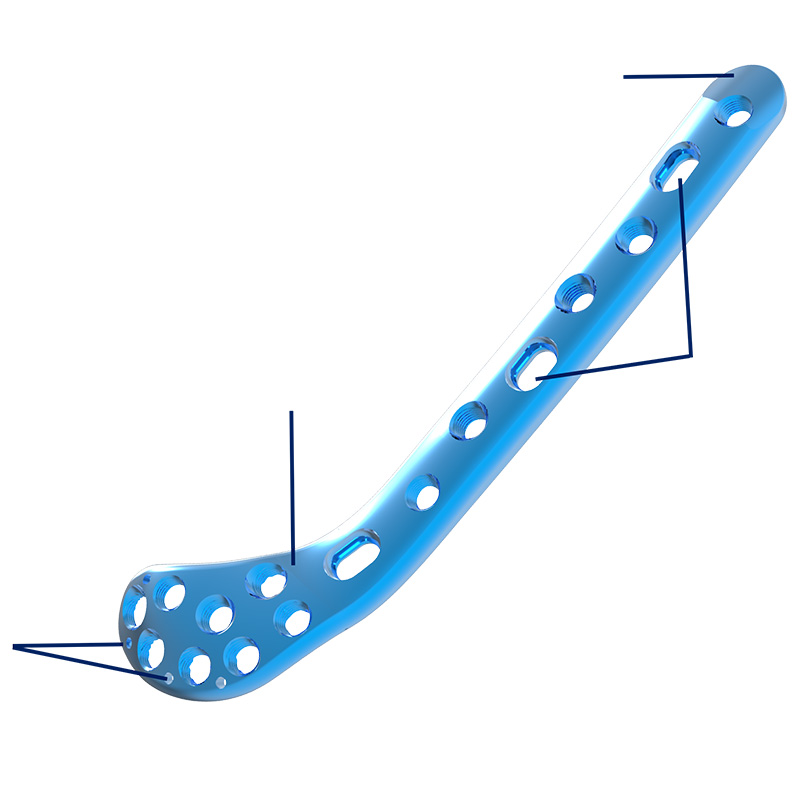
- The long slots allow bi-directional compression.
- Tapered, rounded plate tip facilitates a minimally invasive surgical technique.
- The anatomical shape of the head of the plate matches the shape of the distal femur.
- 2.0mm K-wire holes aid plate positioning.