Precision Orthopedic Implants & Specialized Instrument Assemblies
Direct factory supply for distributors and hospital healthcare procurement networks worldwide.
Evolutionary Dynamics: Modernizing "Clavos Ortopédicos" Engineering
From early unreamed stainless steel rods to anatomical titanium cephalomedullary nail constructs with active compression and helical anti-rotation mechanisms.
Metallurgical Superiority: Grade 23 Ti-6Al-4V ELI
Traditional 316L stainless steel nails (ASTM F138) presented excessive stiffness (~200 GPa), provoking stress shielding, cortical bone resorption, and peri-implant fractures. Contemporary OEM manufacturing shifts strictly to Titanium Grade 23 (ASTM F136 Extra Low Interstitial), cutting stiffness closer to cortical bone while delivering superior fatigue life beyond 5 million dynamic loading cycles.
ASTM F136 & ISO 5832-3 CertifiedAnatomical Bowing & Radius Optimization
Early intramedullary nails caused anterior cortex impingement and femoral shaft perforation. Our CAD-optimized femoral nails feature an anatomical curvature radius (ROC 1.5m–1.8m) engineered around global multi-ethnic anthropometric databases, accommodating distal targeting jigs with micrometric alignment reproducibility.
Optimized Anteroposterior RadiusMulti-Planar & Dynamic Compression Locking
Rotational stability in complex subtrochanteric or distal metaphyseal fractures dictates clinical healing. Modern intramedullary nailing incorporates multi-vector distal oblique locking options and dynamic elongation slots, empowering controlled axial micromotion for secondary callus induction while preventing varus collapse.
Active Dynamization ArchitectureCommercial Breakdown: "Precio de Clavos Ortopédicos" Variables
Direct insight into manufacturing cost drivers, OEM MOQ scalers, sterilization premiums, and international procurement pricing models across global tenders.
When procurement executives, surgical distributors, and tender committees evaluate the precio de clavos ortopédicos (orthopedic nail pricing), commercial figures fluctuate based on metallurgical purity, manufacturing precision, sterile barrier validation, and instrument consignment frameworks. Premium Grade 23 Ti-6Al-4V ELI commands a raw material premium of 35–45% over standard medical stainless steel, yet delivers vastly reduced rates of hardware breakage and revision surgery.
| System Classification | Material Specification | Surface Treatment | Packaging Level | Estimated OEM Price Tier | Lead-Time (MOQ 100 sets) |
|---|---|---|---|---|---|
| Proximal Femoral Nail Antirotation (PFNA) | Ti-6Al-4V ELI (ASTM F136) | Type II Anodization (Anti-galling) | Double Tyvek® Sterile Blister | Tier-1 OEM Competitive | 15–20 Working Days |
| Standard Interlocking Femoral Nail | Medical Stainless Steel 316LVM | Electropolished mirror finish | Non-Sterile Protective Tube | Economy B2B Tender | 10–14 Working Days |
| Tibial Interlocking Expert Nail | Ti-6Al-4V ELI Cannulated | Micro-arc oxidation / Type II | Double Tyvek® Sterile Blister | Mid-High Clinical Tier | 18–25 Working Days |
| Humeral Retrograde/Antegrade Nail | Ti-6Al-4V ELI (High ductility) | Anodized color-coded sizing | Sterile or Non-Sterile Option | Competitive OEM Contract | 15–20 Working Days |
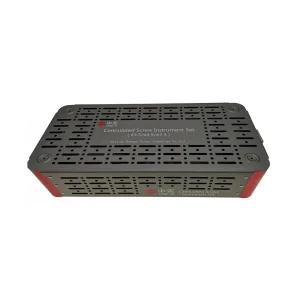
| Surgical Targeting Carbon Instrument Kit | 17-4PH Stainless & Carbon Fiber | Passivated Matte Anti-glare | Autoclavable Sterilization Box | Consignment Capital Asset | 25–30 Working Days |
Sterile vs. Bulk Non-Sterile Logistics
Direct supply in validated double Tyvek® peel blisters eliminates hospital central sterile supply department (CSSD) labor costs, prevents cross-contamination, and supports real-time operating room inventory traceability via GS1-128 barcoding and Unique Device Identification (UDI).
Surface Treatments: Type II Anodization
Untreated titanium nails can experience cold welding (galling) with locking screws during extraction. Our advanced Type II anodization creates a chemically passive surface, increasing surface hardness, drastically cutting friction coefficients, and guaranteeing seamless explantation if clinically required.
Turnkey Surgical Instrument Ecosystems
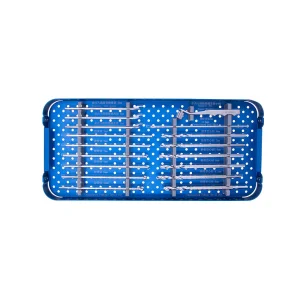
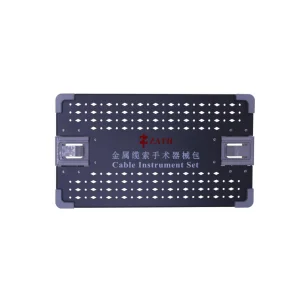
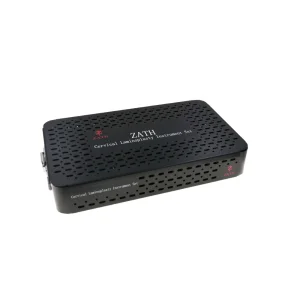
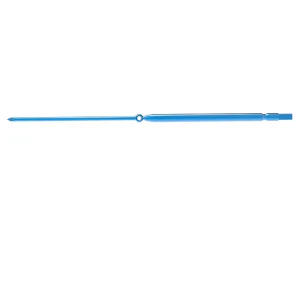
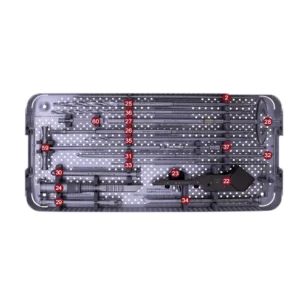
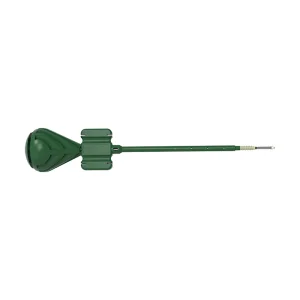
Implant pricing cannot be isolated from instrument cost. OEM partnerships with ZATH integrate carbon-fiber radiolucent targeting arms, calibrated quick-coupling depth gauges, and flexible reamer shafts, ensuring a 1:1 match between bone canal preparation and nail seating.
China Factory 4.0: Supply Chain Resilience & High-Tolerance Scalability
Inside Beijing ZhongAnTaiHua Technology Co., Ltd. (ZATH) — integrating digital twins, multi-axis robotic milling, and rigorous quality gatekeeping since 2009.
Multi-Axis Swiss CNC Centers
Equipped with high-end Citizen and Star multi-axis machining lathes, completing deep cannulation drilling, helical spiral cuts, and precision locking thread profiling in single clamping cycles to eliminate cumulative tooling deviations.
±5 Micrometers AccuracyISO 13485 & Full UDI Serialization
Every single implant is laser-marked with GS1 data-matrix codes capturing raw material heat numbers, CNC operator IDs, cleanroom sterilization batch numbers, and production timestamps for complete end-to-end auditability.
Class 100,000 CleanroomsAgile OEM & ODM Customization
Rapid engineering turnaround: Custom dimensions, specialized distal hole vectors, private label laser etching, distributor-branded packaging, and custom surgical tray anodization executed within 2–3 weeks of design sign-off.
Rapid Tooling TurnaroundGlobal Express Cold & Air Logistics
Streamlined export clearance directly from Beijing International Airport, partnering with DHL, FedEx, and UPS to guarantee hospital delivery within 4 to 6 business days across Latin America, Southeast Asia, and the EMEA regions.
4–6 Day Expedited TransitGlobal Landscape: Latin America, Middle East, and Regulatory Pressures
Navigating MDR transitions, local health registration authorities, and cost-containment mandates without compromising surgical safety.
Latin America: ANVISA, COFEPRIS & DIGEMID
Across Brazil, Mexico, Colombia, and Peru, public and private healthcare sectors seek cost optimization against soaring legacy multinational brands. ZATH provides full technical dossiers (STED), Free Sale Certificates (FSC), ISO 13485 test data, and biocompatibility documentation (ISO 10993) to accelerate regional sanitary registrations.
The Post-EU MDR Paradigm Shift
Stricter European Medical Device Regulation (EU MDR 2017/745) has caused European device manufacturers to rationalize product catalogs, dramatically inflate prices, and abandon mid-volume implant sizes. Global buyers increasingly qualify certified Asian manufacturing partners capable of meeting identical metallurgical standards at sustainable price points.
Hospital Group Purchasing Organizations (GPO)
Modern procurement groups prioritize unified supplier platforms that cover trauma, arthroplasty, and spine simultaneously. Consolidating intramedullary nails, locking compression plates, cannulated screws, and suture anchors into one manufacturing partner trims supply chain friction and administrative overhead by up to 35%.
Localized Operative Applications: Precision Fracture Fixation
Engineered for orthopaedic surgeons who demand ergonomic simplicity, fluoroscopic precision, and definitive mechanical stability across complex trauma pathologies.
Trochanteric & Subtrochanteric Femoral Fractures
Utilizing cephalomedullary nail architectures with helical blade or dual-integrated compression screws. The helical design compacts surrounding osteoporotic cancellous bone rather than reaming it away, vastly improving purchase strength and lowering the risk of post-operative cut-out in geriatric patients.
Geriatric Trauma & OsteoporosisDiaphyseal & Metaphyseal Tibial Fixation
The expert tibial intramedullary nail system accommodates suprapatellar, infrapatellar, or retropatellar surgical approaches. With multidirectional distal locking holes drilled within 5mm of the nail tip, surgeons achieve robust angular stability even in extreme distal third extra-articular fractures.
Suprapatellar Insertion ReadyRetrograde & Antegrade Humeral Interlocking
Engineered with a streamlined proximal diameter to safeguard the rotator cuff insertion during antegrade approach. The system transitions effortlessly to retrograde distal entry for distal-third humeral shaft fractures, avoiding radial nerve palsy through calibrated percutaneous instrumentation.
Rotator Cuff Preserving DesignFrequently Asked Questions: OEM Orthopedic Nail Supply
Essential guidance for global distributors, regulatory affairs managers, and hospital purchasing officers.
Orthopedic Reconstructive Implants, Plates & Suture Anchor Platforms
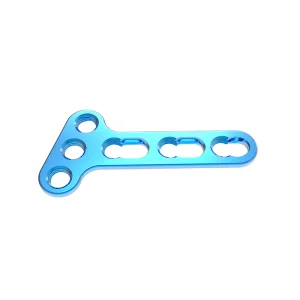
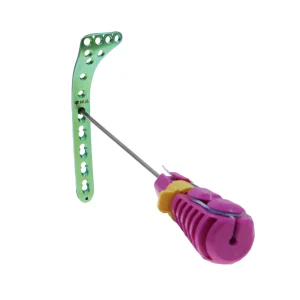
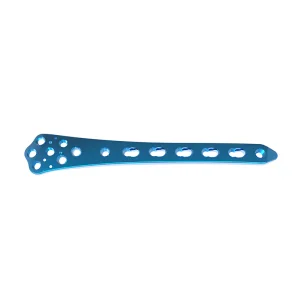
Complete surgical lines manufactured under unified ISO 13485 quality control for global healthcare systems.