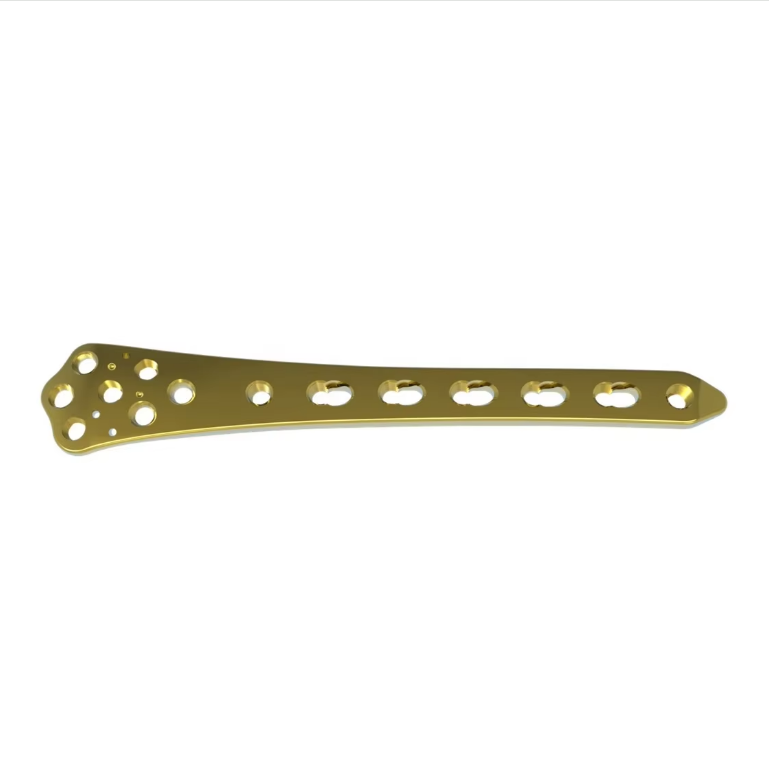
ODM Distal Lateral Femur Locking Compression Plate Supplier, Company
Product Description
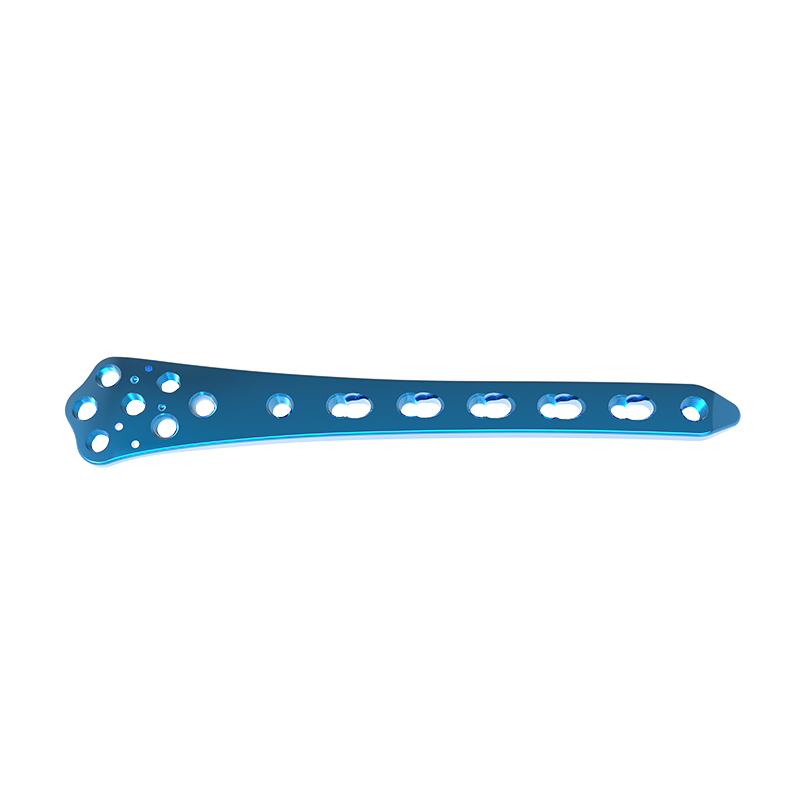
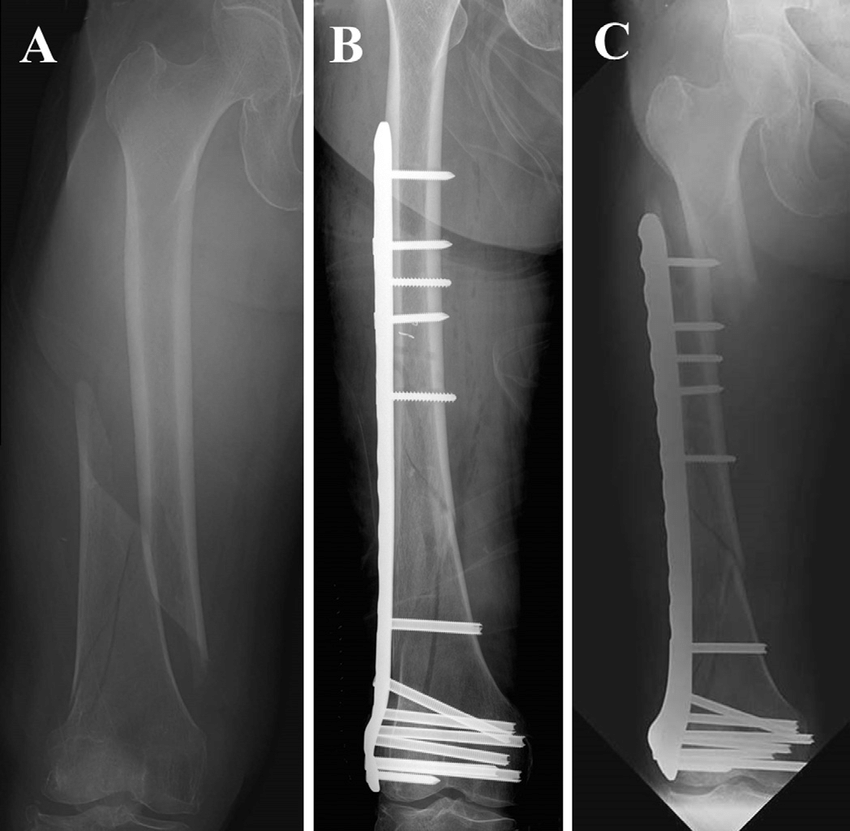
Distal Femur Plate is indicated for buttressing multifragmentary distal femur fractures including: supracondylar, intra-articular and extra-articular condylar, periprosthetic fractures; fractures in normal or osteopenic bone; nonunions and malunions; and osteotomies of the femur.
Technical Specifications & Sizing
|
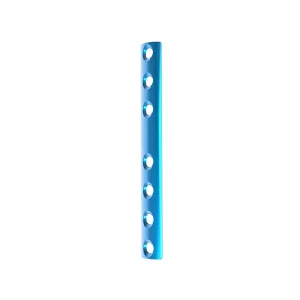
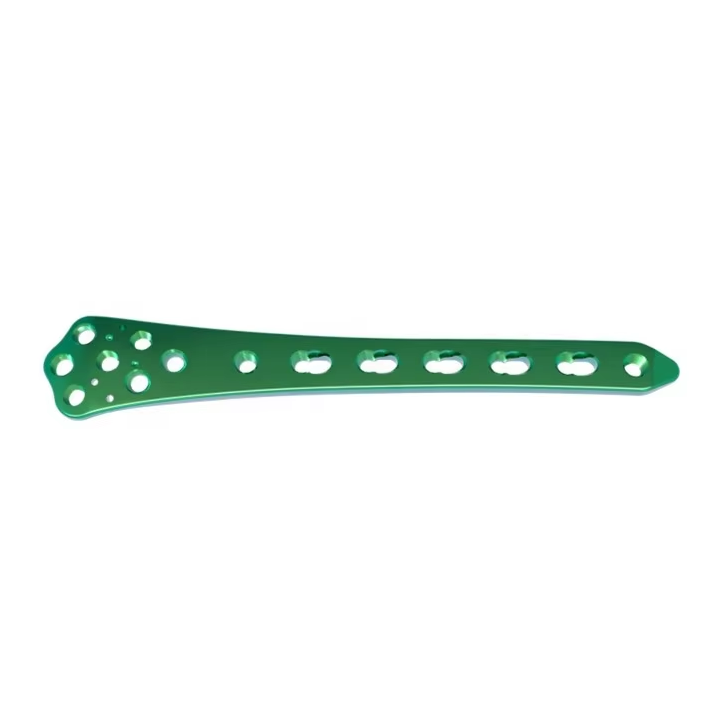
Distal Lateral Femur Locking Compression Plate
|
5 holes x 157mm (Left) |
| 7 holes x 197mm (Left) | |
| 9 holes x 237mm (Left) | |
| 11 holes x 277mm (Left) | |
| 13 holes x 317mm (Left) | |
| 5 holes x 157mm (Right) | |
| 7 holes x 197mm (Right) | |
| 9 holes x 237mm (Right) | |
| 11 holes x 277mm (Right) | |
| 13 holes x 317mm (Right) | |
| Width | 16.0mm |
| Thickness | 5.5mm |
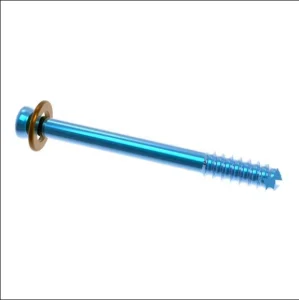
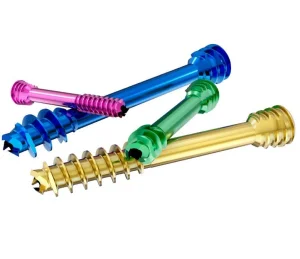
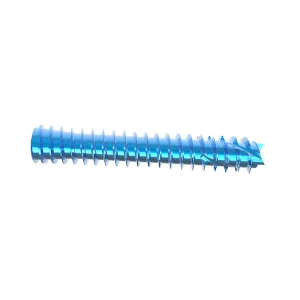
| Matching Screw | 5.0 Locking Screw / 4.5 Cortical Screw / 6.5 Cancellous Screw |
| Material | Titanium |
| Surface Treatment | Micro-arc Oxidation |
| Qualification | CE / ISO13485 / NMPA |
| Package | Sterile Packaging 1pcs/package |
| MOQ | 1 Pcs |
| Supply Ability | 1000+ Pieces per Month |
Clinical Advantages of Distal Lateral Femur LCP
The Distal Lateral Femur Locking Compression Plate (LCP) is a surgical implant used in the treatment of fractures or other injuries in the distal (lower) part of the femur (thigh bone). Here are some advantages of using a Distal Lateral Femur LCP:
The locking compression plate provides superior stability to the fractured bone compared to traditional plates. The locking screws create a fixed-angle construct, which helps to maintain proper alignment and prevent implant failure. This stability promotes better healing and reduces the risk of complications.
The Distal Lateral Femur LCP offers the advantage of both proximal and distal locking options. Proximal locking enables fixation closer to the fracture site, while distal locking allows fixation closer to the knee joint. This feature allows surgeons to adapt to the specific fracture pattern and achieve optimal stabilization.
The plate features multiple holes to accommodate different sizes and types of locking and non-locking screws. This versatility enables surgeons to choose the appropriate screw configuration based on the fracture pattern, bone quality, and stability requirements.
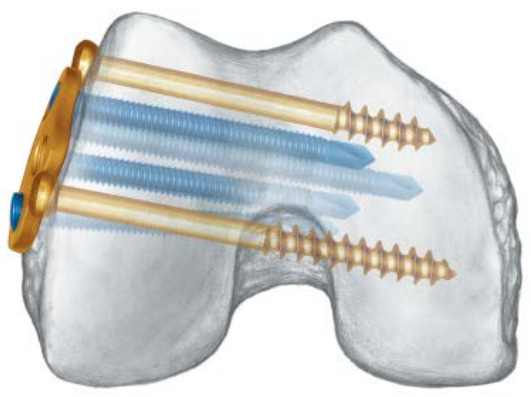
The Distal Lateral Femur LCP is designed to fit the natural contours of the distal femur. This anatomical design helps to minimize soft tissue irritation and improve patient comfort.
The plate's design distributes the load evenly across the fracture site, helping to prevent stress concentration and reduce the risk of implant failure. This load-sharing property promotes better bone healing and minimizes the risk of complications.
The stability provided by the Distal Lateral Femur LCP allows for early mobilization and weight-bearing, leading to faster recovery and return to daily activities.
Design Features & Surgical Benefits
Frequently Asked Questions (FAQ)
It is indicated for buttressing multifragmentary distal femur fractures, including supracondylar, intra-articular, and extra-articular condylar fractures, periprosthetic fractures, fractures in normal or osteopenic bone, nonunions, malunions, and osteotomies of the femur.
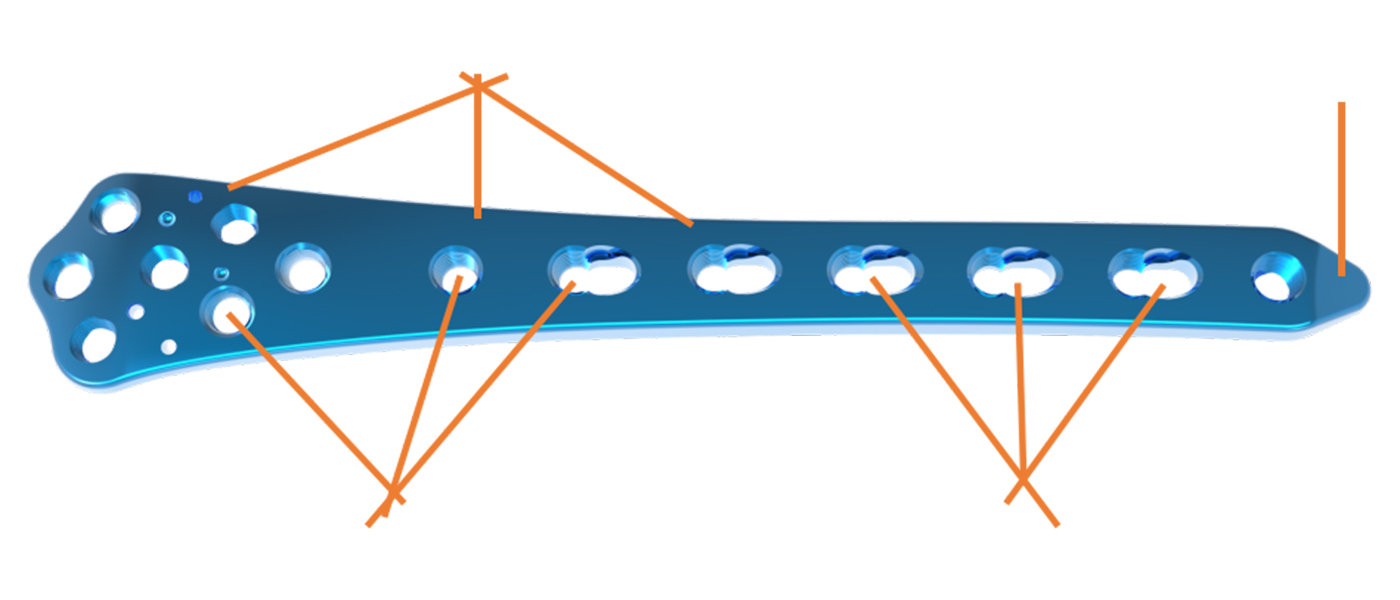
The Distal Lateral Femur LCP matches with 5.0 Locking Screws, 4.5 Cortical Screws, and 6.5 Cancellous Screws. The integrated Combi holes allow for standard cortical screws, locking screws, or a combination of both.
The implant is manufactured from premium medical-grade Titanium and undergoes Micro-arc Oxidation surface treatment. It holds CE, ISO13485, and NMPA medical quality certifications.
Both Left and Right configurations are available in 5 holes (157mm), 7 holes (197mm), 9 holes (237mm), 11 holes (277mm), and 13 holes (317mm). The plate profile features a width of 16.0mm and a thickness of 5.5mm.
The plate is pre-shaped to match the distal femur anatomy (eliminating the need for intraoperative contouring) and features a tapered, rounded plate tip designed specifically to facilitate minimally invasive surgical insertion.
Angular stability prevents screw loosening and avoids primary and secondary loss of reduction. This structural rigidity supports enhanced load-sharing, enabling early functional mobilization, weight-bearing, and faster rehabilitation.