
High-Demand Sports Medicine Systems for Brazilian Arthroscopy
Engineered to withstand rigorous biomechanical loads while delivering lean procurement economics for São Paulo, Rio de Janeiro, and Belo Horizonte healthcare networks.
-
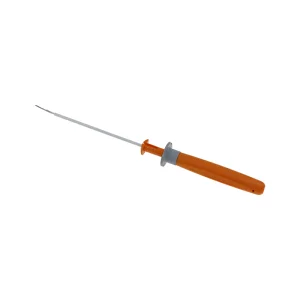
Brazil Market ODM Fast All Inside Meniscal Repair System
View Clinical Specs -
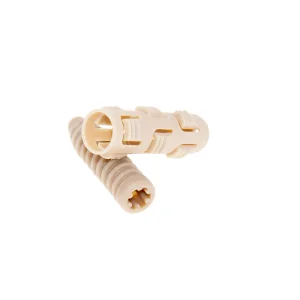
Brazilian Standard OEM Suture Anchor Implant Assembly
View Clinical Specs -
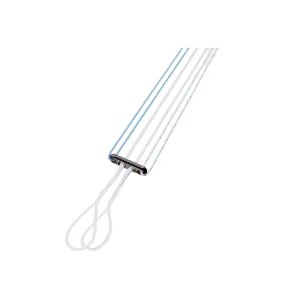
SuperFix Titanium Endo Button With Loop for Brazilian Knee Surgery
View Clinical Specs -
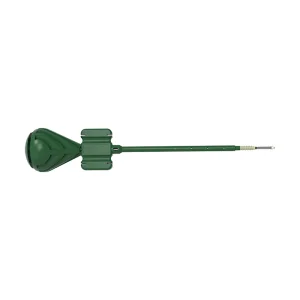
Brazil Wholesale SuperFix P Knotless Suture Anchor System
View Clinical Specs
1. The Sports Medicine Industrial & Commercial Ecosystem in Brazil
A macro-economic analysis of arthroscopic device demand across Brazil's dual-tier healthcare framework.
Brazil stands as Latin America’s largest market for orthopedic and sports medicine devices, characterized by a complex dual-track ecosystem: the unified public healthcare system (SUS – Sistema Único de Saúde) and the private supplemental healthcare network (Saúde Suplementar), overseen by the ANS (Agência Nacional de Saúde Suplementar). As soccer, Brazilian Jiu-Jitsu (BJJ), beach tennis, and cross-training continue to drive participation across metropolitan centers such as São Paulo, Rio de Janeiro, Curitiba, and Porto Alegre, the epidemiological incidence of acute soft-tissue pathology—specifically anterior cruciate ligament (ACL) disruptions, meniscal tears, glenohumeral labral detachments (Bankart/SLAP lesions), and rotator cuff tears—has expanded exponentially.
Historically, the Brazilian market has been dominated by legacy multinational corporations (MNCs) based in North America and Western Europe. However, macroeconomic shifts, currency volatility affecting the Brazilian Real (BRL), and systemic budgetary ceilings imposed on public procurement have created an untenable cost burden for local healthcare operators. Orthopedic distributors, surgical equipment importers (distribuidores de OPME – Órteses, Próteses e Materiais Especiais), and hospital procurement boards face mounting pressure: private insurers demand lower procedural bundle costs, while public tenders require strict compliance with predetermined reference budgets.
This financial environment has ignited demand for discount sports medicine factories capable of eliminating multi-tiered distributor markups without compromising precision biomechanics or regulatory compliance. Factory-direct sourcing enables Brazilian importers to compress landed costs by 40% to 65%, bridging the disparity between premium surgical expectations and bottom-line fiscal sustainability.
SUS Public Procurement
Operates under bidding modalities (Lei 14.133/2021). Requires stringent price-to-volume efficiency, ISO 13485 quality credentials, and predictable bulk deliveries for municipal hospital networks.
Private OPME Distribution
Serves premium healthcare networks (e.g., Rede D'Or São Luiz, Hospital Israelita Albert Einstein). Demands sterile-barrier packaging, knotless fixation systems, and customized OEM surgeon kits.
ANVISA Regulatory Filter
Classification under RDC 751/2022 (Class III & IV implants). Demands rigorous technical dossiers, ISO 10993 biocompatibility testing, and Brazilian Good Manufacturing Practice (BGMP/CBPF).
2. Global Enterprise Procurement & Factory-Direct Solutions
Mitigating currency exposure and supply bottlenecks through streamlined OEM/ODM manufacturing partnerships.
Navigating Macroeconomic Headwinds in Brazilian Importer Operations
Global procurement executives managing Latin American supply chains recognize that purchasing OPME goods through third-party traders or regional Western affiliates adds multiple non-value-added layers. Import tariffs (II - Imposto de Importação), state-level value-added taxes (ICMS), and federal industrial taxes (IPI) compound on top of inflated Western invoice values. By partnering directly with a certified manufacturing facility operating under ISO 13485 standards, Brazilian distributors reset the baseline CIF (Cost, Insurance, and Freight) valuation.
Factory-direct integration further addresses chronic lead-time vulnerabilities. Traditional multinational fulfillment often forces Brazilian clinics into extended backlog queues due to global inventory reallocations. Direct collaboration with flexible OEM/ODM manufacturing hubs provides Brazilian enterprise buyers with tailored production slots, rapid tooling adjustments, and localized packaging designs featuring Portuguese labeling compliant with RDC 751/2022.
| Evaluation Parameter | Legacy Western MNC Channel | Factory-Direct OEM/ODM Alliance |
|---|---|---|
| Procurement Pricing | High premium factoring in multi-national overheads and distributor margins. | Discounted factory floor pricing yielding 40%–65% cost reductions. |
| Regulatory Dossier Support | Standardized; limited willingness to adapt technical files for local ANVISA queries. | Dedicated technical documentation, raw mill certificates, and audit-ready test reports. |
| Branding & OEM Capability | Rigid corporate branding; zero private labeling flexibility. | Full OEM/ODM customization: laser marking, sterile box art, custom tray ergonomics. |
| Suture & Polymer Quality | Standard medical grade UHMWPE or PEEK. | Verified medical grade UHMWPE braided sutures and certified implantable PEEK-OPTIMA®. |
| Batch Flexibility (MOQ) | Rigid volume thresholds often requiring excessive capital tie-up. | Tiered batch volumes supporting both localized trial evaluations and container shipments. |
3. Technology Roadmap: Next-Gen Materials in Sports Medicine
Bridging titanium metallurgy, biocomposites, and ultra-high-molecular-weight braided fibers.
The sports medicine sector has transitioned from aggressive metallic hardware toward physiological soft-tissue preservation. For Brazilian clinical specialists performing arthroscopic rotator cuff repairs, Bankart shoulder reconstructions, and ACL/PCL ligament grafts, the performance of the implant hinges on three key variables: insertion torque integrity, pull-out resistance, and inflammatory biological biocompatibility.
Titanium Alloy (Ti-6Al-4V ELI)
Offers unmatched structural yield strength and cortical bone fixation for active sports patients. Engineered with precise cannulated self-tapping threads that minimize insertion torque failure in dense bone.
Medical PEEK (Polyetheretherketone)
Exhibits an elastic modulus matching native cortical bone (3.5–4.0 GPa), eliminating stress shielding. Its radiolucent profile ensures clear postoperative MRI/CT visualization without scatter artifacts.
UHMWPE Suture Braiding
Ultra-High Molecular Weight Polyethylene sutures provide superior tensile breaking load, high abrasion resistance against anchor eyelets, and tissue-friendly handling for knotless anchoring techniques.
4. Localized Support & Brazilian Compliance Assurance
De-risking medical device customs clearance and certification under ANVISA RDC 751/2022.
Importing Class III and Class IV orthopedic implants into Brazil requires navigating a stringent regulatory maze overseen by ANVISA (Agência Nacional de Vigilância Sanitária). A discount manufacturing partner is ineffective if its documentation cannot survive rigorous scrutiny by Brazilian health authorities.
Our manufacturing infrastructure operates under a certified ISO 13485:2016 quality management system, providing Brazilian registration holders with end-to-end technical dossiers (Relatório Técnico de Produto). Every sports medicine line includes:
- Biocompatibility Validation: Complete biological risk evaluations conducted per ISO 10993 series (cytotoxicity, systemic toxicity, sensitization, intracutaneous reactivity, and implantation).
- Biomechanical Test Certificates: Dynamic cyclic fatigue testing and pull-out force evaluations complying with ASTM F543 and ASTM F1839 standards.
- Cleanroom Packaging & Sterilization Dossiers: Validated double-barrier Tyvek® sterile blister systems verified to ISO 11607-1/2 with Ethylene Oxide (EO) residual controls conforming to ISO 11135.
- Traceability & IFU Compliance: Factory-engraved UDI (Unique Device Identification) with laser lot numbering, alongside multi-language Instructions for Use (IFU) formatted for Portuguese translation.
Accelerate Your ANVISA Registration Roadmap
Connect with our technical regulatory team to request sample technical files, CAD drawings, and test summaries for Brazilian market validation.
Send Inquiry NowFrequently Asked Questions: Sports Medicine Procurement in Brazil
Critical operational answers for commercial directors, regulatory managers, and hospital buyers.
How can Brazilian importers access discount factory pricing without sacrificing ANVISA quality standards?
Factory-direct partnerships bypass Western marketing surcharges and tier-2 agent margins. By manufacturing in an ISO 13485 accredited facility utilizing automated multi-axis CNC machines and streamlined cleanroom packaging, the baseline cost of production is dramatically reduced while metallurgical and biomechanical specifications remain strictly aligned with global standards (ASTM F136 titanium, implantable PEEK, and medical UHMWPE).
What documentation is provided to support ANVISA Class III/IV registration under RDC 751/2022?
We supply an exhaustive technical dossier package: ISO 13485 certification, Free Sale Certificates (FSC), raw material mill certificates, ISO 10993 biocompatibility test reports, EO sterilization validation (ISO 11135), sterile barrier packaging validation (ISO 11607), biomechanical pull-out test data, and detailed risk analysis matrices complying with ISO 14971.
Does your factory support customized OEM branding and private labeling for Brazilian OPME distributors?
Yes. We offer turnkey OEM/ODM services including laser engraving of your proprietary trademark, customized outer box packaging with Portuguese labeling, specific color-anodized sizing systems, and tailored surgical instrument trays matched to local surgeon preferences in Brazil.
What are the logistics arrangements and typical delivery lead times for Brazilian ports and airports?
Standard express air shipments (via DHL, FedEx, UPS) typically arrive at São Paulo (GRU), Campinas (VCP), or Rio de Janeiro (GIG) within 4 to 6 business days for rapid stocking. Bulk sea freight orders are dispatched via Santos Port (Porto de Santos) with comprehensive customs clearance documentation (Invoices, Packing Lists, Certificates of Analysis).
How do knotless suture anchors improve surgical efficiency in sports medicine arthroscopy?
Knotless suture anchor constructs allow surgeons to adjust and lock soft-tissue tension intraoperatively without tying knot stacks. This eliminates the risk of knot migration, reduces intra-articular impingement, shortens surgical anesthesia time, and delivers reproducible fixation stability across high-volume shoulder and knee arthroscopies.
Comprehensive Sports Medicine, Joint & Spine Factory Solutions
Complete your catalog with factory-direct orthopedic implants, instrumentation sets, and soft-tissue systems tailored for Brazilian healthcare tenders.
-
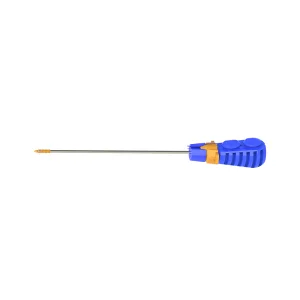
Brazil Market Wholesale Knotless Titanium Anchor with Needle
View Clinical Specs -
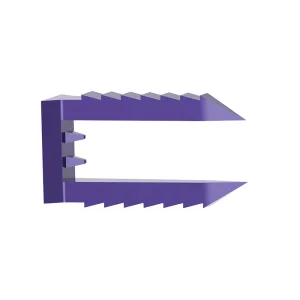
Precision Titanium Alloy Suture Anchor for Brazilian Clinics
View Clinical Specs -
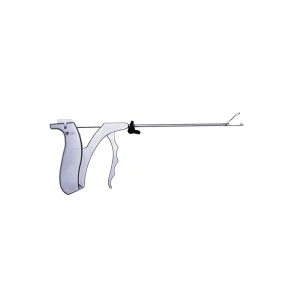
SuperFix Arthroscopic Suture Passer for Brazil OPME Supply
View Clinical Specs -
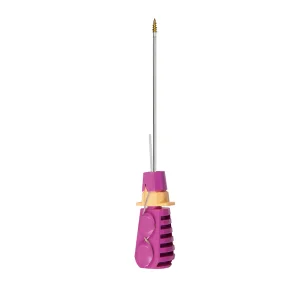
Brazil ODM Titanium Sports Medicine Suture Anchor System
View Clinical Specs -
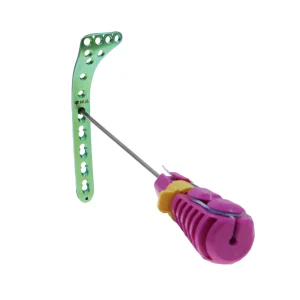
CE Certified Hospital-Grade All Suture Anchor with Needle
View Clinical Specs -
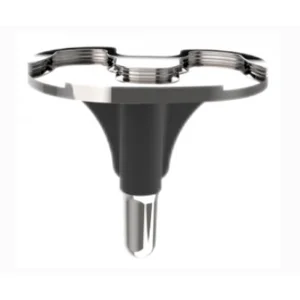
Enable Tibial Baseplate for Total Knee Replacement Surgery Brazil
View Clinical Specs -
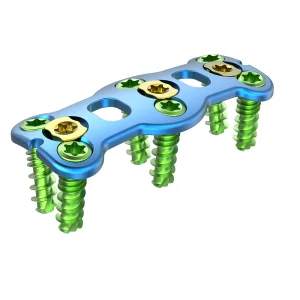
CE Certified Shielder Cervical ACP Plate System Brazil
View Clinical Specs -
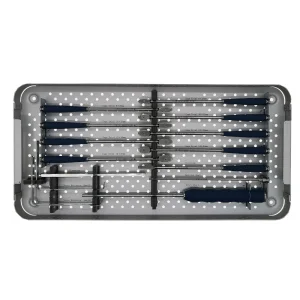
Spine Thoracolumbar PLIF Cage & Ergonomic Instrument Set Brazil
View Clinical Specs
Partner with a Proven Orthopedic & Sports Medicine Manufacturer
Expand your Brazilian market share with certified sports medicine implants, competitive factory-direct pricing, and comprehensive ANVISA regulatory support.
Send Inquiry Now