
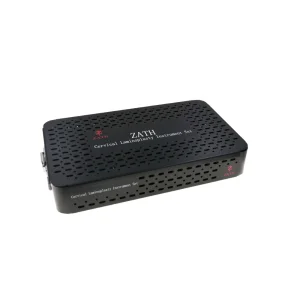
Primary Trauma & Reconstructive Platforms
High-Precision Fixation Systems for South African Clinical Applications
Engineered to support orthopedic surgeons in high-acuity trauma environments like Chris Hani Baragwanath, Charlotte Maxeke, and leading private emergency centers.
Industrial & Healthcare Analysis
The South African Orthopedic Ecosystem: Trauma Epidemiology & Procurement Pressures
An in-depth white paper examining the structural requirements, tender landscapes, and clinical demands driving orthopedic pin, wire, and cable procurement across southern Africa.
Dual Trauma Burden in Public & Private Healthcare
South Africa represents one of the most uniquely demanding clinical environments in global orthopedics. The public healthcare system, coordinated across provincial departments including Gauteng, Western Cape, and KwaZulu-Natal, faces an unprecedented volume of high-energy trauma. Road traffic incidents (RTIs), interpersonal violence, and industrial heavy-machinery accidents generate a continuous influx of complex comminuted fractures, severe diaphyseal disruptions, and periarticular injuries.
In municipal academic medical centers like Chris Hani Baragwanath Academic Hospital (Soweto) and Groote Schuur Hospital (Cape Town), surgical operating theaters face acute pressure to balance high turnaround rates with uncompromising implant reliability. Orthopedic pins (Kirschner wires, Steinmann traction pins) and cerclage cable systems are fundamental workhorses. They are essential not only for permanent osteosynthesis but also for urgent provisional skeletal traction, fracture reduction maintenance, and emergency damage-control orthopedics.
Tender Restructuring & The NHI Transition
Concurrently, the South African National Health Insurance (NHI) framework and provincial medical supply tenders demand that orthopedic medical device distributors provide internationally validated devices at defensible unit economics. The private sector, anchored by hospital conglomerates such as Netcare, Life Healthcare, and Mediclinic, demands surgical implants that eliminate revision risk, minimize infection rates, and guarantee biocompatibility.
Distributors serving this dual market require supply partners capable of delivering dual advantages: manufacturing agility that meets stringent ISO 13485:2016 quality thresholds and competitive price architectures that enable successful participation in RT24 national healthcare tenders. Reliable sourcing of pins and cables has thus transitioned from basic procurement to a critical element of medical supply chain security.
15+
Years Manufacturing Mastery
ISO 13485
Audited Quality Systems
100%
Heat-Lot Material Traceability
4-6 Days
Express Delivery to South Africa
Advanced Metallurgy & Engineering
Biomechanics of Cerclage Cables & Bone Pins: Engineering Superiority
Understanding the critical performance metrics that separate clinical success from catastrophic metal fatigue in load-bearing osteosynthesis.
Multi-Filament Cable Architecture
Our cerclage cables utilize a specialized 7x7 stranded design (49 micro-filaments) fabricated from medical-grade 316LVM implant stainless steel (ASTM F138) and Grade 5 ELI Titanium (ASTM F136). This maximizes tactile flexibility during anatomical contouring around bone cortices while completely eliminating fraying and micro-shear degradation under high-tension crimping.
Patented Low-Profile Crimp Sleeves
Soft tissue irritation and bursitis over the greater trochanter or proximal humerus represent frequent post-operative complications. Our precision-engineered crimp locks offer a hydrodynamic, low-profile geometric footprint with uniform plastic deformation under calibrated tensioners, providing ultimate pull-out strengths exceeding 2,100 Newtons.
Trocar & Diamond Tip Geometry
Our Kirschner Wires and Steinmann Bone Pins undergo automated CNC centerless grinding to create razor-sharp Trocar and Diamond faceted cutting edges. This geometry minimizes thermal friction during cortical penetration, preventing thermal osteonecrosis, ensuring immediate axial purchase, and maximizing bone healing rates.
Material Specification & Mechanical Performance Benchmarks
| Implant Classification | Material Standard | Tensile Strength (MPa) | Key Clinical Indications in South Africa | Sterilization Status |
|---|---|---|---|---|
| Multi-Strand Cerclage Cable | ASTM F136 Ti-6Al-4V ELI / ISO 5832-3 | ≥ 950 - 1050 N/mm² | Periprosthetic femur fracture fixation, Trochanteric reattachment | EO Sterile / Blister |
| Surgical Cerclage Wire | ASTM F138 316LVM Stainless Steel | ≥ 780 - 900 N/mm² | Tension band wiring (patella, olecranon), sternal closure | Sterile & Non-Sterile |
| Steinmann Traction Pin | Medical Stainless Steel 316LVM / Ti6Al4V | ≥ 1100 N/mm² Yield | Femoral / Tibial skeletal traction in severe polytrauma | Sterile Protective Cap |
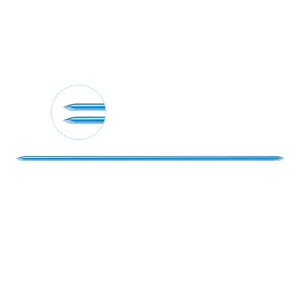
| Double-Ended Bone Pin (K-Wire) | Spring-tempered 316LVM (ASTM F138) | Ultra-High Hardness (45-50 HRC) | Pediatric fracture reduction, temporary joint fixation | Sterile Pack of 10 |
China Factory 4.0
Intelligent Manufacturing, Supply Chain Resilience & Global Competitiveness
How Beijing ZhongAnTaiHua Technology Co., Ltd. (ZATH) deploys advanced automation to eliminate lead times and protect South African tender contractors.
In the aftermath of recent global supply disruptions, healthcare providers across Johannesburg, Durban, Pretoria, and Cape Town encountered persistent back-orders from traditional European and American implant brands. When trauma pins and cerclage cables are delayed, emergency surgeries are postponed, bed occupancy surges, and patient outcomes deteriorate.
ZATH’s modern production complex situated within the Zhongguancun Science and Technology Park (Pinggu, Beijing) operates under Industry 4.0 manufacturing principles. Equipped with multi-axis Swiss-type Citizen and Star CNC lathes, automatic cable braiding machinery, high-precision wire-EDM profiling, and cleanroom packaging bays (ISO Class 7 / Class 10,000), our infrastructure integrates raw-material inspection directly through to sterilized finished goods.
- Raw Material Verification: Every batch of titanium and stainless steel bar stock is subjected to optical emission spectrometry and ultrasonic flaw detection with comprehensive 3.1 mill test certificates.
- Zero-Defect Dimensional Metrology: Automated coordinate measuring machines (CMM) and laser micrometer optical scanners monitor pin diameter tolerances within ±0.005mm.
- Sterile Barrier Validation: Implants are packaged in high-integrity Tyvek® heat-sealed blisters under validated ethylene oxide (EO) sterilization cycles, ensuring a 5-year shelf life.
For South African distributors and surgical supply partners, partnering with an agile Chinese manufacturer means direct access to institutional economies of scale without bureaucratic middleman markups. Our direct OEM/ODM and private-label service offerings empower local distributors to build equity under their own domestic brands or bid directly for South African Government RT Tenders with rock-solid supply continuity.
Express air-freight corridors running directly from Beijing Capital International Airport (PEK) to O.R. Tambo International Airport (JNB) ensure that critical orders and customized emergency restocks arrive on site in South Africa within 4 to 6 business days, accompanied by complete regulatory documentation.
Tender Registration & Regulatory Support for SAHPRA
We provide full technical documentation files (STED format), biocompatibility dossiers (ISO 10993), sterilization validation records (ISO 11135), and Free Sale Certificates (FSC) to accelerate South African Health Products Regulatory Authority (SAHPRA) medical device licensing.
Clinical Realities
Localized Clinical Application Scenarios Across Southern Africa
Real-world surgical applications requiring uncompromising tensile integrity and corrosion-resistant implant design.
Periprosthetic Femoral Fractures (Vancouver B1/B2)
With an aging population in private facilities and increasing revision arthroplasty volume across South Africa, periprosthetic femur fractures around stable or loose femoral stems are common. ZATH titanium cerclage cables provide stable circumferential tension without compromising periosteal blood supply, serving as stable anchors for long trochanteric plates.
Emergency Skeletal Traction in Mining Belts
In high-impact mining regions across Limpopo, Rustenburg, and Mpumalanga, blast and machinery injuries frequently produce severe open comminuted femoral and tibial shaft trauma. ZATH Trocar-pointed Steinmann Pins deliver fast, rigid, infection-resistant skeletal traction to stabilize patients prior to definitive reconstructive intervention.
Tension Band Wiring (TBW) for Olecranon & Patella
Transverse fractures of the patella and olecranon necessitate dynamic conversion of tensile muscular forces into compressive healing forces. ZATH surgical wires, paired with parallel Kirschner wires, withstand repetitive knee flexion and elbow extension cycles without loosening or knot fatigue.
Full Product Matrix
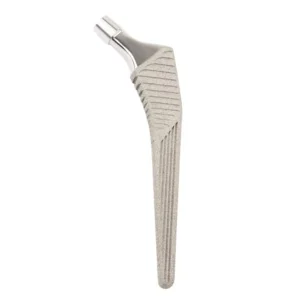
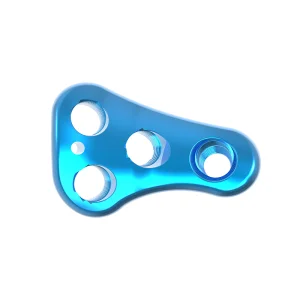
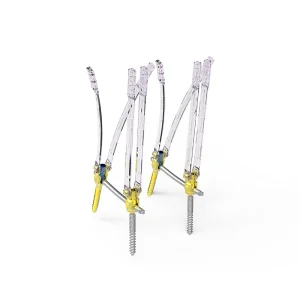
Orthopedic Implants & Systems Complementing Pin & Cable Procedures
Explore our comprehensive surgical range trusted by hospitals across Africa, Latin America, Europe, and Asia.
Procurement Intelligence
Frequently Asked Questions: Pin & Cable Systems for South Africa
Detailed insights on material compliance, regulatory licensing with SAHPRA, logistics, and bulk tender pricing structures.
What specific materials are utilized in ZATH orthopedic pins, wires, and cables?
We manufacture our surgical pin, wire, and cerclage cable systems using certified medical-grade 316LVM implant stainless steel (conforming to ASTM F138 / ISO 5832-1) and Grade 5 ELI Titanium alloy (Ti-6Al-4V ELI conforming to ASTM F136 / ISO 5832-3). These materials are vacuum-arc remelted to achieve superior microstructural cleanliness, eliminating brittle non-metallic inclusions and guaranteeing outstanding fatigue resistance in high-load dynamic environments.
How do ZATH cerclage cables prevent metal fraying and intraoperative breakage?
Our cables are braided in a specialized 7x7 structural matrix (49 micro-filaments) that undergoes calibrated pre-stretching and uniform heat treatment. This architecture provides high tactile suppleness, allowing the surgeon to manipulate the cable through anatomical passers around the femur or humerus without knotting or filament unwinding. When crimped using our calibrated tensioner, the crimp sleeve deforms symmetrically, distributing mechanical clamping force uniformly without cutting individual wire strands.
Does ZATH provide technical documentation to support South African SAHPRA registration?
Yes. We provide complete technical documentation packages structured according to the Common Submission Dossier Template (CSDT/STED). This includes our ISO 13485:2016 certificate, CE / UDEM conformity documentation, ISO 10993 biocompatibility test reports, mechanical fatigue validation summaries, and Free Sale Certificates (FSC) to assist authorized South African distributors in securing SAHPRA medical device establishment licenses and product registration.
Are bone pins and cables supplied sterile or non-sterile for South African hospitals?
Both configurations are available based on procurement requirements. We offer individual peel-open sterile Tyvek® blister packaging processed through validated ethylene oxide (EO) sterilization (SAL 10⁻⁶), ideal for immediate trauma theater use. Alternatively, we supply non-sterile bulk packages and modular autoclavable graphic cases for hospital central sterile supply departments (CSSD) seeking cost efficiency across long-term surgical cycles.
What is the standard delivery timeline for shipments to Johannesburg or Cape Town?
For standard inventory configurations (standard diameters of K-wires, Steinmann pins, and cerclage cable assemblies), orders are dispatched within 48 to 72 hours from our Beijing facility. Air express cargo via DHL, FedEx, or specialized medical forwarders typically arrives at O.R. Tambo International Airport (Johannesburg) or Cape Town International Airport within 4 to 6 business days, accompanied by complete airway bills, packing declarations, and batch certificates of analysis.
Can ZATH provide customized surgical tensioning instruments and matching cable passers?
Yes. A successful cerclage procedure requires matched instrumentation. We manufacture ergonomic cable tensioners with integrated load gauges (measuring applied tension up to 500 N), reverse-action crimping forceps, and subperiosteal anatomical cable passers configured for proximal and distal femoral contours. These instrument sets can be private-labeled and laser-etched with distributor branding.
Can South African distributors request sample evaluation kits before entering commercial contracts?
Yes. We routinely provide evaluation sample packs containing representative sizes of our double-ended bone pins, Steinmann pins, cerclage cables, and crimp sleeves to licensed medical distribution companies and hospital clinical boards across South Africa. These samples allow orthopedic surgical committees to verify tactile feedback, surface finish, and cutting sharpness firsthand.
How does ZATH assist distributors in bidding for South African provincial government tenders (RT24)?
We support prospective tender partners with price protection agreements, guaranteed production capacity commitments, long-term price locks (hedging metal raw-material volatility), and rapid batch scalability. Our team works closely with your regulatory and tender desks to ensure every specification parameter strictly meets the tender bulletin criteria.
Empower Your South African Orthopedic Tender & Supply Pipeline
Partner directly with Beijing ZhongAnTaiHua Technology Co., Ltd. (ZATH) for factory-direct quotes, ISO 13485 certified quality, and rapid fulfillment across Gauteng, Western Cape, KwaZulu-Natal, and regional Southern African markets.