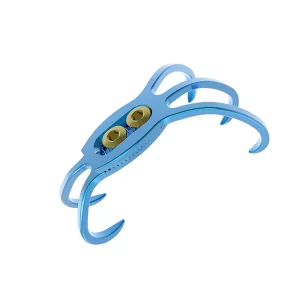
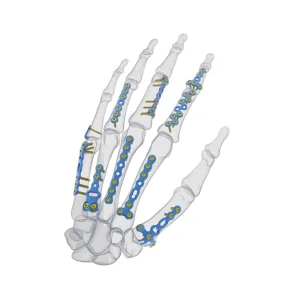
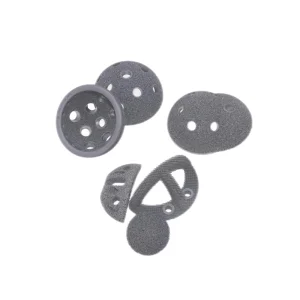
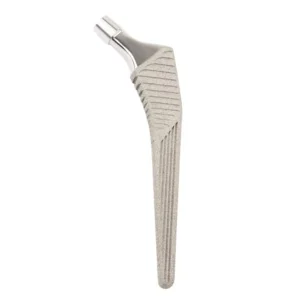
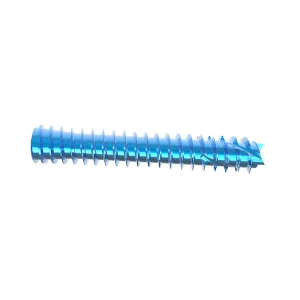
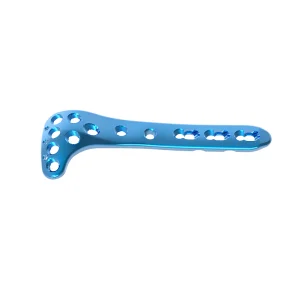
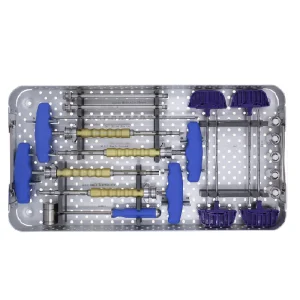
Featured Arthroplasty & Trauma Implants
Comprehensive orthopedic instrumentation and prostheses manufactured under ISO 13485 standards, calibrated for precision surgical interventions in the Osaka metropolitan clinical network.
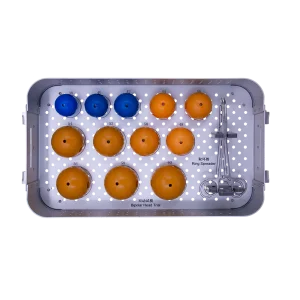
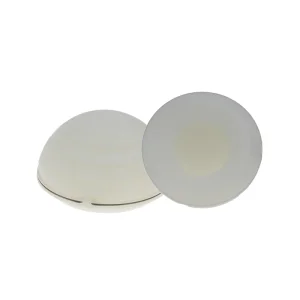
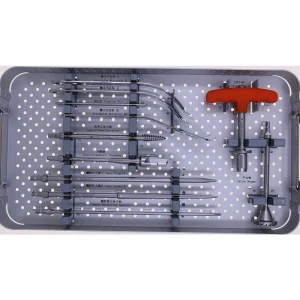

Interbody Fusion Technology & The Osaka Healthcare Ecosystem
The Kansai region, anchored by Osaka, represents one of East Asia's most progressive medical device corridors. With renowned research clusters such as the Northern Osaka Health and Biomedical Innovation Park (Nakanoshima Qross) and elite academic hospitals across Suita and Osaka City, demand for advanced spinal reconstructive instrumentation is advancing rapidly. Japan’s demographic shift has expanded the clinical indication for lumbar and cervical interbody arthrodesis, requiring implants that address low bone mineral density, degenerative disc disease, and spinal stenosis.
Surgeons across Osaka demand interbody fusion cages engineered to minimize subsidence risks while maximizing bone graft containment and vascularization. Our product platforms address Cervical (ACIF), Transforaminal (TLIF), Posterior (PLIF), and Oblique Lateral (OLIF) interventions through anatomically contoured lordotic profiles and friction-reducing insertion geometries.
- Anatomical Geometries: Designed with lordotic variations accommodating Asian sagittal balance and osteoporotic endplate morphology.
- Biocompatible PEEK-OPTIMA & Ti6Al4V ELI: Ultra-low elasticity modulus preventing mechanical stress-shielding and adjacent segment degeneration.
- Radiographic Precision: Integrated tantalum x-ray marker pins enabling real-time intraoperative visualization and postoperative fusion auditing.
Osaka Procurement Efficiency
Healthcare providers and medtech distributors in Osaka operate under strict DPC/PDPS reimbursement criteria. Sourcing spine cages directly from advanced manufacturing nodes significantly reduces inventory overhead while maintaining adherence to international regulatory standards, ensuring seamless surgical set rotation and kit readiness.
China Factory Scalability Meets Japanese Precision Demands
Combining multi-axis CNC micro-machining with rigorous ISO 13485 cleanroom operations to deliver high-volume, defect-free spinal fusion implants.
5-Axis CNC & Additive 3D Tech
Utilizing high-speed DMG MORI and Swiss precision lathes alongside electron beam melting (EBM) 3D titanium printing to construct open-pore lattices that replicate native cancellous bone architecture with a 65–80% porosity ratio.
Traceable Medical Metallurgy
Every batch of titanium alloy (ASTM F136) and biocompatible PEEK polymer (ASTM F2026) is sourced with full raw material mill certs, spectroscopic verification, and fatigue cycle documentation guaranteeing long-term mechanical reliability.
Sterile OR-Ready Packaging
Class 100,000 to Class 10,000 cleanroom packaging with double-barrier sterile Tyvek pouches. Implants are delivered ready for operating theater access, minimizing turnaround sterilization cycles and autoclave logistics.
Cost-Effective Scalability
By leveraging integrated industrial clusters in China, we eliminate sub-tier contractor compounding, allowing Osaka partners and distributors to access superior unit margins while preserving premium engineering tolerances within ±0.01mm.
OEM / ODM Technical Dossiers
Complete documentation arrays provided for Japanese PMDA, CE MDR, and FDA regulatory pathways. We provide biomechanical test reports, biocompatibility profiles, and engineering drawings that streamline distributor submissions.
Express Osaka Logistics Routing
Direct supply line links from our Beijing hub to Kansai International Airport (KIX) via DHL, FedEx, and secured air cargo. Replenish clinical trial inventories, emergency surgical sets, or consignment stock within 3 to 5 business days.
Macro Trends Reshaping Interbody Spinal Arthrodesis
Adapting spinal implant architecture to the rise of minimally invasive surgery, robotic navigation, and bio-active surfaces.
3D Porous Titanium vs. Traditional PEEK
While PEEK retains radiological transparency, additive manufacturing allows for cellular titanium cages with interconnected diamond pores that facilitate dynamic osseointegration and stem-cell adhesion without sacrificial biomechanical stiffness.
Expandable MIS Interbody Cages
Minimally invasive corridor access necessitates cages with a low insertion profile that expand in situ to custom lordotic angles, mitigating nerve root retraction injuries and restoring anatomical disc height with micrometric precision.
Robotic Integration & Custom Sizing
The acceleration of robotic navigation systems across Osaka hospitals requires fusion cages to interface securely with tracked holding and impaction devices, eliminating axial deviation during pedicular trajectory guidance.
Frequently Asked Questions for Sourcing in Osaka
Essential guidance covering regulatory compliance, biomaterials, delivery timelines, and customization services.
What biomaterials are utilized for your fusion cage platforms?
We supply cages manufactured from medical-grade PEEK (ASTM F2026), medical titanium alloy Ti-6Al-4V ELI (ASTM F136), and 3D-printed porous titanium. Tantalum markers (ASTM F560) are pressed into PEEK devices to ensure exceptional radiographic localization.
Do you support OEM and private-label production for Japan?
Yes. We offer turnkey OEM/ODM services including laser-etched branding, customized dimensional increments, bespoke lordotic angulations, custom instrument fabrication, and tailored primary and secondary sterile packaging compliant with local hospital standards.
How are international shipments handled for Osaka facilities?
Consignments destined for Osaka are expedited via direct air cargo routes landing at Kansai International Airport (KIX). Door-to-door express delivery typically clears within 3 to 5 business days, supported by complete customs documentation and export certifications.
What quality certifications accompany your implants?
All surgical systems are manufactured within our ISO 13485:2016-certified facility. Implants are accompanied by CE certificates, free-sale certificates (FSC), metallurgical mill analysis, sterile barrier validation, and batch pyrogen testing records.
Comprehensive Orthopedic Portfolio (Osaka Selection)
Complete anatomical trauma locking plates, intramedullary nails, titanium cannulated screws, and revision arthroplasty platforms available for procurement.