Best Distal Lateral Femur Locking Compression Plate I Factory, Company
Product Description
Indications for Use
Indicated for temporary internal fixation and stabilization of osteotomies and fractures, including:
Design Highlights
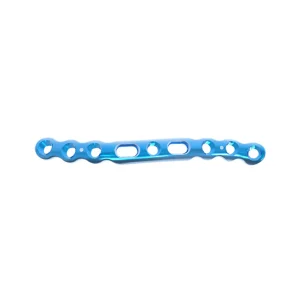
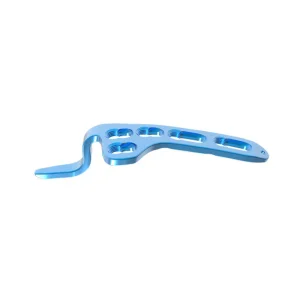
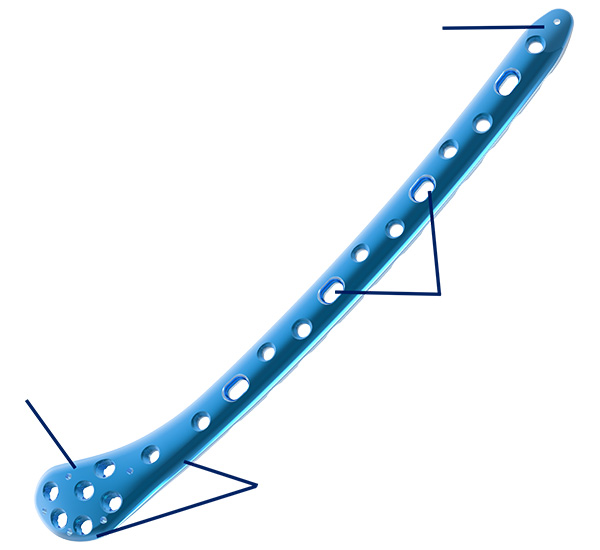
Tapered, rounded plate tip facilities a minimally invasive surgical technique.
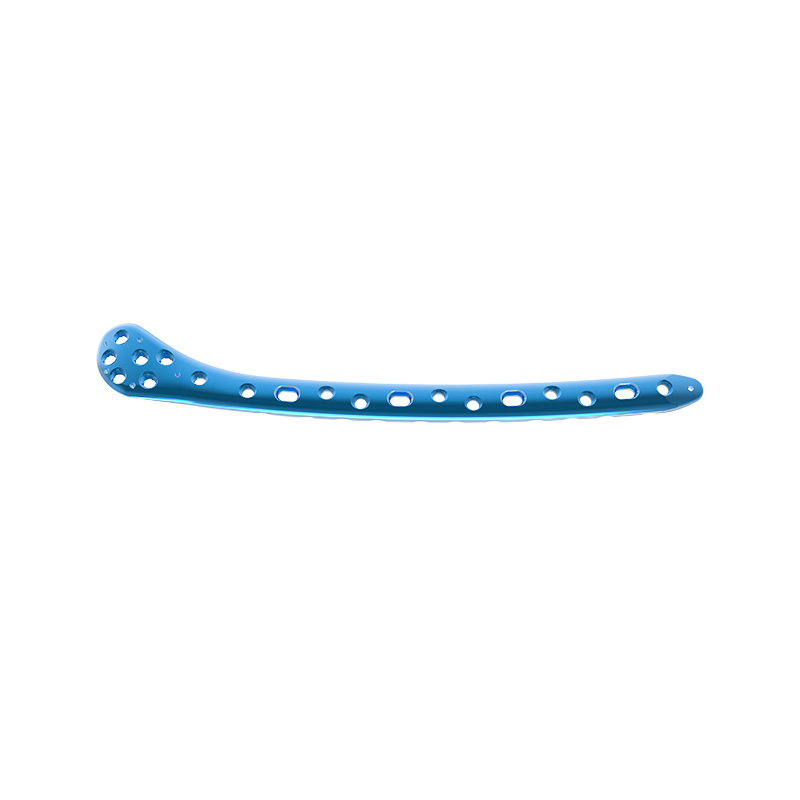
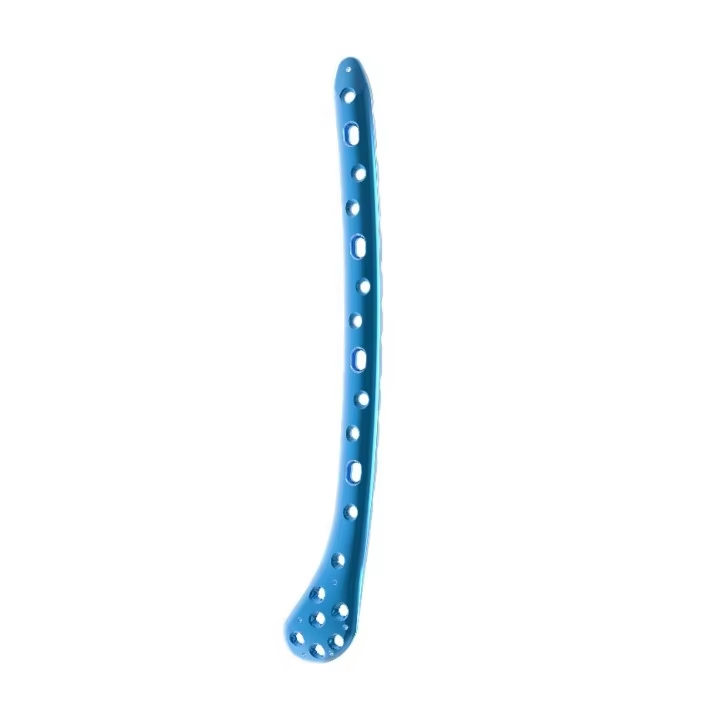
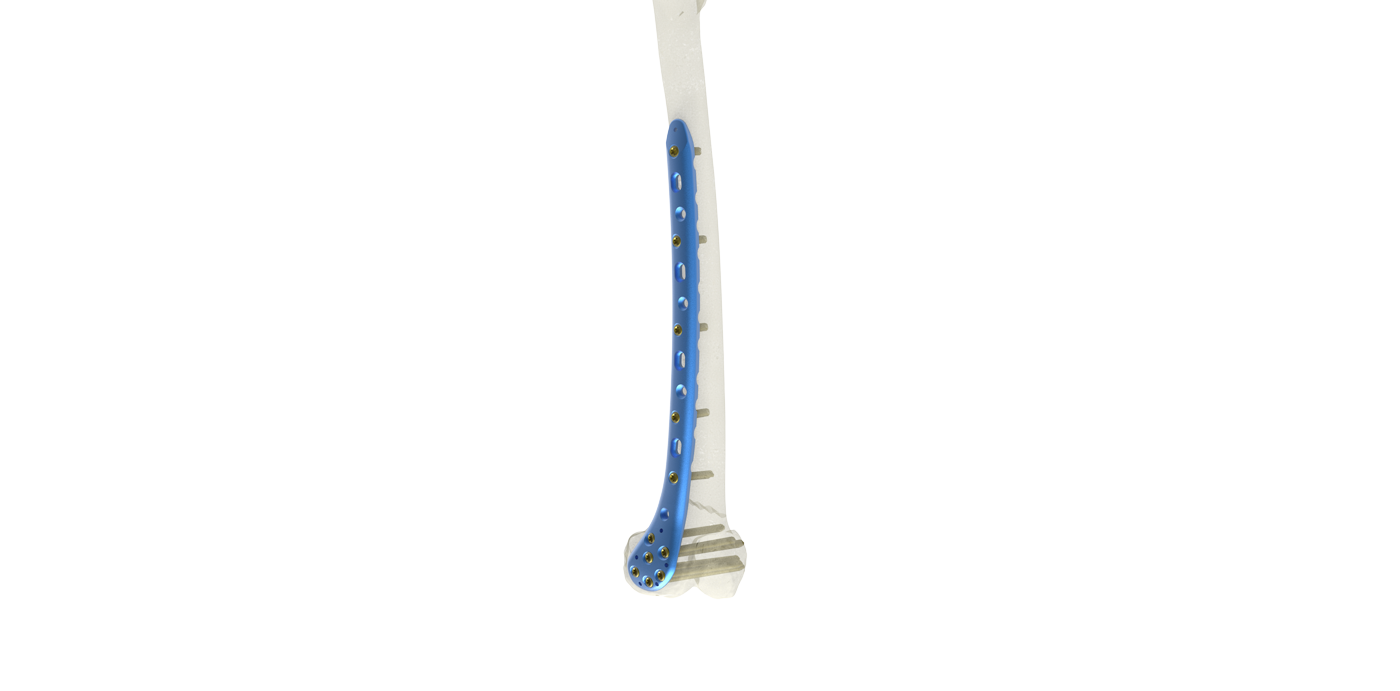
The anatomical shape of the head of the plate matches the shape of the distal femur.
The long slots allow bi-directional compression.
Thick-to-thin plate profiles make the plates autocontourable.
Product Specifications

Distal Lateral Femur Locking Compression Plate I
| Left Configurations |
6 holes x 179mm 8 holes x 211mm 9 holes x 231mm 10 holes x 247mm 12 holes x 283mm 13 holes x 299mm |
| Right Configurations |
6 holes x 179mm 8 holes x 211mm 9 holes x 231mm 10 holes x 247mm 12 holes x 283mm 13 holes x 299mm |
| Dimensions | Width: 18.0mm | Thickness: 5.5mm |
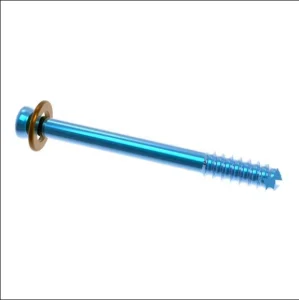
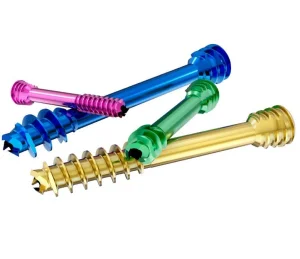
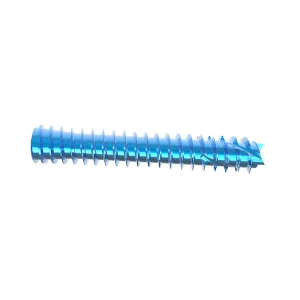
| Matching Screw | 5.0 Locking Screw / 4.5 Cortical Screw / 6.5 Cancellous Screw |
| Material | Titanium |
| Surface Treatment | Micro-arc Oxidation |
| Qualification | CE / ISO13485 / NMPA |
| Package | Sterile Packaging 1pcs/package |
| MOQ | 1 Pcs |
| Supply Ability | 1000+ Pieces per Month |
Surgical Procedure Overview
The Distal Lateral Femur Locking Compression Plate (LCP) operation involves the surgical placement of the plate to stabilize and repair fractures or other injuries in the distal femur (thigh bone). Here's a general overview of the procedure:
Preoperative Preparation
Before the surgery, you will undergo a thorough evaluation, including imaging tests (such as X-rays or CT scans) to determine the extent of the fracture. You'll also receive preoperative instructions regarding fasting, medications, and any necessary preparations.
Anesthesia
The surgery is typically performed under general anesthesia, which means you'll be unconscious and pain-free throughout the procedure. Your anesthesiologist will discuss the anesthesia options with you based on your medical history and specific needs.
Incision
The surgeon will make an incision over the distal femur to expose the fractured bone and surrounding tissues. The size and location of the incision may vary based on the fracture pattern and the planned surgical approach.
Reduction and Fixation
Next, the surgeon will carefully align the fractured bone fragments, a process called reduction. Once the alignment is achieved, the Distal Lateral Femur LCP will be secured to the bone using screws. The screws will be inserted through the holes in the plate and anchored into the bone.
Closure
After the plate and screws are in position, the surgeon will perform a thorough examination of the surgical site to ensure proper alignment and stability. Any remaining soft tissue layers and the skin incision will then be closed using surgical sutures or staples.
Postoperative Care
After the operation, you will be taken to the recovery room and closely monitored. You may be given pain medications to manage any discomfort. Physical therapy may be initiated shortly after surgery to promote healing and restore function. Your surgeon will provide specific postoperative care instructions, including recommendations for weight-bearing restrictions, wound care, and follow-up appointments.
Product Gallery
Frequently Asked Questions
Q: What fractures can be treated with the Distal Lateral Femur LCP?
The plate is indicated for comminuted fractures, supracondylar fractures, intra-articular and extra-articular condylar fractures, fractures in osteopenic bone, nonunions, and malunions.
Q: What material is used and what certifications does it hold?
The plate is manufactured from medical-grade Titanium with a micro-arc oxidation surface treatment. It holds CE, ISO13485, and NMPA certifications.
Q: What screw types are compatible with this plate system?
The system accommodates 5.0 Locking Screws, 4.5 Cortical Screws, and 6.5 Cancellous Screws to suit various fixation requirements.
Q: How does the plate facilitate minimally invasive surgery?
The plate features a tapered, rounded tip specifically designed to facilitate minimally invasive surgical insertion while minimizing soft tissue trauma.
Q: Are there specific designs for left and right femurs?
Yes, anatomical plates are available in dedicated Left and Right designs, with options ranging from 6 holes (179mm) up to 13 holes (299mm).
Q: What is the packaging format and Minimum Order Quantity (MOQ)?
The plate comes individually packed in sterile packaging (1 pcs/package) with an MOQ of just 1 piece, backed by a production capability of over 1,000 pieces per month.