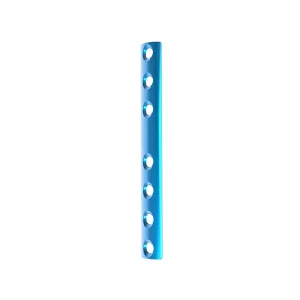
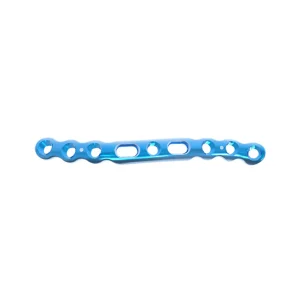
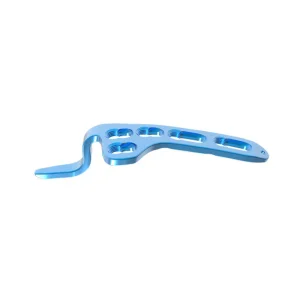
Famous Curved Femoral Shaft Locking Compression Plate Suppliers, Companies
Product Features
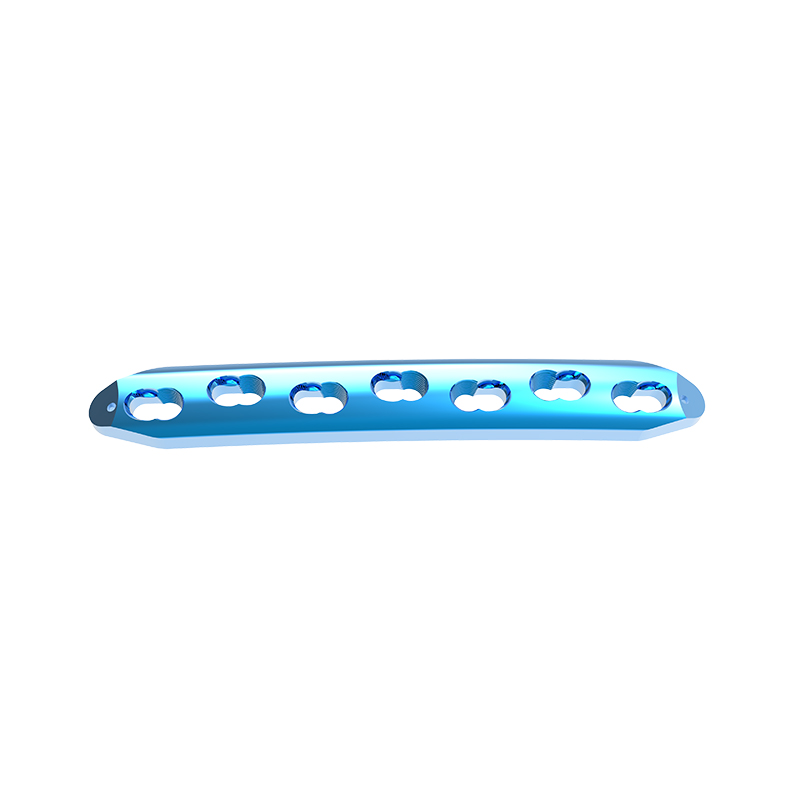
Locking screws provide the ability to create a fixed-angle construct, which have advantages in osteopenic bone or multifragment fractures.
Holes in plate are oriented so that the compression of the hole is always directed toward the middle of the plate
Available sterile-packed
Preoperative planning: The surgeon will review the patient's medical history, conduct a physical examination, and review imaging studies (such as X-rays or CT scans) to assess the fracture type, location, and severity. Preoperative planning involves determining the appropriate size and shape of the LC-DCP plate and planning the position of the screws.
2
Anesthesia: The patient will receive anesthesia, which can be general anesthesia or regional anesthesia, depending on the surgeon's and patient's preference.
3
Incision: A surgical incision is made along the side of the thigh to access the fractured femoral shaft. The length and placement of the incision depend on the specific fracture pattern and the surgeon's preference.
4
Reduction: The fractured bone ends are realigned (reduced) into their proper position using specialized instruments such as clamps or bone hooks. This helps restore normal anatomy and promote proper healing.
5
Preparation of the bone: The outer layer of the bone (periosteum) may be removed to expose the bone surface. The surface of the bone is then cleaned and prepared to ensure optimal contact with the LC-DCP plate.
6
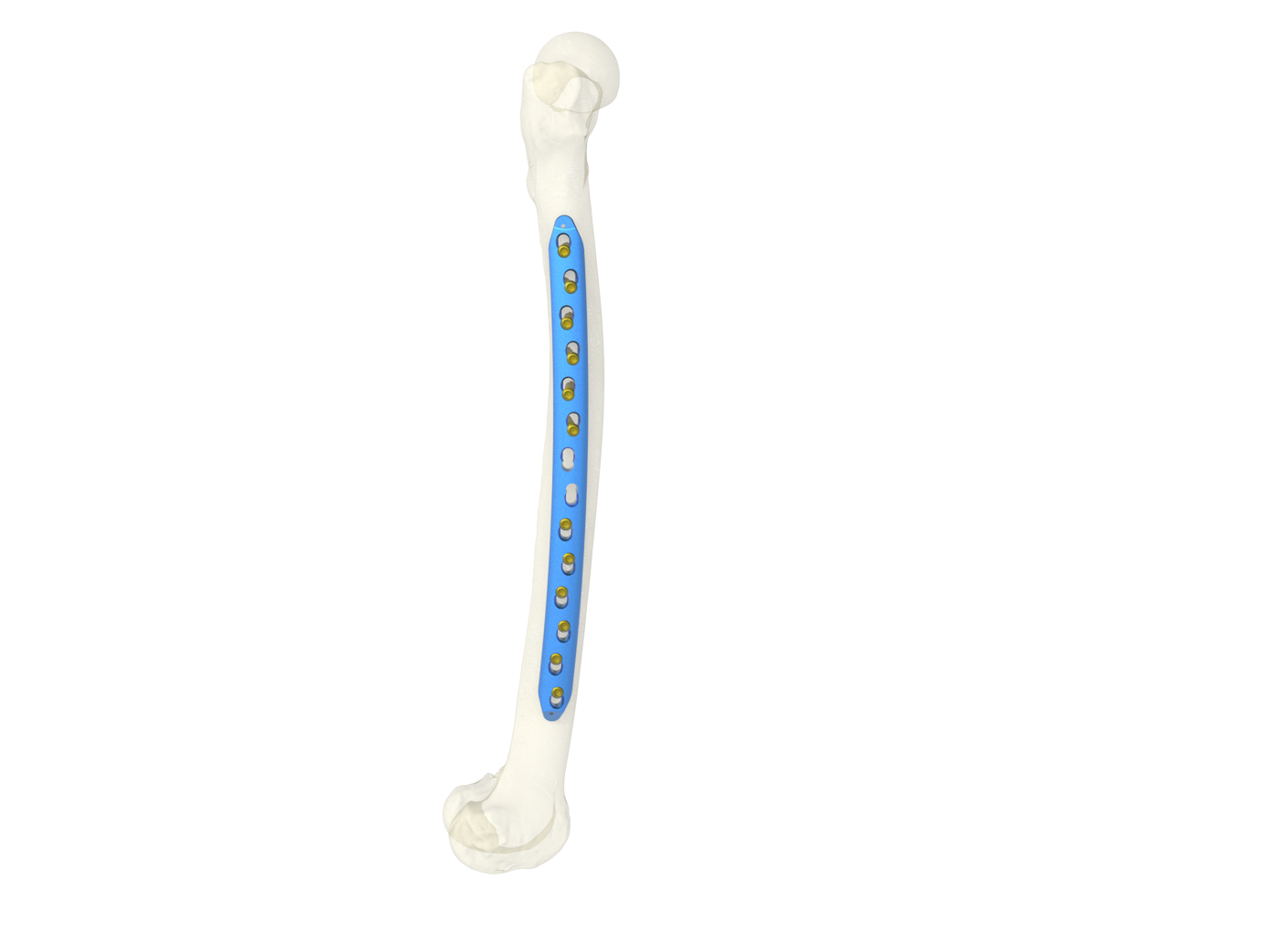
Plate placement: The curved femoral shaft LC-DCP plate is carefully positioned on the lateral surface of the femoral shaft. The plate follows the natural curvature of the femur and is aligned with the bone's axis. The plate is positioned using specialized instruments and fixed to the bone temporarily with guide wires or Kirschner wires.
7
Screw placement: Once the plate is properly positioned, screws are inserted through the plate and into the bone. These screws are often placed in a locked configuration, which provides stability and helps promote healing. The number and position of screws may vary depending on the specific fracture pattern and the surgeon's preference.
8
Intraoperative imaging: X-rays or fluoroscopy may be used during the procedure to confirm proper alignment of the fracture, the position of the plate, and the placement of the screws.
9
Wound closure: The incision is closed using sutures or staples, and a sterile dressing is applied to the wound.
10
Postoperative care: Depending on the patient's condition and the surgeon's preference, the patient may need to use crutches or a walker to facilitate walking and weight-bearing. Physical therapy may be recommended to aid in rehabilitation and regain strength and mobility in the affected leg.
It is important to note that the surgical technique and specific steps may vary depending on the surgeon's experience, the patient's condition, and the specific fracture pattern. This information provides a general overview of the process, but consulting with a qualified orthopedic surgeon is essential for a detailed understanding of the operation.
Frequently Asked Questions (FAQ)
What is the primary clinical indication for this plate?
The curved locking compression plate is specifically indicated for the internal fixation of femoral shaft fractures.
What are the key anatomical design features of this curved femoral plate?
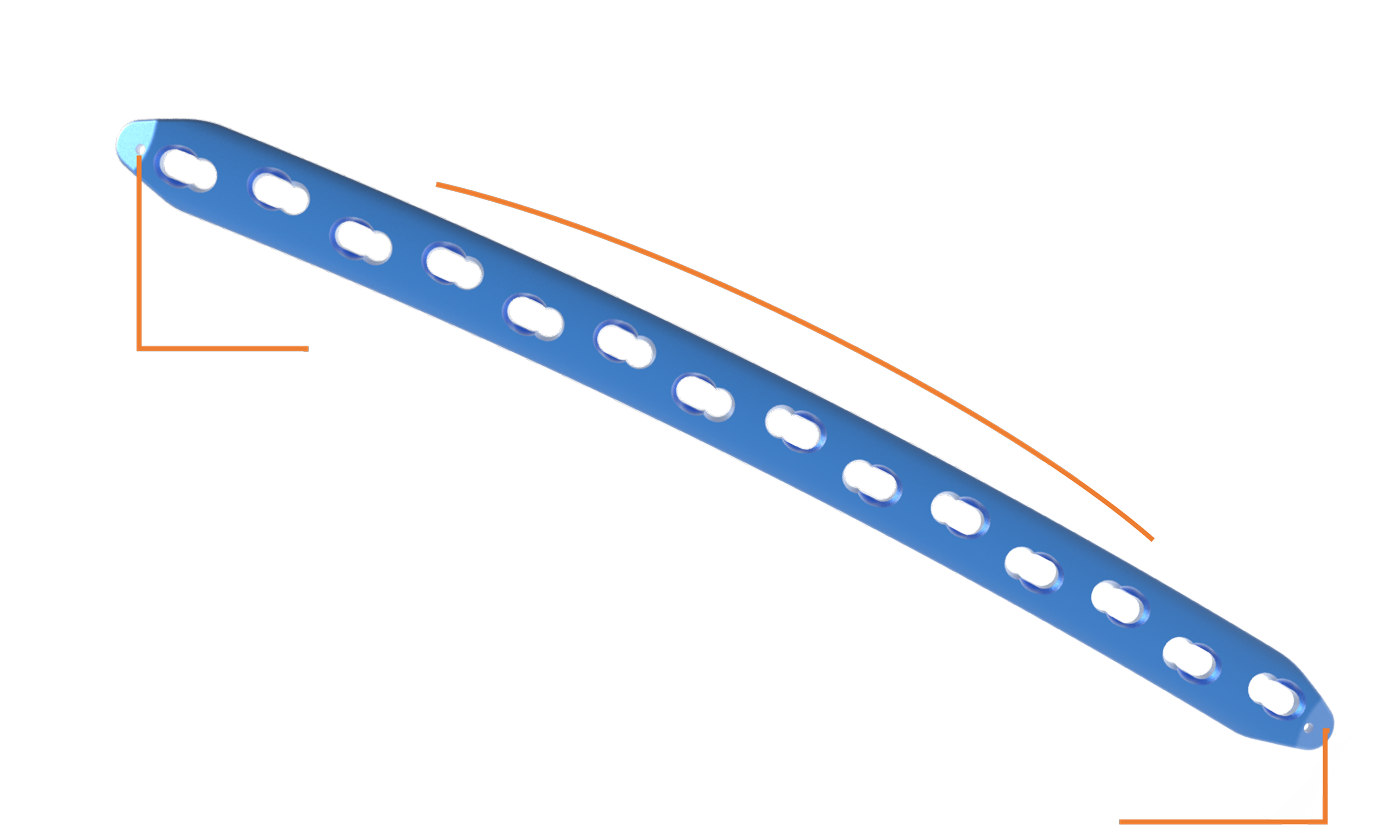
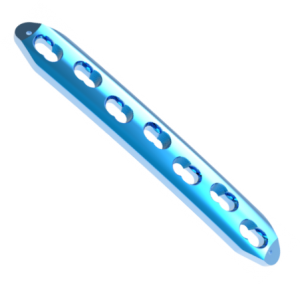
The implant features an anterior curve designed for an anatomic fit on the femur, a tapered plate tip facilitating percutaneous insertion while preventing soft tissue irritation, and 2.0mm K-wire holes to aid accurate plate positioning.
Which screw types are compatible with this system?
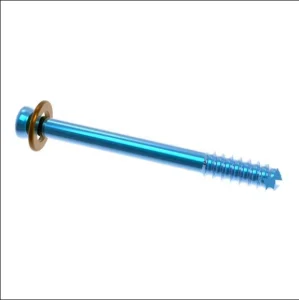
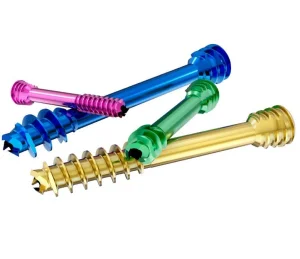
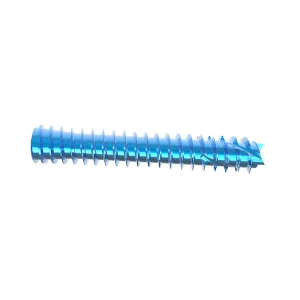
The plate is compatible with 5.0 Locking Screws, 4.5 Cortical Screws, and 6.5 Cancellous Screws.
What lengths and hole variations are available?
Specifications range from 6 holes (120mm) up to 16 holes (300mm), with options for 7, 8, 9, 10, 12, and 14 holes, all featuring an 18.0mm width and 6.0mm thickness.
What material, surface treatment, and certifications apply to this implant?
The plate is crafted from high-grade Titanium treated with Micro-arc Oxidation, meeting international quality qualifications including CE, ISO13485, and NMPA standards.
How is the plate packaged and what is the ordering MOQ?
It is supplied in individual sterile packaging (1 pcs/package) with a Minimum Order Quantity (MOQ) of 1 piece and a supply capability exceeding 1,000 pieces per month.