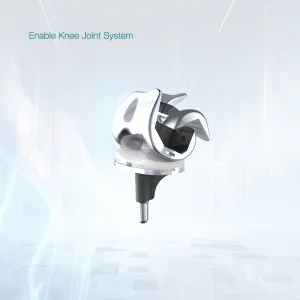
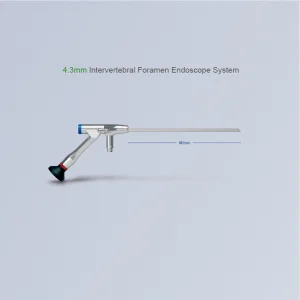
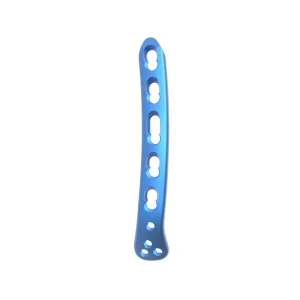
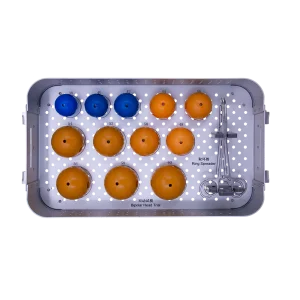
Precision Implants & Surgical Instrumentation (Phase I)
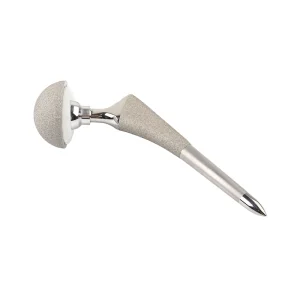
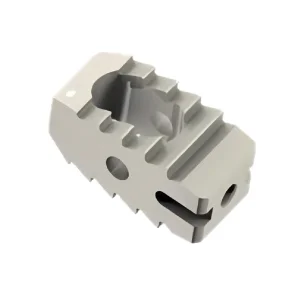
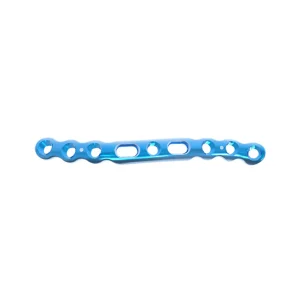
Explore initial surgical platform configurations manufactured to strict medical tolerance thresholds for hip arthroplasty, trauma locking reconstructions, and spinal interventions.
Navigating the Global Market: PFNA Kanghui Supplier Architecture & Service Frameworks
In the contemporary landscape of global orthopedics, the Proximal Femoral Nail Antirotation (PFNA) represents the gold standard intramedullary construct for stabilizing pertrochanteric, intertrochanteric, and high-energy subtrochanteric hip fractures (classified under AO/OTA 31-A1, 31-A2, and 31-A3). Historically pioneered and commercialized by Medtronic Kanghui (Changzhou Kanghui Medical Innovation) alongside top-tier European medical device conglomerates, the architectural design of the PFNA broke ground by replacing traditional dual-lag screw mechanisms with a single, dynamically compacting helical blade. This clinical paradigm significantly lowered rates of post-operative cut-out, rotation deformity, and varus collapse, particularly within osteoporotic bone beds of geriatric patients.
Today, hospital procurement authorities, regional medical distributors, and specialized orthopedic hospital chains seeking to buy PFNA Kanghui compatible systems or equivalent high-precision intramedullary titanium hardware demand more than just geometric catalog matching. They seek integrated, scalable manufacturing partners capable of delivering certified metallurgical purity (ASTM F136 Grade 23 Ti-6Al-4V ELI), flawless micro-milling, friction-free dynamic blade-locking mechanisms, and comprehensive regulatory documentation dossiers (CE MDR technical documentation, FDA 510(k) equivalency pathways, and ISO 13485 audit readiness).
China Factory Efficiency Advantages: How Precision Sourcing Wins
An in-depth analysis of structural supply chain benefits, high-throughput CNC multi-axis automation, and metallurgical quality control.
5-Axis CNC & Citizen Swiss Lathes
Complex intramedullary geometries—specifically proximal nail bends (valgus angles of 4° to 6°), cannulated deep-hole gun-drilling (Ø 4.0mm internal lumen), and spiral blade milling—are completed in single-pass setups. This eliminates tolerance stacking errors and ensures seamless insertion mechanics for surgeons.
- Dimensional tolerances maintained within ±0.005 mm
- In-line optical tool wear monitoring and auto-compensation
- Continuous 24/7 automated robotic bar-feeder processing
Integrated Anodizing & Surface Passivation
Implant biocompatibility and fatigue resilience depend heavily on cleanroom finishing. Advanced facilities integrate closed-loop Type II anodizing lines that form a dense, uniform titanium oxide barrier, minimizing ion leaching and elevating fatigue crack initiation thresholds under cyclic biomechanical loading.
- Automated ultrasonic 7-stage degreasing and pickling
- ASTM F86 medical passivation validation
- Cytotoxicity, pyrogenicity, and systemic toxicity certified
Complete Tooling & Instrument Integration
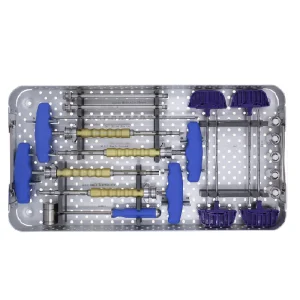
Surgical failures frequently stem from poor instrument calibration rather than nail defects. Top Chinese suppliers engineer bespoke, radiolucent carbon-fiber aiming arms, distal targeting guides, and reamer sets built from surgical-grade 17-4PH stainless steel alongside the implant batches.
- True zero-deviation proximal aiming targeting jigs
- Modular quick-coupling cannulated reamers and shafts
- Hardened instrument surface treatments resisting >500 autoclave cycles
PFNA Systems in Clinical Practice: Biomechanics & Surgical Scenarios
Engineering characteristics optimized to support rapid stabilization, early patient mobilization, and minimal soft-tissue devascularization across multi-trauma and fragility fractures.
Geriatric Pertrochanteric Fractures (AO 31-A1/A2)
Elderly patients with poor trabecular bone mass suffer significant bone loss in the femoral head. The helical blade compacts cancellous bone around its flutes during insertion rather than removing it, increasing contact surface area and pullout resistance by up to 45% compared to standard lag screws.
Unstable Subtrochanteric Fractures (AO 31-A3)
Reverse oblique and comminuted subtrochanteric fractures exert severe deforming forces due to the iliopsoas, abductors, and adductors. Long PFNA implants (340mm to 420mm) provide extensive load-sharing support with distal dynamic/static locking configurations to neutralize torsional and shearing moments.
Fast-Track Minimally Invasive Trauma Surgeries
Percutaneous entry via the tip of the greater trochanter limits blood loss and periosteal stripping. Self-centering aiming jigs allow single-incision blade placement through the trochanteric lateral wall directly into the inferior center of the femoral head under C-arm fluoroscopy.
Pathological Fractures & Impending Bone Failure
In cases of metastatic lesions or severe secondary osteoporosis, prophylactic stabilization using long, cement-augmented PFNA systems ensures immediate axial stiffness, facilitating full weight-bearing rehabilitation and reducing pulmonary embolism risk.
Technical Specification Matrix: PFNA System Engineering
A granular side-by-side technical evaluation illustrating critical biomechanical and metallurgical specifications comparing standard Kanghui specifications with advanced tier-one export manufacturing standards (such as ZATH Orthopedics).
| Engineering Parameter | Standard PFNA Baseline (Kanghui Spec) | High-Spec Export OEM/ODM Matrix (ZATH Class) | Procurement Impact & Clinical Efficacy |
|---|---|---|---|
| Raw Material Grade | Ti-6Al-4V Alloy (ASTM F136 / ISO 5832-3) | Ti-6Al-4V ELI (Extra Low Interstitial) Medical Bar Stock | Elevated fracture toughness, superior notch sensitivity, and extended cyclic fatigue life. |
| Proximal Valgus Angle | 5° Mediolateral anatomical angle | 4.5°–5.0° multi-radius anatomical curve | Minimizes lateral wall impaction stress during greater trochanter entry. |
| Helical Blade Mechanics | Static or manual dynamic compaction locks | Dual-stage dynamic slide and locked rotation mechanism | Allows controlled fracture site collapse while locking axial rotation, eliminating the "Z-effect". |
| Cannulation Bore Precision | Ø 4.2 mm bore, concentricity ±0.08 mm | Ø 4.0 mm bore, deep-hole gun drilled, concentricity ±0.03 mm | Prevents guide wire binding and deflection during high-velocity percutaneous passage. |
| Distal Locking Options | Static transverse round hole & dynamic slot | Multi-planar oblique locking holes with end-cap compression | Enhances distal torsional stability in osteoporotic or extended diaphyseal fractures. |
| Packaging & Sterilization | Non-sterile bulk or EO blister peel pouch | Medical-grade Tyvek double-barrier blister + gamma/EO sterile | Zero hospital central sterile supply department (CSSD) turnaround time; sterile OR ready. |
Industry Trends & Global Procurement Dynamics
How technological innovation, stringent medical device regulatory shifts, and decentralized hospital group purchasing are reshaping orthopedic supply networks.
Radio-Transparent Targeting & Robotics
Distal locking failure accounts for the majority of intra-operative delays and radiation exposure in intramedullary nailing. Next-generation PFNA supplier services now include electromagnetic and optical sensor-compatible targeting jigs that eliminate fluoroscopic trial-and-error.
- Carbon-fiber composite aiming arms that prevent fluoroscopy glare
- Robotic arm navigation-ready drill sleeves and calibrations
- Distal freehand targeting speed improved by over 60%
CE MDR & Global Regulatory Hardening
The transition from MDD to EU MDR 2017/745, alongside stricter national mandates by ANVISA (Brazil), COFEPRIS (Mexico), and SFDA (Saudi Arabia), has weeded out secondary workshops lacking clinical evidence. Qualified OEM suppliers must provide comprehensive technical files, biocompatibility tests, and clinical evaluation reports (CER).
- Complete ISO 10993 biological evaluation data
- ASTM F384 / ASTM F543 cyclic fatigue testing validation
- Post-Market Clinical Follow-up (PMCF) telemetry frameworks
Supply Chain Rationalization & Direct OEM
Global hospital networks and sovereign healthcare tenders (e.g., NHS, MOH tenders) are bypassing multi-layer middlemen. Procuring directly from ISO 13485-certified manufacturers via OEM/ODM contracts allows healthcare systems to stabilize supply guarantees, eliminate stockouts, and negotiate private-label configurations.
- Customized surgical tray and graphic color-coded design
- Low Minimum Order Quantities (MOQs) with high-batch scalability
- Direct factory-to-distributor express air logistics (4-6 business days)
Frequently Asked Questions: PFNA Kanghui Sourcing & Services
Clear, definitive answers addressing regulatory compliance, mechanical interchangeability, custom OEM/ODM packaging, and global dispatch logistics.
Are your PFNA intramedullary systems cross-compatible with original Kanghui instrument trays?
What metallurgical certifications and raw material tracings accompany each production lot?
What are the minimum order quantities (MOQ) and lead times for custom OEM/ODM brand labeling?
Can your engineering team support local medical device registration in our home jurisdiction?
What logistics and cold-chain/sterile delivery safeguards are implemented for rapid global delivery?
Advanced Joint, Spine & Trauma Solutions (Phase II)
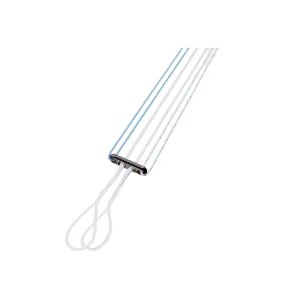
Complementary clinical platforms engineered for orthopedics, spine decompression, joint reconstruction, and sports medicine soft-tissue fixation.