
Precision Engineered Orthopedic Solutions
Explore trauma reconstruction, joint replacement prostheses, and surgical instrument platforms engineered under rigorous ISO 13485 cleanroom manufacturing standards.
Proximal Femoral Nailing (PFN) Biomechanics & Architecture
A granular review of intramedullary load transfer, anti-rotation stabilization, and metallurgical integrity in geriatric and high-energy hip trauma management.
Trochanteric and subtrochanteric femoral fractures represent one of the most challenging clinical problems in contemporary traumatology. The continuous evolutionary cycle of Proximal Femoral Nail (PFN) and PFN Anti-rotation (PFNA) systems from leading Chinese manufacturers highlights an intersection of advanced finite element analysis (FEA), metallurgical purity, and streamlined surgical instrumentation designed to minimize operative morbidity while maximizing early axial load-bearing capacity.
Unlike extramedullary load-bearing implants such as the Dynamic Hip Screw (DHS) or angle-blade plates, intramedullary nails position the weight-bearing mechanical axis closer to the physiological line of gravity within the femur. This structural orientation reduces the moment arm acting across the implant construct by approximately 25% to 30%. Consequently, bending stresses transmitted across the cervicodiaphyseal junction are dramatically mitigated, significantly reducing incidents of hardware failure, varus collapse, and lateral cortical blowout even in severe comminuted unstable fracture patterns (AO/OTA 31-A2 and 31-A3).
Helical Blade vs. Twin-Lag Screws
Modern Chinese PFN manufacturers have mastered the single helical dynamic blade concept alongside traditional dual-screw configurations. Helical blades compress cancellous trabecular bone radially during insertion rather than removing bone via reaming, thereby substantially increasing anchorage surface contact, cut-out resistance, and rotational stability in fragile osteoporotic femoral heads.
Dynamic vs. Static Distal Locking
Engineered with dual distal oblong slots, contemporary intramedullary nails provide surgeons with intraoperative adaptability. Operators can choose between immediate rigid static stabilization for subtrochanteric segmental instability or controlled dynamic secondary compression across the fracture site, accelerating secondary endochondral ossification.
Stress Dissipation & Tip Geometry
A frequent historical complication with early generation cephalomedullary nails was diaphyseal refracture at the implant tip. Modern Chinese PFN designs incorporate a smooth bevelled tip profile with a gradual distal modulus transition, effectively dissipating point contact stress against the anterior femoral cortex and preventing iatrogenic fractures.
Chinese Manufacturing Ecosystem & Factory Capabilities
Examining how high-tier manufacturing clusters in Beijing, Jiangsu, and Guangdong combine metallurgical consistency, multi-axis automation, and competitive unit economics.
Tier-1 Material Sourcing
Implants are forged from certified medical-grade titanium alloy (Ti-6Al-4V ELI conforming to ASTM F136 / ISO 5832-3) and ultra-clean surgical stainless steel (ASTM F138 / ISO 5832-1), accompanied by complete spectroscopic, mechanical tensile, and microscopic grain boundary verification certificates.
Swiss 5-Axis CNC Precision
Multi-axis computerized numeric machining centers (Citizen, Star, DMG Mori) produce complex helical contours, cannulated channels, and proximal deflection angles in single-setup cycles, eliminating cumulative tolerance deviations and guaranteeing exact axial concentricity.
Electropolishing & Anodization
Automated Type II titanium surface anodization yields a biologically inert titanium dioxide (TiO2) protective passive barrier. This enhances biocompatibility, lowers bacterial colonization affinity, and reduces metal-on-metal fretting wear between nail bodies and locking components.
Integrated Instrument Sets
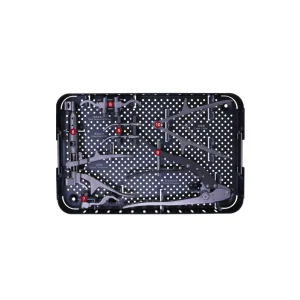
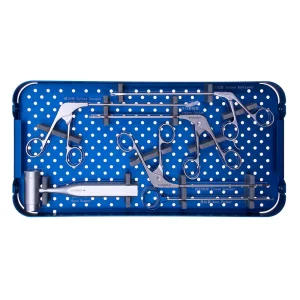
Chinese factories deliver fully synchronized radiolucent carbon fiber aiming arms, calibration sleeves, and depth gauges that maintain precision alignment under fluoroscopic guidance, minimizing surgeon fatigue and preventing aiming jig parallax errors during distal locking.
Biomechanical Comparison: Cephalomedullary & Extramedullary Devices
A rigorous specification analysis highlighting mechanical benefits, operative parameters, and clinical outcomes across conventional fixation models.
| Fixation Parameter | Advanced PFN / PFNA | Dynamic Hip Screw (DHS) | Proximal Femur Locking Plate | First-Gen Gamma Nail |
|---|---|---|---|---|
| Mechanical Lever Arm | Shortest (~45mm to central axis) | Long (~75mm lateral offset) | Long (~80mm lateral offset) | Short (~48mm to central axis) |
| Load Distribution | Intramedullary Shared Load | Extramedullary Eccentric Load | Pure Lateral Tension Load | Intramedullary Shared Load |
| Invasive Surgical Exposure | Minimally Invasive (MIS) | Moderate Open Dissection | Extensive Longitudinal | Minimally Invasive (MIS) |
| Cut-out Resistance (Bone Quality) | Superior (Helical Compaction) | Poor in Severe Osteoporosis | Moderate (Locking Screws) | Moderate (Single Screw) |
| Average Blood Loss (mL) | 80 – 150 mL | 250 – 450 mL | 350 – 600 mL | 120 – 200 mL |
| Immediate Weight Bearing | Permissible in Stable Patterns | Delayed 4–8 Weeks | Strictly Delayed | Permissible |
Regulatory Compliance & International Market Clearance
Navigating technical dossier compilation, biological safety evaluations, cleanroom validation, and quality management systems for global medical device distribution.
ISO 13485:2016 Certified QMS
Every operational tier—from supplier raw billet auditing and tool-path verification to gamma/EtO sterilization validation—is governed strictly under audited ISO 13485:2016 management standards, ensuring reproducible quality across high-volume production batches.
CE MDR & FDA 510(k) Ready Files
Leading Chinese exporters support distributor licensing by furnishing turnkey technical documentation, including comprehensive Clinical Evaluation Reports (CER), finite element analysis stress simulations, and mechanical fatigue test results (ASTM F384 / ASTM F543).
Class 10,000 Cleanroom Packaging
Finished implants are cleaned using ultrasonic multi-tank solvent degreasing and vacuum dried before double-barrier Tyvek blister packaging inside Class 100,000 or Class 10,000 cleanrooms, ready for pre-sterilized distribution to reduce hospital operating room setup times.
Clinical Indications & Localized Operative Scenarios
Specific anatomical trauma patterns where proximal femoral nailing provides definitive stabilization and predictable long-term bony union.
Intertrochanteric Fractures (AO/OTA 31-A1, A2)
The standard benchmark indication. Standard short PFN constructs (180mm–240mm) enable rapid closed percutaneous reduction. The proximal cephalic blade or dual-screw assembly resists rotational torque while permitting dynamic impaction under weight-bearing forces.
Reverse Oblique Patterns (AO/OTA 31-A3)
Characterized by significant transverse displacement forces that cause conventional dynamic hip screw side plates to fail by pullout. Intramedullary nails effectively buttress the lateral trochanteric cortex wall and neutralize medial shearing vectors.
High Subtrochanteric & Segmental Fractures
Long reconstructive PFN models (300mm–420mm) featuring physiological anterior bow curvatures (radius of curvature R=1.5m to 2.0m) span the entire femoral shaft, neutralizing high deforming forces created by the iliopsoas, abductors, and adductor muscle groups.
Geriatric Osteoporotic Fracture Stabilization
In low bone mineral density (DEXA T-score < -2.5), the PFNA helical blade model compacts remaining cancellous bone, dramatically expanding the critical "cut-out" threshold compared to traditional threaded lag screws that shred osteopenic trabeculae.
Pathological Fractures & Metastatic Lesions
Long intramedullary cephalomedullary nailing offers immediate prophylactic or curative load-sharing across extensive lytic lesions in the proximal and middle third of the femur, restoring ambulatory mobility without extensive devascularization.
Periprosthetic Fractures Below Stable Implants
Selected long PFN nail variants customized with distal cable groove channels or offset screw configurations permit bypass fixation over well-fixed hip stems, providing a stable internal splint while sparing periosteal blood supply.
Emerging Industry Trends & Sourcing Guidelines
Strategic perspectives for global healthcare distributors, hospital tender consortiums, and OEM medical device brand managers.
Smart Navigation & Distal Targeting
Distal locking has historically relied on extensive fluoroscopic exposure. Chinese engineering hubs are pioneering magnetic sensor-guided and electromagnetic stereotactic aiming jigs that achieve sub-millimeter distal screw placement without radiation exposure.
Selective Additive 3D Printing
By leveraging electron beam melting (EBM) and direct metal laser sintering (DMLS), manufacturers can create biomimetic porous trabecular titanium zones on the nail surface. This architecture encourages direct osseointegration at designated stabilizing zones while preventing bone ingrowth at extraction sites.
Supply Chain Resiliency & OEM Scalability
With Western healthcare systems prioritizing fiscal sustainability and shorter supply chains, direct sourcing from certified Chinese manufacturers yields substantial gross margin improvements (40%–60%) while maintaining strict technical equivalence to multinational brands.
Frequently Asked Questions (FAQ) for Global Buyers
Essential guidance covering regulatory dossiers, implant design choices, OEM customization parameters, and logistics.
The classic PFN (Proximal Femoral Nail) uses two proximal parallel or converging lag screws: a larger femoral neck screw and a smaller anti-rotation pin. The PFNA (Proximal Femoral Nail Anti-rotation) replaces these twin screws with a single, wide-surface helical dynamic blade. The blade compacts cancellous bone radially rather than drilling it out, achieving significantly greater resistance against rotation, varus cut-out, and migration in osteoporotic bone.
Chinese manufacturers employ medical-grade Titanium Alloy (Ti-6Al-4V ELI / Grade 23 conforming to ASTM F136 and ISO 5832-3) or high-grade Stainless Steel (316LVM conforming to ASTM F138). Titanium offers superior fatigue strength and a lower elastic modulus closer to cortical bone (reducing stress shielding). Full material chemical composition, tensile testing certificates, and ISO 10993 cytotoxicity and hemocompatibility dossiers accompany every batch.
Yes. Contract manufacturing includes laser marking of proprietary distributor logos, customized color anodization for size identification, bespoke instrument tray configurations, and sterile double-blister Tyvek packaging validated for 3- to 5-year shelf life under gamma irradiation or Ethylene Oxide (EtO) sterilization protocols.
Standard catalogue configurations with pre-validated packaging typically dispatch within 10 to 15 business days. Bespoke OEM orders with custom dimensional modifications require approximately 30 to 45 days for CNC re-tooling and QC inspection. Global expedited transit via DHL, FedEx, UPS, or TNT takes 4 to 6 days to major international hubs.
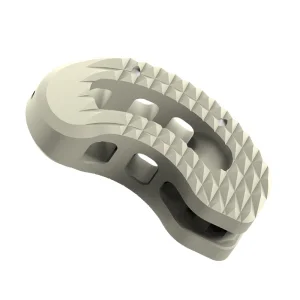
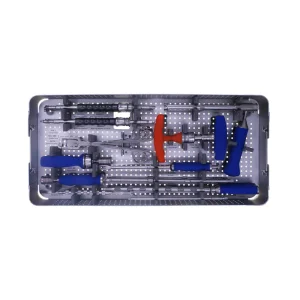
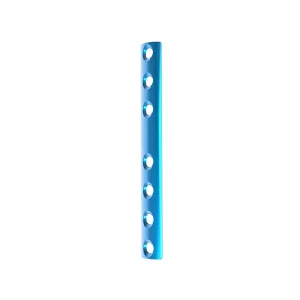
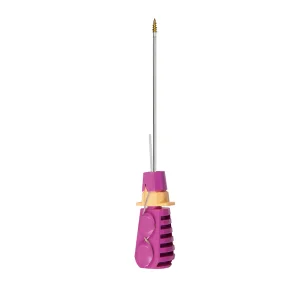
Comprehensive Spinal, Joint & Soft-Tissue Solutions
Explore our extended series of specialized orthopedic devices manufactured under validated medical device cleanroom conditions.
Initiate Your Direct Orthopedic Sourcing Partnership
Connect with experienced orthopedic biomedical engineers to request sample evaluations, full product technical files (CER, FEA, ISO 13485 QMS), or tailored OEM/ODM contract specifications.