Precision Trauma & Spinal Implant Portfolio
Engineered to AO/ASIF internal fixation principles, manufactured with micron-level CNC accuracy, and validated under rigorous static and dynamic fatigue regimes.
The Global Shift in Tibial Internal Fixation Systems
Analyzing biomechanical challenges, incidence metrics, and the industrial migration from standardized plates to anatomically contoured locking constructs.
Subcutaneous Bone Vulnerability
The human tibia possesses an unprotected anteromedial border directly beneath the skin envelope. High-energy motor vehicular trauma, athletic deceleration injuries, and industrial incidents frequently cause severe metaphyseal comminution and compound open fractures. Inadequate contouring in conventional plates induces soft-tissue ischemia, skin necrosis, and dehiscence. As a global tibia bone plate manufacturer, our anatomical designs eliminate intraoperative over-bending, preserving fragile periosteal vasculature.
Biomechanical Shift: Fixed-Angle Stability
The worldwide transition from standard Dynamic Compression Plates (DCP) to Locking Compression Plates (LCP) represents a critical paradigm shift in fracture biology. Conventional plates rely purely on bone-plate friction, crushing periosteal capillary perfusion. Our locking screw-plate constructs act as extramedullary biological internal fixators, transferring shear and axial loads across threaded locking holes without compressing bone, reducing nonunion rates and implant loosening.
Demographics & Fragility Fractures
The surging geriatric population across North America, Europe, and the Asia-Pacific has led to a steep rise in osteoporotic proximal tibial plateau fractures (Schatzker Type I-VI) and distal metaphyseal fragility fractures. Standard cortical screws fail in trabecular-deficient bone due to inadequate purchase. Our specialized multidirectional and variable-angle polyaxial locking configurations create divergent screw trusses, providing solid subchondral structural support against secondary articular subsidence.
Comprehensive Anatomical Tibia Plating Solutions
Covering the full anatomical axis from proximal subchondral articular reconstruction to distal pilon fracture management, each plate system is designed for specific biomechanical demands.
Proximal Tibia Locking System
Engineered for high-energy bicondylar Schatzker Type V and VI fractures. Incorporates pre-shaped lateral plateau buttress plates and medial proximal contour plates with subchondral "rafting" screw holes. These screws sit parallel to the articular cartilage, preventing late joint sinking. Also available in medial open-wedge High Tibial Osteotomy (HTO) configurations with calibrated integrated spacer blocks.
Tibial Shaft & Diaphyseal Plates
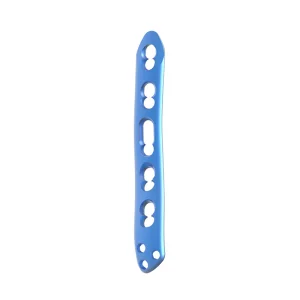
Designed for torsional, oblique, transverse, and segmental diaphyseal tibial fractures. Features optimized combi-holes accepting both standard dynamic compression cortical screws and self-tapping locking screws. Tapered tip geometry supports Minimally Invasive Percutaneous Plate Osteosynthesis (MIPPO), allowing submuscular bridging that leaves periosteal biology intact.
Distal Metaphyseal & Pilon System
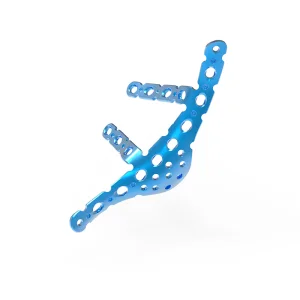
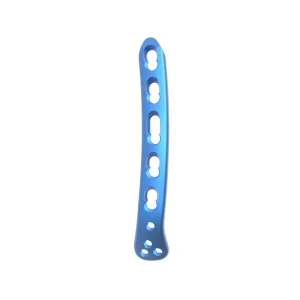
Ultra-low profile (under 2.0 mm at the distal margin) anterolateral and medial distal tibia locking plates. Designed to treat intra-articular pilon fractures (AO/OTA 43-A through 43-C) with multi-plane distal locking hole clusters. The anatomic curvature contours to the medial malleolus and anterior syndesmosis ridge, preventing tendon impingement under thin skin.
Tibia Bone Plate Engineering & Biomechanical Validation Matrix
| Plating Category | Material Standard | Profile Thickness | Screw Diameters | Fixation Mechanics | Recommended Clinical Indications |
|---|---|---|---|---|---|
| Proximal Anterolateral Plate | Ti-6Al-4V ELI (ASTM F136) | 3.5 mm - 4.5 mm | Ø4.5mm Cortical / Ø5.0mm Lock | Subchondral Raft Truss | Schatzker II, V, VI, Comminuted lateral plateau |
| Proximal Medial Buttress | Pure Titanium (Grade 3/4) | 2.8 mm - 3.8 mm | Ø3.5mm Lock / Ø4.0mm Cancel | Rigid Anti-glide Buttress | Schatzker IV medial shearing split fractures |
| High Tibial Osteotomy (HTO) | Ti-6Al-4V ELI / CP-Ti | 4.0 mm - 5.5 mm | Ø4.5mm / Ø5.0mm Multi-lock | Tension-Band Rigid Wedge | Medial unicompartmental gonarthrosis realignment |
| Diaphyseal Broad Wave LCP | Ti-6Al-4V ELI (ISO 5832-3) | 3.8 mm - 4.8 mm | Ø4.5mm Lock & Non-Lock | Bridge Biological Fixation | AO 42-A/B/C shaft fractures, nonunions, osteotomies |
| Distal Medial Anatomic LCP | Ti-6Al-4V ELI (ASTM F136) | 2.0 mm - 3.2 mm | Ø3.5mm Lock / Ø2.7mm Low-pro | Anatomical Envelope Hug | Extra-articular distal tibia, AO 43-A1 to A3 |
| Distal Anterolateral Pilon | Ti-6Al-4V ELI (ASTM F136) | 1.8 mm - 2.8 mm | Ø2.7mm / Ø3.5mm Variable Lock | Multi-planar Distal Tying | AO 43-B/C complex intra-articular pilon fractures |
End-to-End OEM/ODM Manufacturing Infrastructure
From aerospace-certified titanium bar stock to finished sterile-barrier presentation, our Beijing facility operates under a tightly controlled, integrated manufacturing chain.
1. Metallurgy & Bar Certification
All raw stock is sourced with complete mill certs, strictly complying with ASTM F136 / ISO 5832-3 (Ti-6Al-4V Extra Low Interstitial) and ASTM F67 (Pure Titanium). We perform incoming chemical spectroscopic assays to ensure zero contamination of interstitial gases (O, N, H, C), ensuring superior structural fatigue endurance.
2. 5-Axis Multi-Task CNC Milling
Plates are machined using state-of-the-art multi-axis CNC centers and high-precision wire EDM blanks. Complex 3D helical contours, multi-directional thread cuts, and variable-angle cones are cut in single-clamping operations, preserving dimensional tolerances within ±5 microns.
3. Surface Passivation & Type II Anodization
Titanium implants undergo controlled acid-etching deburring followed by AMS 2488 Type II anodization or micro-arc oxidation. This hardens surface layers, prevents cold welding (anti-galling) between plate holes and screw heads, and produces a non-reflective matte finish for glare-free surgery under OR lamps.
4. CMM Optical Dimensional Audit
Every single production lot undergoes 100% thread gauge verification and high-magnification multi-sensor CMM inspection. Hole-to-hole pitch, curvature radii, thread entry chamfers, and edge blendings are verified against Master CAD models to ensure seamless intraoperative screw engagement.
5. ISO Class 7 Cleanroom Packaging
Our ISO Class 7 (Class 10,000) cleanroom manages ultrasonic particulate de-greasing, final high-purity water rinses, and dual-layer blister tray sealing with medical-grade DuPont™ Tyvek®. Validated for EO or Gamma-irradiation to provide a 5-year guaranteed sterile shelf-life.
6. OEM Customization & Laser Etching
Full OEM/ODM customization allows custom hole counts, modified bend angles, distributor branding, and laser-etched 2D DataMatrix Unique Device Identification (UDI) barcoding. Tailored packaging graphics and multi-language IFUs support rapid local authority registration.
Strict Regulatory Compliance & Quality Systems
Operating under certified ISO 13485 standards, our technical documentation dossiers streamline regulatory approval for orthopedic distributors globally.
ISO 13485:2016 Certified QMS
Our manufacturing operations in the Zhongguancun Science Park (Pinggu, Beijing) follow a strict Medical Device Quality Management System. Audited from raw-stock quarantine to post-market clinical surveillance, every batch is tied to traceable melt heat lot numbers.
CE MDR & Global Export Credentials
Prepared under European Medical Device Regulation (EU 2017/745) Class IIb pathways, our devices come backed with exhaustive Clinical Evaluation Reports (CER), Risk Management Files (ISO 14971), and Free Sale Certificates (FSC) to simplify MOH registrations across Latin America, the Middle East, Southeast Asia, and Africa.
ASTM F382 Biomechanical Verification
Plates undergo exhaustive four-point bending and dynamic fatigue validation per ASTM F382 and ISO 9585. Constructs must survive cyclic loading without structural failure, micro-fissuring, or plastic deformation, ensuring safety during full weight-bearing recovery.
Localized Trauma & Reconstructive Case Workflows
Real-world surgical applications where our tibia bone plates provide stable fixation, facilitate biological healing, and streamline instrumentation steps.
Bicondylar Tibial Plateau Fractures
In high-energy Schatzker VI bicondylar fractures with detached posteromedial columns, dual-incision plating is paramount. Our lateral proximal tibia anatomical LCP provides rigid triangular rafting support under the joint, while an anti-glide 3.5mm posteromedial buttress prevents shear displacement. This restores the joint line and allows early passive motion.
Distal Tibial Plafond Burst Fractures
Axial impaction pilon injuries present severely compromised soft-tissue envelopes. Using our low-profile anterolateral distal plate via an anterolateral approach minimizes soft-tissue tension. The clustered distal locking array captures small periarticular fragments, restoring the subchondral vault without requiring massive soft-tissue stripping.
Medial Open-Wedge High Tibial Osteotomy
In younger, active patients with isolated medial compartment knee osteoarthritis and varus deformity, unloading the affected joint is critical. Our HTO Locking Plate system features a calibrated spacer wedge block that maintains the target valgus correction angle. Rigid titanium construction allows early partial weight-bearing without loss of correction.
Segmental Diaphyseal Shaft Nonunions
For comminuted mid-shaft fractures where intramedullary nailing is contraindicated, our long anatomical shaft plates can be inserted subcutaneously through small proximal and distal incisions. Guided locking screws achieve biological bridge fixation, keeping fracture hematoma and periosteal blood supply undisturbed.
Next-Generation Technology & Biomaterials Roadmap
Pioneering the intersection of additive manufacturing, computational bioengineering, and therapeutic smart implants for the next decade of orthopedics.
Patient-Specific 3D EBM Lattice Printing
Utilizing Electron Beam Melting (EBM) and Direct Metal Laser Sintering (DMLS), our R&D center produces customized patient-matched tibia reconstruction plates directly from hospital DICOM CT scans. Integrating open-cell trabecular porous structures (60-70% porosity, 400-600 micron pore sizes) lowers modulus of elasticity, matches host bone compliance, and accelerates osteointegration.
Bioactive Nanocoatings & Infection Control
Implant-associated infection remains a major complication in open tibial trauma. Our development pipeline incorporates silver-doped hydroxyapatite (Ag-HAp) and bioactive gentamycin-eluting polymeric coatings. These release targeted antimicrobial prophylaxis locally during the critical first 72 hours without inducing systemic organ toxicity.
Telemetry-Integrated Smart Bone Plates
Collaborating with biomedical research labs, we are embedding passive wireless micro-strain gauge sensors into neutral plate zones. These sensors continuously monitor micro-motion and load sharing across the fracture callus, transmitting objective telemetric data to clinical teams via NFC to confirm bone healing before safe weight-bearing progression.
Global Logistics & Turnkey Distributor Support
We empower regional medical distributors, hospital procurement teams, and government healthcare contractors with reliable supply chains and comprehensive technical resources.
4-6 Day Express Global Delivery
With optimized central warehousing in Beijing and direct contracts with DHL, FedEx, TNT, and air-cargo freight handlers, urgent hospital and tender shipments are dispatched swiftly, reaching global hubs within 4 to 6 business days.
Matching Surgical Instrument Trays
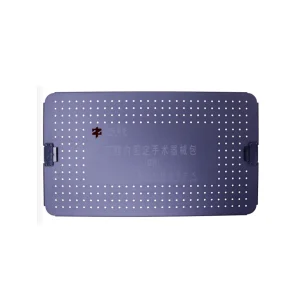
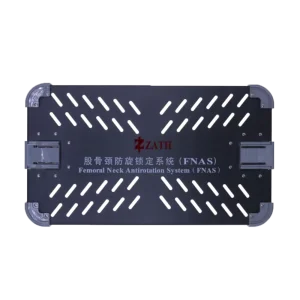
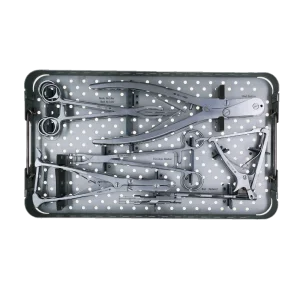
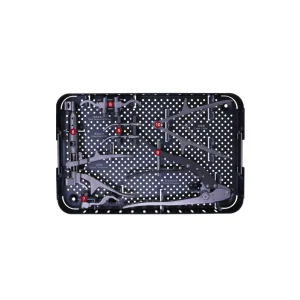
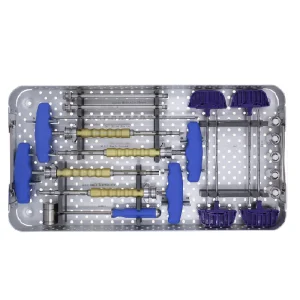
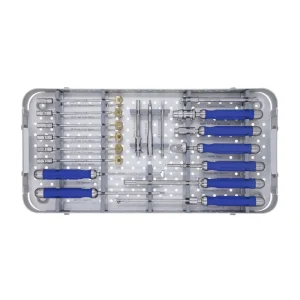
Every tibia bone plate system is supported by dedicated, ergonomic sterilization instrument trays. Trays contain color-coded torque-limiting screwdrivers, precision drill guides, depth gauges, sharp drills, and radiolucent aiming arms manufactured from medical-grade stainless steel and aluminum.
Regulatory Dossiers & Clinical Training
Our regulatory team supplies complete technical files, certified test summaries, CE declarations, and multi-language surgical technique manuals. We also deliver high-resolution anatomical bone model demonstration kits and support on-site or virtual surgical wet-labs.
Frequently Asked Questions: Technical & Commercial Specifications
Addressing engineering specifications, regulatory compliance, minimum order quantities, and OEM capabilities for hospital procurement boards and clinical evaluators.
Orthopedic Reconstructive Systems & Specialized Instrumentation
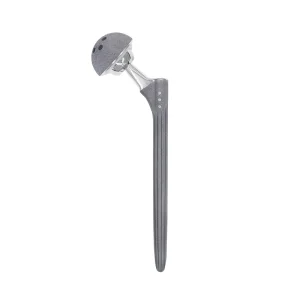
Advanced pelvic, femoral, spine, and soft-tissue surgical instrumentation platforms engineered for high clinical reliability in demanding hospital environments.