
High-Precision Trauma & Surgical Fixation Systems
Engineered to exact biomechanical tolerances using medical-grade titanium alloy (Ti-6Al-4V ELI) and implantable 316LVM stainless steel, accompanied by matched ergonomic instrumentation.
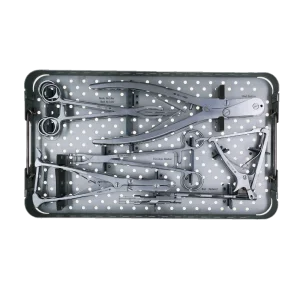
Custom CE approved Orthopedic Ladder OCT Instrument Set for sale Suppliers, Company
Procurement Details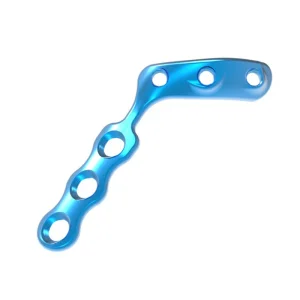
China patent design scapula Locking Plate factory CE ISO insured Exporters, Products
Procurement Details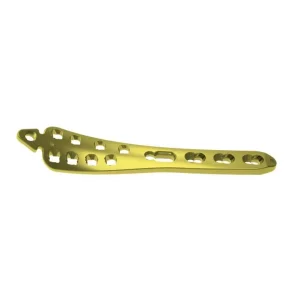
Discount Distal Medial Tibia Locking Compression Plate II Manufacturers, Company
Procurement Details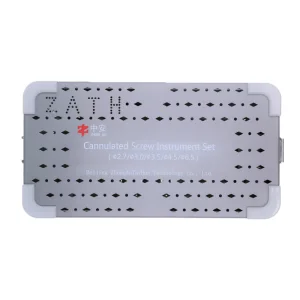
Discount Orthopedic Surgical Instruments Stainless Steel Cannulated Screw Instrument Set Supplier, Service
Procurement Details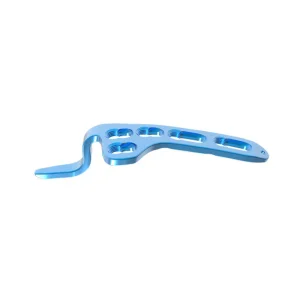
Buy Clavicle Hook Locking Compression Plate Manufacturer, Supplier
Procurement Details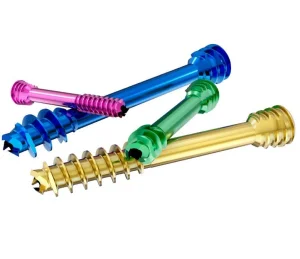
Famous Medical use double threaded cannulated screw with price Factory, Exporters
Procurement Details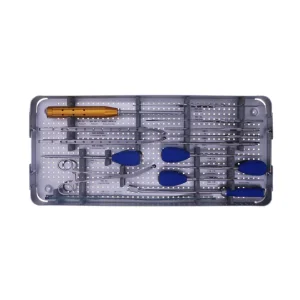
Best Zipper 6.0 System Spinal Internal Fixation System Instrument Universal Set Quotes, Company
Procurement Details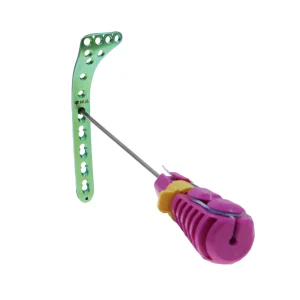
CE Certification CE Approved Hospital Use All Suture Anchor Titanium With Needle Factory, Companies
Procurement DetailsBiomechanics of Internal Fixation: The Locking Plate Paradigm Shift
Transitioning from compressive friction constructs to fixed-angle biological internal fixators to preserve periosteal microvascularization and optimize callus ossification.
Periosteal Perfusion Preservation
Traditional Dynamic Compression Plates (DCP) rely on bone-to-plate frictional compression, which inevitably leads to localized periosteal ischemia and localized cortical necrosis. Locking compression plate (LCP) systems function as "internal fixators," suspending the plate 1–2 mm above the bone surface. This non-contact design preserves critical Haversian canal microcirculation, dramatically reducing time-to-union and minimizing incidence of avascular nonunions.
Fixed-Angle Mechanical Stability
In poor bone quality or severely osteoporotic metaphyseal fractures, conventional screws frequently experience toggle and secondary loss of reduction. Locking screws thread directly into the matching plate hole, creating a rigid single-beam construct. The mechanical load is converted from shear stress along the bone-screw interface into axial compression and tensile loads across the entire plate span, preventing screw back-out and angular collapse.
MIPO Surgical Compatibility
Modern trauma protocols mandate Minimally Invasive Percutaneous Osteosynthesis (MIPO). Anatomically pre-contoured locking plates facilitate submuscular insertion through small incision windows without extensive surgical exposure. The low-profile plate geometry, chamfered tip designs, and radiolucent carbon-fiber targeting guide handles significantly reduce blood loss, soft-tissue disruption, and postoperative infection risks.
| Biomechanical Parameter | Conventional Compression Plates (DCP) | Locking Compression Plates (LCP) | Next-Gen Variable-Angle Polyaxial LCP |
|---|---|---|---|
| Stability Mechanism | Bone-plate friction interface | Fixed-angle threaded screw-plate junction | Multi-directional threaded cone locked ±15° |
| Periosteal Blood Supply | Severely compressed / compromised | Preserved (floating bridged design) | Preserved with scalloped undercuts |
| Performance in Osteoporotic Bone | High risk of screw toggle & pullout | Superior construct rigidity & load dispersion | Optimal fragment targeting & buttressing |
| Plate Contouring Accuracy | Must match anatomical profile exactly | Moderate contouring tolerance acceptable | Minimal manual bending required |
| Primary Mode of Healing | Primary healing (contact / absolute stability) | Secondary healing (callus / relative stability) | Balanced micromotion biological callus |
Multicenter randomized clinical trials (RCTs) demonstrate that internal fixator locking plates reduce secondary varus collapse in comminuted proximal humerus and distal femur fractures by over 42% compared to non-locking dynamic compression counterparts, particularly in patients aged 65 and older presenting with marked bone mineral density deficits (T-score < -2.5).
Next-Generation Internal Fixation: From Metallurgy to Smart Implants
Explaining the engineering shift toward bioresorbable alloys, carbon-fiber composites, active bio-sensing arrays, and additive manufacturing osteointegration.
Variable-Angle (VA) Locking
First-generation monoaxial locking plates forced surgeons into rigid screw trajectories that often collided with existing prostheses or failed to capture small articular fracture fragments. Polyaxial variable-angle locking designs allow screws to be placed within a 30-degree cone of angulation (±15° from nominal axis). Proprietary cobalt-chromium-molybdenum or treated grade-5 titanium locking ring mechanisms ensure thread cross-locking without stripping or cold-welding.
Carbon-Fiber PEEK Architectures
Metallic plates induce "stress shielding" due to the extreme modulus mismatch between titanium (110 GPa) or stainless steel (200 GPa) and cortical bone (12–18 GPa). Carbon-fiber reinforced polyetheretherketone (CFR-PEEK) exhibits an elastic modulus closely mirroring human cortical bone (15–20 GPa). This near-isoelastic behavior encourages physiological dynamization, accelerates secondary callus formation, and offers complete radiolucency for unimpeded intraoperative fluoroscopy.
3D Printed Trabecular Porosity
Direct Metal Laser Sintering (DMLS) of Grade 23 Ti-6Al-4V ELI powder enables topological optimization of bone contact surfaces. By fabricating open-cell interconnected porous geometries (pore sizes 300–500 μm, 65–75% porosity) along plate contact undersides, osteoblast infiltration and rapid osseointegration are dramatically enhanced. This innovation creates permanent anatomical buttresses for complex pelvic reconstruction and severe comminuted joint arthrodesis.
Active In-Vivo Biotelemetry & Micro-Sensors
The convergence of biomedical MEMS (Micro-Electro-Mechanical Systems) and orthopedic implants has birthed "smart locking plates." Embedded passive RFID micro-strain sensors monitor mechanical deformation and load sharing continuously across the fracture gap. As bone bridges and solidifies, strain shifts away from the implant onto the skeleton. This biometric data is wirelessly transferred during clinic consultations, allowing clinicians to optimize patient weight-bearing timelines safely based on quantitative osteotomy data rather than subjective X-ray interpretations.
Bioabsorbable Magnesium & Zinc Alloys
Secondary surgical procedures for implant removal present significant anesthesia risks, hospital costs, and refracture vulnerability through abandoned screw holes. Next-generation bioresorbable magnesium (Mg-Y-RE-Zr) and zinc-based alloys provide structural locking stability throughout the critical 8–16 week osteogenic healing phase, subsequently degrading into benign physiological mineral metabolites over a 12–24 month span. This completely eliminates secondary hardware removal surgeries while maintaining the initial angular rigidity required for complex trauma fixation.
Industrial Scalability, CNC Precision & Supply Chain Resilience
Inside our Zhongguancun Science Park manufacturing complex: Swiss-type turning centers, automated multi-axis milling, and cleanroom packaging ensuring uninterrupted OEM/ODM capacity.
Certified Raw Material Billet Supply
All titanium implants are machined exclusively from certified medical-grade Ti-6Al-4V ELI (ASTM F136 / ISO 5832-3) and implant-grade surgical stainless steel (ASTM F138 / ISO 5832-1). Ingot chemistries, interstitial gas content (O, N, H, C, Fe), and microstructural grain sizing (ASTM Grade 5 or finer) are verified via spectrographic analysis and accompanied by complete certified raw material mill test certificates (MTC).
5-Axis Simultaneous Machining
Locking holes demand microscopic pitch consistency and burr-free internal thread lead-ins to prevent surgical cross-threading. Our facility operates multi-spindle Swiss-type longitudinal CNC lathes and 5-axis DMG MORI machining centers. Specialized high-pressure oil cooling and micro-milling endmills achieve surface roughness values below Ra 0.4 μm on critical contact regions, eliminating micro-crack initiation zones.
Surface Engineering & Passivation
Following high-precision deburring and ultrasonic degreasing, implants undergo Type II Electrochemical Anodization (AMS 2488D) and chemical passivation (ASTM F86). This process yields a stabilized, dense titanium dioxide (TiO2) crystalline layer that maximizes corrosion resistance in biological saline fluid, dramatically reduces metal ion elution, and enables distinct color-coded anodization across anatomical sizes.
By maintaining over 150 metric tons of pre-qualified medical-grade titanium and cobalt billet inventory within our Zhongguancun Science Park facility, ZATH guarantees rapid production agility. While traditional Western suppliers quote 16–24 week lead times for complex trauma assortments, our automated machining lines deliver complete, sterilizer-ready OEM/ODM batches within 3–5 weeks. This capability protects international hospital tenders and national healthcare supply networks from supply chain shocks.
Localization Support, Quality Management & Global Compliance
Ensuring frictionless market access across the European Union, the Americas, the Middle East, and Asia-Pacific through documented, audit-ready regulatory dossiers.
ISO 13485:2016 Certified QMS
Our comprehensive Quality Management System is audited and verified annually under ISO 13485:2016 for orthopedic implant and instrument development. From raw material heat-lot tracking to final visual Coordinate Measuring Machine (CMM) multi-point dimensional validation, every implant batch carries an unalterable Certificate of Analysis (CoA) providing complete traceability throughout its 10-year shelf life.
MDR & FDA Dossier Readiness
We supply qualified international distributor partners with complete Technical Documentation conforming to European Medical Device Regulation (EU MDR 2017/745 Class IIb) and US FDA 510(k) predicate equivalence pathways. Dossiers encompass finite element analysis (FEA), static and dynamic 4-point bending fatigue testing (ASTM F382), screw driving torque (ASTM F543), and clinical evaluation reports (CER).
Biocompatibility & Cleanrooms
All implants undergo extensive biocompatibility evaluations meeting ISO 10993 standards, including cytotoxicity, systemic toxicity, sensitization, and genotoxicity protocols. Primary packaging operations occur inside validated ISO Class 7 (Class 10,000) cleanrooms. Sterile barrier packaging features heat-sealed medical-grade Tyvek blisters validated for accelerated 5-year shelf-life stability (ISO 11607-1/2).
Global Enterprise Procurement, Custom Kitting & OEM/ODM Solutions
A transparent breakdown of procurement parameters, minimum order quantities (MOQs), private labeling capabilities, and turnkey surgical tray configurations.
Custom Laser Marking & UDI Compliance
Full support for OEM brand labeling, catalog codification, and FDA / EU Unique Device Identification (UDI) DataMatrix engraving. Laser etching remains distinct after repeated autoclave cycles (EN 285 steam sterilization), ensuring sterile operating theater instrument scanning and seamless Electronic Health Record (EHR) traceability.
Matched Surgical Graphic Cases
Implant supply agreements include custom anodized aluminum sterilization containers and Radel polymer graphic trays. Trays are color-mapped by anatomical extremity (Upper Limb, Pelvis, Lower Limb, Small Fragment) with secure silicone grommet fixtures that protect cutting flutes, drill bits, and tap guides through multiple washing and sterilization cycles.
Flexible MOQ & Express Replenishment
To support growing distributors competing against established multinational corporations, we offer accessible MOQ thresholds for initial market evaluation sets. Emergency distributor replenishment orders for fast-moving fracture sizes (e.g., Distal Radius, Distal Tibia, Clavicle) are expedited via DHL / FedEx / UPS within 48–72 hours directly from bonded logistics hubs.
Arthroplasty, Reconstruction & Specialized Systems
Comprehensive orthopedic solutions spanning pelvic fracture reconstruction, total hip arthroplasty prostheses, and cervical spinal fixation platforms.
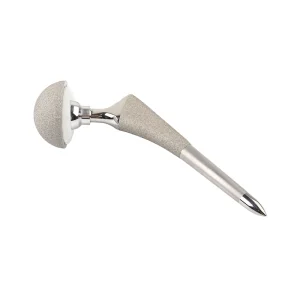
Famous FDS Cementless Stem Hip Joint Prosthesis Supplier, Products
Procurement Details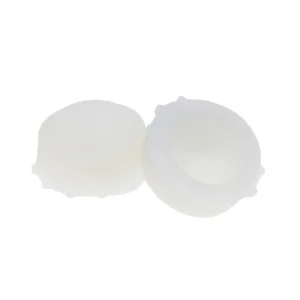
High-Quality Hip Joint ADC Acetabular Liner Manufacturer, Supplier
Procurement Details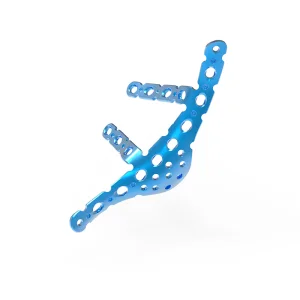
Custom Winged Pelvis Reconstruction Locking Compression Plate Factories, Exporter
Procurement Details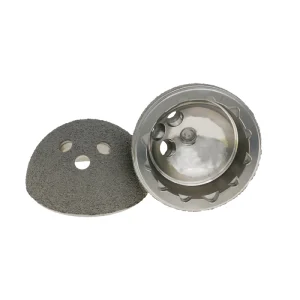
ODM ADC Acetabular Cup Surgical Instrument Factories, Exporters
Procurement Details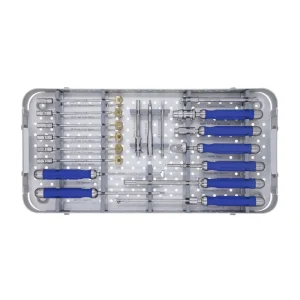
Famous Cervical Fusion Cage Instrument Set Exporters, Service
Procurement Details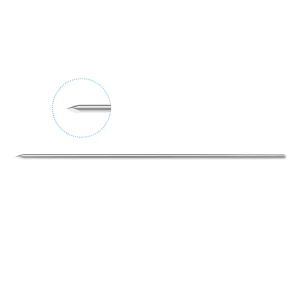
Wholesale High Quality CE Approved Stainless Steel Orthopedic Bone Pin Factory, Quotes
Procurement Details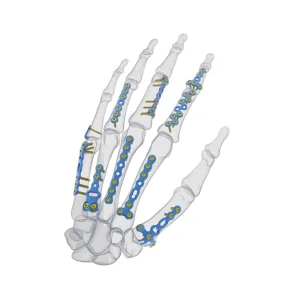
Best Hand Fracture Locking Plate System Exporter, Companies
Procurement Details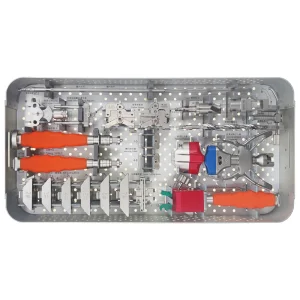
ODM New design quality guaranteed total knee joint instruments Manufacturer, Exporter
Procurement DetailsAuthoritative Insights for Hospital Procurement & Orthopedic Surgeons
Addressing metallurgical tolerances, biomechanical safeguards, sterilization parameters, and regulatory compliance considerations.