
High-Performance Continuous Fixation & Trauma Implants
Verified clinical platforms engineered for absolute angular stability, optimal anatomical contours, and minimized stress shielding across diverse orthopedic applications.
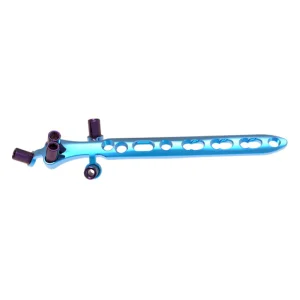
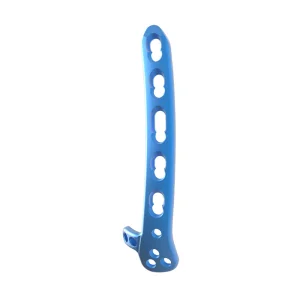
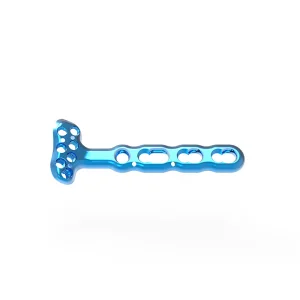
Continuous Bone Plate 15: Biomechanical Tenets & Information Gain
In modern osteosynthesis, achieving stable internal fixation without compromising the periosteal microcirculation remains the gold standard. The Continuous Bone Plate 15 (15-hole continuous locking compression architecture) serves as an essential structural implant designed primarily for complex, extended diaphyseal fractures, segmental bone defects, and comminuted osteoporotic trauma across the femur, tibia, and humerus.
Unlike short segmental plates that concentrate peak bending moments across narrow bridge spans, the 15-hole configuration optimizes elastic modulus continuity. By allowing surgeons to modulate working lengths and strategically skip screw holes across the fracture comminution zone, the continuous construct disperses cyclic load strains over a broad surface area. This technical white paper examines how state-of-the-art precision manufacturing, validated finite element analysis (FEA), and stringent global regulatory compliance converge to deliver peerless clinical reliability in orthopedic reconstruction.
Localized Applications & Anatomical Use Cases
Real-world surgical deployments requiring the exceptional load-bearing bridge stability of 15-hole continuous internal fixation.
Extensive Diaphyseal Bridging
Indicated for high-energy AO/OTA Type C comminuted diaphyseal fractures. The 15-hole continuous profile spans extensive zones of fragmentation, bypassing injured bone segments while avoiding localized periosteal devascularization via limited-contact undersurface scalloping.
Periprosthetic Fracture Salvage
Crucial for Vancouver Type B1 and C femoral fractures around stable total hip stems. The extended length allows fixation distally into healthy cortical bone while offering staggered combination holes proximal to the stem tip to accommodate locking screws or cerclage cables.
Osteoporotic Nonunion Revision
In low bone mineral density (BMD) environments, rigid fixation often yields early pullout. The 15-hole plate permits dynamic spatial screw spread, maximizing bicortical anchor points across wide working zones to prevent construct loosening under physiological gait cycles.
Global Orthopedic Implant Sourcing Trends
The worldwide trauma fixation device sector is witnessing a decisive paradigm shift. Global procurement teams—ranging from national health ministries in the Middle East and Latin America to hospital purchasing networks in Europe—increasingly demand high-tier medical engineering that avoids proprietary monopoly pricing.
To capture market share in competitive tenders, distributors must balance three crucial levers: authenticated metallurgy (Grade 23 ELI Ti-alloy), complete design validation files (including static four-point bending and dynamic fatigue limits according to ASTM F382), and reliable lead times that prevent theater stockouts.
- Substantial reduction of total procurement landed costs by 35%–50% over legacy Western brands.
- Adoption of standardized star-drive (Torx) and dynamic locking compression holes (comb-holes).
- Universal instrument compatibility to eliminate OR re-training hurdles.
Global Sourcing Decision Matrix
China Factory Hub: Resilience, Precision & Scale
How state-of-the-art multi-axis CNC technology and integrated industrial clusters deliver unmatched manufacturing agility.
Multi-Axis CNC Precision
Utilizing high-speed 5-axis Swiss-type and German machining centers, titanium bone plates undergo continuous profile milling, screw pocket threading, and chamfer deburring in single clamping setups, ensuring micron-level tolerances (±0.005mm).
Advanced Anodization & Passivation
Every continuous plate is treated through Type II electrochemical anodization. This creates an inert, uniform titanium oxide film that significantly diminishes soft-tissue adhesion, suppresses metal ion release, and maximizes in-vivo fatigue endurance.
Vertical Sourcing Scalability
By operating our hub in Beijing’s high-tech zone with direct ties to certified metallurgical supply lines, production ramps seamlessly from routine hospital bulk batches to bespoke ODM/OEM requirements without the 6-month backlogs common in legacy supply chains.
Future Implant Roadmap: 2026–2030
- Phase 1: Bioabsorbable Composite Blends: Hybridizing magnesium-zinc or PEEK architectures to eliminate the secondary removal surgery requirement.
- Phase 2: Additive Trabecular Structures: Integrating 3D-printed selective laser melting (SLM) surfaces that simulate cancellous bone elasticity (0.5–2 GPa) to virtually abolish stress shielding.
- Phase 3: Sensor-Embedded Fracture Tracking: Passive telemetric micro-sensors integrated within continuous plate non-screw bridges to monitor real-time strain reduction and callus formation.
Biomechanical Evolution & Smart Trauma Systems
The standard plate-and-screw paradigm is rapidly advancing toward biomechanically responsive environments. The next generation of Continuous Bone Plate 15 systems targets the reduction of rigid union complications, fostering controlled micromotion (axial dynamization) to speed secondary bone healing.
Simultaneously, custom 3D pre-operative planning software enables surgeons to match continuous plates to precise patient-specific CT-reconstructed models prior to sterilization, dramatically reducing intra-operative plate bending, preserving structural fatigue life, and cutting surgical anesthesia duration.
Regulatory Assurance & Distributor Localization
Ensuring frictionless registration, customs validation, and tender eligibility across all jurisdictional authorities.
Technical Dossier (STED) Support
We supply comprehensive Summary Technical Documentation (STED), biocompatibility evaluations (ISO 10993), chemical characterization reports, and mechanical bench-test performance data conforming to international standards.
Sterility & Cleanroom Validation
Continuous bone plates are packaged within certified ISO Class 7 cleanrooms using dual-barrier medical Tyvek packaging, fully validated under ISO 11607 and gamma/EO sterilization processes for immediate operating room readiness.
Custom Branding & Language Packs
From distributor-branded laser etching to multi-lingual Instructions for Use (IFU) and local barcode (GS1/UDI) adherence, our operations ensure full local ministry compliance prior to container dispatch.
Complete Trauma, Reconstruction & Joint Inventory
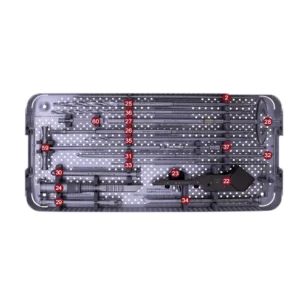
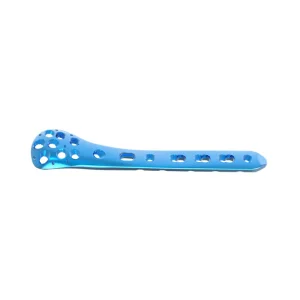
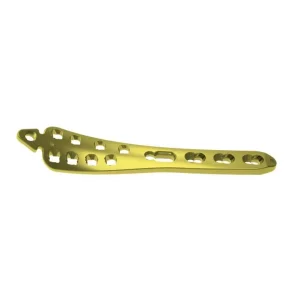
Explore matching orthopedic implant assemblies and instrument configurations ready for hospital supply chain integration.
Frequently Asked Technical & Sourcing Questions
Key information regarding material standards, instrument compatibility, and factory direct customization.