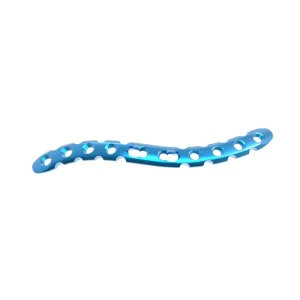
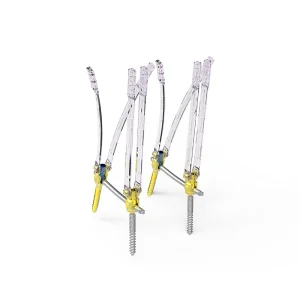
Featured Orthopedic Systems & Pelvic Fixation Implants
Explore precision-engineered anatomical reconstruction plates, sports medicine anchors, and specialized surgical instrumentation certified for worldwide clinical trauma protocols.
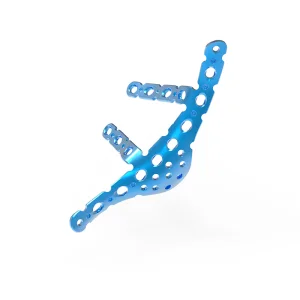
Custom Winged Pelvis Reconstruction Locking Compression Plate Factories, Exporter
Explore Specifications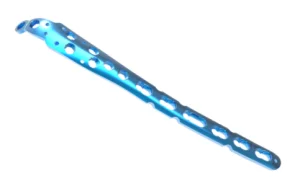
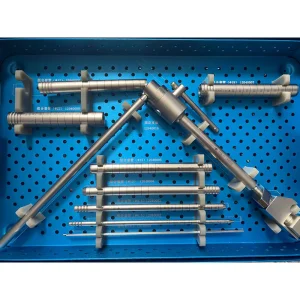
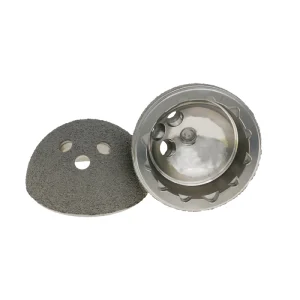
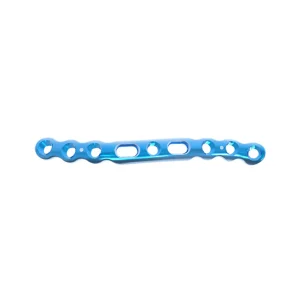
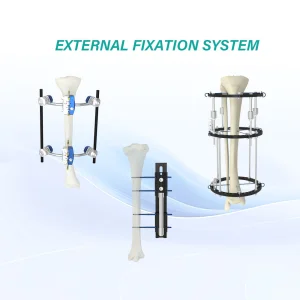
Discount Orthopedic stainless synthes external fixation fixator Factories, Pricelist
Explore Specifications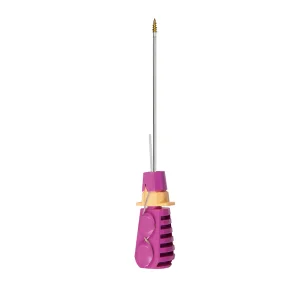
ODM Sports Medicine Titanium Orthopedic Suture Anchor Implant Suppliers, Service
Explore Specifications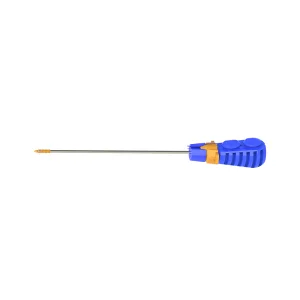
Wholesale Titanium Alloy knotless all adult titanium suture anchor with needle Pricelist, Products
Explore SpecificationsBiomechanical Fixation for Complex Pelvic Ring Trauma
Pelvic and acetabular disruptions represent the most demanding challenges in orthopedic trauma surgery. Modern ODM pelvic locking plates provide rigid internal stabilization, preserving vascularity while facilitating early mobilization.
Multi-Planar Pelvic Ring Instability
High-energy disruptions classified under the Tile or Young-Burgess schemes (APC II/III, LC II/III, Vertical Shear) require rigid anterior and posterior stabilization. Conventional non-locking reconstruction plates suffer from screw toggle and secondary displacement under vertical physiological loading.
- Fixed-angle locking screws prevent torque-induced plate pullout
- Preserves periosteal blood supply through limited contact (LC) footprints
- Supports combined anterior symphysis and posterior SI joint constructs
Acetabular & Quadrilateral Surface Fractures
Medial displacement of the femoral head due to comminution of the quadrilateral plate is historically prone to fixation failure. Dedicated ODM pelvic locking systems introduce anatomically pre-formed infrapectineal and suprapectineal buttress contours.
- Integrated buttress wings prevent intra-articular screw penetration
- Multi-hole spatial triangulation spans from the pubic tubercle to the sciatic notch
- Optimized screw trajectory avoids the acetabular joint space
Fragility Fractures of the Pelvis (FFP)
The aging demographic presents an exponential increase in low-energy insufficiency fractures. Compromised bone mineral density demands locking compression constructs that act as internal fixators rather than relying on bone-plate frictional purchase.
- Angular stability eliminates the requirement for bicortical bite in osteoporotic bone
- Reduces risk of cut-out in cancellous corridors of the posterior ilium
- Allows immediate bedside sitting and early partial weight-bearing
| Fixation Parameter | Anatomical Pelvic Locking Plate | Standard Non-Locking 3.5 Recon Plate | Percutaneous INFIX / External Fixation |
|---|---|---|---|
| Primary Stability | Very High (Locked internal fixator framework) | Moderate (Friction-dependent, toggles in osteoporotic bone) | Moderate (Long lever arms, pin tract micro-motion) |
| Periosteal Perfusion | High Preservation (Point-contact undercut design) | Compressed (Complete surface compression ischemic risk) | Superior (Extra-skeletal suspension) |
| In-Situ Contourability | Pre-formed anatomically; fine-tuning via notched bridges | Complete 3D contouring required intraoperatively | External rod configuration |
| Surgical Approach Synergy | Stoppa, Pararectus, Ilioinguinal, Kocher-Langenbeck | Ilioinguinal, Kocher-Langenbeck | Percutaneous minimally invasive |
| Postoperative Infection Rate | Low (Sub-fascial placement, sterile packed) | Low to Moderate (Lengthy manual contouring times) | Moderate to High (Superficial/deep pin-site tract infections) |
Clinical Insight: Clinical studies across global trauma centers demonstrate that utilizing anatomically pre-contoured pelvic locking plates shortens operative exposure by an average of 34 minutes per procedure compared to flat reconstruction strips, substantially decreasing blood loss in the Corona Mortis hazard zone.
China Factory 4.0: Resilience, Traceability & Scale
Integrating Swiss CNC multi-axis milling, in-line robotic optical Metrology, and Class 100,000 cleanrooms to deliver medical implants with zero defect tolerance and agile volume scaling.
Automated 5-Axis Simultaneous Machining
Pelvic locking plates feature complex helical curvature and variable-angle or fixed combi-holes. Our robotic Swiss-type turning centers and DMG MORI 5-axis milling machines execute complex plate geometry in single setups, removing re-clamping inaccuracies.
- Precision thread geometry ensures cold-welding prevention during screw locking
- Smooth, deburred plate profiles minimize soft-tissue irritation over the pelvic brim
Type II Anodization & Surface Chemistry
Surface optimization plays a vital role in osteosynthesis longevity. Utilizing electro-chemical Type II anodization and precision micro-glass bead blasting, plates achieve elevated fatigue resistance without compromising ductile contourability.
- ASTM F136 medical-grade Ti-6Al-4V ELI titanium microstructural integrity
- Biocompatible color coding enhances intraoperative size and left/right orientation
Class 100,000 Cleanroom & Sterile Packaging
Sterile-packed implants significantly reduce hospital sterilization overhead and operating room turnaround times. Every plate undergoes multi-stage ultrasonic de-greasing, ultrapure water rinsing, and medical tyvek-blister packaging under validated bioburden parameters.
- ISO 11137 validated gamma radiation and EO sterilization processes
- Laser-etched 2D DataMatrix barcode provides full DHR (Device History Record) traceability
Global OEM/ODM Strategy: From Concept to Commercialization
Empowering brand owners, orthopedic distributors, and hospital procurement groups with comprehensive Design-for-Manufacturability (DFM), turnkey prototyping, and audit-proof quality files.
Phase 1: Design for Manufacturability (DFM)
Collaborative engineering reviews evaluate your CAD model against raw stock utilization, cutter path optimization, and locking hole thread tolerances to prevent manufacturing yield issues.
- Finite Element Analysis (FEA) to confirm fatigue endurance limits under cyclic loading
- Optimization of screw combi-hole distribution and bridge spacing
Phase 2: Tooling, Jigs & Rapid Prototyping
Rapid functional sampling in high-grade titanium or surgical stainless steel allows your clinical advisory board to validate handling characteristics, screw insertion angles, and bending compliance.
- Custom bending pliers, drill guides, and insertion instrumentation development
- Pre-production verification batch testing in accredited biomechanics labs
Phase 3: Scale Production & Supply Security
Dedicated production scheduling shields enterprise buyers from supply chain volatility. Backed by multi-ton medical titanium raw material stock and multi-shift operations, lead times stay predictable.
- Custom branding, laser etching of catalogue numbers, UDI barcodes, and logos
- Flexible buffer-stock programs for emergency trauma hospital replenishment
Localized Registration & Regulatory Compliance
Navigating complex international medical device frameworks. We provide complete technical dossiers, validation testing data, and audit readiness to expedite your market entry.
EU MDR 2017/745 Class IIb
Comprehensive European Medical Device Regulation technical documentation dossiers aligned with General Safety and Performance Requirements (GSPR), clinical evaluation reports (CER), and PMCF plans.
- ISO 10993 biological evaluation and extractable/leachable testing
- Biocompatibility, pyrogenicity, and cytotoxicity certifications
US FDA 510(k) Substantial Equivalence
Complete mechanical test reports conforming to ASTM F382 (Standard Specification and Test Method for Metallic Bone Plates), including static 4-point bending, bending strength, and fatigue life verification.
- ASTM F543 testing for cortical and cancellous locking screws (drive torque, pullout)
- Predicate device comparison matrices and performance bench dossiers
MDSAP & Emerging Market Dossiers
Medical Device Single Audit Program compliance spanning Australia (TGA), Brazil (ANVISA), Canada (Health Canada), Japan (MHLW/PMDA), and the United States (FDA), along with specialized Middle East and LATAM registration files.
- Free Sale Certificates (FSC) and Certificate of Analysis (CoA) for customs
- Bilingual technical support and local authorized representative facilitation
Technological Roadmap: The Next Decade in Pelvic Osteosynthesis
Anticipating surgical demands through next-generation additive manufacturing, patient-matched topologies, and bio-absorbable orthopedic materials.
3D Additive Patient-Specific Implants (PSI)
Transitioning from standard pre-bent plates to SLM (Selective Laser Melting) and EBM (Electron Beam Melting) titanium constructs derived directly from preoperative CT DICOM data. Tailored porous trabecular surfaces match regional modulus of elasticity to prevent stress shielding.
Variable-Angle Smart Lock Mechanics
Advancing from fixed-angle locking holes toward multi-axial polyaxial locking mechanisms capable of ±15° angulation without cross-threading risk, empowering trauma surgeons to direct trajectory vectors around vital neurovascular bundles and intra-articular zones.
Bio-Integrative Magnesium Composites
Investigating resorbable high-purity magnesium alloys for secondary quadrilateral buttress plates. Gradually transferring mechanical stress to healing pelvic bone while releasing beneficial magnesium ions that stimulate osteoblast differentiation and reduce second-look implant removals.
Frequently Asked Questions for Device Brand Partners
Answers to key technical, metallurgical, and contractual questions regarding ODM pelvic locking plate development and mass manufacturing.
What distinguishes pelvic locking plates from standard trauma reconstruction plates?
Standard reconstruction plates feature notched edges permitting three-dimensional in-situ deformation but rely completely on bone-plate frictional purchase via cortical screws. In contrast, pelvic locking plates integrate threaded combi-holes creating a fixed-angle internal fixator. This prevents screw toggling in the thin, cancellous iliac and pubic bones, preserves periosteal blood flow through limited-contact undercut relief, and provides superior resistance to vertical shear forces experienced in Tile B and C pelvic fractures.
How do your machining processes prevent screw-plate cold welding?
Cold welding between titanium screws and plates occurs under high torque when thread tolerances vary or surface galling is triggered. We mitigate this through: (1) high-precision multi-axis CNC thread-milling with micro-inch surface tolerances, (2) differential metallurgical hardness control between the plate body and screw threads, and (3) specialized electro-chemical Type II surface anodization which forms an anti-galling oxide layer ensuring seamless removal during revision surgery.
What raw material grades are utilized in your pelvic plate production?
Our pelvic systems are predominantly manufactured from certified medical-grade Ti-6Al-4V ELI (ASTM F136 / ISO 5832-3) for maximum strength-to-weight ratio and fatigue life. Where excessive manual anatomic contouring is preferred by surgeons, we also offer high-purity CP Titanium Grade 4 (ASTM F67 / ISO 5832-2). For markets requiring stainless steel options, implant-grade 316LVM (ASTM F138 / ISO 5832-1) is available with complete raw material mill inspection certificates.
Can you support customized pelvic designs and OEM private labeling?
Yes. We offer end-to-end OEM and ODM support. Brand partners can customize hole spacing, plate thickness profiles, quadrilateral buttress geometry, laser surface marking (logos, catalogue codes, UDI DataMatrix), anodized color schemes, and customized sterile tyvek packaging with full national regulatory dossier alignment.
What fatigue and mechanical testing documentation is provided?
Every plate series undergoes rigorous four-point bending and dynamic cyclic fatigue testing per ASTM F382 to determine bending stiffness, bending strength, and runout fatigue endurance (typically 1 to 5 million cycles). Screws are evaluated according to ASTM F543 for torsional yield, driving torque, and axial pullout resistance. Full third-party accredited laboratory test reports are provided in the regulatory technical dossier.
What are the lead times for custom tooling and mass production batches?
Initial DFM analysis and CAD/CAM programming take 5 to 7 business days. Functional prototype samples are typically delivered within 3 to 4 weeks. Commercial scale production runs under validated ISO 13485 cleanroom workflows require 30 to 45 days, supported by buffer-stock warehousing for established global partners to enable rapid repeat replenishment.
Comprehensive OEM/ODM Portfolio & Trauma Fixation Solutions
Complete range of joint prostheses, specialized anatomical locking plates, and spinal system implants engineered for global surgical distribution.
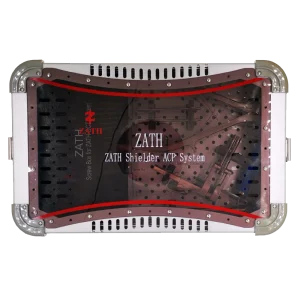
ODM Orthopedic Surgical Use Cervical ACP Plate System Instrument Set Manufacturer, Pricelist
Explore Specifications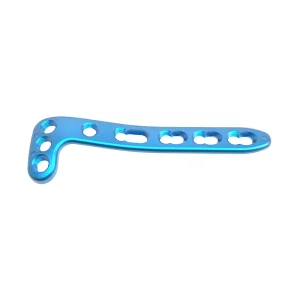
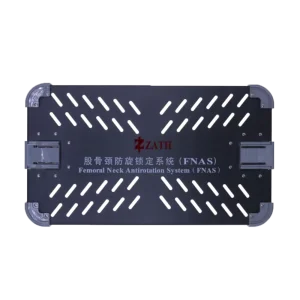
Famous Femoral Neck Antirotation System (FNAS Instrument Set) Supplier, Products
Explore Specifications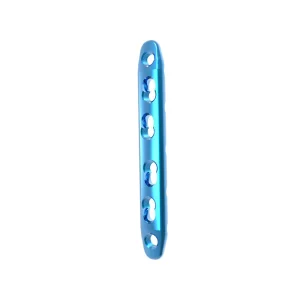
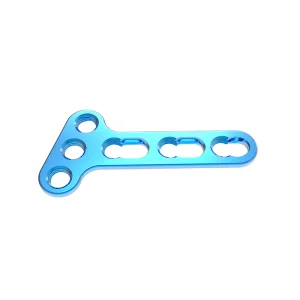
China Humerus Limited Contact Locking Compression Plate Manufacturer, Service
Explore Specifications