Precision Osteosynthesis Solutions & Surgical Systems
Explore our sterile-packaged, clinically documented orthopedic fixation implants and specialized surgical instrument arrays ready for contract manufacturing and international export.

Macro Supply Chain Dynamics & Institutional B2B Procurement
Analyzing procurement requirements across Group Purchasing Organizations (GPOs), multinational medical brands, and tender networks in the trauma and reconstructive osteosynthesis sector.
The global market for orthopedic plates and screws has entered an era of profound consolidation and heightened regulatory scrutiny. Historically, regional healthcare systems relied on fragmented local distributors or high-premium multinational brands. Today, commercial buyers—including national hospital networks, large-scale distributors across Europe, North America, LATAM, and the Asia-Pacific, as well as private-label orthopedic brands—face severe margin pressures under value-based healthcare paradigms, volume-based procurement (VBP), and tightening regulatory frameworks such as EU MDR 2017/745 and US FDA 510(k) enforcement.
In response to these systemic market shifts, OEM (Original Equipment Manufacturer) and ODM (Original Design Manufacturer) partnerships have moved from peripheral cost-saving tactics to core strategic pillars. Modern healthcare device brand owners require certified contract manufacturers that combine comprehensive multi-axis CNC machining, in-house metallurgical verification, certified cleanroom packaging, and end-to-end Design History File (DHF) technical support under a certified ISO 13485:2016 quality management system.
GPO & National Hospital Tenders
Institutional purchasers demand consistent unit-to-unit mechanical tolerances, sterile double-barrier packaging, and guaranteed uninterrupted delivery cycles for emergency trauma inventory replenishment.
- Fixed volumetric unit costs under multi-year contracts
- Strict sterilization validation (ISO 11137 / ISO 11607)
- Complete surgical instrument set availability
Private-Label Brand Holders
Established orthopedic distributors seeking to commercialize proprietary implant brands require rapid prototype-to-production ramp-up, laser branding, and complete regulatory dossiers.
- Comprehensive OEM laser marking with 2D DataMatrix UDI
- Proprietary hole geometries & combi-slot variations
- Design Dossier support for expedited local registration
Supply Chain Dual-Sourcing
Multinational OEMs actively mitigate geopolitical single-point-of-failure vulnerabilities by qualifying audited Asian manufacturing hubs with extensive titanium processing capacity.
- High raw material reserves (Medical Grade Ti-6Al-4V ELI)
- Decoupled Swiss multi-axis CNC machine capacity
- Audited environmental, social, and quality standards
Engineering Principles: Locking Plate & Screw Interface Science
A rigorous examination of AO/ASIF osteosynthesis principles, bridging mechanics, fatigue life optimization, and variable-angle thread design.
Modern internal fracture fixation relies upon the precise application of biological osteosynthesis. The objective is no longer anatomical rigidity achieved through periosteal compression at the expense of local vascularity; rather, the standard demands stable, load-sharing biological fixation that preserves the microvascular periosteal blood supply, encourages secondary bone healing via controlled micromotion, and ensures early patient mobilization.
| Biomechanical Attribute | Conventional Dynamic Compression (DCP) | Fixed-Angle Locking Compression (LCP) | Variable-Angle Locking (VA-LCP) System |
|---|---|---|---|
| Fixation Mechanism | Frictional resistance generated between plate undersurface & cortical bone | Threaded screw head locks into threaded plate hole, acting as an internal fixator | Spherical threaded screw head locks within polyaxial range (±15° cone of freedom) |
| Periosteal Vascularity | High risk of periosteal compression necrosis under plate surface | Preserved; limited-contact plate design minimizes cortical contact pressure | Optimized; allows anatomically contoured bridge plating with zero bone impingement |
| Osteoporotic Bone Holding | Substantially reduced; prone to progressive screw toggling and catastrophic pullout | High; load transferred through plate-screw angular stability, resisting pullout | Superior; permits targeted trajectory anchoring into subchondral bone purchase |
| Primary Indications | Simple diaphyseal transverse or oblique fractures in healthy bone tissue | Complex comminuted metaphyseal/diaphyseal fractures & osteopenic bone | Intra-articular distal radius, proximal humerus, distal femur, and complex pelvis |
| Fatigue Resistance (ASTM F382) | Moderate; stress concentration around open compression screw slots | High; symmetrical combi-hole architecture distributing cyclical bending stress | High; reinforced hole perimeter absorbing non-axial multidirectional sheer loads |
Engineering Focus: Combi-Hole Dynamic Compression vs. Angular Rigidity
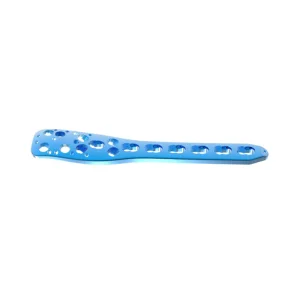
ZATH’s locking compression plates utilize engineered asymmetrical Combi-Holes. One half of the hole features a dynamic compression ramp (DCU profile) that accepts non-locking cortical or cancellous screws for axial fragment reduction; the opposing half features tapered conical threads engineered to lock locking screws at predetermined pitches. This hybrid versatility allows the orthopedic surgeon to perform initial reduction before applying fixed-angle angular stability in complex trauma reconstructions.
Medical Metallurgy & Purity
Our plants process exclusively certified Medical Grade Titanium Alloy (Ti-6Al-4V ELI conforming to ASTM F136 / ISO 5832-3) and High-Grade 316LVM Implant Stainless Steel (ASTM F138 / ISO 5832-1). Material batches undergo chemical glow discharge optical emission spectrometry and microstructural metallography to verify grain size and freedom from interstitial micro-voids.
Micro-Thread Geometry Optimization
Every bone screw is designed with buttress or modified square thread forms that maximize bone-to-implant contact (BIC). Cortical threads utilize tighter pitches for dense diaphyseal cortex, while cancellous threads incorporate deep flutes and expanded outer-to-core diameter ratios to resist pullout in trabecular bone bed structures.
Electrochemical Surface Passivation
Titanium plates and screws receive proprietary electrochemical Type II anodization, creating an amorphous compact TiO2 oxide protective barrier. This process eliminates fretting corrosion between plate-hole and screw-head interfaces, reduces cold welding, and prevents metal ion release into surrounding physiological tissue.
Precision Manufacturing & In-Line Quality Metrology
From aerospace-grade CNC machine centers to Class 10,000 cleanroom final assembly, discover our six-tier production infrastructure located in Beijing's National Science Park.
1. 5-Axis Simultaneous Machining
Employing high-speed DMG MORI and Citizen Swiss-type lathe centers, plates undergo single-setup multi-face milling. This guarantees sub-micron hole pitch consistency, eliminates cumulative dimensional tolerances, and executes complex anatomical pre-contours.
2. Low-Thermal Wire EDM Profiling
Complex plate slot contours and delicate spinal or pelvic reconstruction profiles are cut using precision wire Electrical Discharge Machining (EDM). Controlled deionized dielectric flushing prevents microscopic recasting layers and thermal fatigue cracking along stress borders.
3. Automated Centrifugal Finishing
Robotic deburring and high-energy vibratory centrifugal polishing remove micro-burrs along internal screw thread roots and combi-hole junctions. Chamfered, ultra-smooth plate borders prevent soft tissue irritation and tendon impingement post-implantation.
4. AI Optical Coordinate Metrology
Every critical batch undergoes 100% automated optical profile inspection using Zeiss Coordinate Measuring Machines (CMM) and laser scanning non-contact profilometers. Flute depths, screw drive sockets (Torx / Stardrive), and locking pitches are verified against CAD models.
5. Cleanroom Ultrasonic Washing
Multi-stage automated ultrasonic cleaning tanks utilize medical-grade bio-neutral cleaning agents, reverse osmosis (RO) deionized water rinsing, and vacuum drying to remove particulate, cutting oil, and endotoxins to meet USP <85> standards.
6. Validated Sterile Barrier Pack
In our ISO Class 7 (Class 10,000) cleanroom, implants are sealed into double-blister Tyvek packaging compliant with ISO 11607-1/2. Ready for ethylene oxide (EO) or gamma radiation sterilization with guaranteed 5-year barrier shelf-life integrity.
Technology Roadmap: Next-Generation Osteosynthesis
A strategic projection of the biomaterials, additive technologies, and smart diagnostic solutions shaping the next decade of contract orthopedic manufacturing.
1. Bioresorbable Magnesium Alloys
Developing engineered Mg-Zn-Ca and Mg-Nd alloys with uniform corrosion kinetics. These bioabsorbable plates and screws provide primary structural osteosynthesis during the initial 12-16 weeks, gradually degrading without hydrogen gas pockets, eliminating secondary implant removal surgeries.
2. 3D Additive Trabecular Plating
Pioneering Selective Laser Melting (SLM) and Electron Beam Melting (EBM) additive printing for patient-matched pelvic, periarticular, and oncological reconstruction plates. Featuring interconnected 65-75% porosity trabecular lattices that emulate natural human cancellous bone modulus.
3. Antimicrobial Nanotube Coatings
Formulating anodized Titania (TiO2) nanotube coatings infused with controlled-release silver (Ag) ions and antimicrobial peptides (AMPs). Designed to prevent Staphylococcus aureus biofilm adhesion in open compound fractures without inducing systemic cytotoxic side effects.
4. Telemetric Strain Sensor Implants
Investigating low-profile MEMS strain sensors integrated directly into the non-contact bridges of critical load-bearing femoral and tibial locking plates. Passive NFC telemetry enables wireless, non-invasive postoperative monitoring of fracture callus consolidation in real time.
Global Market Clearance: Compliance Architecture & Dossiers
Ensuring frictionless international trade, customs passage, and local health authority registration across Tier-1 and emerging markets.
Achieving regulatory clearance for class IIb and class III orthopedic devices has become significantly more complex following the transition from the European Medical Devices Directive (MDD 93/42/EEC) to the Medical Device Regulation (MDR EU 2017/745). ZATH operates an integrated quality system that preempts audit obstacles, providing global distribution partners with full technical documentation, Clinical Evaluation Reports (CER), and verified biocompatibility files.
European Union: MDR 2017/745
Our regulatory files satisfy Annex II and III documentation guidelines. Comprehensive Post-Market Surveillance (PMS), Post-Market Clinical Follow-up (PMCF) plans, and Notified Body audited General Safety and Performance Requirements (GSPR) are fully accessible to contracted distributors.
United States: FDA 510(k) Equivalence
Mechanical validation follows ASTM F382 (Metallic Bone Plates) and ASTM F543 (Metallic Medical Bone Screws), including dynamic four-point bending fatigue strength, screw driving torque, axial pullout load, and self-tapping performance benchmarking against predicate devices.
Global Emerging Registrations
We provide full notarized Apostille documentation, Free Sale Certificates (FSC), ISO 13485:2016 factory audit certificates, and legalized Statements of Manufacturing Origin for rapid product approval with ANVISA (Brazil), COFEPRIS (Mexico), SFDA (Saudi Arabia), and TFDA.
End-to-End Contract Manufacturing & Private-Label Services
Headquartered in Beijing's Zhongguancun Science and Technology Park since 2009, ZATH delivers responsive, tailored production services from concept engineering to field instrumentation.
Custom Plate Geometry & Profiling
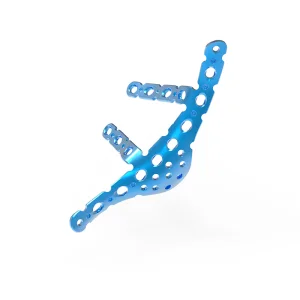
We modify screw hole densities, plate thicknesses, anatomical curvatures, and hole configurations based on surgical feedback or regional morphological anthropometric data.
Bespoke Color Anodization & Laser Branding
Implement intuitive color-coded screw length and diameter systems (Gold, Blue, Green, Magenta) alongside laser-etched partner logos, part reference numbers, and UDI QR barcodes.
Dedicated Instrument Set Fabrication
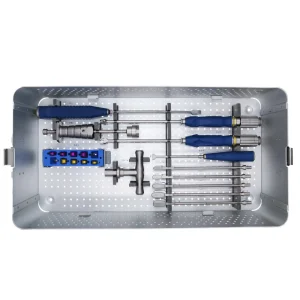
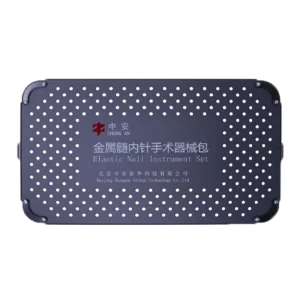
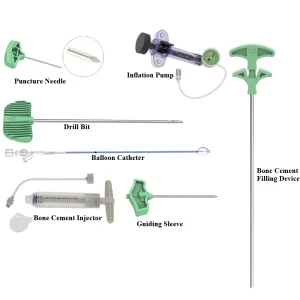
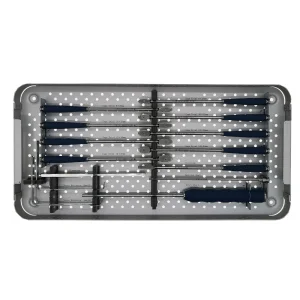
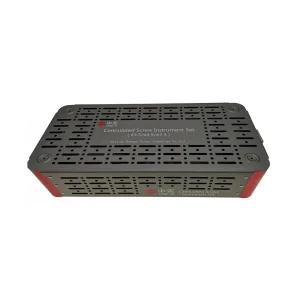
Contract manufacturing of ergonomic silicon-handled torque-limiting screwdrivers, drill guides, depth gauges, self-centering bone-holding forceps, and custom sterilizing graphic cases.
Express International Delivery Logistics
Strategically routed air-express courier networks (DHL, FedEx, UPS, TNT, EMS) ensure delivery to international partner warehouses within 4 to 6 business days, preventing stockouts.
Frequently Asked Questions by Institutional Buyers & Distributors
In-depth responses covering material sourcing, regulatory submissions, minimum order quantities, and surgical instrumentation.
What certified medical alloys are utilized in your bone plate and screw manufacturing?
How does ZATH assist international distributors with regulatory registration and technical files?
What are the options for sterile vs. non-sterile packaging for trauma implants?
What Minimum Order Quantities (MOQ) and production lead times apply for OEM contracts?
Are surgical instrument sets supplied with the plates and screws?
Comprehensive Spinal, Joint & Reconstruction Lines
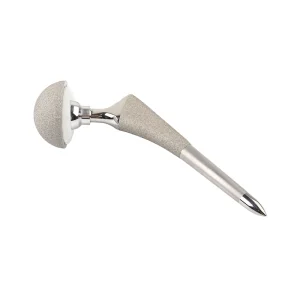
Expand your commercial catalog with our certified joint arthroplasty components, minimally invasive spine instrumentation, and anatomically contoured pelvic reconstruction systems.