
Platform Phase I
Featured Clinical Fixation & Trauma Implants
Engineered for high-stress anatomical sites, our Tier-1 fixation assemblies leverage medical-grade Grade 5 Ti-6Al-4V ELI (ASTM F136) and pure titanium profiles, verified through multi-axis CNC micro-milling.
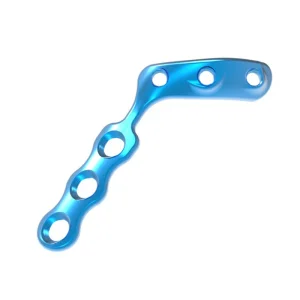
High-Quality Proximal Femur MIS Locking Plate II Suppliers, Product
View Product Specification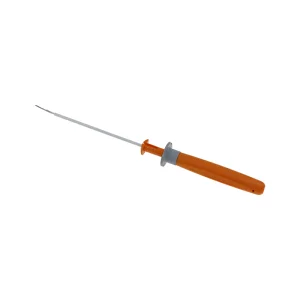
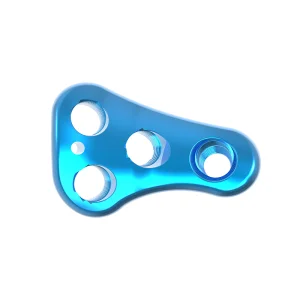
ODM Orthopedic Fast All Inside Meniscal Repair Device System Products, Service
View Product Specification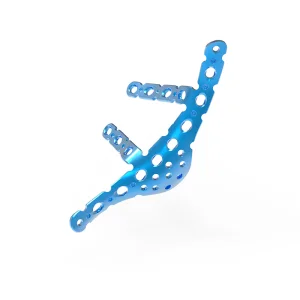
Custom Winged Pelvis Reconstruction Locking Compression Plate Factories, Exporter
View Product Specification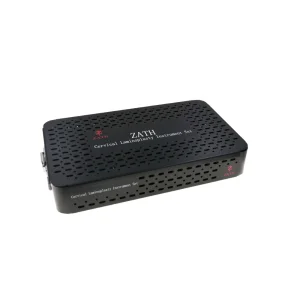
Buy Medical Hospital Use Cervical Laminoplasty Instrument Set Factories, Exporter
View Product Specification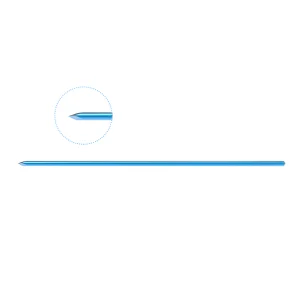
Best Titanium Alloy Orthopedic Bone Pin Factories, Company
View Product Specification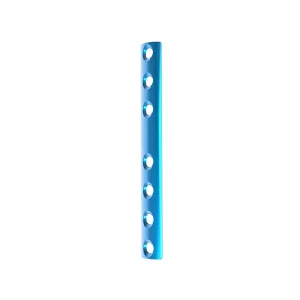
Cheap Metacarpal & Metatarsal Fractures 1/3 Tubular Locking Plate Factories, Service
View Product Specification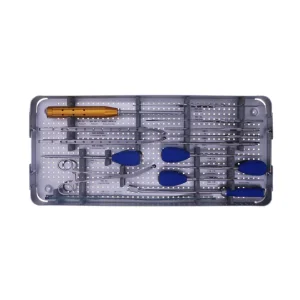
Best Zipper 6.0 System Spinal Internal Fixation System Instrument Universal Set Quotes, Company
View Product SpecificationExecutive Sourcing Intelligence
Global Enterprise Procurement Demands & Total Cost of Ownership (TCO)
In modern orthopedic medical supply chains, volume wholesale procurement encompasses rigorous lifecycle assessments, cross-border regulatory validation, and lean inventory orchestration across international hospital networks.
Supply Chain Resilience & Lead-Time Hedging
Global distributors cannot tolerate backorders for trauma reconstructive systems. Top-tier manufacturers mitigate disruptions by establishing direct partnerships with ISO 5832-3 titanium ingot smelters, keeping raw titanium bar reserves, and deploying automated five-axis Swiss-lathe cells that run continuously under statistical process control (SPC).
MDR Regulatory Dossiers & Clinical Traceability
Under EU MDR 2017/745 and FDA 21 CFR 820, procurement directors prioritize full Device Master Records (DMR) and biocompatibility dossiers according to ISO 10993. Every surgical plate, spinal screw, and intramedullary nail must feature laser-etched Unique Device Identification (UDI) directly tied to raw metallurgical heat numbers.
TCO Optimization & Hospital Margins
Hospital purchasing groups face falling insurance reimbursement rates and DRG payment caps. Sourcing implants from certified Chinese manufacturing centers reduces unit landed costs by 40% to 65% compared to legacy Western brands, without compromising dynamic fatigue limits or metallurgical purity.
Macro Industry Solutions
Macro-Industry Solutions: Orthopedic Product Architecture
A systematic overview of modern surgical implants manufactured across our Beijing production lines, detailing engineering tolerances, alloy standards, and clinical objectives.
| Implant Classification | Primary Alloys & Biomaterials | Manufacturing & Surface Modality | Biomechanical Performance Target | Target Clinical Indications |
|---|---|---|---|---|
| Trauma Fixation Plates & Screws | Ti-6Al-4V ELI (ASTM F136), Pure Titanium Grade 3/4 | Multi-axis CNC Swiss micro-machining, Type II Anodization, Bead-blasting | Fatigue strength exceeds ASTM F382; dynamic bending cycles > 10^6 | Long-bone diaphyseal, metaphyseal fractures, peri-articular non-unions |
| Spinal Fixation Systems | Ti-6Al-4V ELI, PEEK Optima (ASTM F2026) | Wire EDM cutting, Dual-lead thread whirling, Micro-porous 3D lattice cages | Pull-out force > 1200 N, axial compression limit conform to ASTM F1717 | Degenerative disc disease, spondylolisthesis, spinal deformity, burst fractures |
| Joint Arthroplasty (Hip & Knee) | CoCrMo Alloy (ASTM F75), Ti-6Al-4V, Crosslinked UHMWPE | Precision vacuum investment casting, 5-axis CNC grinding, Plasma spray HA | Surface roughness Ra ≤ 0.05 μm; wear rate < 8 mg/million cycles (ISO 14242) | Osteoarthritis, avascular femoral head necrosis, revision arthroplasty |
| Sports Medicine & Soft Tissue | Medical PEEK, Titanium Alloy, Ultra-High MW Polyethylene (UHMWPE) | Precision micro-molding, CNC micro-milling, automated knotless braided loop integration | Tensile anchor pull-out load > 280 N (ASTM F543 / F1839 compliance) | Rotator cuff tears, ACL/PCL reconstruction, meniscal tears, labral lesions |
| Intramedullary Nailing Platforms | Anodized Ti-6Al-4V ELI, High-Strength Stainless 316LVM | Deep-hole gun drilling, CNC bending, dynamic interlocking thread turning | Torsional stiffness > 0.25 Nm/deg; structural fatigue endurance per ASTM F1264 | Femoral, tibial, and humeral shaft fractures, subtrochanteric stabilizing |
R&D Roadmap
Technical Roadmap: Metallurgy, 3D Additive Manufacturing & Osteointegration
The transition from conventional subtractive milling to selective laser melting (SLM) and electron beam melting (EBM) has revolutionized how bone implants interact with living bone tissue.
PILLAR 01
Trabecular Biomimetic Additive Engineering
Subtractive machining creates smooth metallic surfaces that rely primarily on mechanical press-fit. Our additive manufacturing platform uses medical titanium powder to build interconnected 3D trabecular lattices that closely match human cancellous bone.
- Engineered pore diameter calibrated between 400 μm and 600 μm
- Interconnected open porosity rates exceeding 65% to 80%
- Significantly reduced modulus of elasticity to mitigate stress shielding
- Accelerated vascularization and bone ingrowth confirmed by in vitro assays
PILLAR 02
Advanced Surface Nanotopography & Bioactivity
Osseointegration kinetics rely on surface chemistry at the nanoscale. By combining sandblasting, dual-acid etching (SLA), electrochemical oxidation, and vacuum plasma-sprayed hydroxyapatite (HA), we build surfaces optimized for cell attachment.
- Crystalline hydroxyapatite coating thickness controlled at 50 μm ± 10 μm
- Adhesion shear strength exceeds 35 MPa per ASTM F1147
- Nanotextured surfaces encourage osteoblast migration and alkaline phosphatase production
- Type II hard anodization provides high wear resistance and prevents ion leaching
PILLAR 03
Next-Gen Biodegradable & Antibacterial Formulations
Our long-term R&D pipeline focuses on materials that actively prevent infection or safely resorb once healing is complete, helping reduce secondary surgeries for hardware removal.
- Bioabsorbable magnesium-zinc (Mg-Zn) alloys for pediatric and small-bone fracture fixation
- Silver-doped and copper-doped titanium coatings that resist biofilm formation
- Custom patient-matched implants derived from DICOM CT imaging data
- Clean room packaging compatible with dry gamma and ethylene oxide (EO) sterilization
Regulatory & Commercial Landscape
Global Commercial Landscape, Regulatory Pathways & Direct Sourcing
Navigating global healthcare markets requires strict adherence to regional medical device directives and robust post-market surveillance systems.
European Union: CE MDR (2017/745)
Class IIb and Class III orthopedic implants face demanding regulatory requirements in Europe. Our comprehensive technical documentation files, clinical evaluation reports (CER), and post-market clinical follow-up (PMCF) plans provide medical distributors with clear, transparent registration pathways.
Americas: FDA 510(k) & ANVISA
For distributors targeting the United States, Latin America, and Brazil, our test protocols run on ISO 17025 accredited test benches. These cover biomechanical pull-out, cyclic fatigue, and wear debris characterization required for premarket notifications and regulatory approvals.
Emerging Markets: Asia, Middle East & Africa
Public tenders in Southeast Asia, the Middle East, and Africa demand dependable volume shipments backed by Free Sale Certificates (FSC) and clean ISO 13485 audit records. Direct factory collaboration removes intermediary trading markups, giving our distribution partners a reliable commercial edge.
Factory Operations & Verification
Localized Support, Production Capacity & Quality Infrastructure
Operating from our modern facility in Pinggu Park, Zhongguancun Science and Technology Park, Beijing, ZATH combines high manufacturing capacity with dedicated engineering support for our global partners.
Cleanroom Environments
Implant packaging and cleaning take place within certified Class 10,000 (ISO Class 7) cleanrooms, using 18 MΩ·cm ultra-pure deionized water systems to keep bioburden levels well below regulatory thresholds.
Advanced Multi-Axis CNC
Our workshop houses high-precision DMG MORI, Citizen, and Star CNC machines that deliver micro-tolerances down to ±0.005 mm, ensuring dependable interchangeability across locking plates, cannulated screws, and instrument kits.
OEM & ODM Flexibility
We provide comprehensive private-label manufacturing: laser engraving, custom anodization color-coding, regional sizing modifications, and sterile double-blister Tyvek packaging configured to your market's needs.
Complete Traceability
From raw metallurgical bar stock to cleanroom packaging, every production step is documented with optical comparators, Zeiss CMM coordinate measurement machines, and digital batch record keeping.
Platform Phase II
Specialized Joint, Spine & Reconstructive Platforms
Explore our specialized joint arthroplasty components, minimally invasive spinal stabilization hardware, and sports medicine fixation systems.
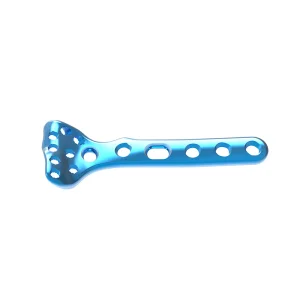
ODM DVR Locking Compression Plate I Exporter, Product
View Product Specification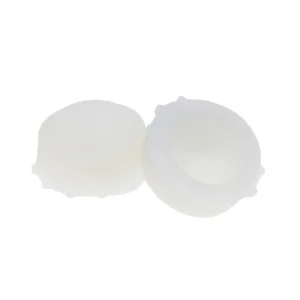
High-Quality Hip Joint ADC Acetabular Liner Manufacturer, Supplier
View Product Specification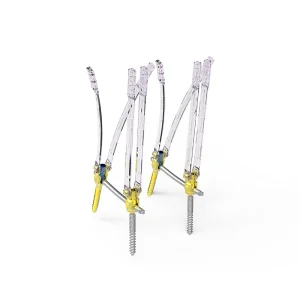
ODM Spine Titanium Minimally Invasive Pedicle Screws Manufacturer, Pricelist
View Product Specification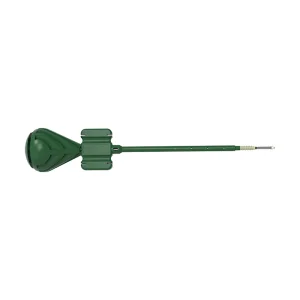
Wholesale SuperFix P Knotless Suture Anchor Manufacturer, Suppliers
View Product Specification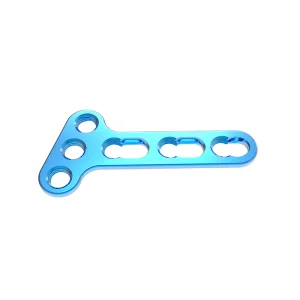
Buy Oblique T-Shape Locking Compression Plate Manufacturers, Pricelist
View Product Specification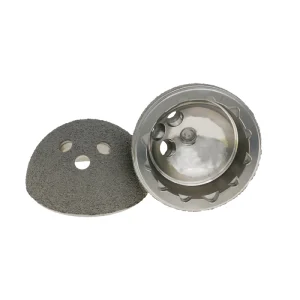
ODM ADC Acetabular Cup Surgical Instrument Factories, Exporters
View Product Specification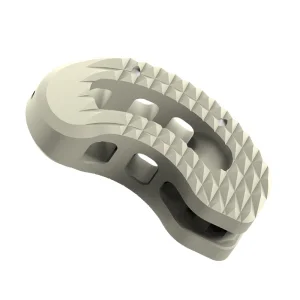
ODM Thoracolumbar Interbody Cage (Angled) Exporter, Company
View Product Specification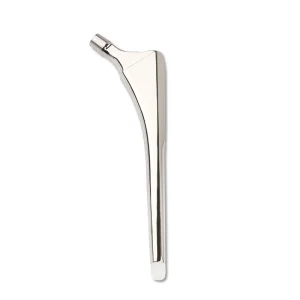
Cheap TDS Cemented Stem Orthopedic Implants Companies, Service
View Product SpecificationExecutive Q&A
Frequently Asked Questions (B2B Procurement & Manufacturing)
Key technical, regulatory, and logistical considerations for distributors and hospital procurement teams evaluating wholesale bone implant manufacturers.
Q
What metallurgical certifications accompany your bone implant shipments?
Every shipment includes comprehensive Material Test Reports (MTRs) confirming compliance with ASTM F136 / ISO 5832-3 for Ti-6Al-4V ELI or ASTM F138 for 316LVM implant stainless steel. Documentation details chemical composition, inclusion cleanliness, grain size distribution, and tensile properties, alongside complete raw-material heat lot traceability.
Q
How does your factory address stress shielding and implant loosening?
We use anatomically contoured profiles, selective wall-thinning techniques, and 3D trabecular titanium porous coatings where appropriate. Matching structural stiffness closer to natural bone helps optimize physiological load transfer under Wolff's Law, encouraging bone maintenance and reducing long-term aseptic loosening.
Q
Can your facility handle customized OEM/ODM sizing and private-label packaging?
Yes. We run dedicated OEM/ODM production lines. Our team works with distributors to adapt thread pitches, plate contours, screw head recesses (such as Torx or Stardrive), and customized instrument set arrangements. We also support private labeling with customer branding, regional translations, and custom-designed medical-grade Tyvek blister packs.
Q
What validation protocols support your sterile-packaged product lines?
Our pre-sterilized implants are packaged in ISO Class 7 cleanrooms using ISO 11607-compliant heat-sealed double Tyvek blisters. Sterilization validation meets ISO 11137 (Gamma Irradiation) or ISO 11135 (Ethylene Oxide) standards, consistently providing a Sterility Assurance Level (SAL) of 10^-6 with verified five-year shelf-life stability data.
Q
How are quality deviations prevented during CNC high-speed machining?
We use real-time tool wear monitoring, in-process Renishaw machine probing, and periodic laser micrometer checks. Machined parts then undergo full automated cleaning, passivation testing per ASTM A967, and dimensional verification on coordinate measuring machines (CMM) before surface finishing or packaging.
Q
What are your typical wholesale production lead times and logistics arrangements?
Standard inventory platforms ship via express air courier (DHL, FedEx, UPS) within 4 to 6 business days. For bulk wholesale contracts and custom OEM production runs, initial batch manufacturing typically completes within 4 to 8 weeks, supported by continuous production updates and complete export clearance documentation.