
Distributor Sourcing Catalog: High-Volume Implant Systems
Engineered for immediate wholesale export and regulatory registration. Certified under ISO 13485 standards with comprehensive mill test reports and lot traceability.

The Biomechanical Revolution in Plate Ankle Fracture Systems
An authoritative clinical evaluation of modern trauma osteosynthesis, evolving classification paradigms, and the shifting commercial requirements of hospital tenders worldwide.
Epidemiological Dynamics
Ankle fractures account for more than 9% of all skeletal trauma events, ranking as the second most common weight-bearing lower-extremity injury. Shifts in global demographic distributions have driven a bimodal epidemiological surge: high-velocity rotational sports trauma in active younger demographics and fragile osteoporotic malleolar disruptions among the aging population.
Lauge-Hansen & Weber Precision
Modern clinical osteosynthesis demands plate geometries adapted to complex biomechanics. Whether addressing Danis-Weber Type B trans-syndesmotic shears or supination-external rotation (SER) stage IV lesions, standard 1/3 tubular non-locking plates have given way to anatomically pre-contoured locking compression plates (LCP) that neutralize torsional and bending moments without periosteal stripping.
Value-Based Hospital Sourcing
Healthcare institutions and national tendering bodies face immense cost pressures. Procurement authorities are aggressively replacing premium tier-one implants with ISO 13485-certified alternatives that deliver identical clinical efficacy, superior fatigue cycles, and comprehensive surgical tray modularity at 40% to 60% lower total acquisition costs.
Titanium Ti-6Al-4V ELI vs. 316L Stainless Steel Engineering Benchmarks
In the delicate subcutaneous environment of the distal fibula and medial malleolus, soft-tissue envelope preservation is paramount. The thickness, edge taper, and metallurgical density of an ankle fracture plate dictate long-term post-operative healing, wound complication risks, and revision rates.
- Biocompatibility & Osseointegration: Medical-grade Ti-6Al-4V ELI (ASTM F136 / ISO 5832-3) exhibits a significantly lower modulus of elasticity (~110 GPa) relative to 316L Stainless Steel (~200 GPa), approaching human cortical bone (18 GPa) to drastically reduce stress shielding and peri-implant bone resorption.
- Low-Profile Scalloped Geometry: Modern distal fibular locking plates feature an aggressive profile reduction down to 1.5mm–2.0mm distally, combined with fully recessed screw heads to minimize peroneal tendon irritation and skin necrosis.
- Limited-Contact Underside Architecture: Dynamic compression plate undercuts preserve the periosteal microcirculation, preventing localized cortical ischemia and accelerating clinical fracture consolidation.
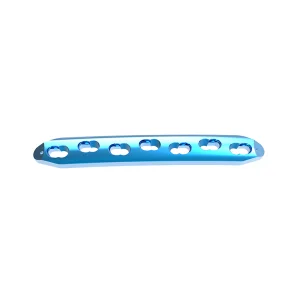
- Multi-Directional Combi-Holes: Combining dynamic compression unit (DCU) slots with variable-angle locking threads allows surgeons to switch between axial compression and angularly stable fixed-angle fixation within a single construct.
| Biomechanical Metric | Ti-6Al-4V ELI (Grade 5) | 316L Stainless Steel |
|---|---|---|
| Tensile Yield Strength | ≥ 860 MPa | ≥ 280–480 MPa |
| Modulus of Elasticity | 110 GPa (Closer to Bone) | 200 GPa (Rigid) |
| MRI / CT Artifacting | Minimal (High Clarity) | Moderate to Severe |
| Corrosion Resistance | Superior Passive TiO2 Layer | Pitting Susceptible in Saline |
| Soft Tissue Impingement | Ultra-Low Profile (≤1.8mm) | Standard Profile (2.0–2.5mm) |
| Fatigue Endurance Limit | > 10^7 Cycles @ 450 MPa | > 10^7 Cycles @ 260 MPa |
China's Precision Manufacturing Hub: Efficiency, Scalability & Traceability
How industrial clustering in national high-tech manufacturing parks produces world-class orthopedic trauma systems with unmatched lead-time predictability and economic efficiency.
5-Axis Swiss Multi-Spindle CNC
Operating multi-axis Swiss-type turning centers (Citizen, Star Micronics) and automated high-speed milling cells (DMG Mori), Chinese manufacturing complexes achieve micron-level threading accuracy (±0.005mm) across high-density polyaxial variable-angle locking holes.
In-House Controlled Processing
From raw titanium bar stock ultrasonic testing to automated wire EDM, chemical passivation, Type II electrochemical color anodization, and 100% optical coordinate measuring machine (CMM) verification, the entire value chain is contained under one roof to prevent third-party contamination.
Ultra-Fast Turnaround Cycles
Where Western manufacturing operations average 16 to 24 weeks for OEM batch production, Chinese facilities leverage tightly integrated raw material reserves, automated tooling jigs, and dedicated logistics pipelines (DHL/FedEx Air Hubs) to deliver custom OEM batches within 4 to 6 weeks.
Class 100,000 Cleanroom Packaging
Final sterile packaging operations are executed inside Class 100,000 (ISO 8) cleanrooms equipped with laminar airflow hoods. Double-barrier sterile blister packs sealed with medical-grade Tyvek® ensure five-year sterile barrier integrity under ISO 11607 validation protocols, drastically reducing in-hospital autoclave and handling cycles.
Comprehensive OEM / ODM Customization
Offering comprehensive private labeling services: direct micro-laser marking of logos and lot serials, custom-designed aluminum anodized sterilization containers, region-specific anatomical contour tailoring (e.g., Asian vs. Caucasian skeletal geometries), and localized regulatory documentation compilation.
Localized Anatomical Plating Configurations & Surgical Scenarios
A complete mechanical classification of ankle fracture osteosynthesis plates, syndesmotic stabilization modalities, and tibial pilon reconstructive solutions.
Lateral Distal Fibular LCP
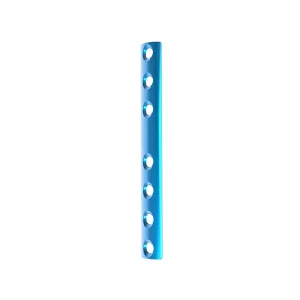
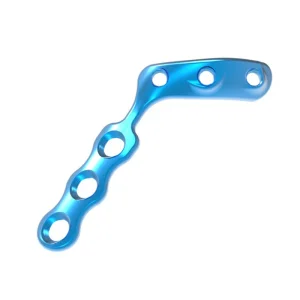
Pre-shaped to mimic the complex anterior-lateral curve of the distal fibula. Features divergent distal locking screw clusters targeting the styloid process and distal articular block to ensure superior pullout strength in comminuted Danis-Weber Type B/C fractures.
Posterolateral Anti-Glide Plate
Indicated for shear fractures of the Volkmann's triangle and posterior malleolar fragments. Acts as an authentic mechanical buttress to eliminate axial displacement, while distal recessed screws avoid joint penetration and flexor hallucis longus impingement.
Medial Malleolar Hook Plate
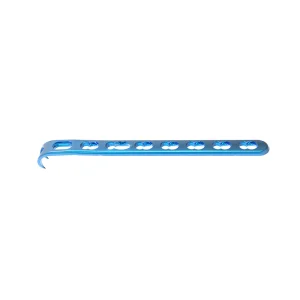
Specially engineered for small avulsion chips or transverse medial fractures where standard screws lack sufficient purchase. Sharp distal hooks grip the distal tip, translating vertical tensile stresses into rigid compressive stability across the fracture gap.
Anterolateral Distal Tibia Plate
High-strength reconstruction plate for high-energy axial load plafond disruptions (AO/OTA 43). Extended proximal shaft provides bridging stability, while multi-planar subchondral locking screws raft and support the joint surface.
Syndesmotic Fixation: Rigid Screws vs. Dynamic Flexible Suture Buttons
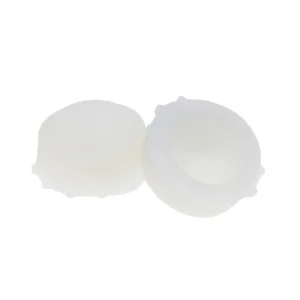
The management of distal tibiofibular syndesmosis disruption remains critical. Factory configurations include both trans-syndesmotic tri-cortical and quad-cortical 3.5mm/4.0mm cortical screws, as well as state-of-the-art titanium dynamic flexible suture-button constructs. Flexible fixation allows physiologic micro-motion and rotation of the fibula inside the incisura tibialis during post-operative weight bearing, eliminating the routine need for secondary hardware removal surgeries while drastically reducing late malreduction rates.
Navigating International Regulatory Gateways: MDR, FDA, and ISO 13485
For healthcare distributors, private-label brand owners, and hospital purchasing consortia, regulatory compliance is non-negotiable. Qualified Chinese manufacturing leaders operate under stringent Quality Management Systems verified by European Notified Bodies and global accreditation institutions.
ISO 13485:2016 Certified Quality Infrastructure
Full design dossier control, process validation, risk management according to ISO 14971, and comprehensive post-market surveillance ensure every batch is manufactured within rigorously validated parameters.
European MDR (EU 2017/745) & CE Documentation
Comprehensive Clinical Evaluation Reports (CER), mechanical fatigue validation per ASTM F382 (Standard Specification and Test Method for Metallic Bone Plates), and biological safety evaluations according to ISO 10993.
Distributor Procurement Audit Checklist
Key criteria international distributors must verify prior to establishing factory-direct supply agreements:
- Mill Test Reports (MTR): Traceability to vacuum arc remelted (VAR) medical-grade titanium ingots with chemical analysis and grain size certification.
- Dynamic Fatigue Performance: ASTM F382 proof of 1,000,000 cycles under cyclical bending moments without micro-crack propagation or plastic deformation.
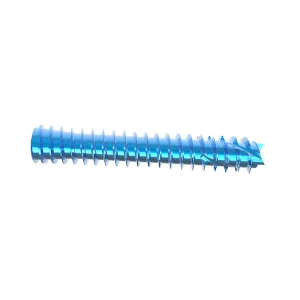
- Screw Locking Interface Integrity: Thread stripping torque testing (ASTM F543) confirming cross-threading prevention up to 3.5 Nm.
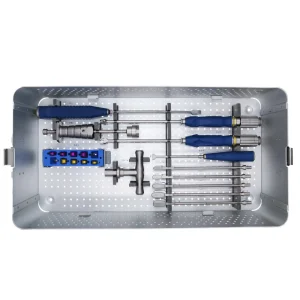
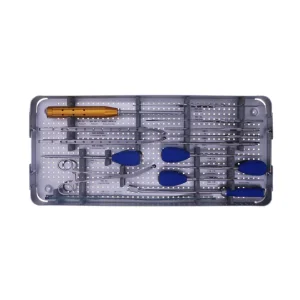
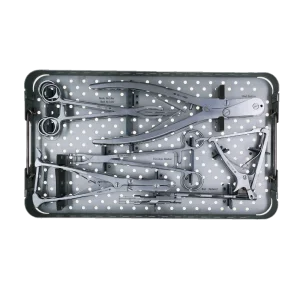
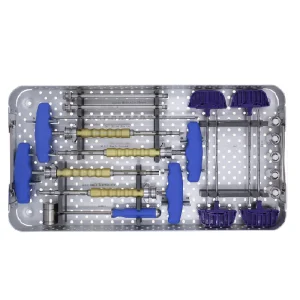
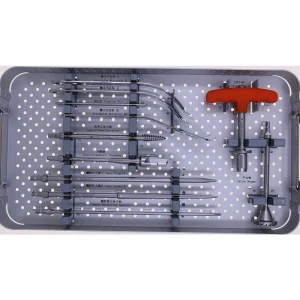
- Instrument Set Ergonomics: Color-coded, hard-anodized instrument trays containing medical-grade silicone handles, self-retaining StarDrive/Torx screwdrivers, and carbon-fiber depth gauges.
- Ethylene Oxide (EtO) Residue Testing: Verification of residual ethylene oxide and ethylene chlorohydrin below limits prescribed by ISO 10993-7.
Future Horizons: Additively Manufactured & Bioresorbable Systems
How next-generation materials and additive industrial printing are shaping the future of extremity fracture reconstruction.
EBM 3D-Printed Trabecular Titanium
Utilizing Electron Beam Melting (EBM) to produce patient-specific and customized osteosynthesis plates with interconnected porous architectures (65% porosity, 400–600μm pore size) that encourage direct bone ingrowth in complex revision surgeries and distal tibial bone-loss scenarios.
Absorbable Magnesium-Zinc Alloys
Pioneering bioabsorbable metallic implants based on high-purity magnesium and rare-earth alloys. These plates provide high-strength fixation for 12 to 18 weeks before degrading harmlessly into bio-compatible ions, permanently eliminating hardware-removal procedures.
AI-Driven PSI & Virtual Templating
Integration of artificial intelligence algorithms that ingest CT DICOM files to auto-segment comminuted malleolar fractures, simulate reduction pathways, and 3D-print patient-specific surgical drill guides (PSI) alongside custom-milled pre-contoured plates.
Frequently Asked Engineering & Sourcing Questions
Direct technical and commercial clarifications tailored for hospital purchasing departments, orthopedic distributors, and implant import specialists.
What are the mechanical advantages of variable-angle (VA) locking over fixed-angle systems?
Variable-angle locking technology permits surgeons to angulate the locking screw up to 15 degrees off-axis in any direction within a 30-degree cone. In distal ankle anatomy, this flexibility is crucial: it enables surgeons to deliberately converge or diverge screws to purchase dense subchondral bone, avoid articular cartilage penetration, cross-fix specific fracture fragments, and steer clear of concomitant syndesmotic fixation screws.
Why is Ti-6Al-4V ELI titanium preferred over stainless steel for distal fibular plates?
The subcutaneous tissue envelope over the lateral malleolus is exceptionally thin, often less than 2-3mm. Ti-6Al-4V ELI exhibits superior tensile strength and fatigue endurance compared to stainless steel, permitting plate profiles to be reduced to 1.5–1.8mm without sacrificing torsional rigidity. Furthermore, its lower elastic modulus minimizes stress shielding, while non-ferromagnetic properties guarantee crisp, artifact-free postoperative MRI and CT diagnostics.
How do Chinese factories maintain batch-to-batch micron-level tolerance consistency?
Tier-1 Chinese manufacturers utilize automated 5-axis Swiss-machining production lines running dedicated CAM algorithms. Optical tool pre-setters and automated laser measuring sensors inspect every cutting tool in real time, auto-compensating for thermal expansion and tool wear. Finished implants undergo 100% automated optical inspection using coordinate measuring machines (CMM) to ensure thread pitch, taper, and plate curvature remain within ±0.005mm of master CAD definitions.
What is the standard regulatory dossier provided for hospital tender registrations?
Standard documentation packages include the ISO 13485:2016 certificate, Free Sale Certificate (FSC), CE certificate under MDR (EU 2017/745), raw material Mill Test Reports (MTR), ASTM F382 static and dynamic bending test reports, ASTM F543 screw insertion/pullout/torsional test data, ISO 10993 biocompatibility dossiers, and validated ISO 11607 sterile packaging shelf-life acceleration reports.
What are the minimum order quantities (MOQs) and lead times for OEM private labeling?
Standard catalog products require no minimum order thresholds and ship within 4 to 6 business days via international air express. For private label OEM/ODM customization (custom laser branding, specialized anodized color coding, modified hole distributions, and bespoke packaging), MOQs typically start at 50 to 100 units per plate specification, with prototype delivery in 14 days and full production turnaround within 30 to 45 days.
How does pre-contoured anatomical shaping eliminate intraoperative plate bending?
Modern locking plates are engineered based on statistical 3D bone morphology databases comprising thousands of CT datasets. By reverse-engineering average skeletal contours, the plate naturally hugs the lateral fibular surface and distal twist without requiring intraoperative bending irons. Eliminating mechanical bending prevents microscopic notch stresses, preserves the structural integrity of internal screw-locking threads, and dramatically reduces surgical anesthesia time.
Comprehensive Surgical Fixation & Instrumentation Solutions
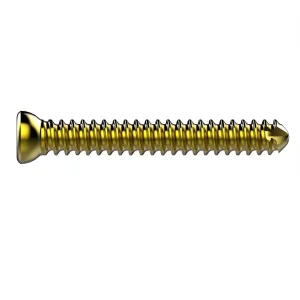
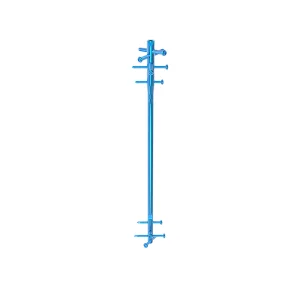
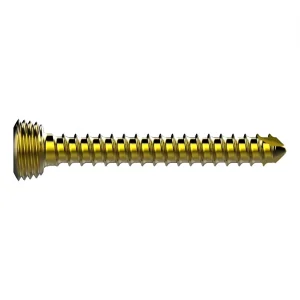
Expand your hospital distribution portfolio with matched surgical instruments, specialized cortical screws, intramedullary nails, and spinal reconstruction hardware.
Request Full Engineering Dossiers & Wholesale Pricing
Direct factory access, customized OEM tray layouts, and comprehensive technical files for distributor tenders. Partner with an ISO 13485-certified medical manufacturing powerhouse.
Download Master Trauma Catalog