
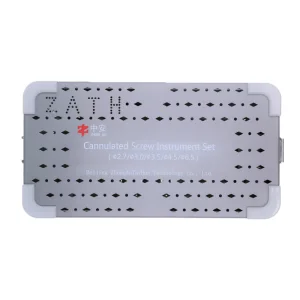
Trauma Suite · Hamburg Special
Standardized modular surgical instrumentation systems calibrated for University Medical Center Hamburg-Eppendorf (UKE), BG Klinikum Boberg, and metropolitan specialized trauma operating theaters.
The Free and Hanseatic City of Hamburg represents one of Central Europe's most concentrated centers for acute trauma care, complex orthopedic reconstructive surgery, and clinical biomechanics. Medical procurement requires uncompromising metallurgical stability, seamless traceability, and rapid instrument replenishment.
Institutions such as the Universitätsklinikum Hamburg-Eppendorf (UKE) and BG Klinikum Hamburg (Boberg) manage high-energy multi-fragmentary fractures, complex pelvic disruptions, and severe polytrauma requiring rapid cannulated guide-wire positioning, minimal periosteal stripping, and reliable torque retention during percutaneous fixation.
With multiple hospital campuses across Hamburg (Altona, St. Georg, Barmbek, Nord-Heidberg, and Wandsbek), surgical instrument procurement demands high standardization across central sterilization units (AEMP/ZSVA) to endure continuous autoclaving cycles without surface pitting or calibration drift.
Operating within the Life Science Nord innovation cluster spanning Hamburg and Schleswig-Holstein, regional distributors and orthopedic clinics enforce strict compliance with European Medical Device Regulation (EU MDR 2017/745), requiring comprehensive technical dossiers and biological evaluation certificates.
Percutaneous cannulated screw fixation is a cornerstone of modern minimally invasive orthopedic surgery (MIOS). Designed to minimize intraoperative soft tissue disruption and preserve vascular supply to critical bone fragments, our instruments support specific clinical workflows.
Geriatric populations treated in Hamburg require rapid internal fixation to facilitate early mobilization and minimize complications associated with prolonged recumbency. Utilizing parallel inverted-triangle three-screw configurations (Φ6.5mm or Φ7.3mm cannulated cancellous screws), the instrumentation set provides parallel guide wire sleeves, calibrated depth countersinks, and high-tensile guide pins that resist cortical deflection during lateral trochanteric entry.
For hand surgery departments, such as those at Asklepios Klinik St. Georg, Herbert-type headless compression screws (Φ2.4mm / Φ3.0mm) demand extreme concentric precision. Our micro-cannulated drills and screwdrivers prevent axial wobble, ensuring the trailing threads fully bury beneath the articular cartilage while generating robust interfragmentary compression across waist and proximal pole fractures.
Pediatric orthopedic interventions require single-screw central pin placement perpendicular to the physis without joint penetration. Cannulated depth measuring gauges with micro-etched laser indices allow Hamburg surgeons to identify exact thread engagement within the capital epiphysis under fluoroscopic guidance, preventing avascular necrosis (AVN) of the femoral head.
Sports-related injuries and degenerative osteoarthrosis commonly treated in Hanseatic athletic clinics demand substantial cross-joint rigidity. Large-diameter Φ7.3mm partially threaded cannulated screws with reverse-cutting flutes can be placed across the talocrural or subtalar joint utilizing our solid-handle cannulated hex or torx drivers that deliver high insertion torque without stripping the screw recess.
Comprehensive configuration guide for orthopedic buyers evaluating instrument alloy chemistry, surface hardness, and surgical compatibility.
| Component / Tool | Raw Material Grade | Surface Treatment / Hardness | Cannulation Bore (Φ mm) | Clinical Role |
|---|---|---|---|---|
| Guide Wire Sleeve (Double / Triple) | AISI 316L / 1.4441 Medical Stainless | Electropolished, Passivated (ASTM A967) | Φ1.1mm / Φ1.6mm / Φ2.1mm | Directs trocar-tip K-wires parallel to fracture vectors |
| Cannulated Step Drill Bits | Custom 455 / 17-4PH Precipitation Hardened | PVD TiAlN Coated / 52-56 HRC | Φ1.2mm / Φ1.8mm / Φ2.2mm | Glides over guide pin, countersinking outer cortex |
| Cannulated Hex / Torx Screwdrivers | High-Yield Surgical Stainless / Titanium Alloy | Micro-Blast Matte Finish / 54 HRC | Full-Length Longitudinal Cannulation | Provides non-slip torsional transmission during final seating |
| Calibrated Direct Measuring Gauge | 304L Medical Grade Stainless Steel | Laser-Annealed Scale Markings (Non-Fade) | Over-Wire Sliding Bore | Measures embedded guide wire depth down to 1.0mm accuracy |
| Reverse Cutting Tap | Custom 465 Medical Instrument Steel | Mirror Polish Flutes / Dual Thread Leads | Central Core Cannulation | Pre-taps hard sclerotic bone to prevent excessive insertion torque |
Beijing ZhongAnTaiHua Technology Co., Ltd. (ZATH) brings over 15 years of dedicated orthopedic manufacturing expertise, combining advanced CNC infrastructure with lean operational workflows to support European medical device distributors and hospital chains.
Cannulated surgical instruments require extreme axial straightness and concentricity over long drill shanks and slender screwdrivers. Our manufacturing facility in Pinggu, Beijing utilizes high-precision Swiss-type turning centers and deep-hole drilling technology. We achieve concentric runout tolerances within ≤0.01mm across cannulated lengths up to 320mm, preventing binding, rotational oscillation, or guide-wire shearing during intraoperative motor drilling.
Every orthopedic implant and instrument undergoes automated ultrasonic degreasing, multi-stage DI water rinsing, and passivation compliant with ASTM F86 standards. We operate ISO 14644-1 Class 7 (Class 10,000) and Class 8 (Class 100,000) cleanrooms for sterile-barrier pouch and blister tray sealing. This delivers operating-room-ready instruments that lower hospital reprocessing overheads and support strict nosocomial infection prevention guidelines.
Looking ahead toward 2026-2030, orthopedic surgery in Northern Germany is rapidly adopting robotic arm assistance and intraoperative CT fluoroscopic navigation. Our R&D engineering department has prototyped radiolucent carbon-fiber drill guides, quick-coupling optical tracking array adapters, and ceramic-coated depth limiters that eliminate electromagnetic interference during computer-navigated percutaneous screw insertion.
Global supply disruptions necessitate reliable, multi-modal supply chains. Leveraging Beijing's air freight corridors and long-term partnerships with DHL, FedEx, and UPS, urgent surgical instrument sets reach Hamburg Airport (HAM) within 4 to 6 business days. For bulk hospital replenishment, sea cargo routes linking Chinese manufacturing ports directly with the Port of Hamburg (Waltershof Container Terminal) offer cost-efficient bulk pallet delivery with complete customs clearance dossiers.
Navigating the transitioning landscape of European medical device regulations demands total transparency from overseas original equipment manufacturers. ZATH operates an audited Quality Management System conforming to ISO 13485:2016, with full device master records (DMR), device history records (DHR), biocompatibility test data under ISO 10993 (cytotoxicity, sensitization, irritation), and steam sterilization validation in accordance with ISO 17665.
Whether configuring tailored surgical cases for specific surgical departments or setting up regional stock distributor agreements across Northern Germany, we maintain a systematic, transparent quoting protocol.
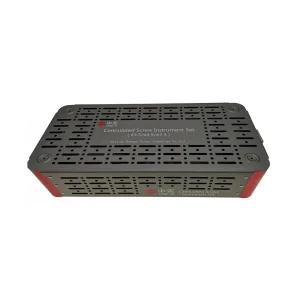
Submit required screw diameters (Φ2.4, Φ3.0, Φ3.5, Φ4.0, Φ4.5, Φ6.5, Φ7.3mm) and corresponding instrumentation requirements: cannulated taps, countersinks, guide sleeves, depth gauges, and sterilization case configurations (aluminum alloy or radel/stainless steel racks).
Specify laser etching needs (distributor brand logos, part reference codes, lot numbers, 2D DataMatrix UDI symbols), custom handle colors (anodized silicone grips), or customized tray layout inserts optimized for German hospital washer-disinfectors (RDG).
Receive transparent tiered volume quotes (FOB Beijing or DAP/DDP Hamburg). Fast-track sample evaluation kits can be dispatched within 48 hours for clinical evaluation by head orthopedic surgeons and central sterilization directors.
Detailed answers addressing regulatory clearance, metallurgical integrity, cleaning and reprocessing validation, and international shipping protocols.
Our modular instrumentation sets are engineered across three standardized clinical tiers: Mini Fragment (Φ2.4mm, Φ3.0mm headless Herbert-type screws for hand, scaphoid, and distal radius fixation), Small Fragment (Φ3.5mm and Φ4.0mm screws for ankle, foot, patella, and radial head fracture reduction), and Large Fragment (Φ6.5mm and Φ7.3mm cancellous screws with 16mm or 32mm thread lengths for femoral neck, sacroiliac joint, and tibial plateau osteosynthesis). Each instrument set includes calibrated guide wire sleeves, graduated cannulated countersinks, depth measurement gauges, and quick-connect cannulated hex/torx screwdrivers specifically toleranced to prevent jamming over high-tensile guide wires.
German central sterile supply departments (ZSVA/AEMP) enforce stringent cleaning standards governed by the Robert Koch Institute (RKI) and DGSV guidelines. Our cannulated instruments feature large internal flush ports, full-length through-cannulations without internal dead spaces, and micro-electropolished inner lumen walls to allow complete detergent penetration and ultrasonic cavitation. Manufactured from corrosion-resistant AISI 316L, 17-4PH, and Custom 455 surgical-grade alloys with automated chemical passivation, they withstand repeated automated washer-disinfection (RDG) and fractional vacuum steam autoclaving at 134°C without discoloration, surface corrosion, or loss of edge sharpness.
Yes. OEM/ODM partnerships constitute a major pillar of our global business. We can customize handle ergonomics (e.g., silicone overmold grips in client-specified colors), quick-coupling connectors (AO Synthes type, Hudson, or Hall couplings), laser-annealed client branding, and custom-milled aluminum or Radel PPSU graphic sterilizing cases. Our engineering design team creates 3D CAD models and prototype samples within 7-10 working days to match exact regional surgical preferences and sterilization rack footprints.
Each delivery is supported by a comprehensive documentation package, including ISO 13485:2016 factory audit certificates, raw material mill test certificates (MTR) verifying chemical composition according to ASTM F899 or ISO 5832 specifications, passivation and heat treatment verification reports, dimensional inspection certificates, and biological safety evaluations. For distributors preparing local dossiers, our regulatory affairs department provides technical files, reprocessing instructions (IFU compliant with ISO 17664), and full risk management documentation (ISO 14971).
Standard instrument sets held in inventory are dispatched within 48 to 72 hours following commercial confirmation. For express hospital replenishment, priority air shipments via DHL Express, FedEx Priority, or UPS Worldwide typically arrive at Hamburg Airport (HAM) within 4 to 6 business days, complete with automated tracking, customs documentation, and HS code classification (9018.90). For large distributor scheduled supply contracts, ocean freight to the Port of Hamburg provides an exceptionally economical logistics corridor with delivery times ranging between 26 and 32 days.
Integrate cannulated screw procedures with complete fracture trauma systems, arthroscopy soft-tissue repair implants, and complex joint revision platforms manufactured under identical ISO 13485 cleanroom controls.
Join hospital networks, medical distributors, and surgical implant providers across Hamburg and Europe benefiting from direct factory pricing, rapid prototyping, and high-precision instrument durability.
Send Inquiry Now