
Cervical Spine
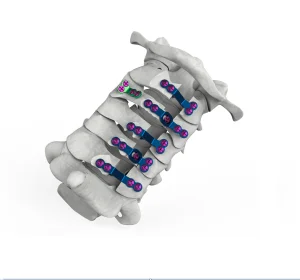
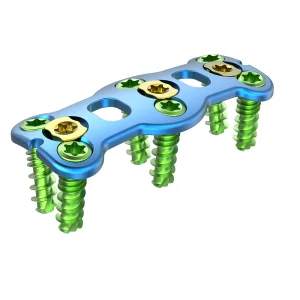
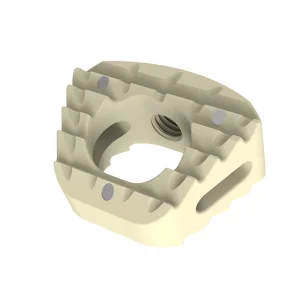
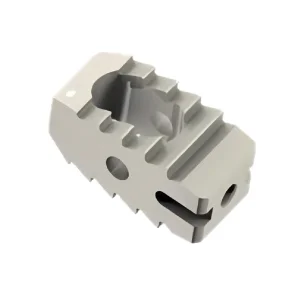
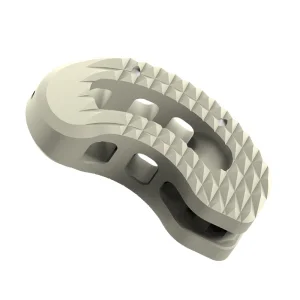
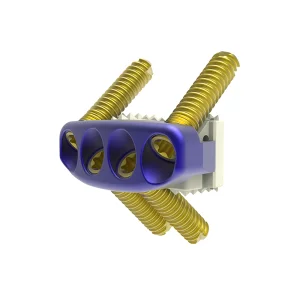
Engineered to satisfy demanding Latin American clinical parameters, our anterior cervical plates, laminoplasty systems, and PEEK interbody cages deliver verified biomechanical stability for Uruguayan neuro-orthopedic procedures.
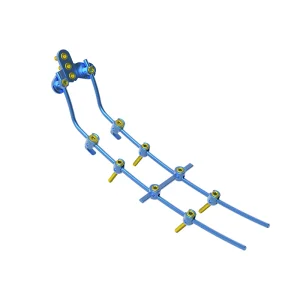
The Oriental Republic of Uruguay possesses one of the most mature, structured, and clinically demanding medical landscapes in the Southern Cone. Unlike many neighboring South American economies, Uruguay is characterized by an advanced demographic transition: over 15% of its 3.5 million citizens are aged 65 or older. This demographic reality drives disproportionate clinical demand for surgical interventions addressing degenerative spine conditions, including lumbar spinal stenosis, degenerative disc disease (DDD), adult spinal deformity, and osteoporotic vertebral compression fractures (VCFs).
Uruguay’s universal healthcare delivery operates through the Sistema Nacional Integrado de Salud (SNIS), dividing patient volume between the public provider—Administración de los Servicios de Salud del Estado (ASSE)—and private non-profit collective healthcare institutions known as Instituciones de Asistencia Médica Colectiva (IAMC) or mutualistas, alongside leading private sanatorios such as Hospital Británico and Sanatorio Americano. Crucially, high-cost, high-complexity surgical treatments are centrally coordinated and funded through the autonomous Fondo Nacional de Recursos (FNR).
The FNR exercises rigorous cost-utility evaluations and stringent technical audits before reimbursing spinal arthrodesis and instrumented stabilization hardware. Consequently, Uruguayan hospital purchasing committees and distribution partners are aggressively seeking direct manufacturer relationships in China. By sourcing directly from Tier-1 Chinese manufacturing platforms like ZATH, procurement leaders eliminate intermediate broker layers, securing premium surgical implants at sustainable economic thresholds without conceding on metallurgical purity, mechanical fatigue life, or clinical safety.
Public tenders and mutualista procurement contracts face capped reimbursement ceilings set by the Fondo Nacional de Recursos. Chinese Class 4.0 medical facilities provide the ideal balance: high-tier Ti-6Al-4V ELI screws and PEEK cages priced 40%–60% below legacy multinational brands, protecting hospital margins while preserving surgeon trust.
Every orthopedic implant deployed in Montevideo or interior departments must comply with Decree 3/008 and Mercosur technical directives. ZATH supports authorized Uruguayan importers with complete technical dossiers, ISO 13485:2016 certificates, Free Sale Certificates (FSC), biocompatibility reports (ISO 10993), and Spanish labeling documentation.
How the Latin American orthopedic sector is shifting away from inflated multinational markups toward direct manufacturing partnerships built on certified metallurgical excellence.
Uruguayan spine surgeons at public university centers like Hospital de Clínicas and private clinics are rapidly migrating from open pedicle screw stabilization to percutaneous cannulated screw-rod assemblies. MIS techniques minimize muscle dissection, decrease surgical blood loss, and shorten post-op hospitalization—an essential priority for IAMC mutualistas seeking to reduce bedsore complications and ICU stays in elderly cohorts.
The clinical standard for cervical and lumbar arthrodesis has moved permanently away from rigid stainless steel. Modern surgical protocols prioritize radiolucent PEEK-OPTIMA implants with tantalum x-ray markers and 3D additive titanium lattices. These materials mimic cancellous bone modulus (3–4 GPa), dramatically mitigating stress-shielding and adjacent segment disease (ASD).
Global supply chain friction, currency volatility, and inflation have made traditional European and North American implant brands prohibitively expensive for Latin American healthcare budgets. Qualified Chinese factories operating with ISO 13485 QMS and CE certifications now represent the primary engine of sustainable procurement for regional tier-1 distributors in Montevideo, Punta del Este, and Salto.
At our state-of-the-art Beijing manufacturing base located in the Zhongguancun Science and Technology Park, Beijing ZhongAnTaiHua Technology Co., Ltd. (ZATH) bridges the gap between surgical clinical demands and high-throughput mechanical production. Employing over 300 biomedical specialists and nearly 100 senior CNC technicians, our vertically integrated plant controls every stage: raw material verification, wire EDM shaping, 5-axis Swiss-lathe processing, chemical surface passivation, cleanroom assembly, and validated double-barrier sterile packaging.
Implant failure is never an option in spinal instrumentation. We utilize exclusively certified medical-grade Ti-6Al-4V ELI (Extra Low Interstitial) titanium alloy adhering to ASTM F136 standards, paired with implantable-grade PEEK polymers. Every raw material bar arrives with complete mill test certificates (chemical spectrometry, ultimate tensile strength, elongation percentage, and metallurgical grain boundary analysis), establishing unbroken lot traceability from raw ingots to the surgical theater.
Our spine stabilization platforms undergo comprehensive multi-axial static and dynamic fatigue testing replicating millions of human physiological loading cycles. Utilizing cyclic servohydraulic load frames, constructs are tested under axial compression, bending, and torsion past 5,000,000 cycles without yield or catastrophic mechanical deformation, ensuring absolute clinical reliability for heavy-labor patients across Uruguay's agricultural and industrial sectors.
Targeted solutions engineered for the operational and surgical protocols of leading Montevideo medical centers and regional departmental sanatorios.
Administered throughout mutualista facilities (e.g., CASMU, Médica Uruguaya) for degenerative cervical radiculopathy. The Shielder ACP Plate System provides an ultra-low profile design to minimize post-operative dysphagia, combined with ZATH PEEK Cages featuring aggressive teeth profiles that resist migration under dynamic neck flexion.
Clinical Node: Montevideo Private HealthcareDesigned for severe burst fractures and thoracic unstable trauma cases managed at national referral public centers. High-strength pedicle screw assemblies and Titanium Reconstruction plates ensure instantaneous rigid fixation across segmental instability, supported by streamlined instrumentation that shortens intraoperative OR time.
Clinical Node: ASSE Emergency Trauma CareAddressing the geriatric rural population in departments like Tacuarembó, Rivera, and Colonia. Our PKP Vertebroplasty / Kyphoplasty Kits allow rapid percutaneous balloon inflation, anatomical height restoration, and controlled polymethylmethacrylate (PMMA) cement delivery under local anesthesia to prevent catastrophic bone collapse.
Clinical Node: Regional Interior ClinicsFor chronic degenerative spondylolisthesis and spinal canal decompressive fusions financed under Fondo Nacional de Recursos programs. ZATH Thoracolumbar Interbody Cages paired with ergonomic screw-rod instrumentation reduce overall hospital procurement expenditure while sustaining long-term arthrodesis success rates.
Clinical Node: FNR Reimbursed Complex ProceduresFully compliant with international CE and ISO quality management guidelines, our extended product matrix provides comprehensive surgical flexibility for multi-specialty orthopedic and spine tenders in Uruguay.
In-depth responses regarding MSP dossier submission, biological safety conformity, surgical instrumentation loaner sets, and customs clearance protocols.