
Famous Hip Joint Replacement Suppliers & Exporters for Mumbai
Empowering Maharashtra’s Tertiary Orthopedic Ecosystem with Class III ISO 13485 Certified Arthroplasty Implants, Advanced Titanium Surface Topography, and Direct B2B Supply Lines.
Primary Hip Replacement & Reconstruction Portfolio for Mumbai
Engineered for immediate clinical deployment across Mumbai's public teaching institutions and premier multi-specialty healthcare networks.
Clinical Demographics, Supply Chains & Biomechanical Imperatives in Mumbai
A multidimensional technical assessment for chief procurement officers, institutional distributors, and joint reconstruction surgeons across Western India.
1. The Clinical Arthroplasty Landscape of the Mumbai Metropolitan Region (MMR)
Mumbai operates as both the financial powerhouse of India and the central surgical gateway for domestic and international medical value travel (MVT). Encompassing top-tier quaternary medical institutions in South Mumbai, Bandra, and Andheri (such as Lilavati, Hinduja, Kokilaben Dhirubhai Ambani, and Nanavati Max), alongside prestigious civic teaching hospitals (such as KEM Hospital, Sion Hospital, and BYL Nair), Mumbai manages an exceptionally dense volume of total hip replacements (THR) and hemiarthroplasties annually.
However, clinical requirements in Mumbai present unique biomechanical challenges. High epidemiological prevalence of secondary osteoarthritis due to steroid-induced osteonecrosis (avascular necrosis / AVN)—accentuated in post-pandemic clinical cohorts—demands implants engineered for younger, active patients. In these populations, maintaining long-term biological fixation and proximal stress transfer is vital to halt femoral head collapse and prevent early aseptic loosening.
2. Morphometric Compatibility: Addressing the Asian Metaphyseal Profile
Standard Western femoral stems often display larger proximal tapers and longer neck offsets that run the risk of canal under-reaming or intraoperative periprosthetic fractures when applied to typical Asian femoral canals. Morphometric audits in Western India consistently highlight smaller canal flare indexes (CFI), lower femoral head radii, and narrower mediolateral dimensions in patients requiring primary interventions.
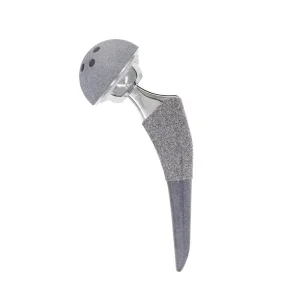
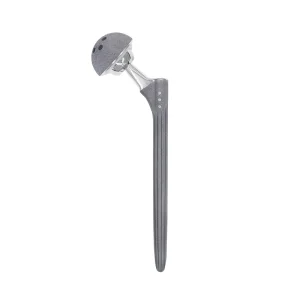
Our JDS and DDS cementless hip stems incorporate a modernized, double-tapered wedge geometry optimized for direct endosteal contact within narrower Asian medullary canals. Machined exclusively from Ti-6Al-4V ELI (ASTM F136), our tapered wedge architecture promotes physiological load sharing, minimizes proximal stress shielding, and supports rotational stability even under aggressive torsional loads common in daily floor-level activities and cross-legged sitting posture.
Plasma-Sprayed Porous Ti & HA
Micro-porous coatings with 30-50% porosity and 150-350 µm pore size facilitate rapid osteoconduction and immediate trabecular ingrowth.
Highly Cross-Linked Poly (XLPE)
Electron-beam radiated XLPE acetabular liners infused with Vitamin E offer superior resistance to oxidation and volumetric wear rates under 10 mm³/year.
CDSCO Regulatory Dossiers
Complete Class C / Class D medical device documentation, CE conformity, ISO 13485 certifications, and batch bio-burden sterilization test reports.
Equipping Hospitals & Surgical Centers in Mumbai?
Speak directly with our bio-mechanical engineers for turnkey hospital consignment or exclusive distribution contracts.
3. Comparative Engineering Matrix: Cemented vs. Cementless Biomechanics
Procurement directors across Maharashtra evaluate total cost of ownership alongside clinical success rates. The table below illustrates the mechanical and clinical parameters governing ZATH hip systems against standard global specifications:
| Implant Specification | DDS Cementless Stem System | TDS Cemented Stem System | Clinical Value Proposition (Mumbai) |
|---|---|---|---|
| Substrate Material | Forged Ti-6Al-4V ELI (ISO 5832-3) | High-Nitrogen CoCrMo (ISO 5832-4) | Optimized modulus vs. superior fatigue strength |
| Surface Topology | Vacuum Plasma Sprayed Hydroxyapatite (HA) | Mirror-Polished Ra < 0.05 µm | Rapid secondary fixation vs. micro-motion friction control |
| Primary Indications | AVN, Primary Osteoarthritis, Dorr Type A/B | Elderly Osteoporotic, Dorr Type C canal | Complete surgical coverage across age demographics |
| Neck-Shaft Angle | 127° Standard & 135° Lateralized | 130° Biomechanical Axis | Precise restoration of femoral offset and leg length |
| Acetabular Articulation | Alumina Ceramic / CoCr on XLPE | CoCr Head on Bipolar Outer Cup | Eliminates osteolysis triggers and debris-induced wear |
4. Technological Roadmap & Arthroplasty Horizon (2026–2030)
The joint replacement sector is moving rapidly beyond standard implants into intelligent, patient-matched reconstructive protocols. ZATH maintains active investment in high-complexity manufacturing domains to prepare surgical supply chains for next-generation orthopedics:
EBM 3D Trabecular Titanium
Electron Beam Melting creates random cellular microstructures closely mirroring natural cancellous bone, with 70%+ interconnected porosity.
Robotic Arm Alignment
Developing universally calibrated end-effectors and navigation tracker registries for precision autonomous robotic milling systems in Mumbai.
Patient-Specific 3D Reconstructions
CT-to-implant custom revision augments, triflange cups, and custom stems engineered for extreme pelvic discontinuity and bone defect cases.
Smart Telemetric Biosensing
Integration of passive RFID micro-transponders within stem tapers for long-term monitoring of periprosthetic load shifts and early infection diagnostics.
5. Scalable B2B Consignment & OEM Solutions for Indian Exporters
In accordance with India’s Medical Devices Rules (MDR) and CDSCO licensing frameworks, regional orthopedic enterprises require rock-solid manufacturing continuity. ZATH's OEM/ODM vertical in Beijing delivers end-to-end device realization: multi-axis Swiss-machining, laser-marking, proprietary double-barrier medical Tyvek sterile packing, and pre-formatted Dossiers compliant with ASEAN Common Medical Device Templates (CSDT).
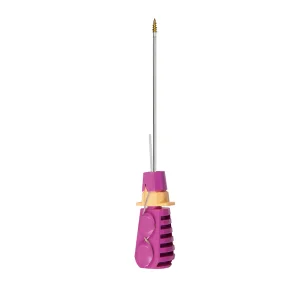
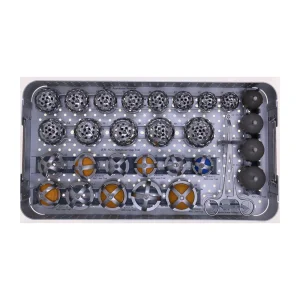
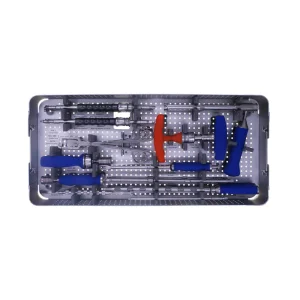
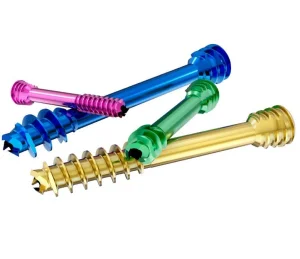
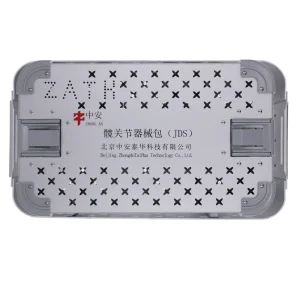
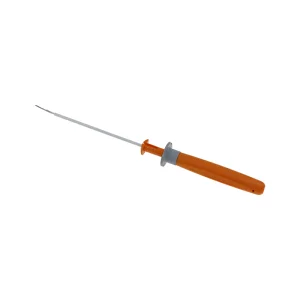
Specialized Surgical Implants & Universal Instrument Sets
Complete instrumentation, trauma stabilization pins, and spine/sports systems built under ISO 13485 standards for Mumbai distributors and institutional exporters.


Frequently Asked Questions for Mumbai Distributors & Hospitals
Key regulatory, clinical, and freight logistics data for prospective distributors across Maharashtra.
How do ZATH hip joint implants comply with Indian CDSCO regulations?
Our Class III hip systems (both cemented and cementless) are supported by exhaustive regulatory files that fulfill the requirements of India's Medical Device Rules (MDR). We furnish full ISO 13485:2016 certifications, Device Master Files (DMF), biocompatibility records (ISO 10993), clinical evaluation reports, and Free Sale Certificates (FSC) to assist Indian authorized agents in securing CDSCO import licenses swiftly.
What are the freight options and lead times to Chhatrapati Shivaji Maharaj International Airport (BOM)?
We work with air-express carriers (DHL Express, FedEx, UPS) as well as scheduled air-cargo lines connecting directly to Mumbai (BOM). Typical transit duration for sterile, packaged implants is 4 to 6 business days from our Beijing facility. For full container shipments of matched surgical instrumentation and heavy consignment stocks, direct maritime routes reach Nhava Sheva (JNPT) within 16-22 days.
How does the DDS Cementless Stem accommodate the morphometry of Indian patients?
The DDS system employs an evolutionary proximally-tapered wedge geometry specifically calibrated to optimize primary press-fit stability in Dorr Type A and B femoral canals, which are common among Indian patients presenting with AVN. Reduced distal dimensions prevent distal canal binding and thigh pain while preserving metaphysical bone stock for future revisions.
Can Mumbai-based healthcare providers brand or customize instrument sets?
Yes. As a primary manufacturer, ZATH provides full OEM/ODM branding services. We support custom laser-marking of corporate logos, custom tray layout configurations, and localized labeling matching hospital group requirements, all executed under strict ISO 13485 cleanroom and quality parameters.
What surface coating technologies are applied to the femoral stem and acetabular shell?
Our cementless cups and stems undergo vacuum plasma spraying to apply a titanium porous layer overlaid with high-purity Hydroxyapatite (HA) with an average roughness (Ra) of 4.5–6.0 µm. This micro-texture creates the optimal substrate for rapid bone ongrowth, accelerating osseointegration and lowering early migration indices.
How does ZATH safeguard against wear-induced osteolysis in younger patients?
Our acetabular liners use ultra-high molecular weight polyethylene cross-linked through high-dose electron radiation (XLPE) and thermally stabilized to neutralize free radicals. Paired with our mirror-finished Alumina Ceramic or CoCr 28mm/32mm/36mm heads, the system achieves negligible wear rates that support active lifestyle demands.