
Precision Trauma & Reconstructive Implants
Explore our foundational upper-extremity, joint, and spinal fixation devices engineered for superior biological stability and operative efficiency.
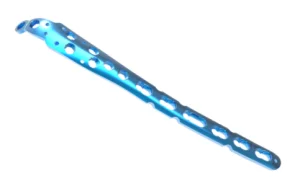
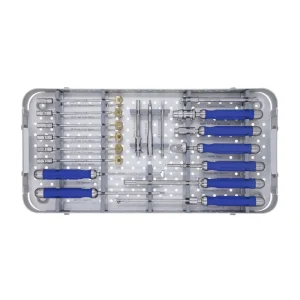
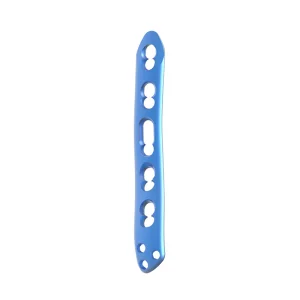
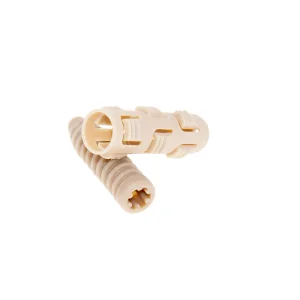
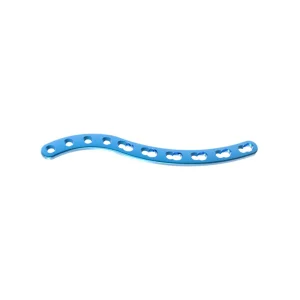
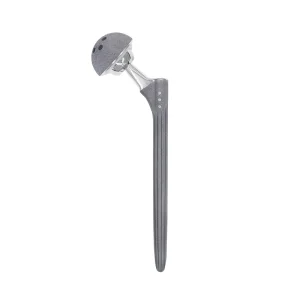
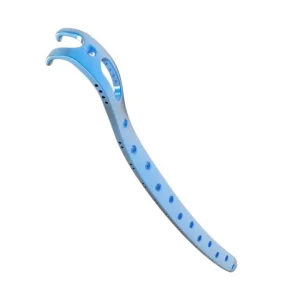
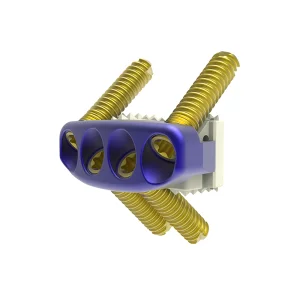
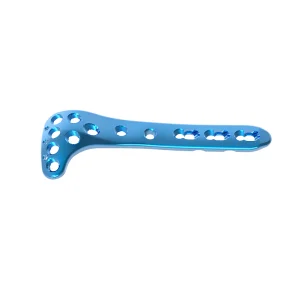
Distal Radius T Plate Engineering: Anatomic Fixation Paradigm
Distal radius fractures represent over 17% of all emergency orthopaedic fracture admissions globally. The distal radius T plate provides the structural cornerstone for open reduction and internal fixation (ORIF).
Volar Watershed Line Alignment
Our distal radius T plate profiles are tapered distally to prevent irritation of the flexor pollicis longus (FPL) and flexor digitorum profundus (FDP) tendons, facilitating sub-watershed placement and eliminating secondary tendon ruptures.
Subchondral Multi-Angle Support
The transverse bar of the T configuration houses precision threaded combi-holes designed to hold low-profile locking screws. This locks the subchondral bone raft, restoring volar tilt, radial height, and articular congruity even in osteoporotic bone.
Dynamic Radial Compression
The longitudinal plate stem features dynamic elongation slots permitting anatomical plate repositioning before locking. Combined cortical and locking screw purchase delivers controlled axial compression across metaphyseal comminutions.
| Design Parameters | ZATH Distal Radius T Plate Standards | Clinical Advantages |
|---|---|---|
| Raw Material Formulation | Ti-6Al-4V ELI (ASTM F136) / Implant-grade 316L Stainless Steel (ASTM F138) | High fatigue strength, low elastic modulus minimizing stress shielding, optimal MRI compatibility. |
| Profile Thickness & Edge Geometry | 1.5 mm – 2.0 mm low-profile, double-beveled rounded perimeter | Suppresses soft-tissue impingement, reduces postoperative tenosynovitis, conforms to anatomy. |
| Screw Configuration | 2.4 mm / 2.7 mm subchondral distal locking; 3.5 mm shaft cortex/locking | Uncompromised mechanical hold in bone comminution; prevents cross-threading during rapid insertion. |
| Surface Passivation & Finish | Electropolished, Type II Anodization (Ra < 0.4 µm) | Minimizes bacterial adhesion, promotes cellular biocompatibility, ensures corrosion resistance. |
Distal Radius Plating in Global Healthcare Delivery
How healthcare ecosystems in North America, Europe, APAC, and LATAM balance surgical outcomes with cost pressures, and how specialized suppliers bridge the gap.
Ambulatory Surgical Centers (North America & Europe)
The global shift toward outpatient hand surgeries requires pre-sterilized, single-use, traceable kit configurations. ZATH provides gamma-sterilized blister kits with matching single-patient torque-limiting drivers to minimize autoclaving overhead.
Demographic Shifts in APAC & Latin America
Rising osteoporotic fragility fractures in aging demographics demand robust angular stability at accessible procurement costs. Our T plates integrate divergent locking screw trajectories to maximize bone purchase in comminuted dorsal cortex fractures.
Tender Procurement & Universal Sets
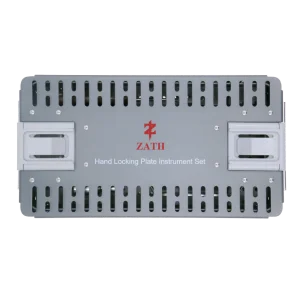
Public hospital tenders require high modularity. ZATH supplies unified compact instrument sets compatible with 2.4/2.7/3.5 mm platforms, reducing cross-hospital tray inventories while delivering consistent lot traceability.
China Factory Resilience & High-Precision Production
Headquartered in Pinggu Park, Zhongguancun Science and Technology Park, Beijing, ZATH combines advanced multi-axis CNC tooling with a closed-loop quality ecosystem.
Integrated Multi-Axis Swiss CNC Machining
Equipped with high-precision multi-axis turning and milling centers, our factory produces complex contoured distal radius T plates with tolerances under ±5 microns. Thread geometries are calibrated for effortless screw locking without cold welding.
Tier-1 Raw Material Supply Security
We source medical-grade titanium and stainless steel directly from verified mill vendors with complete metallurgical and chemical assay certificates. Strict incoming inspection prevents material porosity and ensures uncompromised plate fatigue cycles.
Rapid Prototype-to-Bulk Agile Scaling
With an in-house engineering squad of nearly 100 technicians, ZATH transforms custom CAD profiles into clinical samples within 14 days, supported by rapid mold production, automated deburring, and cleanroom packaging facilities.
15+
Years Orthopedic Specialization
300+
Specialized Personnel & QA Engineers
100%
Lot-Traceable Cleanroom Sterilization
4-6 Days
Global Express B2B Delivery
Technological Evolution of Distal Extremity Fixation
The convergence of additive manufacturing, digital surgical planning, and surface nano-engineering is reshaping distal radius repair.
Patient-Specific 3D EBM/SLM Printing
For complex malunions and intra-articular shearing injuries, our advanced pipeline translates 3D CT reconstructions into tailor-made trabecular titanium distal plates, optimizing load transfer across delicate radial styloid fragments.
Bio-Absorbable Magnesium Composites
ZATH’s biomaterials division is pioneering clinical trials on degradable magnesium-zinc alloys for non-load-bearing metaphyseal plates, removing the need for secondary hardware removal surgery and eliminating long-term foreign body risks.
Smart Navigation & AR Pre-Bending
Upcoming system iterations feature intraoperative augmented reality (AR) calibration, enabling surgeons to match plate contouring against virtual bone reconstructions, ensuring anatomical screw trajectory without fluoroscopic trial-and-error.
Global Medical Compliance & Distributor Partnership
Procuring orthopedic implants requires full regulatory documentation. ZATH empowers international hospital partners with end-to-end technical file packages and turnkey OEM/ODM services.
Complete Regulatory Dossiers
We supply authenticated ISO 13485 QMS records, UDEM certifications, and Free Sale Certificates (FSC) to accelerate regional registrations across Latin America, Southeast Asia, the Middle East, and Eastern Europe.
Clinical Training & Surgical Workshops
Distributors receive full CAD surgical technique guides, animated operative videos, sawbones training kits, and remote biomedical engineering support to train local orthopedic teams and scrub nurses.
Customized OEM/ODM Private Labeling
From custom laser marking and anodized plate color variants to regional sterile Tyvek blister packaging and box design, we turn your brand vision into compliant, commercial-ready orthopedic solutions.
Comprehensive Extremity, Joint & Specialized Systems
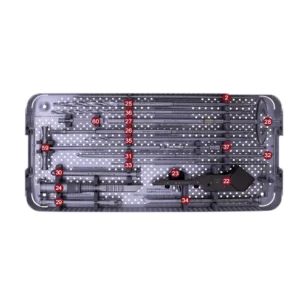
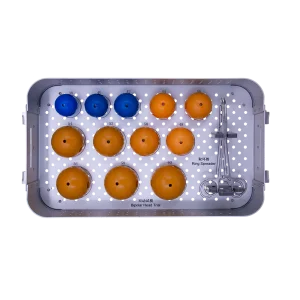
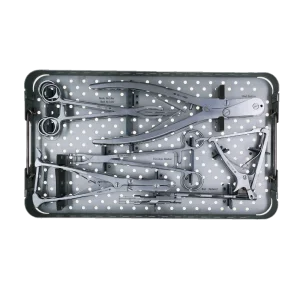
Pair distal radius trauma solutions with our certified high-performance knee, tibial, intramedullary, and soft tissue instrumentation platforms.
Distal Radius T Plate FAQ: Sourcing & Engineering
Essential guidance for hospital tenders, orthopaedic procurement teams, and commercial distributors.
Why is a distal radius T plate preferred over standard straight plates for metaphyseal fractures?
The distal radius widens significantly at the metaphyseal-epiphyseal junction. A straight plate provides inadequate lateral and medial screw spread. The distal radius T plate features an expanded transverse head with multiple cross-locking screw holes. This configuration creates a solid subchondral structural shelf beneath the articular surface, offering superior resistance against axial collapse and secondary intra-articular displacement.
How does ZATH prevent flexor tendon irritation with its distal radius T plate designs?
Flexor Pollicis Longus (FPL) tendon rupture is a well-documented risk during volar distal radius plating if the plate crosses the watershed line. ZATH precision-mills plates with a low-profile thickness (1.5–2.0 mm), fully rounded and electropolished perimeter borders, and a distal edge that tapers smoothly toward the pronator quadratus insertion. This enables secure sub-watershed placement and reduces friction against gliding tendons.
What quality management certifications and traceability back ZATH implants?
ZATH operates an ISO 13485-certified medical device quality management system. Implants are certified under UDEM and backed by official Free Sale Certificates (FSC). Each distal radius T plate carries a laser-etched Data Matrix code alongside its lot number, ensuring 100% material traceability from raw certified titanium bar stock to finished sterile-barrier packaging.
Can ZATH accommodate OEM/ODM customization for specialized trauma distributors?
Yes. Our in-house research, development, and tooling facility supports bespoke hole counts, custom plate curvatures, specialized screw-locking angles, and branded anodization finishes. We also supply custom graphic sterile Tyvek packaging, multi-language IFUs (Instructions for Use), and surgical case sets configured to regional distributor requirements.
What is the standard delivery timeline for international bulk and sample orders?
Stocked catalog plates, screws, and instrument sets dispatch rapidly, reaching international destinations within 4 to 6 business days via DHL, FedEx, UPS, or TNT express air logistics. Custom OEM/ODM production batches typically transition from verified CAD approval to delivered clinical evaluation lots in 3 to 5 weeks.