Precision Implants & Locking Fixation Platforms
Explore sterile-ready titanium and cobalt-chrome orthopedic systems engineered under certified ISO 13485 cleanroom conditions for worldwide trauma, joint, and spinal surgeries.

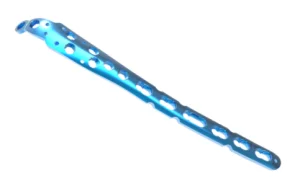
Technological Evolution of Medical Bone Plates
From rigid dynamic compression to biologically optimized internal fixators: how biomechanics, advanced metallurgy, and modern surface treatments define next-generation patient outcomes.
Dynamic vs. Locking Mechanics
Conventional dynamic compression plates (DCP) relied entirely on frictional resistance generated by pressing the plate against periosteal bone. This frequently strangled local vascular supply and induced osteopenia beneath the implant.
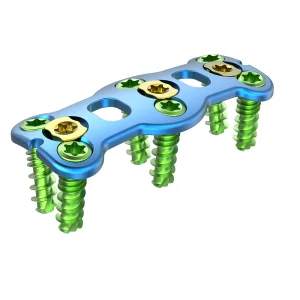
Modern Locking Compression Plate (LCP) systems utilize threaded screw-to-plate hole interfaces, converting the plate into a fixed-angle construct or "internal fixator." This preserves periosteal blood flow, accelerates secondary callus formation, and prevents secondary reduction loss even in osteoporotic or comminuted metaphyseal bone.
- Preservation of periosteal blood microcirculation
- Fixed-angle stability without excessive torque
- Elimination of screw loosening under angular load
Biomaterial Selection Standards
Top-tier manufacturing demands medical-grade titanium alloy (Ti-6Al-4V ELI conforming to ASTM F136 / ISO 5832-3) and implant-grade 316LVM stainless steel (ASTM F138 / ISO 5832-1). Titanium's lower elastic modulus (~110 GPa) mirrors natural human cortical bone (~18-20 GPa) far closer than stainless steel (~210 GPa).
This critical mechanical attenuation mitigates stress shielding, minimizes subsequent hardware-removal cortical refracture, and exhibits superior magnetic resonance imaging (MRI) compatibility with negligible image artifacting during diagnostic postoperative evaluations.
- Extra Low Interstitial (ELI) titanium purity
- High notch-fatigue endurance limit under cyclical gait
- Negligible nickel leaching compared to standard alloys
Surface Passivation & Anodization
The biological interface dictates long-term chemical stability. Medical plate facilities must execute electrochemical Type II Anodization (AMS 2488D) and acid bath chemical passivations conforming to ASTM F86.
This process thickens the protective titanium dioxide (TiO₂) ceramic passive layer, suppresses fretting corrosion between plate-hole threads and screw heads, minimizes cytopathic ion migration, and prevents plate-to-bone cold welding during future revision interventions.
- Elimination of microscopic galling & fretting fatigue
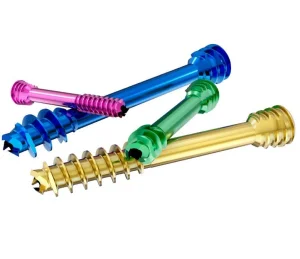
- Color-coded anatomical profiling by diameter
- Enhanced biocompatibility for long-term implantation
Global Enterprise Procurement Framework
B2B hospital groups, national tenders, and multinational distributors require exhaustive documentary and operational validation. Here is the technical rubric for vetting plate manufacturers.
| Evaluation Parameter | International Standard | Tier-1 Factory Benchmark (e.g. ZATH) | Sub-Standard Competitor Risk |
|---|---|---|---|
| Raw Material Traceability | ASTM F136, ISO 5832-3 | Original vacuum-arc-remelted (VAR) bar stock with 100% heat-lot mill certificates | Recycled grade sponge titanium prone to internal voids, micro-fissures, and catastrophic bending fracture |
| Bending & Fatigue Life | ASTM F382, ISO 9585 | Dynamic 4-point bending testing exceeding 1.2×10⁶ cycles at 75% yield stress | Failure at <300,000 cycles, causing early construct collapse prior to skeletal union |
| Dimensional Precision | ISO 2768-mK / CMM Laser | Thread pitch tolerance within ±0.005mm; non-contact optical multi-axis inspection | Thread binding, cross-threading during surgery, cold seizure, and stripped screw heads |
| Sterilization Packaging | ISO 11607-1/2, EN 868 | Double blister medical-grade Tyvek® packaging in ISO Class 7/8 cleanrooms | Non-sterile bulk bagging requiring manual hospital autoclaving; contamination risk |
| Regulatory Master Files | ISO 13485, CE MDR, FDA | Complete Technical Documentation Files (TDF), biocompatibility dossiers, and FSC | Rejection by regional customs authorities (e.g., ANVISA, SFDA, COFEPRIS, CE-MDR) |
China Industry 4.0: Resilience, Scale & Precision
How Beijing and high-tech biomedical hubs have restructured global orthopedic value chains from low-cost casting to automated multi-axis precision engineering.
5-Axis CNC & Swiss Wire EDM
Modern Chinese plants employ coordinated multi-axis CNC machining centers (e.g., Citizen, Star, DMG Mori) capable of simultaneous anatomical contour profiling, thread tapping, and combi-hole milling within a single clamping setup.
Eliminating multiple workholding transfers reduces cumulative geometric positioning error to under 5 microns, safeguarding exacting tolerances across complex metaphyseal contours.
Full-Stack Traceability
From raw titanium sponge processing to vacuum induction melting and ultrasonic bar defect scanning, Chinese clusters maintain an integrated internal manufacturing chain.
At factories like ZATH (operating in Zhongguancun Science Park since 2009 with over 300 personnel), every single batch undergoes optical coordinate measuring (CMM) and digital batch tracking, ensuring zero lot mixing.
Lead-Time Compression
Western contract manufacturers often quote 24 to 36 weeks for tooling, custom prototype runs, and volume production. Industry 4.0 Chinese factories execute rapid prototyping in 7 working days, with mass production runs delivered in 4 to 6 weeks.
Rapid setup amortizes non-recurring engineering (NRE) charges, enabling distributors to respond flexibly to evolving tender specifications.
35-50% Total Cost Advantage
Intelligent automation, coupled with China's high industrial concentration, reduces production overhead without sacrificing metallurgy or cleanroom protocols.
Distributors and OEM brands secure tier-1 quality implants at 35% to 50% below European and North American quotes, preserving robust operating margins in tender-driven markets.
Anatomical Scenarios & Regional Procurement Realities
Examining how customized medical plate geometries address specific skeletal pathologies while aligning with local healthcare economic structures across major continents.
Proximal Ulna & Olecranon Locking Plates
Clinical Focus: Comminuted olecranon fractures, Monteggia fracture-dislocations, and proximal ulna osteotomies. Demands low-profile anatomically pre-contoured plates to avoid skin irritation over the subcutaneous olecranon border.
Engineering Detail: Divergent proximal screw placement anchors fragments without articular joint penetration, while combi-holes in the shaft accommodate both cortical compression and variable-angle locking screws.
Distal Medial/Lateral Femur Plates
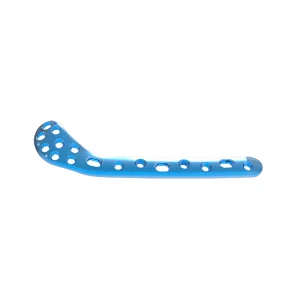
Clinical Focus: Distal supracondylar femoral fractures and peri-prosthetic revisions adjacent to total knee implants. Multi-plane screw purchase provides angular stability against extreme physiological valgus/varus torque.
Engineering Detail: Polished tapered ends facilitate minimally invasive plate osteosynthesis (MIPO) subcutaneous insertion, preserving periosteal hematoma and minimizing soft-tissue trauma.
Anterior Cervical Plate (ACP) Systems
Clinical Focus: Multilevel anterior cervical discectomy and fusion (ACDF) for degenerative disc disease or traumatic instability. Requires ultra-low profile (≤2.0mm) to minimize postoperative dysphagia and soft-tissue impingement.
Engineering Detail: Visual integrated anti-backout locking mechanisms guarantee absolute screw retention without secondary locking tabs that might detach into the retropharyngeal space.
Regional Commercial Realities: North America & Europe
Western markets prioritize complete CE MDR (EU 2017/745) Class IIb documentation and FDA 510(k) clearances. With Western OEM prices escalating, health networks and GPOs actively explore certified contract manufacturers in China for private-label value lines to sustain profitability in ambulatory surgical centers (ASCs).
Regional Commercial Realities: Latin America & Middle East
Distributors in Brazil (ANVISA), Mexico (COFEPRIS), and Saudi Arabia (SFDA) require factory ISO 13485 audit reports and Free Sale Certificates (FSC). Hospitals prioritize pre-sterilized blister packaging to alleviate constrained sterilization capacities in public tertiary care centers.
Factory Quotation Anatomy: What Shapes Your Unit Price?
Understanding cost drivers in precision implant production enables procurement teams to negotiate and structure RFQ inquiries with complete commercial clarity.
1. Raw Material Grade
Certified Ti-6Al-4V ELI (Grade 23) bar stock costs 25-40% more than non-medical Grade 5 titanium due to stringent vacuum remelting and interstitial gas limits (O, N, C, H, Fe). This metallurgy is essential to withstand physiological bending fatigue.
2. Multi-Axis CNC Cycle Time
Complex anatomical 3D contours with dual-threaded variable locking holes require up to 45 minutes of spindle time per plate. Advanced 5-axis simultaneous surfacing adds machining overhead, but eliminates manual post-bending in the operating room.
3. Packaging & Sterility Validation
Non-sterile bulk plate shipments represent the baseline quotation. Pre-validated sterile double-blister Tyvek® packaging with ethylene oxide (EtO) or Gamma irradiation processing adds $2.50 to $4.80 per unit, while eliminating hospital sterilization liability.
Frequently Asked Questions for Device Importers
Essential guidance on minimum order quantities, customization parameters, quality registrations, and shipment dynamics directly from the factory floor.
What critical certifications are required when importing orthopedic bone plates?
Can medical plate manufacturers customize plate profiles under OEM/ODM terms?
What is the standard Minimum Order Quantity (MOQ) for factory direct quotes?
Why are titanium locking plates preferred over stainless steel in modern trauma fixations?
What is the standard lead time for global express deliveries?
Specialized Trauma, Spinal & Joint Systems
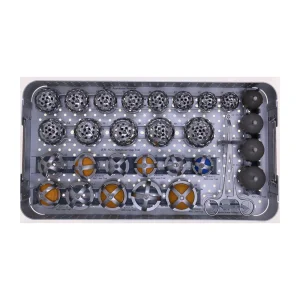
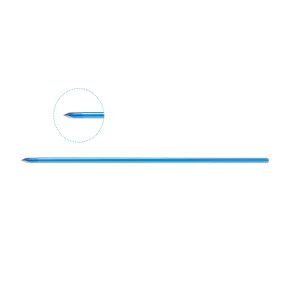
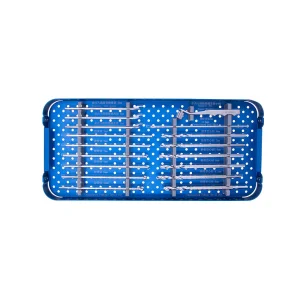
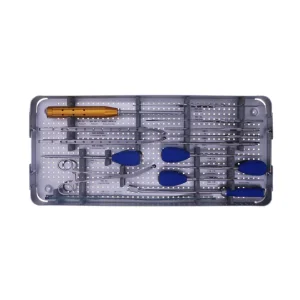
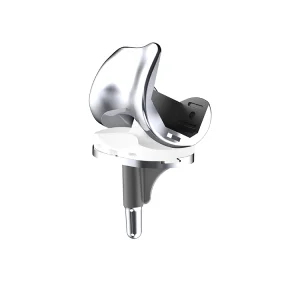
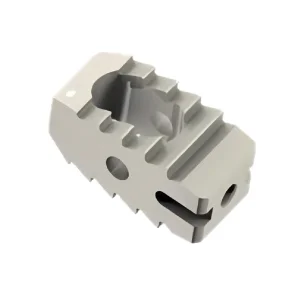
Review comprehensive surgical instrument caddies, cervical anterior plates, reconstruction pins, and reconstructive implants manufactured for global healthcare suppliers.