
Joint Arthroplasty
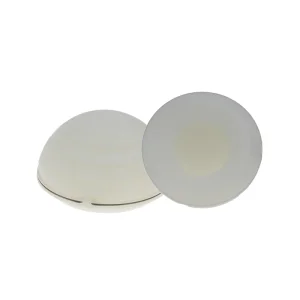
Explore precision-engineered orthopedic implants and specialized instrumentation platforms certified for international hospital distribution and OEM contracts.
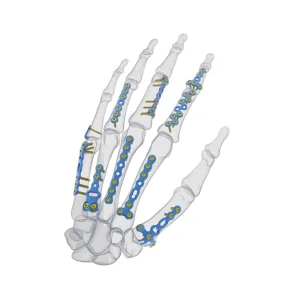
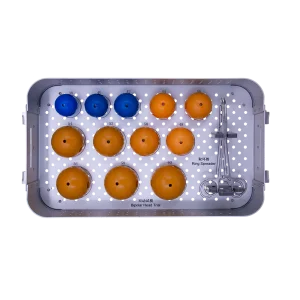
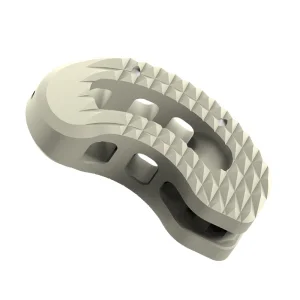
Hand and wrist fractures constitute nearly 28% of all skeletal trauma cases presenting to emergency departments globally. Within this segment, the shift toward rigid internal fixation with miniature low-profile locking plates has reshaped hospital procurement mandates worldwide.
Metacarpal and phalangeal fractures represent over 10% of all human bone fractures. Rapid industrialization, mechanized manufacturing operations, extreme sports, and traffic incidents generate complex comminuted fractures requiring open reduction and internal fixation (ORIF) over closed reduction casting.
Global public healthcare systems and private orthopedics groups are moving away from Kirschner wires (K-wires) due to high pin-tract infection rates (up to 7%) and secondary displacement. Low-profile titanium mini-plate sets now account for over 64% of surgical hand trauma expenditure.
With the enforcement of the EU Medical Device Regulation (MDR 2017/745) and stringent FDA 510(k) Class II requirements, medical suppliers must demonstrate rigorous clinical equivalence, mechanical fatigue testing (ASTM F382), and pristine bio-burden validation.
Clinical Insight: Unlike femoral or tibial diaphyseal plates where static load tolerance dominates, hand fixation plates must strike an intricate biomechanical balance: offering sufficient angular rigidity to prevent rotational malunion while remaining sub-millimeter thin to eliminate extensor and flexor tendon impingement.
Small bone fixation requires exacting tolerances. A hand plate failure results in tendon adhesion, rotational deformity, and severe loss of hand dexterity. Below is an engineering breakdown of the metallurgical characteristics and screw-plate dynamics.
| Material Specification | Tensile Strength (MPa) | Elastic Modulus (GPa) | Biocompatibility & MRI Safety | Primary Clinical Application |
|---|---|---|---|---|
| Ti-6Al-4V ELI (Grade 23 / ASTM F136) | ≥ 860 | 110 - 114 | Exceptional; Zero ferromagnetic artifact; Certified 3.0T MRI safe | High-stress metacarpal shaft and peri-articular comminuted plates |
| Pure Titanium (Grade 4 / ISO 5832-2) | ≥ 550 | 105 | Superior tissue integration; Excellent intraoperative malleability | Phalangeal avulsion, lateral strut, and delicate dorsal web plates |
| Stainless Steel 316LVM (ASTM F138) | ≥ 800 | 190 - 200 | Good; Mild MRI scatter; Higher stiffness can induce stress shielding | Cost-sensitive basic trauma programs; pediatric temporary constructs |
| Bioresorbable PLGA / Magnesium Alloy | ≥ 280 | 40 - 45 | Full physiological degradation; eliminates secondary hardware removal | Low-load pediatric osteotomies; non-displaced condylar avulsions |
Traditional non-locking hand plates rely on bone-to-plate friction produced by screw torque. This compromises local periosteal micro-vasculature. Modern locking mini-systems create a fixed-angle construct where the threaded screw head locks securely into the plate hole. This converts sheer stresses into compressive loads across the fracture without compressing the periosteum, accelerating clinical union by up to 35%.
ZATH precision hand fracture solutions feature variable-angle (VA) locking technology allowing a ±15° angulation cone. This permits orthopedic hand surgeons to accurately capture small articular fragments (such as base-of-metacarpal avulsions or condylar splits) without cross-threading the plate, preventing screw convergence within cramped joint capsules.
China's orthopedic industrial base has evolved from basic component contract-machining into a vertically integrated, ISO 13485-certified hub utilizing 5-axis Swiss-type machining and automated cleanroom packaging.
Traceable medical-grade titanium bars (ASTM F136 ELI) undergo chemical spectroscopy and ultrasonic flaw detection.
Precision turning of 1.0mm - 2.4mm locking screws with Torx (Star) drive recesses holding ±0.005mm tolerances.
Plate blanks milled with 3D anatomically pre-contoured cambers, chamfered low-profile edges, and threaded screw holes.
Controlled electrochemical passivation and color-coding by screw diameter (e.g., 1.5mm gold, 2.0mm blue, 2.4mm green).
Ultrasonic solvent cleaning, bioburden testing, and double sterile-barrier blister packaging with Tyvek® lids.
Direct sourcing from Beijing high-tech manufacturing parks eliminates middleman markups, enabling hospital tenders and international distributor networks to achieve superior margins without sacrificing clinical tolerances.
Full support for private-label laser etching, custom plate profiles (e.g., specialized boxer fracture plates), customized screw caddies, and bespoke graphic sterilization containers matched to hospital autoclave limits.
Shortened mold-design and CNC programming lifecycles mean new plate geometries can transition from surgeon CAD sketches to clinical trial batches in under 6 weeks, compared to 9 months in Western Europe.
Small bone anatomy dictates precise structural variation. Hand fixation plates cannot be universally flat; each sub-segment demands dedicated mechanical geometry to facilitate rapid functional rehabilitation.
Plate Morphologies: Straight 4-to-8 hole plates, Y-plates, and Web-plates (1.5mm / 2.0mm system).
Indication: Boxer's fractures (5th metacarpal neck), transverse diaphyseal breaks, and spiral rotational fractures.
Biomechanical Objective: Neutralizes torsional and bending forces while allowing immediate active finger flexion without splinting.
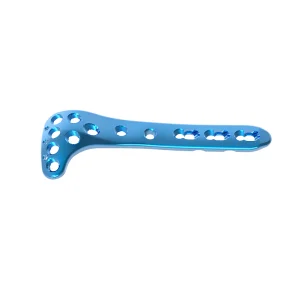
Plate Morphologies: Ultra-thin T-plates, L-plates, and lateral strut plates (0.8mm - 1.0mm thickness).
Indication: Proximal and middle phalanx comminuted base, shaft, or unicondylar split fractures.
Biomechanical Objective: Placed laterally beneath the lateral bands to prevent extensor tendon scarring and PIP joint contracture.
Plate Morphologies: Pre-angled fusion plates (P1/P2 arthrodesis, CMC thumb joint fusion).
Indication: Post-traumatic arthritis, severe rheumatoid swan-neck deformity, and scaphoid non-unions.
Biomechanical Objective: Delivers continuous interfragmentary dynamic compression to accelerate solid bone bridge fusion.
Soft Tissue Preservation: Over 70% of post-operative complications in hand surgery stem from extensor tendon adhesions. ZATH hand plates incorporate continuous round-edge chamfering and countersunk screw recesses to ensure the extensor hood glides smoothly across the plate surface with zero frictional tenosynovitis.
From additive manufacturing to digital pre-operative planning, hand surgery is transitioning from generic manual bending to patient-matched, biologically active implant platforms.
Selective Laser Melting (SLM) enables the production of trabecular titanium bone plates for massive blast injuries or oncology reconstructions, integrating porous scaffold architectures that promote direct osteoblast ingrowth.
Hospitals are rapidly adopting pre-sterilized, single-procedure hand trauma kits containing one pre-contoured plate and appropriate screws. This eliminates hospital autoclave reprocessing costs, lowers CSSD labor, and guarantees zero surgical site cross-contamination.
Advanced silver nanoparticle immersion and anodized micro-pore hydroxyapatite (HA) coatings prevent Staphylococcus aureus biofilm formation in contaminated open crush injuries, drastically reducing hardware infection rates.
When reviewing requests for quotation (RFQs) and entering OEM distributor agreements, procurement directors must inspect critical technical and regulatory documentation to mitigate supply-chain disruption.
| Evaluation Pillar | Critical Verification Item | Acceptance Criterion / Standard | Risk of Non-Compliance |
|---|---|---|---|
| Quality System | ISO 13485:2016 Certification | Accredited Notified Body audit covering design, cleanroom, and machining | Immediate import detention and customs seizure |
| Material Authenticity | Raw Material Mill Test Reports (MTR) | ASTM F136 / ISO 5832-3 Ti6Al4V chemical composition and grain size analysis | Implant snapping, stress corrosion cracking inside patient bone |
| Mechanical Safety | Dynamic Bending Fatigue Test | ASTM F382 / ISO 9585 testing demonstrating > 1,000,000 run-out cycles | Construct fatigue collapse before bony union occurs |
| Screw Engagement | Torsional Strength & Pull-Out Force | ASTM F543 specification for self-tapping medical bone screws | Screw head stripping or stripped bone threads during drive insertion |
| Sterilization Validation | Ethylene Oxide (EO) / Gamma Sterility | ISO 11135 / ISO 11137 with Sterility Assurance Level (SAL) of 10-6 | Deep bone infection (osteomyelitis), major medical liability lawsuits |
For custom OEM/ODM brand production, minimum initial order quantities typically start at 100 sets or 500 plates per profile. For standard ZATH catalog inventory, distributor orders feature flexible batching with standard sample dispatch available for engineering and metallurgical validation.
Finished standard implants ship within 48 to 72 hours via DHL/FedEx Express, delivering to destination hospitals within 4 to 6 business days. Sterile-packaged batches are monitored with impact indicators and temperature-stable packaging to maintain sterile-barrier integrity throughout transit.
Complementary orthopedic implant ecosystems engineered with identical ISO 13485 standards, high-tolerance machining, and comprehensive surgical instrumentation.
Clear, expert answers addressing clinical specifications, order quantities, material traceability, and regulatory registration for distributors and hospital procurement teams.
Request comprehensive CAD drawings, mechanical test data sheets, regional distribution exclusivity details, and volume-tiered factory quotes today.