
Precision Trauma & Soft Tissue Surgical Assemblies
Direct supply from Beijing ZhongAnTaiHua Technology Co., Ltd. (ZATH) — fully certified surgical implants, instrument kits, and external fixation hardware engineered for worldwide clinical tenders.
The Biomechanical Shift: Anterior-Inferior vs. Superior Clavicular Fixation
Exploring the anatomical rationale, screw trajectories, and soft-tissue preservation mechanics that position Locking Compression Plates (LCP) as the apex solution for clavicle midshaft fractures.
Neurovascular De-Risking
Superior clavicle plate placement forces drill bits directly toward the subclavian artery, subclavian vein, and brachial plexus cords. In contrast, Anterior-Inferior LCP plating reorients the drilling vector in an anteroposterior plane, aiming parallel to thoracic structures and drastically diminishing catastrophic neurovascular puncture rates.
Skin Impingement Elimination
The clavicle's superior cortex is directly subcutaneous, covered only by thin skin and the platysma muscle. Superior plates exhibit hardware prominence rates exceeding 32%, often demanding elective secondary removal surgery. Anterior LCP systems nestle into the anterior subpectoral sulcus, yielding a clinically proven 65% drop in symptomatic plate irritation.
Longer Bicortical Screw Trajectories
Anthropometric micro-CT studies confirm the clavicle presents an asymmetrical oval cross-section at the midshaft, with greater anteroposterior thickness than craniocaudal height. Anterior-inferior locking screws harness this longer working length, securing robust bone purchase and superior pull-out resistance even in osteopenic profiles.
| Evaluation Parameter | Superior Clavicle Plate (Traditional) | Anterior Clavicle LCP (ZATH System) | Intramedullary Clavicle Pinning |
|---|---|---|---|
| Direct Neurovascular Threat | High (drill points caudally to subclavian bundle) | Minimal (horizontal AP screw path away from dome) | Moderate (blind reaming and medial protrusion risks) |
| Subcutaneous Hardware Prominence | Severe (palpable through skin, jacket rubbing) | Negligible (sheltered under clavicular head of pectoralis) | Low (deep internal placement, yet entry pin irritation) |
| Torsional & Bending Rigidity | Standard superior tension band mechanics | Optimized Multi-planar Stability via angular locked screws | Poor rotational control in comminuted fractures |
| Implant Removal Re-operation Rate | High (~18% to 35% across global studies) | Under 4.5% due to low-profile anatomical edge tapering | Mandatory secondary procedure for rod extraction |
| MIPPO / MIS Feasibility | Difficult; compromises cutaneous nerve branches | Highly Compatible with subpectoral tunneling instruments | Closed reduction technique required |
Procurement Criteria for Hospital Groups, GPOs & Distributors
How international medical device procurement teams systematically audit trauma implant vendors for clinical compliance, material integrity, and regulatory robustness.
Material Traceability (ASTM F136 Ti-6Al-4V ELI)
Global hospital tenders mandate vacuum arc remelted Titanium alloy with rigorous interstitial element limits (Extra Low Interstitial - ELI). Suppliers must demonstrate uncompromised chemical analysis certificates, fatigue limit assays, and tensile yield strength exceeding 860 MPa to prevent plate fracture under repetitive cyclical clavicular shoulder girdle forces.
Comb-Hole & Screw Versatility
Surgical flexibility demands dynamic compression unit (DCU) geometries coupled with internal locking threads. Surgeons must have the intraoperative freedom to toggle between 3.5mm cortex screws for fragment compression and 3.5mm/2.7mm locking screws for angular fixed-angle stability in comminuted metaphyseal zones without switching instrument sets.
Sterile Double-Blister Packaging
Ambulatory Surgical Centers (ASCs) and acute hospital chains actively avoid central sterile supply department (CSSD) re-sterilization bottlenecks. Pre-sterilized, gamma-irradiated or ethylene oxide (EO) double-barrier packaging with 5-year validated shelf-life guarantees immediate operating room turnover and eliminates non-sterile litigation hazards.
China Factory 4.0: Manufacturing Resilience at Beijing ZATH
Combining five-axis Swiss machining centers, computerized optical metrology, and Lean automated supply lines in the Zhongguancun Science and Technology Park to ensure unwavering quality and rapid order turnaround.
Simultaneous 5-Axis Milling
The anatomical double-curved S-contour of the anterior clavicle plate cannot be achieved reliably with conventional progressive bending presses without inducing crystalline micro-cracks. ZATH utilizes high-precision 5-axis CNC machining centers to mill the 3D compound curve directly from solid titanium billets, eliminating internal material tension.
Type II Anodization & Passivation
To eliminate the dreaded intraoperative issue of cold welding (galling) between titanium screw heads and plate locking hole threads, all plates undergo strict electrolyte anodization and chemical passivation. This generates a dense, inert titanium oxide ceramic film that minimizes surface friction and repels cellular debris adhesion.
Integrated Instrument Synergy
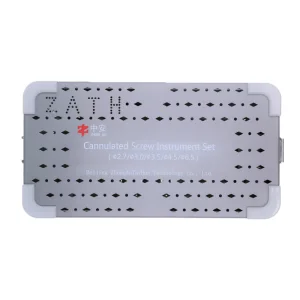
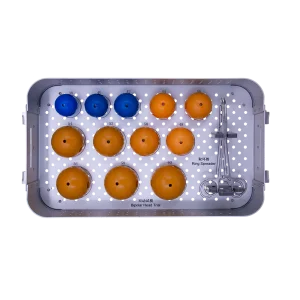
A locking plate is only as dependable as its delivery instrumentation. ZATH manufactures fully matching custom surgical sets: torque-limiting screwdrivers (calibrated to 1.5 Nm / 0.8 Nm), threaded drill sleeves with zero runout, sharp self-centering bone reduction forceps, and radiographic contour templates for flawless intraoperative workflow.
Regional Adoption Landscape & Regulatory Ecosystem
A cross-territorial analysis of how clavicular osteosynthesis devices are evaluated, reimbursed, and deployed in key global healthcare markets.
North America (FDA / ASC Focus)
Rapid migration of clavicle fixation cases to outpatient Ambulatory Surgical Centers (ASCs). Emphasis is placed on pre-sterilized, procedure-specific single-use kits that eliminate autoclave prep cycles, backed by comprehensive 510(k) biomechanical pull-out documentation.
European Union (MDR 2017/745)
Stringent Post-Market Clinical Follow-up (PMCF) requirements and rigorous biocompatibility testing under ISO 10993. Tier-1 distributors require complete Technical Documentation Files (TDF) and notified body auditing to maintain long-term hospital tender eligibility.
Asia-Pacific (Expanding Tenders)
High incidence of high-energy road traffic and industrial midshaft fractures. Public healthcare systems demand massive volume capabilities, reliable pricing structures, and agile factory fulfillment without compromising clinical grade specifications.
LATAM & Middle East (Turnkey Sets)
Private hospital systems prioritize versatile implant-plus-instrument loan sets. Quick regional customs support, Free Sale Certificates (FSC), and ISO 13485 compliance form the foundational criteria for master distributorship agreements.
Standardized Surgical Workflow for Anterior LCP Placement
A step-by-step technical overview of the anteroinferior surgical approach designed to optimize biomechanical purchase while safeguarding anatomical structures.
Step 1: Incision & Pectoral Detachment
An anterior incision is made along Langer's skin lines, positioned 1 cm inferior to the anterior clavicular edge. The clavicular origin of the pectoralis major muscle is elevated subperiosteally just enough to accommodate the low-profile plate, keeping the supraclavicular sensory nerves retracted.
Step 2: Anatomical Trial & Pre-Contour Check
The pre-shaped S-curve plate is matched against the fracture site. Thanks to ZATH's anthropometrically mapped curvature, additional bench bender contouring is virtually unneeded. In complex nonunion cases, minor manual adjustment is executed using dedicated bending irons without notching the plate holes.
Step 3: Horizontal Anteroposterior Fixation
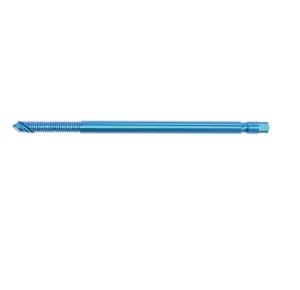
The plate is temporarily secured with bone clamps. A 2.8mm calibrated drill bit with threaded drill guide is utilized to drill from anterior to posterior in a horizontal or slightly posterosuperior trajectory. 3.5mm self-tapping locking screws are torqued until fully seated flush within the comb-hole recess.
Frequently Asked Questions: Technical, Regulatory & Supply
Addressing the core technical inquiries posed by orthopedic biomedical engineers, procurement directors, and master distributors.
ZATH exclusively employs medical-grade Ti-6Al-4V ELI (Extra Low Interstitial) conforming strictly to ASTM F136 and ISO 5832-3 standards. This alloy delivers maximum fatigue resistance, high ductility, and biocompatibility superior to standard commercial titanium.
Superior clavicle plates demand vertical (superior-to-inferior) drilling aimed directly toward the subclavian vessels and brachial plexus situated immediately beneath the subclavius muscle. Anterior plates utilize horizontal anteroposterior drilling, which directs the drill bit completely away from the thoracic neurovascular bundle.
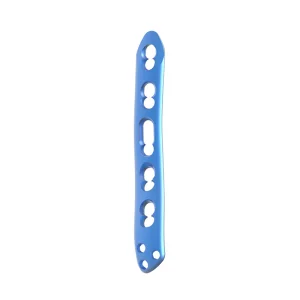
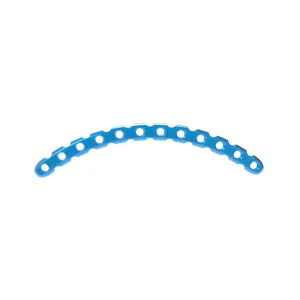
The system spans 6, 7, 8, 9, 10, and 12 comb-hole configurations in distinct Left and Right anatomical pre-contoured profiles. The central bridge section is specifically engineered to span comminuted midshaft fractures without weakening the structural integrity of the plate.
Yes. We support global distributors with OEM/ODM manufacturing, including proprietary laser marking, customized anodization color codes, individualized package design, and full support with registration dossier compilation (CE, Free Sale Certificates, and technical construction files).
All plates and screws can be procured in either non-sterile tray bulk packaging or pre-sterilized, double-sealed Tyvek blister packs sterilized via validated radiation or Ethylene Oxide (EO), providing a validated 5-year sterile shelf life.
Standard catalog implant and instrument shipments dispatch via DHL, FedEx, TNT, or UPS express within 4 to 6 business days. Large-volume OEM batch productions are scheduled within 4 to 6 weeks, depending on customization parameters.
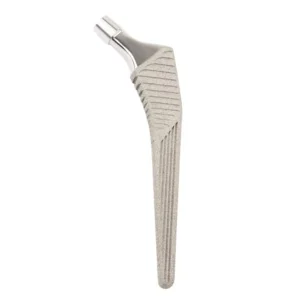
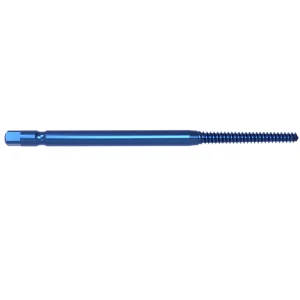
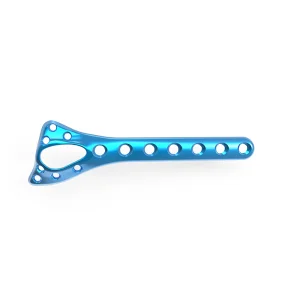
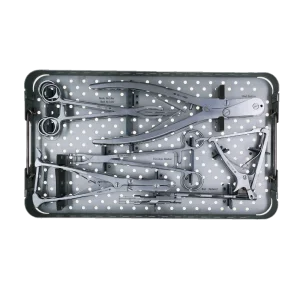
Complementary Orthopedic & Spinal Implant Systems
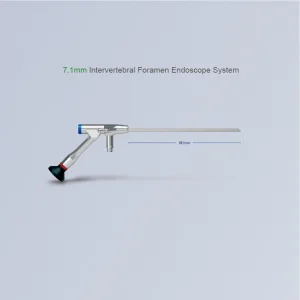
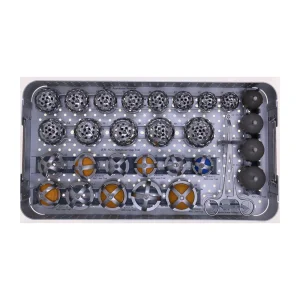
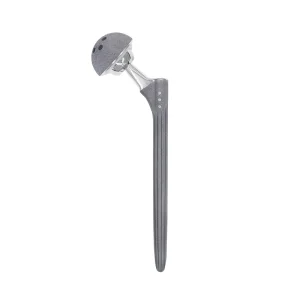
Explore ZATH's full manufacturing breadth: from high-demand joint arthroplasty systems to reconstruction plating, minimally invasive spinal fixation, and endoscopic platforms.
Request Complete Trauma Plate Engineering Dossier & OEM Quotes
Partner directly with Beijing ZhongAnTaiHua Technology Co., Ltd. for factory-direct container shipments, custom sterile-kit configurations, or distributor territory qualification.