
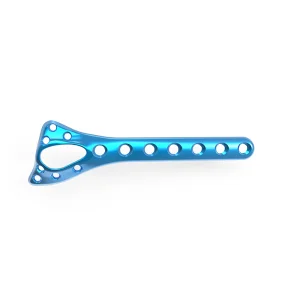
ODM DDR Locking Compression Plate Companies, Product
View Technical Specs
Explore our flagship internal fracture fixation implants engineered with anatomical pre-contouring, low-profile screw head chamfers, and dynamic combi-hole technology.
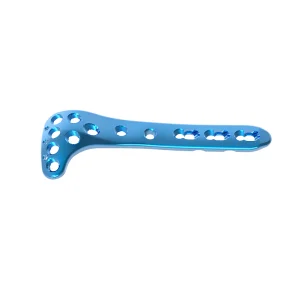
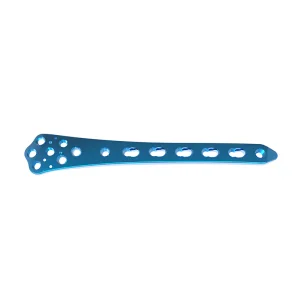
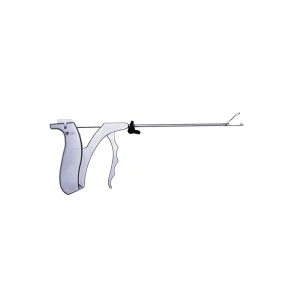
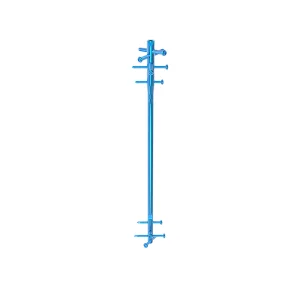
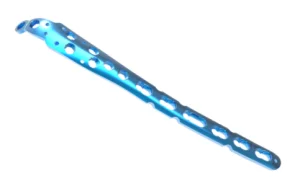
A deep analysis into stress redistribution, periosteal vascular perfusion preservation, and angular stable construct mechanics.
In historical internal fixation, conventional dynamic compression plates (DCP) relied entirely on frictional resistance generated by screw torque against the bone cortex. This direct compression exerted extensive contact pressures onto the periosteum, frequently causing iatrogenic vascular necrosis, localized cortical osteoporosis, and delayed callus formation. The clinical arrival of Locking Compression Plates (LCP) fundamentally revolutionized osteosynthesis by functioning as internal fixators.
By locking the screw head directly into the female threads of the plate hole, mechanical shear forces are transmitted through the rigid plate-screw interface rather than relying on compressive friction between implant and periosteum. At Beijing ZhongAnTaiHua Technology Co., Ltd. (ZATH), our plate geometries integrate dynamic combination holes ("combi-holes"), giving orthopedic surgeons simultaneous intraoperative flexibility: employing standard cortex screws for interfragmentary compression alongside threaded locking screws for angular stability in osteoporotic or comminuted bone segments.
| Biomechanical Variable | Standard Dynamic Compression (DCP) | ZATH Anatomical Locking Plate (LCP) | Clinical Advantage for Surgeons |
|---|---|---|---|
| Fixation Mechanism | Plate-to-bone friction torque | Threaded internal angular fixator | Zero periosteal crushing; preserves Haversian vascular network. |
| Primary Screw Stress | Shear and tensile axial pull-out | Transverse bending & toggling resistance | Prevents primary screw toggling and secondary reduction loss. |
| Performance in Osteoporotic Bone | High incidence of screw stripping | Superior construct pull-out stiffness | Stable purchase in poor-density bone without cement augmentation. |
| Intraoperative Contour Need | Demands 100% anatomical adaptation | Pre-contoured 3D digital profiles | Reduces operating room bend-stress and microfracture initiation. |
By locking the screw into threaded bushings at exact anatomical vectors, cantilever loading is converted into axial compression, eliminating secondary displacement even under early partial weight-bearing protocols.
Utilizing high-purity Ti-6Al-4V Grade 5 ELI, the implant delivers an elastic modulus closely approaching cortical bone (~110 GPa vs ~200 GPa of stainless steel), radically mitigating stress shielding and cortical bone resorption.
Surface micro-arc oxidation and precision pitch control eliminate micro-galling between the screw head and plate hole, ensuring reliable intraoperative insertion torque and frictionless hardware removal during hardware extraction surgery.
Inside our Zhongguancun Science Park manufacturing center: 300+ employees and multi-axis Swiss CNC turning stations operating within ISO Class 7/8 cleanrooms.
Sourcing orthopedic implants globally requires absolute certainty in metallurgical authenticity, micron-level machining tolerance, and zero-defect consistency across thousands of production lots. As an established Beijing implant manufacturer operating continuously since 2009, ZATH maintains an integrated end-to-end industrial chain. We eliminate third-party processing bottlenecks by executing bar stock validation, multi-axis wire EDM profile slicing, 5-axis CNC machining, ultrasonic passivation, laser marking, cleanroom blister packaging, and gamma/EtO terminal sterilization entirely within our certified facilities.
Every titanium and stainless-steel billet is procured exclusively with certified mill inspection dossiers (ASTM F136 / ISO 5832-3), undergoing rigorous spectrographic chemical assays and tensile testing prior to machining.
Automated Swiss-type automatic lathes and 5-axis simultaneous high-speed machining centers cut complex anatomical curvatures, torx self-tapping screw tips, and precision double-lead threads with sub-micron repeatability.
Equipped with optical multi-sensor Coordinate Measuring Machines (CMM) and laser profile scanners, validating true 3D spatial thread geometries, pitch angles, surface roughness (Ra < 0.4 μm), and hole burr elimination.
Cleaned in multi-stage ultrasonic baths with pure reverse-osmosis DI water, sealed in double-barrier Tyvek medical blister trays inside ISO Class 7 cleanrooms for 5-year sterile shelf-life assurance.
Comprehensive manufacturing frameworks engineered to accelerate regional market entries, private label brands, and hospital tender bids.
Our in-house R&D engineering division transforms surgeon concepts or local clinical sketches into validated 3D models and functional prototypes within 14 business days. Services include:
We provide full white-label and ODM packaging options that comply with international Medical Device Labeling guidelines and regional ministry of health mandates:
Ensuring distributor contract stability with reliable fulfillment schedules that prevent hospital backorders:
Stringent compliance architectures designed to expedite your national medical device registration dossier.
Navigating international medical device regulatory landscapes requires complete transparency and verified evidentiary documentation. ZATH's operations strictly comply with the requirements of ISO 13485:2016 for medical devices. We provide authorized distributors with comprehensive technical documentation packages (Technical Construction Files) structured to align with EU MDR 2017/745 expectations, US FDA 510(k) pathway documentation, and regional national regulatory authorities (e.g., ANVISA, SFDA, COFEPRIS, INVIMA).
Certified testing according to ISO 10993 series: cytotoxicity, intracutaneous irritation, delayed hypersensitivity, systemic toxicity, and sub-chronic toxicity reports generated by accredited GLP laboratories.
Dynamic four-point bending fatigue endurance and pull-out testing conducted under ASTM F382 (Metallic Bone Plates) and ASTM F543 (Metallic Medical Bone Screws) exceeding 1,000,000 cycles without yield failure.
Ethylene Oxide (EtO) residual analysis according to ISO 11135 and Accelerated Ageing Shelf-Life Stability according to ASTM F1980 verifying sterile integrity up to 5 complete calendar years.
Anticipating the clinical landscape: Additive manufacturing, bioabsorbable alloys, and bioactive smart surfaces.
Next-gen patient-specific plating leveraging Selective Laser Melting (SLM) to create bio-mimetic trabecular porosity (60–70% pore ratio), fostering rapid bone ingrowth and osseointegration.
Eliminating secondary hardware removal operations through biologically degradable Mg-Nd-Zn alloys. The construct provides robust initial mechanical fixation while safely metabolizing into harmless physiological ions.
Combatting implant-associated surgical site infections and bacterial biofilm formation with dual-action hydroxyapatite (HA) and silver-doped nano-coatings that release local bactericidal agents without systemic cytotoxicity.
Embedding micro-electromechanical (MEMS) strain gauges within intermediate plate profiles to stream continuous intra-cortical load distribution and callus consolidation data wirelessly to the orthopedic clinical team.
Essential clinical and commercial guidance for hospital procurement teams and orthopedic distribution partners.
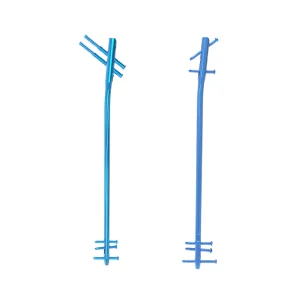
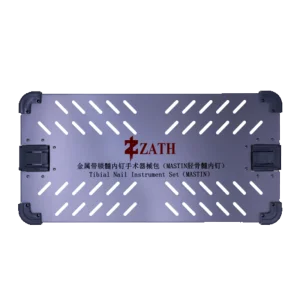
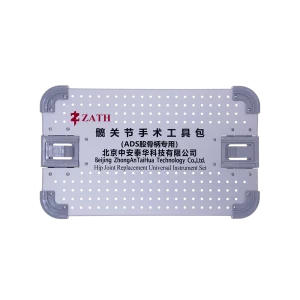
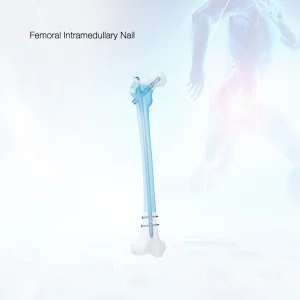
Explore our specialized secondary portfolio: femoral intramedullary nails, arthroplasty sets, and pelvic reconstruction systems.
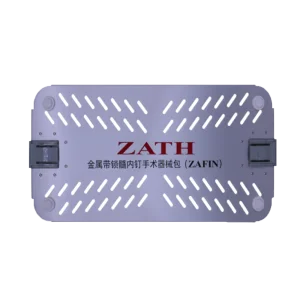
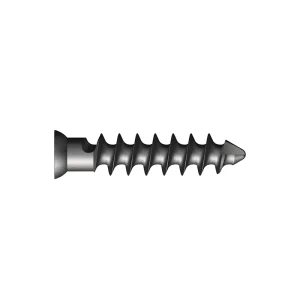
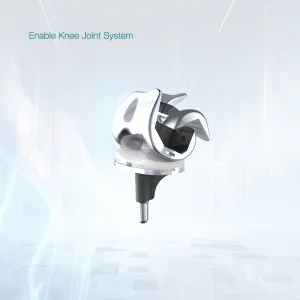
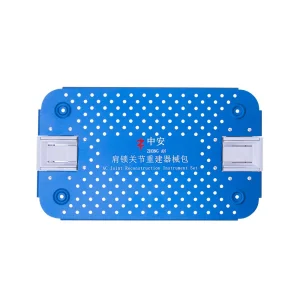
Connect directly with our biomedical engineering staff in Beijing. Request our complete surgical product catalog, pricing matrices, instrument set loaner agreements, or OEM/ODM private label feasibility analyses.