
Featured Internal Fixation & Surgical Orthopedic Systems
Explore certified clinical fracture repair implants, anatomical locking compression sets, intramedullary solutions, and specialized instrumentation produced within strict ISO 13485 cleanroom protocols.
The Clinical Evolution of Locking Compression Plates (LCP)
From primary rigid compression to biological internal fixators: Why fixed-angle stability and periosteal vascular preservation redefine standard-of-care orthopedics in complex comminuted fractures.
Biological Fixation vs. Friction Dependency
Traditional Dynamic Compression Plates (DCP) rely on extreme frictional compression between the plate undersurface and cortical bone to resist translational shear. This friction often strangles the periosteal blood supply, leading to cortical necrosis, delayed union, or secondary bone resorption. In contrast, CE-certified LCP systems function as locked internal fixators. The threaded screw heads lock mechanically into the plate holes, eliminating the requirement to force the plate against the bone cortex. This preserves endosteal and periosteal microcirculation, accelerating callus formation and clinical consolidation.
The Dynamic Combi-Hole Paradigm
Modern CE-certified LCP technology is defined by the hybrid Combi-hole configuration. One half of the elongated hole features dynamic compression ramping (accepting conventional cortical screws for axial interfragmentary reduction), while the adjacent threaded half accommodates conical locking screws for angular stability. This provides surgical teams with unmatched intraoperative flexibility: achieve primary anatomic reduction across simple transverse fracture lines, or convert seamlessly into a rigid fixed-angle bridging construct across comminuted metaphysical segments without plate repositioning.
High-Cycle Biomechanical Fatigue Resistance
Under cyclic physiological loading, locked screw-plate constructs convert axial loads into tensile and compressive stresses distributed across the longitudinal plate axis rather than concentrating shear stress at the bone-screw interface. For osteoporotic or comminuted bone where screw pullout is a catastrophic failure mode, locked angular stability increases pullout strength by over 300% compared to traditional non-locking screws, maintaining anatomical axis alignment through full postoperative rehabilitation cycles without loss of reduction.
Engineering Note: Metallurgical Integrity (ASTM F136 Ti-6Al-4V ELI vs. 316L VM)
Top-tier LCP factories utilize medical-grade titanium alloy Ti-6Al-4V ELI (Extra Low Interstitial) conforming strictly to ASTM F136 and ISO 5832-3. The material's modulus of elasticity (~110 GPa) is considerably closer to human cortical bone (~18 GPa) than 316L stainless steel (~210 GPa), significantly mitigating stress shielding phenomena while delivering exceptional yield strength (>860 MPa) and biocompatibility for permanent or long-term internal fixation.
CE Certification Rigor: Transitioning from MDD to EU MDR 2017/745
How authentic Tier-1 orthopedic factories navigate Class IIb long-term implantable classifications, Notified Body technical file scrutiny, biocompatibility testing, and cleanroom sterilization validation.
| Evaluation Parameter | Legacy MDD (93/42/EEC) | Current EU MDR (2017/745) Standard | ZATH Production Facility Execution |
|---|---|---|---|
| Classification & Notified Body Oversight | Class IIb via basic conformity assessment; sampling dossiers permitted. | Mandatory unannounced audits; rigorous scrutiny of every implant family and UDI link. | UDEM / CE 2292 certified; full technical dossier coverage per LCP plate family. |
| Clinical Evaluation Reports (CER) | Literature equivalence widely accepted with minimal internal clinical follow-up. | Stringent clinical equivalence rules; post-market clinical follow-up (PMCF) mandatory. | Longitudinal clinical follow-up datasets spanning 15+ years of orthopedic trauma surgeries. |
| Biocompatibility & Cleanliness | Basic ISO 10993 cytotoxicity and systemic toxicity assays. | Comprehensive chemical characterization (ISO 10993-18), toxicological risk assessment. | Class 10,000 (ISO Class 7) cleanroom cleaning, ultrasonic multi-stage passivation, bioburden tested. |
| Traceability & Serialization | Standard batch numbering on outer transport boxes. | Unit-level Unique Device Identification (UDI) etched with GS1 2D DataMatrix. | 100% laser-etched UDI on plate profiles; complete digital traceability from raw titanium bar. |
| Mechanical Fatigue Validation | Static four-point bending tests based on factory internal specs. | Dynamic multi-million cycle fatigue profiling conforming to ASTM F382 & ISO 9585. | Certified testing showing run-out fatigue endurance exceeding 5,000,000 cycles at 75% yield. |
Inside the Modern LCP Smart Factory: Supply Chain Resilience & Multi-Axis Precision
How Beijing ZhongAnTaiHua Technology Co., Ltd. (ZATH) integrates high-precision 5-axis CNC machining, automated coordinate measurement, and vertically integrated supply chains to serve global buyers.
Certified Raw Material Verification
Every batch of medical Ti-6Al-4V ELI or 316L VM bar stock arrives with full mill certificates. Before entry into production lines, materials undergo in-house spectral analysis, metallographic grain inspection, and ultrasonic flaw detection to ensure zero internal voids or inclusions.
Wire EDM & Profile Blanking
Precision wire Electrical Discharge Machining (EDM) shapes anatomically pre-contoured blanks from solid plate slabs. Low-heat spark erosion prevents micro-structural phase changes, eliminating residual stress zones that could cause in-vivo fatigue micro-cracking.
Multi-Axis Swiss CNC Machining
Equipped with 5-axis simultaneous machining centers and automated tool-wear sensors. Locking hole threads, Combi-hole ramps, and chamfered plate margins are machined within ultra-tight surgical tolerances (±0.005 mm) to guarantee flawless intraoperative screw engagement.
Automated Deburring & Surface Treatment
Robotic centrifugal tumbling and electrochemical polishing eliminate microscopic tool burrs. Titanium implants undergo Type II electrochemical anodization or micro-arc oxidation to enhance surface micro-hardness, corrosion resistance, and tissue biocompatibility.
CMM & Optical Vision Inspection
100% dimensional verification using automated 3D Coordinate Measuring Machines (CMM) and multi-sensor optical vision systems. Pitch diameters of locking hole threads, curvature radius, and hole spacing are audited against CAD models with digital archiving.
Sterile Cleanroom Packaging & Warehouse
Final ultrasonic degreasing using multi-frequency baths and medical DI water. Packaged in dual sterile-barrier blister packs (Tyvek®) within ISO Class 7 cleanrooms, followed by ethylene oxide (EtO) or Gamma irradiation before temperature-controlled warehousing.
Supply Chain Resilience: Why Decentralized Sourcing Matters
Modern international distributors face severe freight bottlenecks and prolonged 16-24 week lead times from traditional Western OEM brands. By anchoring operations in the Zhongguancun Science Park (Beijing) with integrated raw material buffering, ZATH maintains consistent inventory buffers across all standard 19 product families, ensuring urgent hospital replenishment and global express dispatches (via DHL, FedEx, UPS) within 4 to 6 business days.
Global Trauma Procurement: Hospital Tenders, TCO & OEM/ODM Flexibility
A strategic breakdown of procurement criteria for national ministries of health (MOH), surgical hospital groups, and regional orthopedic distributors seeking cost-effective, high-yield supplier partnerships.
Tender Qualification & File Dossiers
Navigating public hospital tenders in Latin America, Southeast Asia, the Middle East, and Eastern Europe requires extensive technical documentation. A factory must supply not only certificate copies (ISO 13485, CE, FSC) but also complete Biocompatibility Test Reports (ISO 10993), Dynamic Fatigue Reports (ASTM F382), Packaging Integrity Validations (ISO 11607), and sterilization dosing validation (ISO 11135 / ISO 11137). ZATH furnishes turnkey registration dossiers, slashing distributor registration lead times by up to 60%.
Total Cost of Ownership (TCO) Optimization
In mature healthcare systems operating under Diagnosis-Related Group (DRG) and Value-Based Healthcare reimbursement frameworks, orthopedic trauma departments face intense margin compression. OEM procurement from accredited Chinese manufacturing centers delivers 40% to 55% reduction in unit acquisition costs without sacrificing clinical efficacy or surgical outcomes. This margin allows distributors to expand localized consignment inventories across regional trauma centers.
Full-Spectrum OEM / ODM Customization
Brand differentiation is critical for regional market dominance. ZATH's OEM/ODM capabilities encompass custom plate geometry engineering (adapting anatomical curves for specific population anthropometrics), specialized screw thread pitches, custom anodized color-coding (gold, blue, green, magenta for distinct diameters), custom laser branding, multilingual surgical manual generation, and tailored instrument tray layouts.
Anatomical Indications & Localized Trauma Application Scenarios
Comprehensive clinical validation across the anatomical spectrum: How specialized LCP geometries address complex fracture patterns, high-energy trauma, and poor bone mineral density.
Distal Radius Fractures (AO/OTA 23)
Volar locking compression plates contoured anatomically to fit the watershed line without tendon impingement. Multi-directional subchondral locking pegs secure intra-articular fragments, preventing secondary collapse in osteoporotic geriatric wrist fractures.
Proximal Humerus (AO/OTA 11)
PHILOS-type anatomical designs with divergent and convergent calcar-supporting locking screws. Crucial for resisting varus collapse in comminuted 3-part and 4-part proximal humeral fractures with suture eyelets for rotator cuff reattachment.
Distal Femur & Proximal Tibia (AO/OTA 33 & 41)
Heavy-duty condylar LCP and periarticular lateral tibial plateau plates. Engineered for minimally invasive percutaneous plate osteosynthesis (MIPPO) techniques, inserting submuscularly via minimal incision to protect the periosteal envelope.
Pelvic & Acetabular Reconstruction
Flexible 3.5mm titanium reconstruction plates capable of complex 3D contouring across curved pelvic brims and iliopectineal lines. Maintains precise contouring during screw insertion without loss of anatomical reduction.
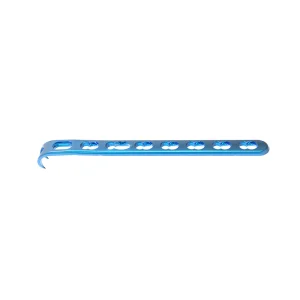
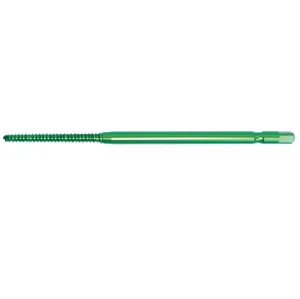
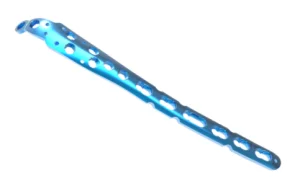
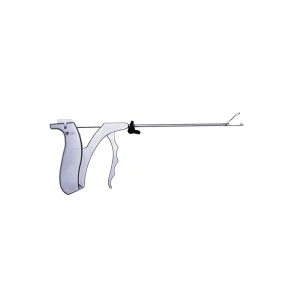
Anatomical Plates, Pins & Specialized Instrument Assemblies
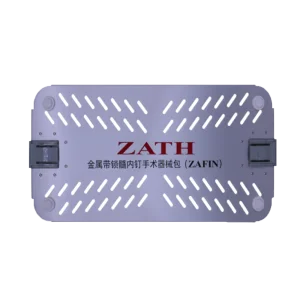
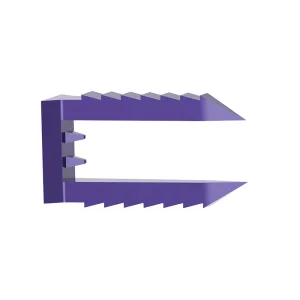
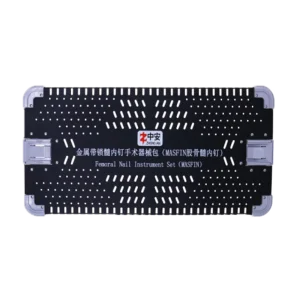
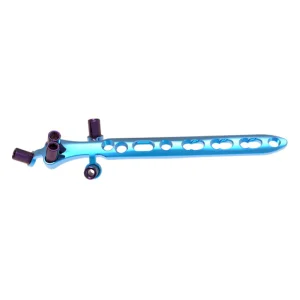
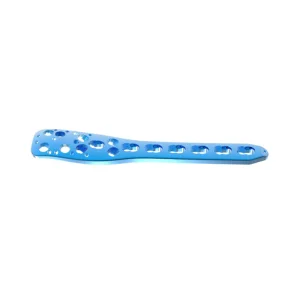
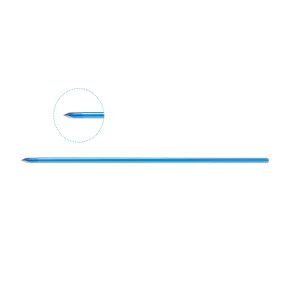
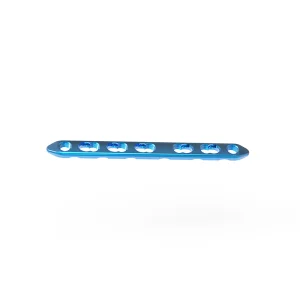
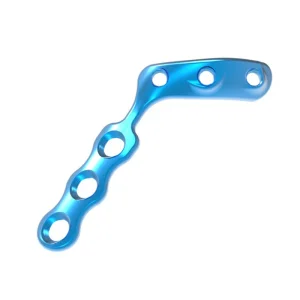
Explore the remainder of our clinically proven internal fixation portfolio, engineered to provide high mechanical stability and biocompatibility across upper and lower extremity trauma interventions.
Frequently Asked Questions for Hospital Buyers & Importers
Comprehensive answers regarding CE certification, regulatory file availability, dynamic fatigue tolerances, sterilization standards, and OEM/ODM private labeling.
What specific CE certification standard applies to ZATH's Locking Compression Plates?
What titanium grade is utilized in LCP plate and screw production?
How do you validate the fatigue endurance and pullout resistance of LCP plates?
Are ZATH LCP plates supplied non-sterile or in sterile peel-packs?
What are the minimum order quantities (MOQ) and lead times for OEM private labeling?
Do your LCP instrument sets interface interchangeably with AO/ASIF instrumentation?
How does ZATH assist international distributors with national MOH registrations?
What logistics channels are used to guarantee international shipment speed?
Initiate Your Certified LCP Procurement & OEM Evaluation
Connect directly with Beijing ZhongAnTaiHua Technology Co., Ltd. (ZATH) engineering specialists. Request complete CE MDR technical files, certified biocompatibility dossiers, CAD anatomical specifications, or personalized price quotations for hospital tenders.