Engineered Internal Fixation & Surgical Systems
Factory-direct locking plates, minimally invasive spinal channels, and trauma instrumentation manufactured under stringent CE and ISO 13485 cleanroom regimes.
Executive Engineering Overview: The Biomechanics of Titanium Orthopedic Screws
Bridging metallurgic precision and biological stability: Why Ti-6Al-4V ELI (ASTM F136 / ISO 5832-3) represents the definitive gold standard in internal bone fracture fixation.
In modern orthopedic trauma, reconstructive osteotomy, and spinal instrumentation, the titanium orthopedic bone screw is far more than a passive threaded mechanical fastener. It functions as an active biomechanical load-transfer nexus designed to maintain rigid interfragmentary compression, withstand multidirectional cyclic shear stresses, and foster primary bone healing without invoking stress-shielding necrosis or cytopathic wear debris.
As a premier CE-certified titanium bone screw manufacturer and global supplier founded in 2009 in Beijing, Beijing ZhongAnTaiHua Technology Co., Ltd. (ZATH) approaches orthopedic screw design through the combined lenses of finite element analysis (FEA), clinical histology, and multi-axis Swiss machining. Orthopedic implants constructed from medical-grade Titanium Grade 5 ELI (Extra Low Interstitial, Ti-6Al-4V ELI) demonstrate an elastic modulus of approximately 110 to 114 GPa—dramatically closer to human cortical bone (18–22 GPa) than traditional 316L stainless steel (approx. 200–210 GPa). This critical reduction in Young's modulus diminishes peri-implant osteopenia, accelerates callus formation, and guarantees exceptional fatigue endurance under physiological walking cycles.
Thread Pitch & Flute Dynamics
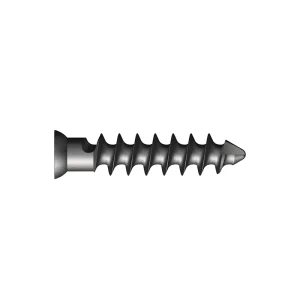
Cancellous threads feature deep asymmetrical thread heights with large pitches (up to 3.0mm) to optimize purchase in trabecular spongy bone. Cortical screws utilize fine, symmetric pitches with aggressive chip-evacuation flutes for self-tapping ease without generating microcracks.
Torx (Stardrive) Recess Interface
Eliminating hex-stripping failure: Our precision-broached Stardrive (T-series) recess accommodates high torsional insertion loads, reduces cam-out events by 85%, and provides stable single-hand axial hold during deep cavity or minimally invasive surgical corridors.
Type II Anodization & Passivation
Electrolytic surface oxidation thickens the native TiO2 passive dielectric layer, suppressing ionic leakage (Al, V release) in vivo, increasing fatigue life, and minimizing cold welding when interfacing with titanium locking compression plates.
Localized Clinical Application Scenarios & Anatomical Fixation Matrices
How distinct anatomical zones dictate bespoke screw geometries—from diaphyseal long bone trauma to osteoporotic fragility fractures and percutaneous spinal stabilization.
Across diverse clinical theatres worldwide, orthopedic surgeons encounter wildly fluctuating patient bone densities, biomechanical strain environments, and operative vectors. A standardized, one-size-fits-all screw approach introduces elevated risks of stripping, toggle loosening, or secondary non-union. Therefore, ZATH designs and manufactures tailored sub-families of CE-marked titanium orthopedic screws engineered to fulfill exacting regional and clinical indications:
| Screw Sub-Category | Primary Anatomical Target | Dimensional Diameter Range | Key Biomechanical Trait | Clinical Advantage |
|---|---|---|---|---|
| Cortical Bone Screws | Diaphyseal Femur, Tibia, Humerus, Forearm | Ø1.5mm, 2.0mm, 2.7mm, 3.5mm, 4.5mm | Fine thread pitch, high core-to-outer diameter ratio | Maximum bicortical shear rigidity and pull-out resistance |
| Cancellous Bone Screws | Femoral Condyle, Tibial Plateau, Calcaneus | Ø4.0mm, 6.5mm (Partially / Fully Threaded) | Aggressive thread depth, wide pitch (2.75–3.0mm) | Optimized compaction in low-density trabecular bone |
| Headless Cannulated Screws | Scaphoid, Metatarsal, Femoral Neck Osteotomies | Ø2.5mm, 3.0mm, 4.5mm, 7.3mm | Variable differential thread pitch (Acutrak principle) | Zero soft-tissue irritation, continuous interfragmentary lag compression |
| Locking Screws (Angle-Stable) | Periarticular Distal/Proximal Locking Plates | Ø2.4mm, 3.5mm, 5.0mm (Conical / Threaded Cap) | Threaded head mechanically locks into plate eyelet | Acts as internal fixator; preserves periosteal blood supply |
| Polyaxial Pedicle Screws | Thoracolumbar Spine & Degenerative Fusion | Ø4.5mm to Ø7.5mm (Lengths 35mm–55mm) | Spherical tulip allowing ±25° angulation, saddle lock | Accommodates severe anatomic deformities, streamlines rod reduction |
Trauma & Diaphyseal Long-Bone Repair: In comminuted fractures of the femoral or humeral shaft, cortical locking screws serve as the anchoring pillars within Locking Compression Plates (LCP). By decoupling screw purchase from plate-bone frictional clamping, the periosteal microcirculation remains intact, expediting secondary secondary woven-bone bridging and eliminating plate-induced localized osteopenia.
Geriatric & Osteoporotic Fragility Fixation: A major challenge facing European and North American healthcare systems is the surge in osteoporotic hip and spinal compression fractures. ZATH has pioneered fenestrated cannulated screws designed specifically for bone-cement (PMMA) augmentation. Injectable cement radiates through laser-drilled distal fenestrations directly into porous cancellous voids, enhancing anchoring pullout strength by more than 320% compared to standard non-augmented hardware.
Global Commercial Landscape: Regulatory Friction vs. Cost Containment
Navigating the monumental shift from MDD to EU MDR (2017/745), escalating healthcare tender pressures, and the emergence of direct manufacturer partnerships.
The global orthopedic implant market, currently valued in excess of USD $48 Billion, is undergoing structural disruption driven by regulatory upheavals and public health budget constraints. Across the European Union, the transition from the legacy Medical Device Directive (MDD 93/42/EEC) to the stringent European Medical Device Regulation (EU MDR 2017/745) has created acute bottlenecks. Under MDR, bone screws and internal fixation plates have been reclassified into high-scrutiny Class IIb and Class III categories, demanding exhaustive clinical evaluation reports (CER), rigorous Post-Market Clinical Follow-up (PMCF), and comprehensive biological safety dossiers under ISO 10993-1:2018.
Simultaneously, hospital procurement networks, national health services (such as the NHS in the UK, G-BA in Germany, and GPOs across Latin America and North America), are enforcing stringent price caps. For multinational tier-1 brand distributors, bloated operational overheads have driven implant unit prices beyond sustainable budget thresholds. This commercial reality has catalyzed leading distributors, hospital alliances, and regional brand owners to seek direct partnerships with validated, vertically integrated manufacturers.
The MDR Supply Gap Opportunity
Over 25% of legacy European small-fragment orthopedic lines are being discontinued due to prohibitive MDR certification costs. ZATH provides certified distributors with drop-in, ISO 13485-traceable replacement lines to prevent hospital stockouts.
Procurement Margin Realignment
Eliminating 3-tier distributor markups: Factory-direct engagement reduces unit acquisition costs by 40% to 60%, allowing local distributors to submit highly competitive bids in public tenders while safeguarding healthy operating gross margins.
Traceability & UDI Compliance
Full implementation of GS1-compliant Unique Device Identification (UDI-DI & UDI-PI) laser marking directly onto screw heads and sterile blister packaging ensures rapid inventory scanning and flawless compliance with global digital health systems.
Supply Chain Resilience: Why China's Advanced Clusters Lead Global Output
Inside the Beijing Zhongguancun Science Park facility: Vertical integration, Japanese multi-axis CNC cells, and raw material sovereignty that insulate global buyers against disruption.
In high-precision biomedical manufacturing, factory resilience is defined by the complete mastery of raw material traceability, continuous machining capacity, and certified in-house cleanroom packaging. Headquartered in Beijing's premier Zhongguancun Science and Technology Park, ZATH operates a world-class manufacturing campus staffed by over 300 highly specialized personnel, including approximately 100 seasoned engineering and metallurgic specialists.
Unlike assembly-only firms or repackaging traders, ZATH maintains 100% control over the internal supply cycle. China's domestic supply of medical-grade titanium sponges and certified Ti-6Al-4V ELI titanium bar stocks guarantees complete insulation against geopolitical raw material volatility. Every incoming alloy billet undergoes optical emission spectrometry, ultrasonic flaw inspection, and metallographic grain size evaluation (ASTM E112) prior to CNC assignment.
Raw Bar Stock Control
Certified titanium billets validated via mill test reports, mechanical tensile testing, and ultrasonic internal pore detection.
High-Speed Swiss CNC Turning
Star and Citizen 7-axis & 9-axis Swiss screw turning centers achieve simultaneous single-setup thread whirling and Torx broaching.
Ultrasonic Degreasing & Deburring
Automated multi-chamber ultrasonic cavitation removes microscopic burrs and hydrocarbons without altering micro-thread tolerances.
Type II Surface Anodization
Electrolytic passivation hardens titanium surfaces, enhances biocompatibility, and provides color coding for instantaneous OR diameter identification.
100% Optical Profile Inspection
Automated laser image measurement systems verify pitch, major/minor diameters, and runout within ±0.005mm tolerances.
ISO Class 7 Cleanroom Blistering
Sealed in medical-grade Tyvek® double-sterile blister packs with EO / Gamma irradiation validation, ready for direct operating room delivery.
Technological Roadmap: The Next Frontier in Bone Screw Engineering
Anticipating the convergence of additive 3D manufacturing, bioactive osteoinductive nanocoatings, and AI-driven personalized surgical hardware.
The orthopedic implant sector is rapidly evolving from mechanically passive fixation to biologically active and digitally customized platforms. ZATH's dedicated R&D engineering lab collaborates with academic clinical centers to pioneer three key technological vectors:
Porous Trabecular 3D Printing (SLM)
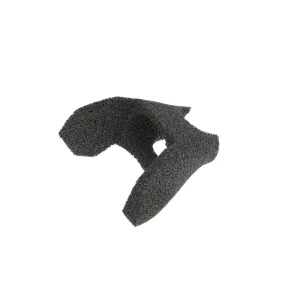
Using Selective Laser Melting (SLM), we manufacture titanium screw cores featuring interconnected 60–70% microporosity (pore sizes 300–500μm). This architecture mimics native cancellous trabeculae, encouraging rapid deep bone ingrowth directly into the screw body.
Bioactive & Antimicrobial Nanocoatings
To counter peri-implant bacterial biofilms (Staphylococcus aureus), our surface-engineering teams are evaluating silver nanoparticle-doped hydroxyapatite (HA) and electrochemical bioactive coatings that stimulate osteoblast differentiation while providing local antibacterial defense.
AI Trajectory & Robotic Integration
Aligning screw flute mechanics with surgical robotics: Our latest MIS pedicle and cannulated screw heads feature proprietary optical-tracker registration geometry, interfacing seamlessly with computer-assisted navigation and intraoperative robotic arms.
Localized Regulatory Support & Global Compliance Assurance
How ZATH empowers global distributors with certified technical dossiers, third-party biocompatibility protocols, and standardized mechanical bench validation.
A premier orthopedic manufacturing partner must provide absolute regulatory assurance. Distributing medical devices into mature jurisdictions (European Union, Southeast Asia, Middle East, Latin America, and Africa) demands impenetrable documentation that withstands audits by competent health authorities and notified bodies.
Every bone screw manufactured by ZATH is backed by exhaustive verification testing following globally accepted standards:
- ASTM F543-17 Standard: Thorough mechanical testing characterizing axial pullout strength from synthetic bone models, insertion and removal torque profiles, and torsional yield strength.
- ISO 10993 Series Biological Evaluation: Certified cytotoxic, systemic toxicity, intracutaneous irritation, sensitization, and genotoxicity safety clearances.
- ISO 11607 Packaging Validation: Accelerated aging and real-time package barrier integrity testing confirming 5-year sterile shelf life.
- Technical Dossier Ready for Local Registration: We furnish qualified partners with complete Common Technical Document (CTD) formats, Risk Management files (ISO 14971), and official Certificates of Free Sale (FSC).
ISO 13485:2016 Certified QMS
Full audit trails spanning design transfer, CNC manufacturing, cleanroom packaging, and warehouse dispatch, audited annually by internationally accredited notified bodies.
Direct In-Country Distributor Escort
Our dedicated regulatory affairs team provides direct liaison support, translating technical clinical reports, responding to national health ministry questions, and expediting market access.
Full OEM/ODM Brand Customization
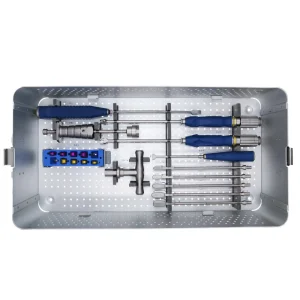
Bespoke laser engraving of partner logos, specialized color anodization palettes, proprietary thread pitch variations, and custom surgical kit tray layouts delivered with rapid lead times.
Comprehensive Engineering & Sourcing Q&A
Essential technical, clinical, and commercial answers for orthopedic distributors, hospital procurement managers, and tender specialists.
ZATH exclusively employs medical-grade Ti-6Al-4V ELI (Extra Low Interstitial) titanium alloy compliant with ASTM F136 and ISO 5832-3. This grade tightly restricts interstitial elements (oxygen, nitrogen, carbon, and iron), yielding elevated fracture toughness, superior tensile strength (≥860 MPa), and exceptional resistance to cyclic stress fatigue compared to commercial pure (CP) titanium or standard aerospace grades.
Cold welding (galling) can occur when identical titanium alloys interface under heavy torsional shear. ZATH prevents this through precision-controlled Type II surface anodization on screw threads and plate eyelets. This controlled electrochemical treatment forms a hard, micro-dense titanium dioxide surface layer that reduces the coefficient of friction, eliminates micro-abrasion, and guarantees smooth intraoperative torque and subsequent postoperative explantation.
Both options are fully supported based on market preferences. We offer ready-for-surgery sterile packaging utilizing DuPont® Tyvek® double-blister enclosures validated under ISO 11607 to ensure a 5-year sterile shelf life. Alternatively, we supply non-sterile bulk configurations for hospitals operating their own validated autoclave sterilization containers, supported by comprehensive hospital reprocessing instructions.
Qualified regional distributors receive full Technical Dossiers in ASEAN CSDT or EU STED format. This includes ISO 13485:2016 quality system certificates, CE declarations, ASTM F543 mechanical test data, ISO 10993 biocompatibility laboratory reports, sterilization validation files, and official Free Sale Certificates (FSC) issued by the competent medical authorities in China.
Standard catalog products maintain continuous inventory reserves and can be dispatched via air express (DHL, FedEx, UPS) within 4 to 6 business days. For customized OEM/ODM screw runs—including custom laser branding, modified thread lengths, or dedicated driver recesses—standard lead times range between 3 to 5 weeks from technical drawing sign-off.
Comprehensive Trauma, Intramedullary & Reconstructive Systems
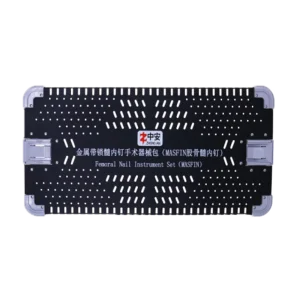
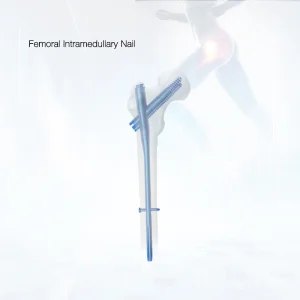
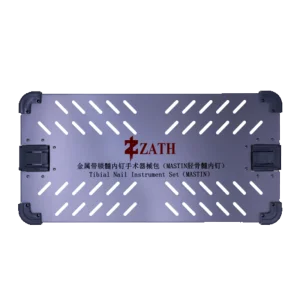
Integrated surgical instrument kits, specialized acetabular fixation screws, and advanced reconstruction solutions developed to empower global orthopedic teams.