Trauma & Surgical Inventory
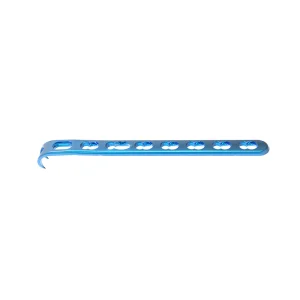
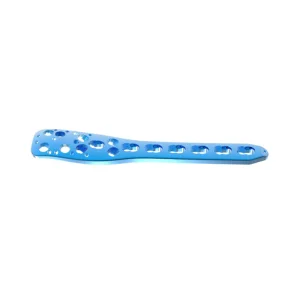
Featured Orthopedic Plate & Reconstruction Solutions
Engineered to international regulatory parameters with certified titanium alloy profiles, precision-milled combi-holes, and sterile room compatibility.
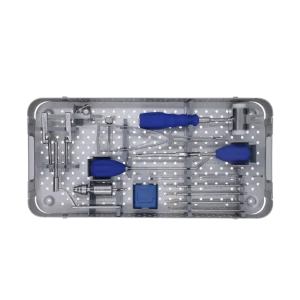
ODM High Quality ZP Cage Instrument Set Manufacturer, Manufacturers
Explore Tech Specs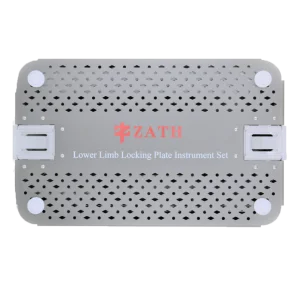
ODM Orthopedic Instrument Lower Limb Locking Plate Instrument Set Manufacturer, Suppliers
Explore Tech Specs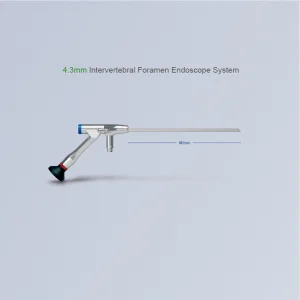
ODM 4.3mm Intervertebral Foramen Endoscope System Product, Products
Explore Tech Specs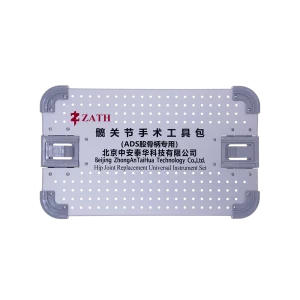
Famous Surgical use ADS Total Hip Joint Replacement Instrument Set Suppliers, Quotes
Explore Tech Specs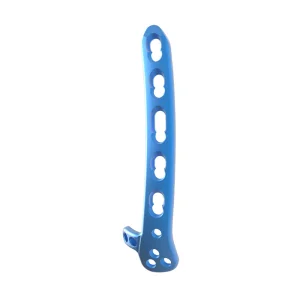
ODM Distal Posterolateral Humerus Locking Compression Plate (with Lateral Support) Product, Products
Explore Tech Specs
High-Quality CE Approved Traume Rib Locking Plate Instrument Set Quotes, Product
Explore Tech Specs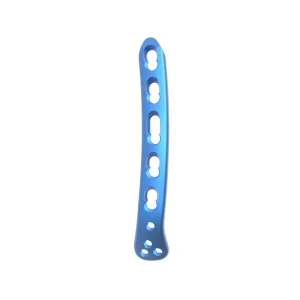
Cheap Distal Posterolateral Humerus Locking Compression Plate Suppliers, Exporter
Explore Tech Specs
Strategic Procurement Dynamics
Sourcing Cheap Tibia Plates: Value Engineering vs. Clinical Quality
Decoupling the search term "cheap" from inferior engineering: How enterprise purchasers achieve optimal cost per operative case without sacrificing mechanical integrity.
Clinical Intent Mining
Modern orthopedic departments do not compromise on biomechanical fatigue resistance. In distal and proximal tibia fractures, cheap plate alternatives often fail due to micro-motion and screw back-out. Sourcing teams prioritize anatomically contoured Ti-6Al-4V ELI plates that integrate dynamic combi-holes, enabling both compression and rigid angular locking.
The True TCO Calculation
Total Cost of Ownership (TCO) in implant sourcing accounts for intraoperative bending time, non-union rates, revision procedures, and sterile reprocessing expenses. Authentic manufacturing partners lower wholesale procurement pricing through economies of scale and vertical integration rather than downgrading medical metallurgy.
Dynamic Locking Biomechanics
Tibia fracture configurations—including AO/OTA Type 41, 42, and 43—demand varied holding force. Fixed-angle constructs bridge complex multi-fragmentary metadiaphyseal defects without periosteal compression, preserving vital vascularity to accelerate osteogenesis.
Manufacturing Architecture
China Factory Supply Chain: The Competitive Advantage
Discover how Beijing ZhongAnTaiHua Technology Co., Ltd. (ZATH) transforms raw titanium bar stock into class-leading trauma solutions within a streamlined, vertically integrated ecosystem.
Aerospace-Grade Raw Material
Every batch originates with certified mill certificates. We enforce optical emission spectroscopy to verify chemical purity and grade distribution before multi-axis wire cutting.
5-Axis CNC Precision Processing
Custom tooling algorithms carve precise locking holes and anatomically pre-bent curves with micron-level tolerances, reducing intraoperative notch stresses.
ISO 13485 Controlled Inspection
From Coordinate Measuring Machines (CMM) checking dimensional profiles to torque testing of self-tapping locking screws, 100% of finished lots are tracked.
Pre-Sterile OR-Ready Packaging
Cleanroom packaging prevents cross-contamination, provides verifiable shelf-life integrity, and lowers hospital handling friction across international borders.
International Regulatory Framework
Localization Support, Compliance & Tender Assurance
Overcoming barriers to regional market entry through complete technical documentation dossiers, MDR compliance support, and turnkey distributor toolkits.
Complete Regulatory Dossiers
We supply full Technical Construction Files (TCF), biocompatibility validation reports (ISO 10993), sterilization validation, and UDEM certification documentation needed for Ministry of Health registrations.
Hospital Tender Customization
National healthcare tenders often demand specific plate profiles (e.g., extra-thin metaphyseal low-profile tabs) and bespoke tray setups. Our in-house engineering team designs custom matching instrument containers within 3-4 weeks.
Regional Technical Assistance
We offer distributor staff biomechanical workshops, clinical operative guides, CAD model access, and live surgical telemetry consulting to establish deep credibility with local orthopedic key opinion leaders (KOLs).
Clinical Applications
Tibia Plate Systems: Localized Surgical Anatomic Scenarios
Standardizing anatomical fit reduces perioperative soft-tissue irritation and eliminates excessive manual bending during time-critical emergency trauma reconstructions.
Proximal Tibia Locking Configurations
Formulated for tibial plateau fractures (Schatzker I-VI), featuring multi-directional locking screw clusters designed to support articular surfaces and prevent post-reduction secondary depression.
Distal Anterolateral & Medial Systems
Specifically engineered for pilon fractures and distal metaphyseal breaks. Boasting ultra-low profile tapered plate ends to safeguard minimal anterior soft tissue envelopes and reduce skin necrosis risks.
Diaphyseal Wave & Straight Locking Plates
Engineered for segmental tibia shaft non-unions, osteotomies, or periprosthetic fractures where intramedullary nailing is contraindicated due to canal deformities or prior arthroplasty implants.
Future Projections
Industry Trends: The Evolution of Osteosynthesis
Key technological and market vectors reshaping modern trauma procurement across global health systems.
3D Trabecular Titanium Printing
Integration of additive manufacturing into metaphyseal defect plates, providing instant structural load-bearing alongside osteoconductive scaffolds for natural bone ingrowth.
Variable-Angle Locking Hubs
Shift from fixed 90-degree axis to ±15-degree conical deflection systems, allowing trauma surgeons to target dense bone fragments while avoiding intra-articular screw penetration.
Direct-To-Distributor Supply Chains
Elimination of multi-tiered middlemen. Hospital purchasing chains increasingly contract directly with certified Chinese manufacturing facilities to hedge against inflation.
Carbon-PEEK Radiotranslucent Plates
Ongoing clinical trials of radiolucent composites for continuous postoperative callus monitoring without metal scattering artifacts in CT or MRI imaging.
Knowledge Base
Frequently Asked Questions (FAQ)
Direct answers for hospital procurement specialists, distributor QA directors, and orthopedic export agents.
Why are your tibia plates priced more competitively than Western equivalents?
Our manufacturing headquarters in Zhongguancun Science Park, Beijing, leverages automated 5-axis CNC machining, localized raw titanium material ecosystems, high daily throughput, and zero broker markups. We deliver verified ISO 13485 medical devices directly to distributors at clean industrial factory rates.
Can you provide custom laser engraving and personalized tray instrument sets?
Yes. We specialize in complete OEM/ODM solutions. We customize laser markings, unique catalog coding, specific anodized color-coding (e.g., gold cortex, blue locking), sterile packaging branding, and tailor-made lower-limb instrument cases to match your tender specs.
How do you verify implant metallurgy and fatigue life durability?
All products utilize biomedical Grade 5 Titanium Alloy (Ti-6Al-4V ELI) or Grade 4 Pure Titanium compliant with ASTM F136 / ISO 5832-3 standards. Dynamic 4-point bending fatigue assessments and torque-to-failure testing are conducted in accordance with ASTM F382 standards.
What is the typical lead time for international bulk trauma orders?
Standard inventory configurations are dispatched via international express air cargo (DHL, FedEx, UPS) within 4 to 6 business days. Custom OEM production runs with personalized tooling are normally completed and shipped within 3 to 4 calendar weeks.
Cross-Discipline Hardware
Full-Portfolio Surgical & Orthopedic Ecosystem
Comprehensive trauma, arthroplasty, and soft-tissue anchors engineered to identical ISO 13485 standards for mixed-container procurement efficiency.
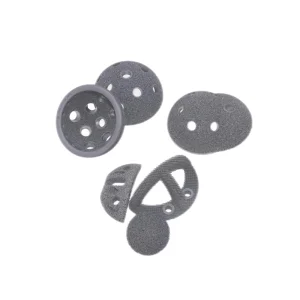
ODM 3D Printing Acetabular Revision System Manufacturers, Pricelist
Explore Tech Specs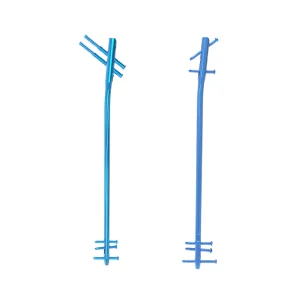
China MASFIN Femur Intramedullary Nail Implant Manufacturer, Manufacturers
Explore Tech Specs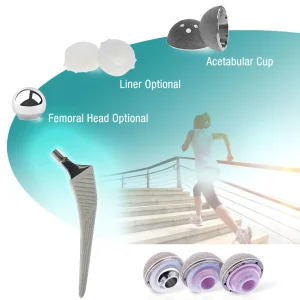
Discount Professional Medical Hip Implant Titanium Bipolar Hip Joint Prosthesis Manufacturers, Supplier
Explore Tech Specs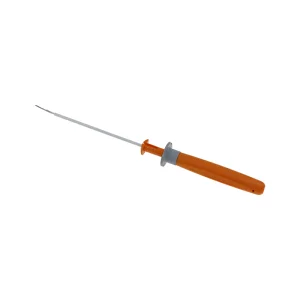
ODM Orthopedic Fast All Inside Meniscal Repair Device System Products, Service
Explore Tech Specs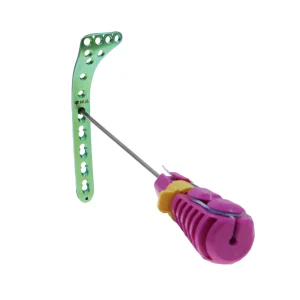
CE Certification CE Approved Hospital Use All Suture Anchor Titanium With Needle Factory, Companies
Explore Tech Specs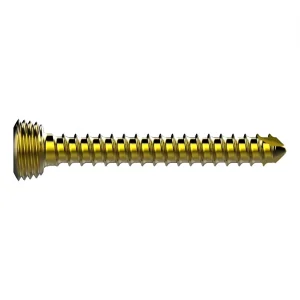
OEM 2.0mm 2.7mm 3.5mm 5.0mm Locking Screw Orthopedic Screw Implants Suppliers, Companies
Explore Tech Specs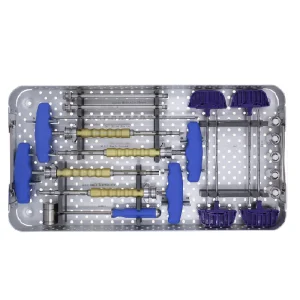
Cheap Spine Instrument Set (Zenith HE Instrument Set) Suppliers, Quotes
Explore Tech Specs