Clinical Implants & Instrument Systems
Precision-machined medical devices meeting global regulatory standards for trauma, arthroplasty, and extremities reconstruction.
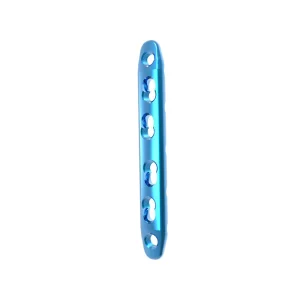
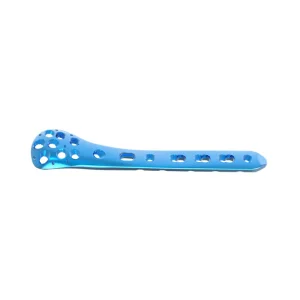
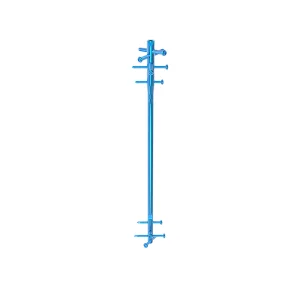
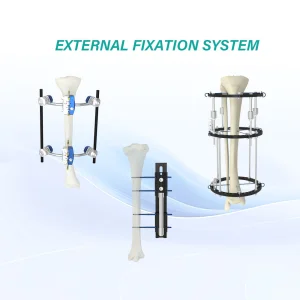
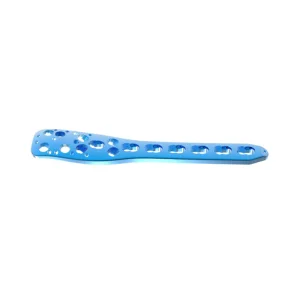
Macro-Industry Solutions: Eliminating Varus Collapse & Cut-Out in Geriatric Trauma
As the global demographic ages, the incidence of unstable pertrochanteric, intertrochanteric, and subtrochanteric femur fractures is rising at over 5.4% compound annual rate. Addressing failure modes requires an evolved biomechanical approach.
Integrated Dual-Screw Biomechanics
Traditional sliding hip screws (SHS) and single-screw cephalomedullary devices frequently fall victim to the "cut-out" phenomenon and "Z-effect" migration. An intertan nail system incorporates two integrated cephalomedullary screws: a superior compression screw and an inferior lag screw that interface with gear-meshed or interlocking profiles.
This tandem geometry converts rotational forces into active linear compression, distributing axial load across dense subchondral trabeculae of the femoral head rather than concentrating stress along a single cantilever pivot axis.
Resistance to Varus Tilt & Collapse
Femoral neck shortening following hip fracture reduction causes abductor muscle lever arm compromise and painful limp. Intertan configurations demonstrate over 60% higher torsional resistance and 40% less secondary varus displacement than conventional gamma-type intramedullary constructs.
The integrated dual screws provide a broad triangular cross-sectional wedge inside the proximal femoral neck, locking the head-neck segment firmly to prevent varus tilting under immediate full-weight-bearing postoperative protocols.
Distal Stress Redistribution
A critical issue in long intramedullary nailing is distal femoral cortex anterior impingement and thigh pain caused by a mismatch in anatomical bow radius. Modern OEM Intertan manufacturing employs an optimized radius of curvature (ROC 1500mm to 1800mm) combined with a flexible split or beveled tip.
This anatomical design prevents cortical stress shielding, minimizes stress concentration at the distal locking holes, and streamlines nail insertion through minimal-incision portals without excessive reaming.
Global Commercial & Supply Chain Dynamics in Orthopedic Trauma
The global contract manufacturing ecosystem for orthopedic titanium implants is undergoing rapid restructuring. Rising procurement costs in North America and Western Europe, coupled with regulatory compliance bottlenecks under the EU Medical Device Regulation (MDR 2017/745), have accelerated demand for agile, vertically integrated OEM/ODM manufacturing facilities.
Beijing ZhongAnTaiHua Technology Co., Ltd. (ZATH) has established an end-to-end industrial model since 2009 in Beijing's Zhongguancun Science Park. By maintaining complete domestic ownership over raw material inspection, Swiss multi-axis CNC micro-milling, surface treatment (Type II anodization), class 10,000 cleanroom sterile packaging, and in-vitro biomechanical verification, ZATH offers global distributors margin stability, direct factory pricelists, and reduced risk of supply disruptions.
- Medical-Grade Titanium Grade 5 ELI: Sourced strictly per ASTM F136 and ISO 5832-3 with full mill heat-lot certs.
- End-to-End Traceability: Laser-etched unique lot serial numbers tied directly to physical chemical and mechanical test logs.
- Fast Global Turnaround: Air delivery within 4–6 business days via DHL, FedEx, TNT, or UPS for hospital stock replenishment.
Engineering Parameter Benchmark
Standard vs Custom Factory Production Tolerance Limits
| Critical Dimension | Standard Catalog | Custom OEM Tolerance |
|---|---|---|
| Proximal Diameter | 15.2 mm – 16.5 mm | ±0.015 mm precision |
| CCD Neck-Shaft Angle | 125° / 130° options | Custom 120°–135° ±0.5° |
| Radius of Curvature | R1500 mm – R1800 mm | Patient-matched curves |
| Proximal Screw Fit | Integrated Gear Tandem | Zero-backlash coupling |
| Distal Locking Holes | Static / Dynamic Slot | Multi-plane or angular |
Localized Clinical Application Scenarios: Indications & Operative Precision
Intertan intramedullary fixation accommodates complex fractures where traditional plates or simple nails are prone to mechanical failure.
Unstable Pertrochanteric Fractures
In cases with posteromedial wall fragmentation or lost calcar support, integrated tandem screws create active linear compression across the fracture line, preventing rotation of the proximal fragment during seating.
Reverse Oblique & Transverse
Reverse obliquity fractures induce medial shaft displacement under axial loading. The rigid proximal nail core and intramedullary medialization maintain reduction without lateral cortical breakout.
High Subtrochanteric Extensions
Subtrochanteric fractures endure severe deforming forces from the iliopsoas, abductors, and adductors. Long Intertan variants with anatomical bows neutralize flexion, abduction, and external rotation deformities.
Geriatric Pathologic Bone Repair
Severely osteoporotic bone lacks bone mineral density for standard single-thread fixation. The combined cross-sectional purchase area of dual interlocking screws significantly reduces post-op revision surgeries.
Localized Regulatory Support & International Compliance Assurance
Navigating medical device registrations requires clean documentation, verified test standards, and transparent manufacturing traceability.
ISO 13485 & UDEM Standards
Our manufacturing facility operates under an ISO 13485:2016-certified Medical Devices Quality Management System audited for orthopedic surgical implants. Production lots conform to certified quality protocols, with available Free Sale Certificates (FSC) to assist distributor registration dossiers across Southeast Asia, the Middle East, Latin America, and Eastern Europe.
Full Dossier & Testing Transfer
Distributors qualifying ZATH as an OEM/ODM manufacturing source receive comprehensive technical dossier support: fatigue test data (ASTM F384 / ASTM F1264 4-point bending up to 5,000,000 cycles without catastrophic fracture), biocompatibility evaluations (ISO 10993), chemical cleanability logs, and packaging validation reports.
Sterile Packaging & Lot Control
Every clinical implant can be supplied in validated dual-layer Tyvek/PETG blister packaging pre-sterilized via Ethylene Oxide (EtO) or Gamma irradiation, maintaining a Sterility Assurance Level (SAL) of 10-6. Hospitals save operating room prep time while minimizing surgical site infection liabilities.
Technological Roadmap & Future Horizons in Cephalomedullary Devices
As clinical trauma workflows move toward digital surgery and biologically active implants, manufacturing systems must keep pace.
Selective Laser Melting (3D-SLM) Porous Calcar Lattices
Future iterations of the Intertan system integrate electron beam melting (EBM) and SLM-printed porous titanium surfaces (pore size 400–600 μm, 65% interconnected porosity) around the proximal calcar contact zone. This micro-architecture induces rapid biological osseointegration, preventing long-term migration in geriatric osteopenic canals.
Radiation-Free Electromagnetic (EM) Distal Targeting
Distal locking in long intramedullary nailing typically involves repetitive fluoroscopic exposure, increasing surgical duration and radiation dose. ZATH's R&D engineering program is standardizing carbon-fiber radiolucent aiming arms matched with electromagnetic tip-sensor targeting to achieve sub-millimeter distal screw placement without X-ray reliance.
Embedded Biotelemetric Micro-Sensors
In pilot collaboration with orthopedic research institutes, internal strain micro-gauges and passive RFID sensors are being designed into non-load-bearing nail lumens. These allow non-invasive outpatient tracking of fracture union, micro-motion, and local bone consolidation before advising complete weight-bearing rehabilitation.
Frequently Asked Questions: Technical Engineering & OEM Sourcing
In-depth answers for hospital procurement committees, regulatory affairs directors, and orthopedic brand managers.
The Intertan system utilizes two integrated cephalomedullary screws that interlock inside the proximal nail aperture: a large trapezoidal subchondral lag screw combined with a smaller superior compression screw. As the compression screw advances, its integrated gears engage the lag screw, producing true linear interfragmentary compression without rotation of the femoral head. Conventional helical blades or single lag screws rely solely on impaction or sliding, which carries an increased risk of rotational cutting out, tip-apex distance (TAD) failures, and the Z-effect in unstable fractures (AO 31-A2 and A3).
All ZATH custom Intertan nails and interlocking components are manufactured from medical-grade Titanium-6Aluminum-4Vanadium Extra Low Interstitial (Ti-6Al-4V ELI) compliant with ASTM F136 and ISO 5832-3 standards. We subject finished nails to rigorous dynamic fatigue testing per ASTM F384 and ASTM F1264, achieving over 5 million cycles at peak physiological loads without deformation. Surface treatments include micro-bead blasting and Type II anodization to increase fatigue endurance limits and reduce fretting corrosion.
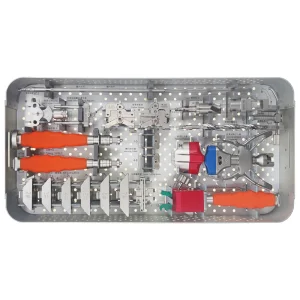
Yes. We provide complete OEM/ODM customization services. We routinely adjust CCD neck-shaft angles (available in 125° and 130°, customizable from 120° to 135°), distal nail diameters (9 mm, 10 mm, 11 mm, 12 mm), proximal diameters (15.2 mm to 16.5 mm), and anatomical bow radii (R1500 to R1800 mm) to suit specific ethnic patient femoral geometries. We also design, machine, and assemble complete matching surgical instrument cases with custom branding, color anodized carbon-fiber targeting arms, and customer-specified tray layouts.
ZATH operates an audited ISO 13485:2016 quality management system and holds UDEM CE conformity alongside Chinese NMPA Class III domestic approvals. For international distributor partners, we provide full registration documentation including: Certificate of Free Sale (CFS / FSC), Certificate of Analysis (CoA), Biocompatibility Summary (ISO 10993), Biomechanical Testing Reports (ASTM F384/F543), Sterilization Validation Reports (ISO 11135), and Risk Management Dossiers (ISO 14971).
Standard inventory stock configurations are prepared and dispatched within 48 to 72 hours. OEM custom branded runs or non-standard geometrical sizes usually require 4 to 6 weeks for precision CNC setup, lot inspection, laser marking, and sterile blister packaging. International express air freight is coordinated via DHL, FedEx, TNT, or UPS, typically arriving at distributor facilities within 4 to 6 business days worldwide.
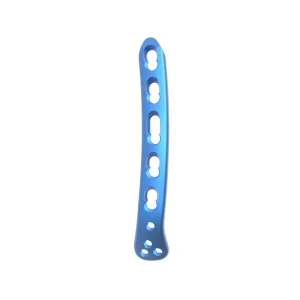
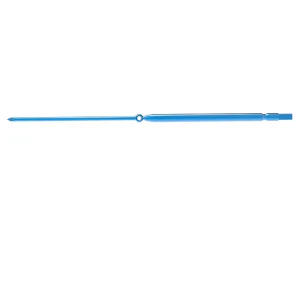
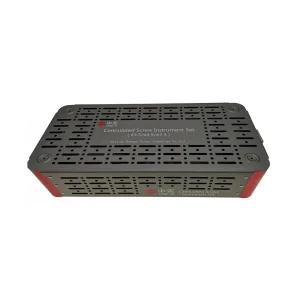
Featured Orthopedic Implant Assemblies & Tooling
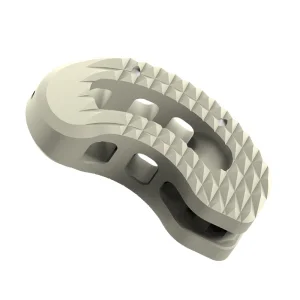
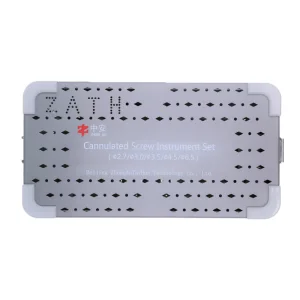
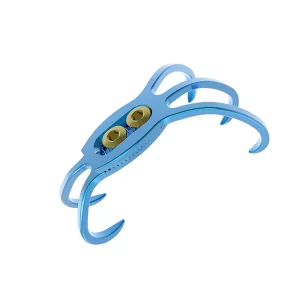
From acetabular reconstruction and spinal cages to specialized trauma instrument sets, manufactured under direct quality oversight.