
Primary Trauma & Reconstruction Product Platforms
Direct manufacturer quotations on sterile and non-sterile titanium trauma fixation plates, locking compression systems, and high-precision orthopedic surgical instruments.
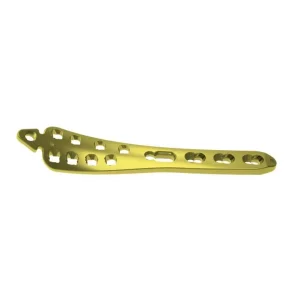
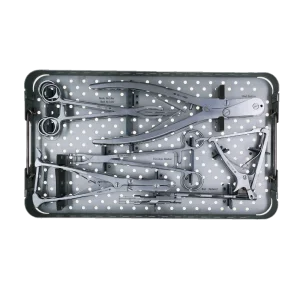
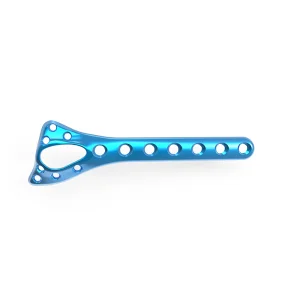
Strategic Engineering & Macro Solutions in Modern Ortopedia y Traumatología
A comprehensive examination of global supply ecosystems, metallurgical optimization, and shifting surgical techniques driving modern clinical procurement.
1. The Clinical Shift: From Rigid Compression to Biological Osteosynthesis (BO)
Over the past three decades, the surgical philosophy underpinning internal fixation in traumatology has transitioned decisively from absolute mechanical rigidity toward biological preservation. Early osteosynthesis methodologies prioritized absolute anatomical stability at the expense of extensive surgical exposure, stripping periosteal blood vessels and elevating rates of delayed union, pseudoarthrosis, and secondary infection. Modern traumatology standards—advocated by AO/ASIF foundations and advanced by high-tier medical device manufacturers like Beijing ZhongAnTaiHua Technology Co., Ltd. (ZATH)—revolve around biological osteosynthesis.
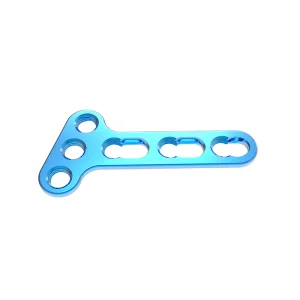
This biological mandate requires implants to function as internal splints rather than rigid compression bars. Limited-Contact Locking Compression Plates (LC-LCP) and minimally invasive percutaneous osteosynthesis (MIPO) instruments feature undercut reliefs along the plate undersurface. This profile reduces plate-to-bone contact area by up to 60%, maintaining the periosteal microcirculation critical for callus formation. Concurrently, the integration of threaded locking hole geometries creates a fixed-angle construct where the screws do not compress the plate to the periosteum, mitigating stress shielding and facilitating accelerated patient weight-bearing.
Angular Stability & Pull-Out Resistance
By locking the screw head directly into the plate hole thread, fixed-angle constructs eliminate toggling and catastrophic screw pull-out in osteoporotic or comminuted metaphyseal bone.
Anatomical Pre-Contouring
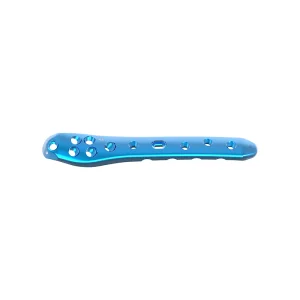
Multi-axis computerized manufacturing matches the exact anatomical curvature of the human skeleton (e.g., clavicle, radius, distal tibia), eliminating intraoperative plate bending fatigue.
Sterile-Packed Single-Use Safety
Factory-sealed double-blister sterile packaging prevents cross-contamination, simplifies hospital inventory tracing via 2D GS1 DataMatrix barcodes, and streamlines OR preparation.
2. Global Commercial Landscape: Overcoming Procurement Monopolies via Direct Exporter Quotations
In the contemporary B2B medical device ecosystem, regional distributors, private surgical clinics, and public tender authorities encounter severe margin compression. Historically, global orthopedic hardware distribution has been dominated by a handful of Western multinational conglomerates. These entities maintain extreme pricing premiums driven by tiered sales channels, redundant administrative overhead, and non-differentiated branding.
Conversely, certified direct-to-manufacturer exporters provide a technologically equivalent, economically resilient alternative. High-precision Chinese manufacturing centers—headquartered in innovation zones such as the Zhongguancun Science and Technology Park in Pinggu, Beijing—integrate raw-material metallurgy, multi-axis Swiss-lathe wire cutting, 5-axis CNC machining, and ISO Class 7 cleanroom packaging under one unified roof. By obtaining custom quotations directly from verified exporters like ZATH, global partners achieve between 40% to 65% cost reductions without compromising tensile fatigue endurance, dimensional accuracy, or regulatory compliance.
Advanced Metallurgy & Surface Engineering Standards
Engineered to exceed ASTM and ISO biomechanical specifications for implantable medical devices.
Biocompatibility and cyclical fatigue limits represent the non-negotiable foundations of implantable traumatology devices. Beijing ZhongAnTaiHua Technology Co., Ltd. applies rigorous metallurgical specifications, procuring raw titanium bar stock and medical polyetheretherketone (PEEK) exclusively from certified mills with complete chemical composition and tensile test certifications.
| Material Classification | International Standard | Tensile Strength (MPa) | Primary Clinical Indications | Surface Treatment / Finishing |
|---|---|---|---|---|
| Ti-6Al-4V ELI (Grade 5) | ASTM F136 / ISO 5832-3 | ≥ 860 MPa | Trauma Plates, Locking Screws, IM Nails, Pedicle Screws | Type II Anodization, Bead Blasting, Micro-Arc Oxidation |
| CP Titanium (Grade 4) | ASTM F67 / ISO 5832-2 | ≥ 550 MPa | Anatomical Mesh, Clavicle Plates, Maxillofacial Fixation | Color Anodization (Thickness: 0.1–0.3 µm) |
| PEEK-OPTIMA Natural | ASTM F2026 / ISO 10993 | ≥ 100 MPa | Spinal Interbody Fusion Cages (PLIF, TLIF, ACDF) | Micro-Textured Contact Footprints, Tantalum X-Ray Markers |
| CoCrMo Alloy | ASTM F75 / ISO 5832-4 | ≥ 655 MPa | Total Knee Joint Femoral Components, Bipolar Heads | Mirror Finish Surface Polishing (Ra < 0.05 µm) |
Furthermore, surgical hardware longevity is dictated by surface morphology. Non-anodized titanium implants face risks of galling and cold welding between the screw head thread and the plate hole. ZATH executes proprietary Type II anodic oxidation processes that harden the oxide layer, minimize friction coefficients during screw insertion, and passivate the metal surface against galvanic corrosion in the electrolytic saline environment of human interstitial fluid.
Cleanroom Integrity (ISO Class 7)
Microbiological contamination is neutralized through strict environmental monitoring. Automated terminal cleaning and Tyvek double-barrier blister sealing ensure absolute pyrogen-free delivery.
Sterilization Validation
Validated in accordance with ISO 11135 (Ethylene Oxide) and ISO 11137 (Gamma Irradiation) protocols to achieve a verified Sterility Assurance Level (SAL) of 10⁻⁶.
Fatigue Test Qualification
Static and dynamic cyclic 4-point bending tests executed per ASTM F382 demonstrate mechanical endurance exceeding 2,500,000 cycles without plastic micro-fracture or delamination.
Localized Clinical Applications: Traumatology in the Operating Theater
Engineered for high-stress orthopedic environments, acute polytrauma emergencies, and elective reconstructive interventions.
1. Polytrauma & Damage Control (DCO)
In high-energy motor vehicle crashes, stabilizing hemodynamically compromised patients requires rapid bridging fixation. ZATH's trauma systems interface seamlessly between temporary pin-to-rod external fixators and definitive submuscular locking compression plates, reducing systemic inflammatory responses (SIRS) and operative blood loss.
2. Geriatric Osteoporotic Fracture Fixation
Aging demographic curves present severe proximal femur, periprosthetic, and distal radius fragility fractures. Low-density bone provides poor cancellous purchase; ZATH proximal femoral plates utilize divergent multi-plane locking angle screws that act as a cohesive structural scaffold, preventing secondary varus collapse and cut-out.
3. Complex Thoracic Wall Reconstruction
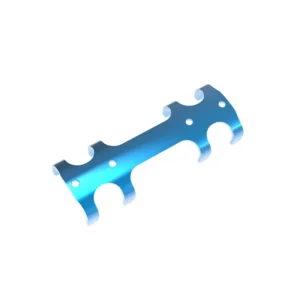
Flail chest and multiple contiguous rib fractures severely impair respiratory mechanics, often causing prolonged mechanical ventilation dependency. Our OEM Titanium Rib Claw Plates enable rapid subpectoral stabilization without penetrating the inner cortical table or risking lung parenchyma puncture, cutting ventilator weaning times in half.
Local Sanitary Regulatory Dossier Support (MDR, FDA, LATAM & Middle East)
Procuring orthopedic implants across international borders requires stringent sanitary compliance. Importers and distributors frequently encounter customs impoundments or multi-year regulatory stalemates if technical documentation lacks rigorous traceability. ZATH actively resolves these market entry barriers by furnishing exhaustive technical documentation:
- ISO 13485:2016 Certification: Audited Quality Management System specifically tailored for the design, machining, and sterile packaging of invasive surgical implants.
- Free Sale Certificates (FSC / CLV): Fully notarized and apostilled export documentation issued by national drug regulatory bodies, certifying legal commercialization.
- Biological Evaluation Reports: Conforming to ISO 10993 (Cytotoxicity, Sensitization, Intracutaneous Reactivity, Systemic Toxicity, and Genotoxicity).
- Product Dossier Readiness: Pre-structured Common Technical Documents (CTD) formatted for rapid submission to COFEPRIS (Mexico), ANVISA (Brazil), INVIMA (Colombia), SFDA (Saudi Arabia), and MoHAP (UAE).
Engineering Roadmap & Future Horizons (2026–2035)
Integrating additive manufacturing, bioresorbable alloys, and robotic-assisted surgical instrumentation into the commercial supply stream.
1. 3D-Printed Trabecular Titanium
Deploying Electron Beam Melting (EBM) to synthesize fully interconnected biomimetic porous lattices (pore size: 400–600 µm, porosity: 70–80%). These structures mirror human cancellous bone modulus (~3 GPa vs. cortical ~18 GPa), substantially mitigating stress-shielding bone resorption.
2. Biodegradable Magnesium Alloys
R&D efforts focused on rare-earth-free magnesium-calcium-zinc alloys for pediatric traumatology and maxillofacial fixation. These implants provide structural stability throughout osteogenesis and naturally resorb over 12–18 months, eliminating secondary removal surgeries.
3. Navigated & Robotic Alignment Sets
Matching our hardware with real-time optical surgical navigation arrays and robotic end-effectors. Ergonomic instrument sets feature quick-coupling cannulations and radiolucent carbon fiber handles that ensure sub-millimeter trajectory placement during complex spine and pelvic cases.
Specialized Arthroplasty, Spine & Trauma Fixation Solutions
Complete surgical sets, locking compression assemblies, and high-load joint reconstructive implants ready for bulk order and OEM export.
Comprehensive B2B Procurement & Exporter FAQ
Key information regarding international contracts, OEM/ODM customizations, quality certifications, and supply chain logistics.
What is the official procedure for requesting a custom commercial quotation?
Global procurement directors and distributors can request tailored quotes by submitting a bill of quantities (BOQ), including desired system categories (trauma, spine, joint, sports medicine), packaging preferences (bulk clean or sterile double-blister packed), and anticipated annual order volumes. Our international export desk issues comprehensive FOB/CIF proforma quotations within 24 business hours.
How does ZATH verify mechanical compliance under ISO and ASTM standards?
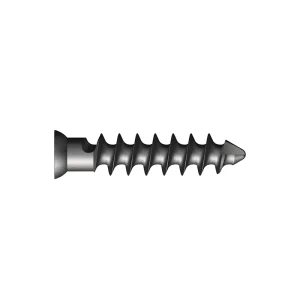
Every production batch is tested in our in-house metallurgical testing laboratory. We run optical coordinate measurement machines (CMM) for dimensional tolerance (+/- 0.005mm), 4-point dynamic bending fatigue testing per ASTM F382, torsional yield verification per ASTM F543 for bone screws, and periodic metallurgical spectrographic chemical assays to verify zero material contamination.
What minimum order quantities (MOQs) apply for OEM and private-label orders?
For standard catalog SKUs bearing ZATH branding, we support flexible initial evaluation orders with no minimum line limits to facilitate clinical evaluation. For customized OEM/ODM projects (custom laser marking, specific anatomical contour profiles, or regional sterile packaging designs), baseline MOQs typically start at 50 to 100 units per specification to optimize CNC tooling and cleanroom sterilization cycles.
Can ZATH provide regulatory dossiers for local sanitary registration?
Yes. We routinely assist international partners with their local health authority filings. We provide complete Technical Construction Files (TCF), ISO 13485:2016 quality management system audit reports, Biocompatibility Summary Reports (ISO 10993 series), and validated accelerated aging shelf-life test protocols (up to 5 years sterile barrier stability).
What is the standard production and shipping lead time for volume orders?
High-turnover trauma locking plates, screws, and standard instrument kits are maintained in controlled inventory, allowing dispatch within 48 to 72 hours. Specialized volume productions or customized titanium plate dimensions require 2 to 4 weeks production lead time. Air-express deliveries via DHL, FedEx, or specialized medical freight forwarders typically arrive in 4 to 6 business days worldwide.
How are matching surgical instruments supplied and serviced?
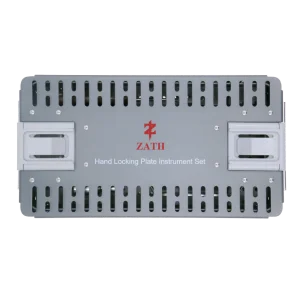
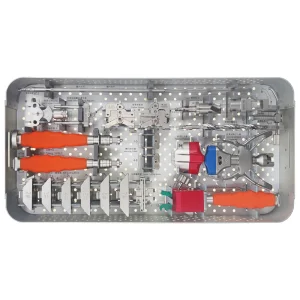
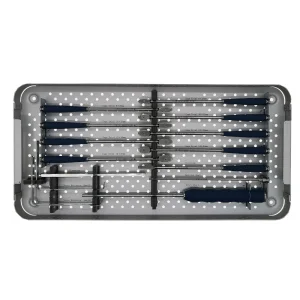
Every implant category is complemented by a modular, autoclavable instrument set housed in anodized aircraft-grade aluminum or medical polyphenylsulfone (PPSU) trays. Custom instrumentation sets can be laser-engraved with distributor logos and tailored with specialized handle connections (e.g., AO quick-coupling, Zimmer hex, or Jacobs chuck styles) to suit surgeon preferences.