
Precision Trauma & Spinal Systems Immediate OR Inventory
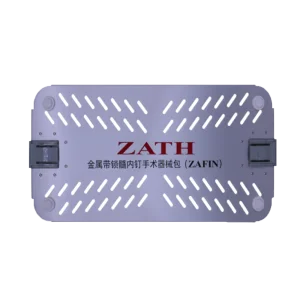
Engineered under ISO 13485 quality protocols, sterile-packaged or autoclave-ready, paired with dedicated instrument trays for optimal intraoperative reproducibility.
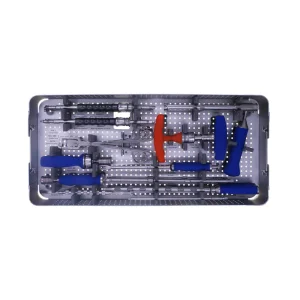
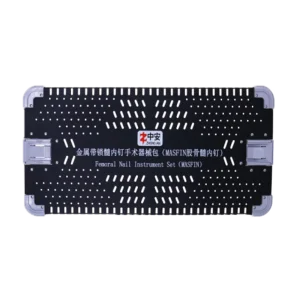
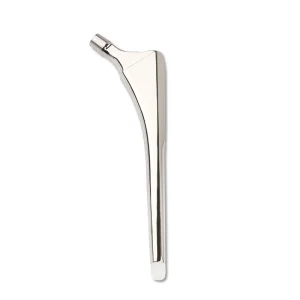
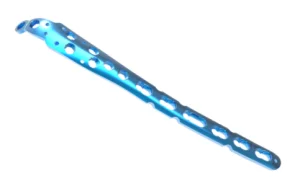
Engineering Superiority in PFNA Intramedullary Fixation
Addressing the epidemiological surge of osteoporotic trochanteric fractures through load-sharing geometry, helical bone compaction, and optimized biomechanical lever arms.
The Biomechanical Paradigm Shift: Helical Blade vs. Conventional Dual Lag Screws
Proximal Femoral Nail Antirotation (PFNA) technology revolutionized the management of pertrochanteric and intertrochanteric femur fractures (AO/OTA 31-A1, 31-A2, and 31-A3). Historically, extramedullary dynamic hip screw (DHS) constructs and dual-screw intramedullary nails were vulnerable to catastrophic cut-out, rotation of the femoral head-neck fragment, and the dreaded "Z-effect" or reverse Z-effect, where screws migrate medially or laterally due to unequal load distribution across poor-quality cancellous bone.
The single helical blade design of custom PFNA systems eliminates bone removal during insertion. Instead of reaming away vital trabecular bone in the femoral head, the helical blade compresses the surrounding cancellous bone during axial insertion. This radial bone compaction dramatically increases bone-implant interface density, yielding significantly higher resistance to rotational collapse and superior cut-out force limits (exceeding 4.2 kN in comparative biomechanical cyclic testing).
Clinical Anchorage Insight
Compaction of osteoporotic cancellous bone by the helical blade increases pullout resistance by up to 48% compared to standard threaded hip screws, ensuring primary stability that permits early weight-bearing and accelerates post-operative ambulation.
Load-Sharing vs. Load-Bearing Dynamics
Because the intramedullary nail is positioned centrally within the medullary canal, the lever arm between the implant and the mechanical axis of the femur is shortened by over 30% compared to laterally mounted locking plates. This intramedullary center of rotation significantly lowers the bending moment applied to the nail shaft, reducing hardware fatigue, stress-shielding, and non-union rates while sustaining controlled dynamic fracture collapse.
- 5° Lateral Valgus Angle: Permits an anatomical entry point at the tip of the greater trochanter, sparing abductor muscle insertions.
- Distal Fluting & Flexibility: Absorbs peak stresses at the nail tip, mitigating periprosthetic fracture risk in brittle cortical bone.
- Dynamic/Static Interlocking Options: Accommodates both rigid axial stabilization and controlled sliding dynamization.
| Biomechanical Attribute | Conventional Plate / Extramedullary | Dual-Screw Cephalomedullary Nail | ZATH Custom PFNA Helical System |
|---|---|---|---|
| Bending Moment Arm | Long (Laterally Placed: 65-80mm) | Short (Intramedullary: 35-45mm) | Optimized (32-38mm Central Axis) |
| Cancellous Bone Interaction | Extensive reaming / Bone removal | Partial compaction / Drill removal | 100% Radial Radial Bone Compaction |
| Cut-out & Migration Resistance | Moderate (Subject to plate lift-off) | Prone to "Z-Effect" migration | Superior Multi-Planar Rotational Lock |
| Soft-Tissue Stripping | Extensive open exposure required | Percutaneous / Minimally Invasive | Ultra-Low MIS Incision < 35mm |
| Early Weight-Bearing Capability | Delayed (Risk of plate bending) | Moderate to Fast | Immediate Post-Op Day 1 to 2 |
Macro Dynamics in Orthopedic Supply Chain & OEM Sourcing
Adapting to global Volume-Based Procurement (VBP), EU MDR 2017/745 clinical constraints, and localized healthcare sovereignty.
Supply Chain Reshoring vs. Asian Foundry OEM
Global hospital networks and distributors face extreme cost pressures driven by health insurance budget caps and centralized tender models. As European and North American brand premiums erode, tier-1 contract foundries capable of delivering medical-grade titanium (Ti-6Al-4V ELI) implants under verifiable ISO 13485 QMS standards represent the dominant growth corridor for distributor private-label branding.
EU MDR 2017/745 & Global Regulatory Rigor
Regulatory bar-raising has forced the obsolescence of unverified surgical manufacturers. Importers now require comprehensive Technical Documentation Dossiers, biocompatibility according to ISO 10993 series, rigorous Post-Market Clinical Follow-up (PMCF) plans, and proven biomechanical fatigue cycle records (ASTM F384 / ISO 7206) to safeguard patient outcomes and prevent institutional liability.
Volume-Based Procurement (VBP) Competitiveness
With national healthcare tenders demanding up to 60-80% cost reductions without sacrificing metallurgical purity or clinical performance, vertically integrated manufacturers with automated CNC Swiss turning centers, internal cleanroom sterilization, and in-house metrology maintain an unassailable strategic advantage over assembly-only trading outfits.
Localized Applications & Patient-Specific Geometry
Standardized Western implants fail in diverse global demographics. Custom PFNA designs accommodate regional variations in femoral curvature, isthmus diameter, and trochanteric entry vectors.
The Asian vs. Caucasian Femoral Radius Mismatch
Extensive clinical studies indicate that Caucasian femurs possess a mean anterior bow radius of 1.5 meters, whereas East Asian, Southeast Asian, and Latin American cohorts frequently present with shorter, more acutely bowed femurs with a radius of curvature (ROC) between 1.0 and 1.2 meters. Forcing standard long nails with a 1.5m bow into acutely curved femurs leads to anterior cortical impingement, distal perforation, and iatrogenic shaft fractures during intraoperative insertion.
ZATH custom engineering provides specialized nail options with tailored ROC of 1.2m and 1.0m, reduced distal shaft diameters (down to Ø9.0mm and Ø8.0mm), and customizable lengths (170mm, 200mm, 240mm for short nails; 300mm to 420mm for long nails), guaranteeing anatomical conformity and zero iatrogenic cortical compromise across localized international patient populations.
AO/OTA Indication Scope
- 31-A1 Fractures: Pertrochanteric simple (two-part) stable fractures.
- 31-A2 Fractures: Pertrochanteric multi-fragmentary with loss of posteromedial calcar buttress.
- 31-A3 Fractures: Intertrochanteric reverse obliquity and transverse trochanteric patterns.
- Subtrochanteric Combinations: High subtrochanteric extensions requiring long reconstituting nails.
- Pathological Fragility: Severe senile osteopenia and impending metastatic lesions.
Beijing ZhongAnTaiHua Technology Co., Ltd. (ZATH)
Founded in 2009 in the Zhongguancun Science and Technology Park, Pinggu District, Beijing: Over 15 years of uninterrupted orthopedic engineering, precision CNC manufacturing, and worldwide delivery.
Operating from our modern medical manufacturing campus in Beijing's Xinggu A Area, ZATH employs more than 300 specialized professionals, including approximately 100 senior and mid-level biomechanical technicians and metrology specialists. We oversee an integrated end-to-end production ecosystem spanning six rigorous control stages:
- Medical-Grade Raw Material Quarantine: Verified certified ASTM F136 titanium alloy (Ti-6Al-4V ELI) and ISO 5832 high-nitrogen stainless steel bar stocks with full mill heat traceability.
- Multi-Axis CNC Swiss Machining: High-precision machining of helical blades, self-tapping flutes, dynamic screw slots, and micro-cannulations.
- Precision Wire EDM Profiling: Non-stress blank shaping preserving metallographic grain structures.
- CMM & Optical Metrology: 100% lot-level dimensional verification with sub-micron coordinate measurement machinery.
- ISO Class 7 (Class 10,000) Cleanroom Packaging: Double-sterile blister barrier pouching ready for direct surgical suite delivery.
- Automated Traceable Storage: Global logistics via DHL, FedEx, UPS, and TNT, achieving rapid international airport arrivals within 4 to 6 business days.
OEM & ODM Private Label Capabilities
From custom laser etching, customized instrument targeting jigs, and tailored tray anodization to private blister packaging and technical registration dossiers, ZATH empowers global distributors to commercialize proprietary orthopedic portfolios swiftly and securely.
The Forward Engineering Roadmap Future of Intramedullary Systems
Pioneering active biological integration, surface functionalization, smart telemetric monitoring, and robotic fluoroscopic targeting.
Active Bio-Interactive & HA Nanocoatings
Moving beyond passive titanium oxide passivation, next-gen PFNA nails will feature electrochemical hydroxyapatite (HA) and strontium-doped nanocoatings on helical blade surfaces. In osteoporotic femoral heads, these surfaces trigger rapid localized osteogenesis, establishing osteointegration within 14 days and permanently neutralizing rotational failure risks.
Smart Sensors & Telemetric Strain Monitoring
Micro-electromechanical systems (MEMS) embedded within cannulated nail cavities allow passive NFC telemetric reporting of internal bending strain and load transmission. Surgeons can objectively monitor real-time callus stiffening and identify delayed union or implant overload long before radiological fracture gaps reveal failure.
Robotic Fluoroscopy & Sensorized Carbon Jigs
Overcoming distal interlocking radiation exposure and targeting parallax errors via radiolucent carbon fiber aiming arms coupled with optical guidance. Real-time surgical tracking guarantees instant, single-pass distal locking screw placement without prolonged C-arm fluoroscopy radiation for surgeons and patients alike.
Trauma, Arthroplasty & Reconstruction Solutions
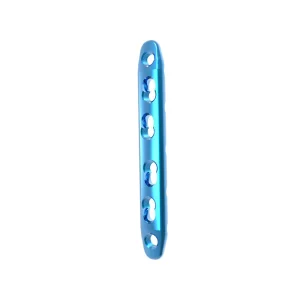
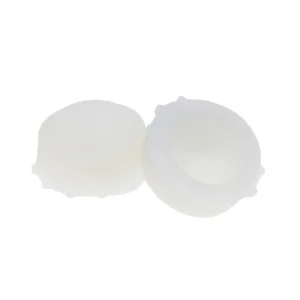
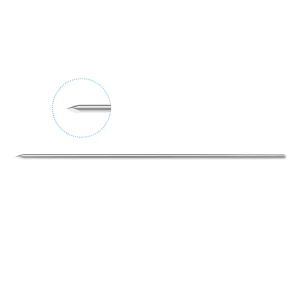
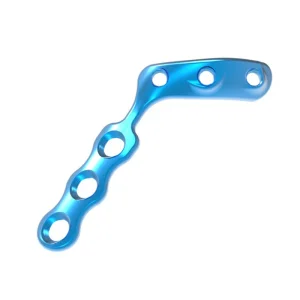
Complementary reconstructive and fixation technologies manufactured to identical metallurgical and dimensional standards.
Frequently Answered Clinical & Technical Queries
Comprehensive responses derived from surgeon queries, tender bidding standards, and biomedical engineering requirements.